
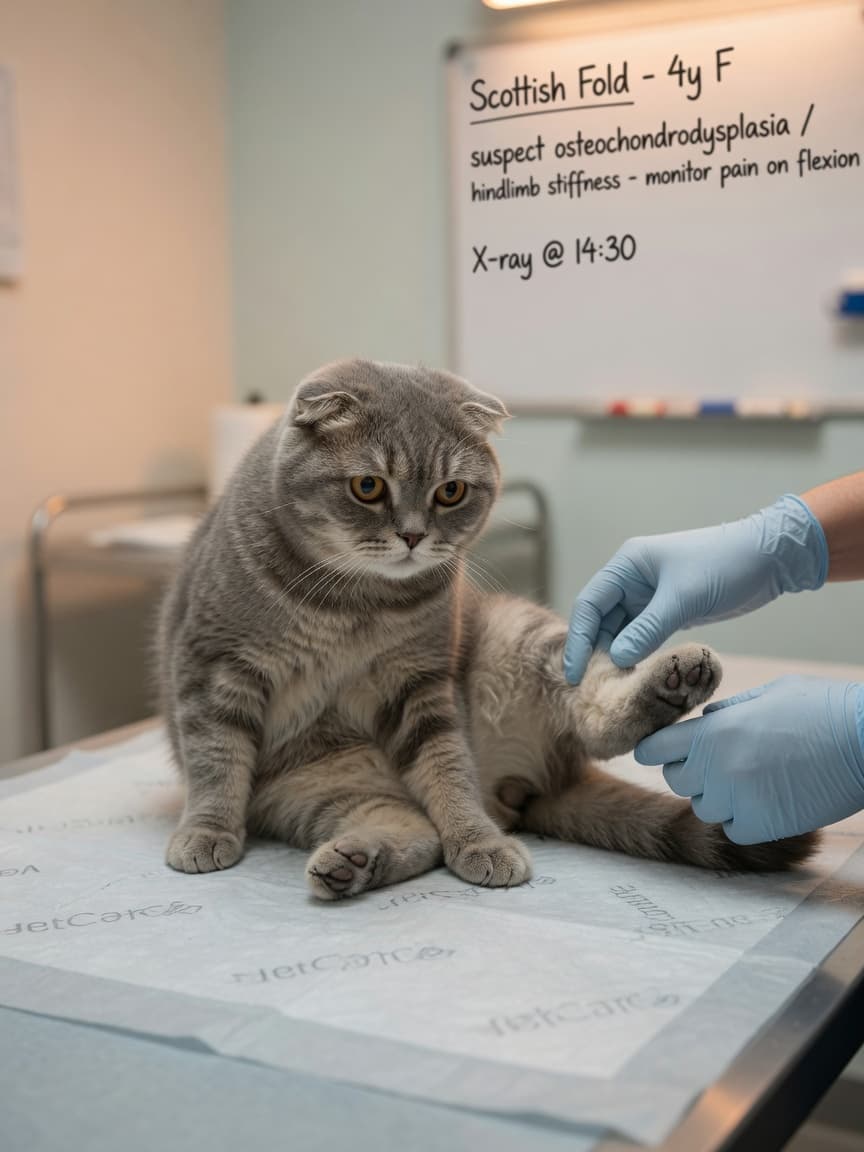
Scottish Fold Joint Disease: The Ethical Controversy and Health Reality
Few cat breeds have generated as much debate in veterinary and welfare circles as the Scottish Fold. With their distinctively folded ears and wide, owl-like eyes, they have become enormously popular, particularly on social media. But behind the appealing appearance is a serious and largely unavoidable health problem — one that has led several countries and major veterinary organisations to call for the breed to be discontinued entirely.
What Causes the Folded Ears
The Scottish Fold's signature look comes from a dominant genetic mutation affecting cartilage development throughout the body. The mutation, found in the TRPV4 gene, causes a condition called osteochondrodysplasia — an abnormal development of bone and cartilage that is not limited to the ears. Every Scottish Fold, regardless of whether it has fully folded or only slightly folded ears, carries this mutation if it has the characteristic appearance.
This is the point that many owners and even some breeders misunderstand. The folded ears are not a cosmetic quirk separate from the cat's underlying health — they are a visible symptom of a systemic skeletal disease.
Osteochondrodysplasia: The Disease Behind the Look
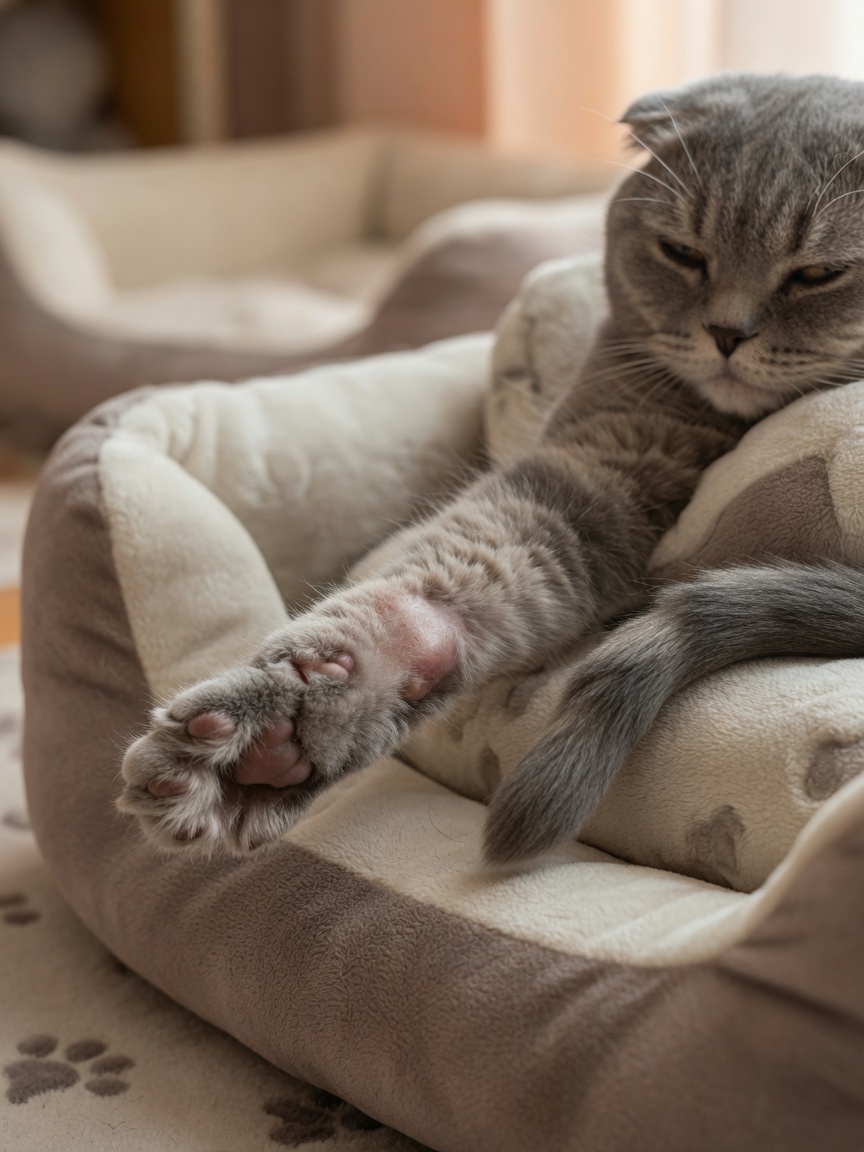
Osteochondrodysplasia causes abnormal bone formation in the joints, particularly affecting the tail, ankles, and feet. The condition is progressive and painful. Affected cats develop proliferative bony lesions — abnormal bone growths — that fuse joints and severely restrict movement. The tail may become stiff and painful to touch. The hind legs and paws are commonly affected, making walking uncomfortable and eventually difficult.
Pain from osteochondrodysplasia can begin surprisingly early — sometimes in kittens as young as a few months old, though it often becomes more apparent by one to two years of age. Because cats instinctively mask pain, many owners do not recognise the problem until it is quite advanced. A cat that is reluctant to jump, sits in an unusual posture, walks with a stiff or waddling gait, or objects to being touched around the tail and legs may be showing early signs.
The Homozygous Problem
The severity of osteochondrodysplasia depends partly on whether a cat carries one copy of the mutation (heterozygous) or two (homozygous). Cats with two copies — which can result when two Scottish Folds are bred together — develop a far more severe form of the disease. Homozygous kittens may be profoundly disabled from a very young age. Responsible breeders avoid pairing two Folds together for this reason, though the practice still occurs.
Crucially, even heterozygous cats — those with one copy of the mutation — develop osteochondrodysplasia to some degree. It is not a case of some Scottish Folds having the disease and others being clear. The mutation that creates the fold is inseparable from the skeletal pathology.
Diagnosis and Management
Diagnosis is typically confirmed through X-rays, which reveal the characteristic changes in bone structure. There is no cure. Management focuses on pain relief, which may include anti-inflammatory medications, joint supplements such as omega-3 fatty acids, and in some cases, pain management protocols similar to those used for severe feline arthritis.
Environmental modifications can help affected cats manage daily life. Providing low-sided litter trays, ramps rather than stairs, soft bedding, and food and water bowls at a height that does not require stretching can reduce daily discomfort. Physical therapy and acupuncture are used in some cases, though evidence for their effectiveness in osteochondrodysplasia specifically is limited.
The Ethical and Regulatory Landscape
The veterinary consensus on Scottish Folds has hardened significantly in recent years. The British Veterinary Association has actively discouraged the breeding and purchase of Scottish Folds since 2018. The German Veterinary Medical Society and several other European bodies have taken similar positions. In the Netherlands and Austria, breeding Scottish Folds is prohibited under animal welfare legislation.
The Royal College of Veterinary Surgeons and numerous welfare organisations argue that deliberately breeding animals with a known and inherent welfare problem — where suffering is not a risk but a certainty — is ethically indefensible, regardless of consumer demand. The counter-argument, made by some breeders and enthusiasts, is that heterozygous cats can live reasonably comfortable lives with attentive care. Veterinary organisations largely reject this framing, pointing out that even mildly affected cats experience ongoing pain that would not exist without selective breeding for the fold trait.
If You Already Own a Scottish Fold
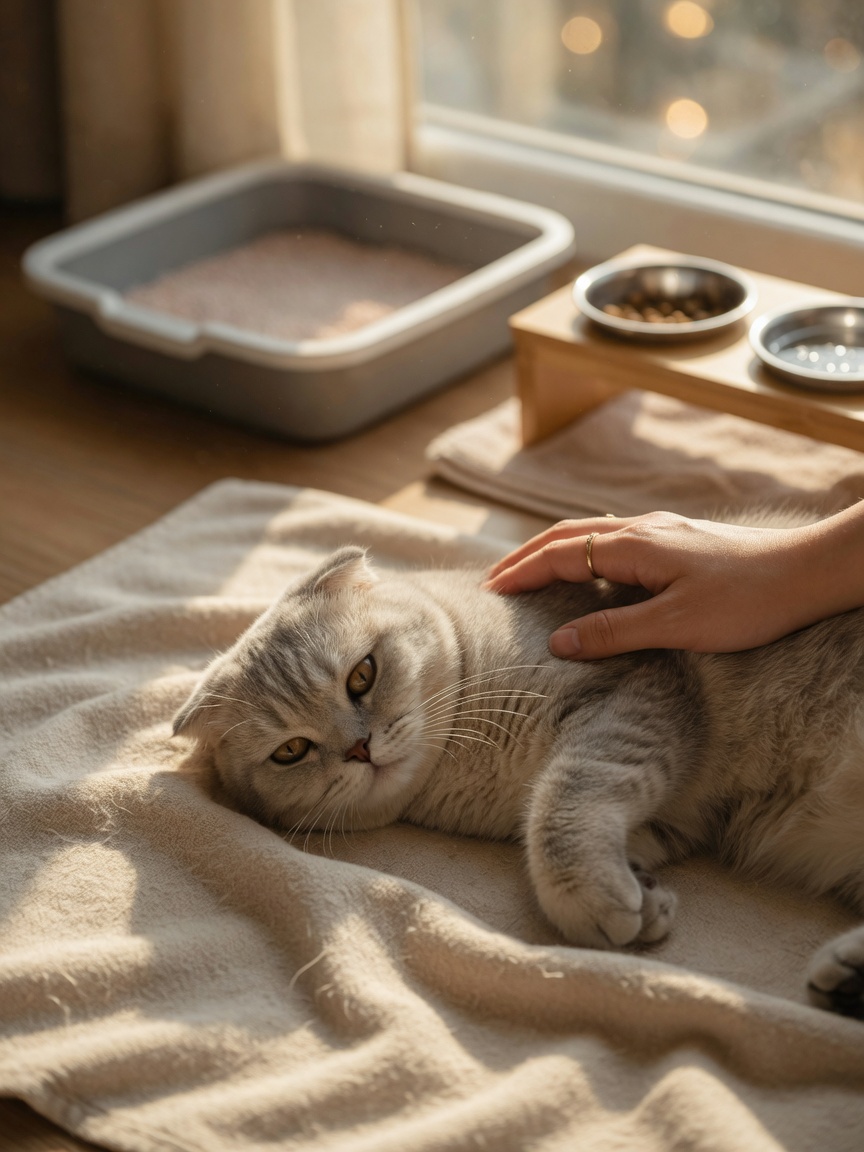
If you already have a Scottish Fold, the ethical debate does not change the practical reality of caring for that animal. Regular veterinary check-ups are essential, with particular attention to mobility and signs of discomfort. X-rays of the tail and limbs can help establish a baseline and monitor progression over time.
Pain should never be assumed to be absent simply because your cat is not vocalising distress. Subtle behavioural changes — reduced activity, altered posture, reluctance to be handled — warrant a vet visit. Working with a vet experienced in feline pain management will give your cat the best quality of life possible.
The Question of Future Ownership
For those considering whether to purchase a Scottish Fold kitten, the veterinary position is clear: the breed cannot be bred without inheriting the condition that causes their suffering. The popularity of these cats on social media and in celebrity culture has driven demand that directly funds a breeding industry built on predictable animal pain. That is a choice worth sitting with seriously before proceeding.
Many cats of other breeds share the gentle, affectionate temperament that draws people to Scottish Folds — without the inbuilt welfare burden. Exploring those options is something any prospective owner concerned about animal welfare should genuinely consider.