
Cats Feel the Cold More Than Most Owners Realise
It is easy to assume that a cat's fur coat handles everything winter throws at it. In reality, domestic cats — particularly older cats, underweight cats, and short-haired breeds — are genuinely vulnerable to cold. In the UK, indoor temperatures in unheated rooms can drop below 10°C on bitter nights, which is cold enough to cause discomfort and, in vulnerable animals, to affect circulation and immune function. A cat that is cold will not always tell you loudly. They may simply withdraw, sleep more, or eat less — easy signs to miss.
Understanding Your Cat's Thermal Comfort Zone
Most cats are comfortable between 15°C and 25°C. Below that, they begin seeking warmth actively — radiators, laps, airing cupboards, boiler rooms, and, dangerously, car engines. The goal in winter is to ensure your cat has safe, reliable warmth without having to search for it in hazardous places.
Kittens, elderly cats, and those with conditions such as arthritis or hyperthyroidism are most at risk. Arthritis in particular worsens in cold and damp conditions, and many owners notice their older cat becoming less mobile or more reluctant to jump in winter. A warmer sleeping environment can make a meaningful difference to their comfort and mobility.
Draught-Proofing Your Home for Cats
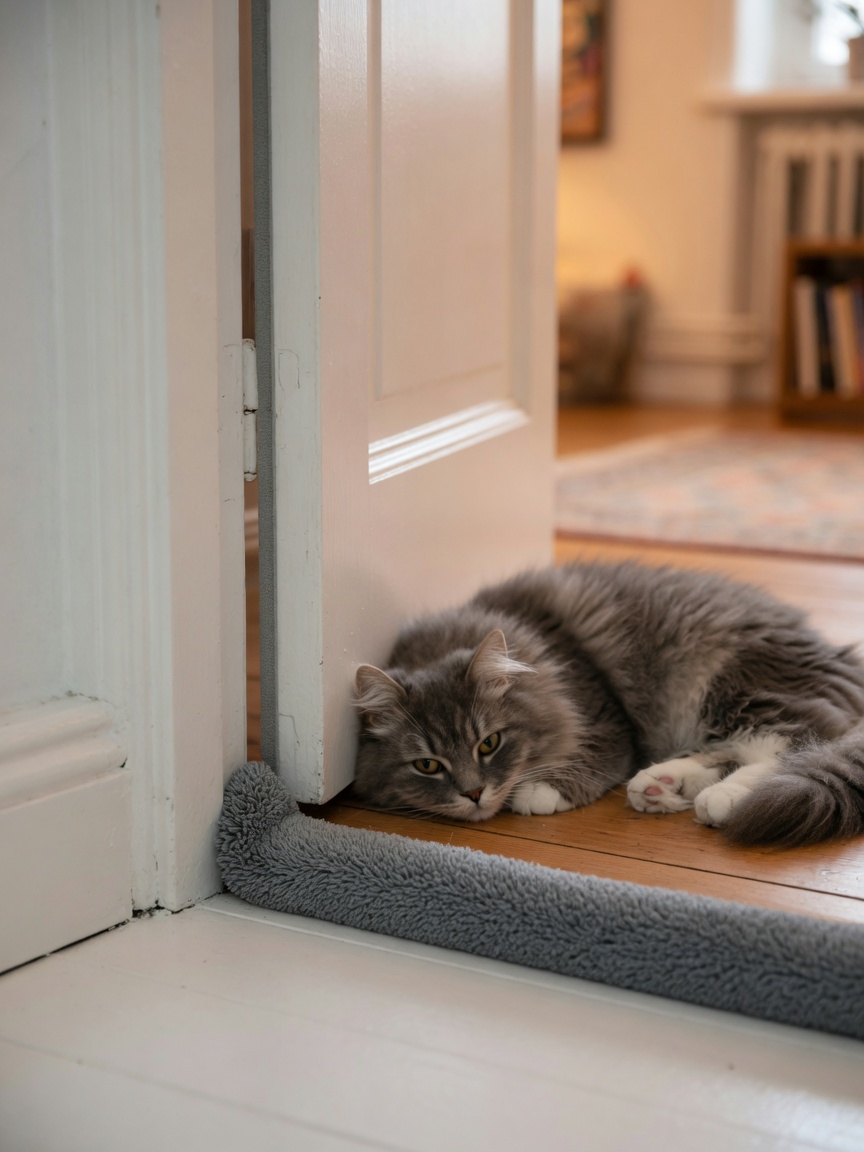
Cats tend to sleep low to the ground or in tucked corners, where cold air pools. Draught-proofing around skirting boards, under doors, and around window frames benefits both the cat and your heating bill. A simple draught excluder at the base of a door your cat sleeps near can noticeably raise the temperature in that spot.
If your cat uses a cat flap, check that it seals properly when not in use. Poorly fitting cat flaps are a significant source of cold air into the home, particularly in hallways and kitchens. Brush-seal or magnetic cat flap models retain considerably more heat than basic rubber-flap versions.
Bedding That Actually Insulates
Choosing the Right Materials
Not all cat beds are equally warm. Thin foam beds offer minimal insulation, particularly on cold tiled or laminate floors. Look for beds with raised sides or a cave design — these trap body heat around the cat and significantly reduce heat loss. Fleece and faux-sherpa linings hold warmth well and are easy to wash.
Placement matters as much as material. A bed on the floor against an exterior wall is the coldest possible position. Elevate the bed slightly off the floor or place it against an interior wall. A shelf or raised platform near (but not directly on top of) a radiator can be an excellent spot, provided the cat can move away if they become too warm.
Self-Warming and Thermal Beds
Self-warming beds use a reflective layer that bounces the cat's own body heat back to them — no electricity required. These are a safe and low-cost option, particularly for cats who sleep alone overnight. They are not as warm as heated beds but they carry no risk of burns or electrical faults.
Safe Heat Sources: What to Use and What to Avoid
Electric Heated Pet Beds
Purpose-made pet heating pads and electric cat beds are designed to operate at a low, safe temperature and are generally regulated to avoid overheating. Always choose products specifically designed for pets — never use human heating pads, which can reach temperatures that cause burns, particularly in cats who are sleeping deeply or have reduced sensitivity due to age.
Check the cable regularly for chewing damage and ensure there is always an unheated area nearby so the cat can self-regulate. Cats should never be confined to a heated surface with no exit.
Radiators and Open Fires
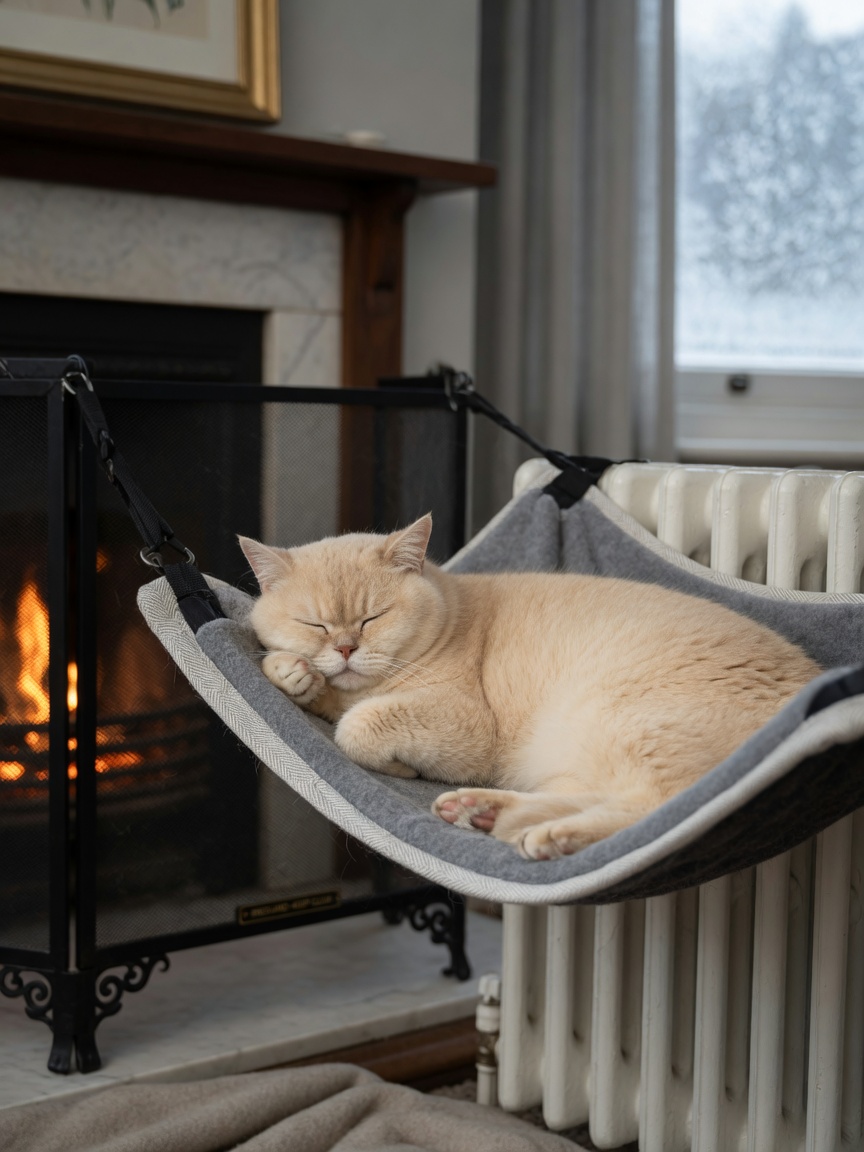
Radiator hammocks are popular and safe as long as the cat can climb off easily. Keep a one-cat-length clearance from radiators to prevent mild burns on fur or skin during very cold periods when radiators run at high temperatures.
Open fires and wood-burning stoves require a fireguard. Cats are attracted to direct flame and can singe whiskers or paws with alarming ease. A well-fitted fireguard eliminates this risk without removing the warmth.
Outdoor Cats and Winter Safety
If your cat goes outdoors, provide a sheltered, insulated outdoor space they can access in case they become caught out in cold weather. A wooden shelter lined with straw (not hay, which retains moisture) placed in a dry location can prevent a cold cat from becoming dangerously hypothermic. Check outbuildings such as sheds and garages before locking them — cats investigate warm enclosed spaces and can become accidentally trapped.
Before starting your car on cold mornings, knock on the bonnet — cats frequently climb into wheel arches and engine bays for warmth overnight, and starting the engine in these circumstances has fatal consequences.
Keeping Your Cat Comfortable This Winter: A Checklist
- Identify where your cat sleeps and ensure that area is draught-free
- Provide a bed with raised sides or cave design lined with fleece
- Elevate the bed off cold floors and away from exterior walls
- Consider a self-warming or purpose-made electric pet bed for overnight warmth
- Fit a sealing cat flap if your current one lets in cold air
- Use a fireguard near all open flames
- Check sheds and outbuildings before locking them
- If your cat is elderly or has joint issues, speak to your vet about whether the cold is affecting their mobility
As always, if you notice your cat becoming unusually lethargic, refusing food, or showing signs of discomfort in cold weather, a veterinary check is warranted. What looks like a cat simply disliking winter can sometimes indicate an underlying health issue worth investigating.