
Rehoming a Cat: What Shelters Need to Know About Your Pet
Surrendering a cat to a rescue organisation is often one of the most emotionally difficult decisions a cat owner faces. Whether driven by serious illness, housing changes, an unforeseen allergy, or a breakdown in the match between owner and animal, it is a decision that requires honest reflection and careful preparation. Rescue centres are better equipped to find your cat an appropriate home when they receive accurate, detailed information. Your honesty, even about difficult subjects, directly improves your cat's chances.
Why Accurate Information Matters
Rescue organisations make placement decisions based on what they know about each animal. A cat incorrectly described as good with children or dogs may be placed in a home where it suffers chronic stress. One described as shy when it is in fact genuinely fearful or reactive may receive inadequate behavioural support. Conversely, a cat described as difficult that is simply grieving or adjusting to loss may be assessed as unadoptable when it would in fact thrive in a quiet, patient home.
Shelter staff work under significant resource pressure. The more complete the picture you provide, the more efficiently they can advocate for your cat and match it appropriately. Exaggerating positive traits out of guilt does not help your cat. It may delay its placement or lead to a failed adoption that returns the animal to the shelter in a worse emotional state than when it arrived.
Medical History: The Non-Negotiables
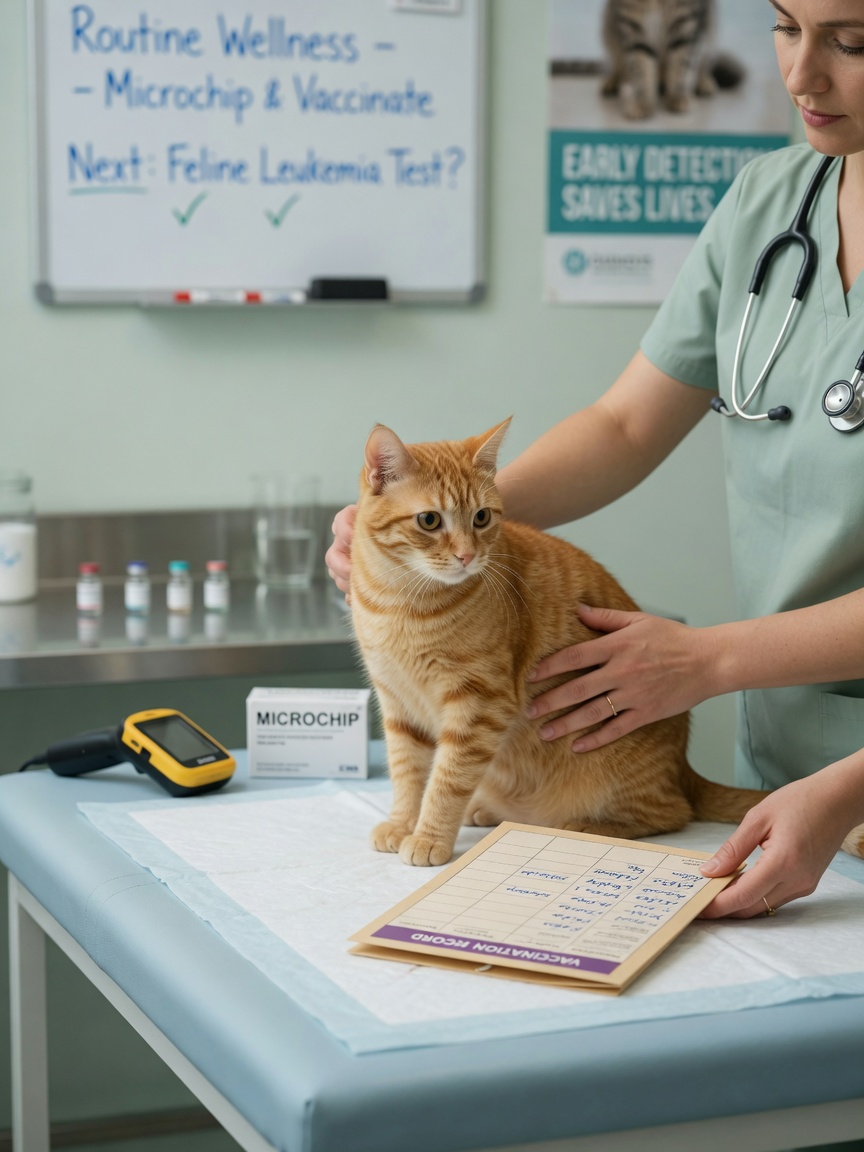
Bring every piece of veterinary documentation you possess. This includes vaccination records with dates and brands, any neutering certificate, microchip registration paperwork including the database name and chip number, details of any prescription medications including dosing schedules and the treating practice, and a summary of any diagnosed conditions whether ongoing or historical.
If your cat is on long-term medication for a condition such as hyperthyroidism, diabetes, or inflammatory bowel disease, be explicit about the management protocol. These animals can and do get adopted, but adopters need to be prepared, and shelters need to factor in care costs during the time the cat is in their custody.
Feline immunodeficiency virus and feline leukaemia virus status should be communicated if known. If your cat has not been tested and there is any reason to suspect exposure, mention it. Shelters typically test on intake, but forewarning allows appropriate precautions to be taken immediately rather than retrospectively.
Behavioural Profile: Be Precise and Be Honest
Behaviour is where many owners understandably struggle to be objective. You may love your cat deeply and want to present it in the best possible light. Instead, aim for precision over positivity. A good behavioural profile covers the following areas.
Tolerance of Handling
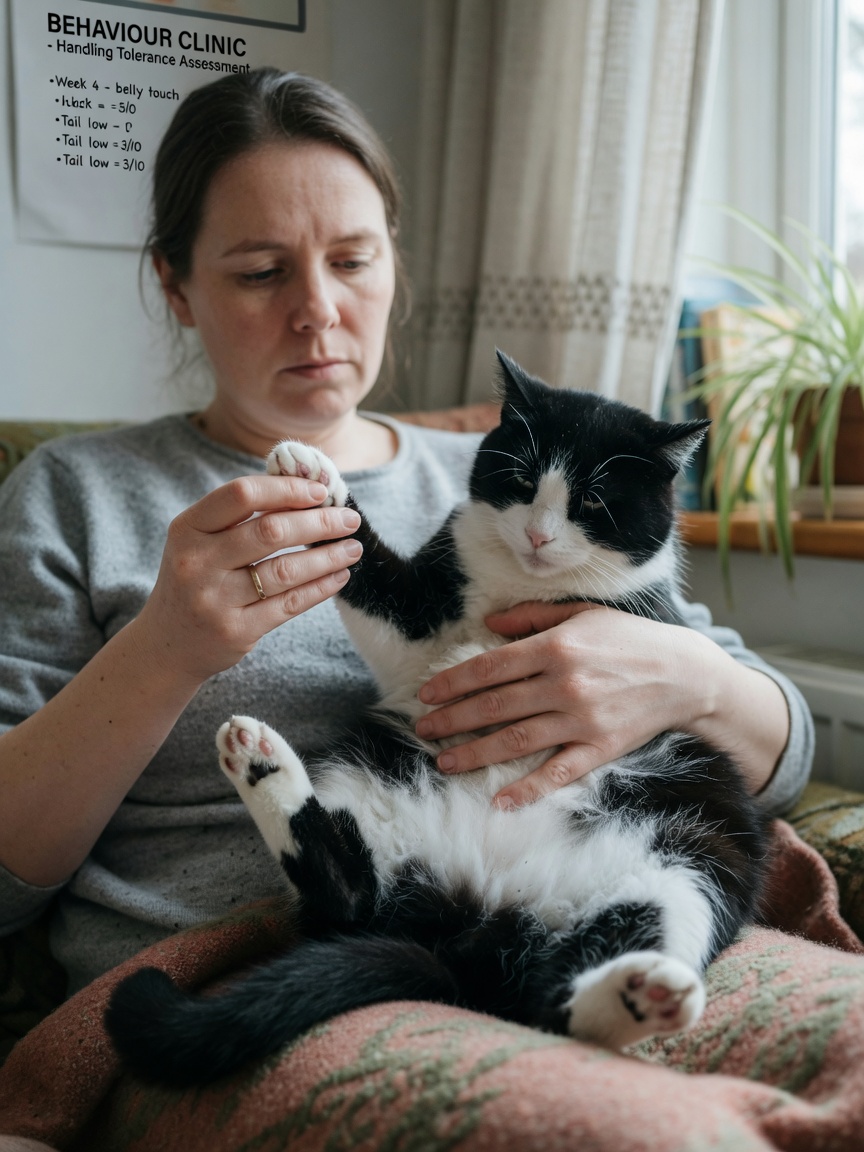
Can your cat be picked up without protest? Does it accept being held or does it tolerate it briefly before becoming agitated? Are there body areas, such as the belly or paws, where handling consistently provokes a reaction? Does the cat give warning signals such as tail lashing or flattened ears, or does it react with little prior warning?
History With Other Animals
Describe the household the cat is leaving and how it behaved within it. A cat that has lived peacefully with a particular dog may still be fearful of dogs generally. A cat that has fought persistently with a sibling cat may still bond well with a different individual. Be specific rather than making sweeping generalisations about compatibility.
History With Children
If children have been part of the household, at what ages and how did the cat respond? A cat that withdrew when an infant became a toddler is giving meaningful information about its tolerance threshold. A cat that actively sought out children for play is giving different information. Both are valid and useful.
Indoor and Outdoor Status
Describe the cat's current lifestyle honestly. A cat that has had full outdoor access will experience significant welfare compromise if placed in a long-term indoor-only environment. Shelters need this information to identify suitable adopters and to assess whether a managed transition period is needed.
Routine, Preferences, and Daily Life
Detail matters here. What food does your cat eat, at what times, and in what quantities? Is it a dry-only feeder or does it accept wet food? Are there brands or protein sources it refuses? Continuity of diet during the initial shelter period reduces digestive upset and one source of stress in an already disrupted period.
Where does your cat sleep? Does it have favoured spots or objects that could be donated to the shelter for scent familiarity? Has it used a litter tray reliably or has there been any recent history of inappropriate elimination that the shelter should know about and investigate rather than misattribute?
If your cat has fears of specific triggers, such as loud noises, strangers entering the home, or car engines, document them. If it has a hiding spot it reliably uses when stressed, that tells the shelter something useful about how to set up its enclosure.
Preparing Emotionally and Practically
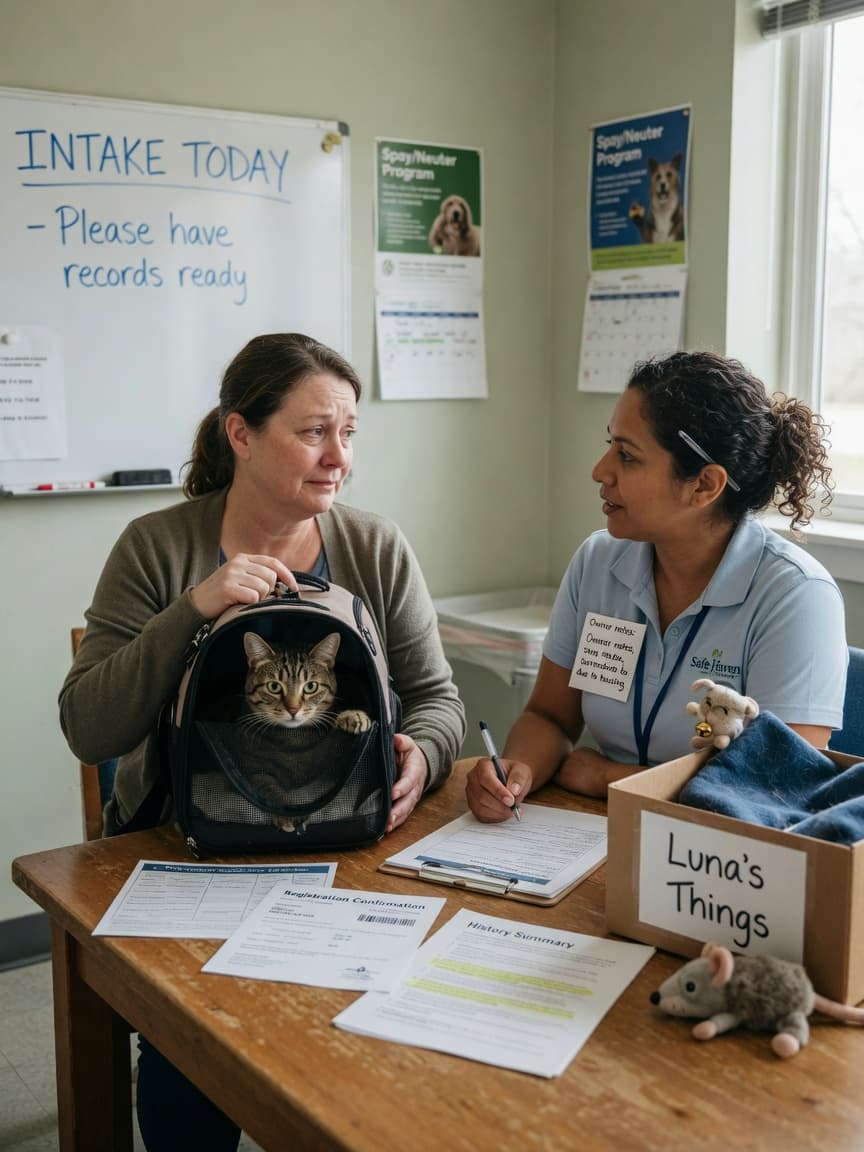
Gather all documents before your appointment with the shelter. If possible, bring your cat's familiar bedding and any strongly associated toys, as these carry comforting scent cues. Ask the shelter about their intake process and what the likely timeline looks like for assessment and adoption listing.
If you have the capacity to remain a point of contact for questions during the cat's stay, offer this. Shelters occasionally need to clarify something about a cat's behaviour or history and access to the previous owner can resolve ambiguity quickly. This is not a commitment to take the cat back; it is simply an extension of the care you have already demonstrated by providing thorough information in the first place.