
Understanding Brachycephalic Syndrome in French Bulldogs
French Bulldogs are one of the most popular breeds in the UK, and it is easy to understand why. They are affectionate, adaptable, and endlessly entertaining. However, their distinctive flat-faced appearance comes with a significant set of respiratory challenges that every owner needs to understand. Brachycephalic obstructive airway syndrome, commonly shortened to BOAS, is not a single condition but rather a collection of anatomical abnormalities that can severely compromise a dog's ability to breathe.
What Causes BOAS in French Bulldogs?
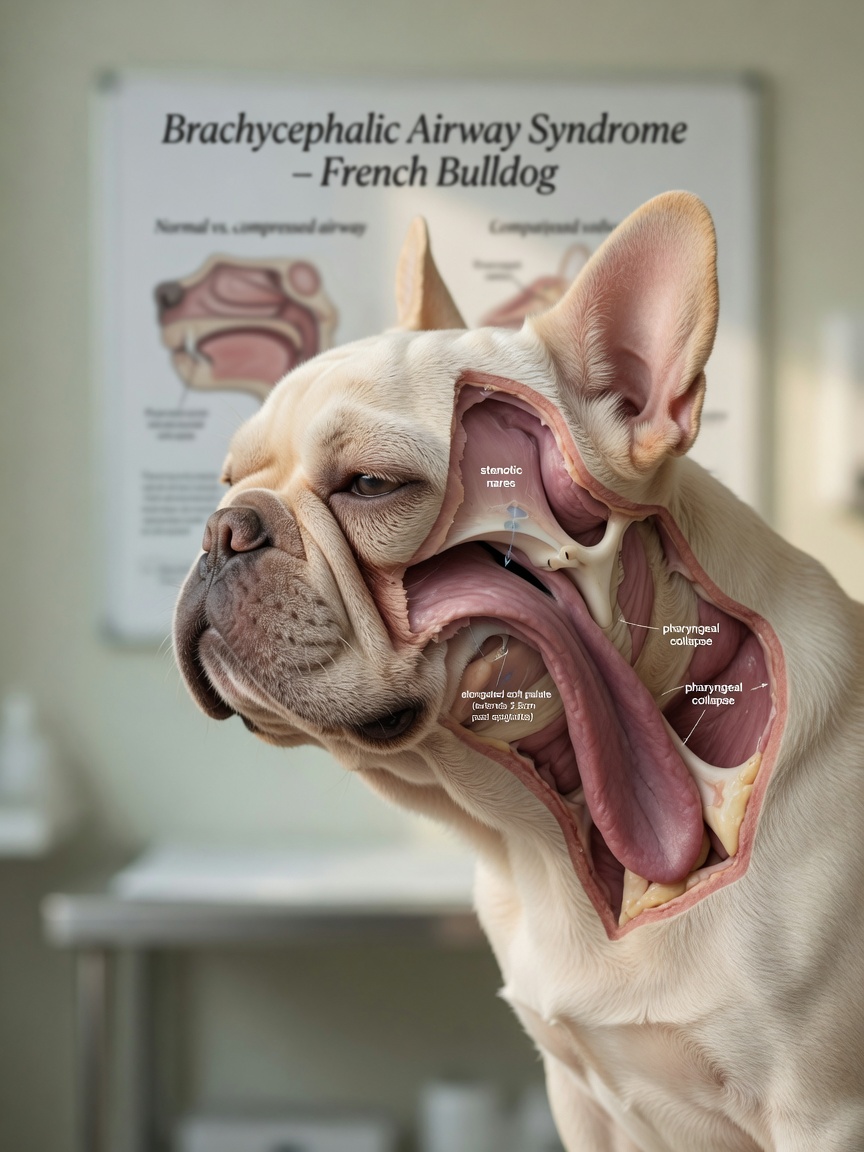
The term brachycephalic comes from Greek roots meaning "short head." Selective breeding over generations has produced a skull shape where the bones of the face are compressed, but the soft tissues inside — the nostrils, the soft palate, and the throat — remain relatively normal in size. The result is a dog with too much tissue crammed into too little space.
BOAS in French Bulldogs typically involves a combination of the following anatomical problems:
- Stenotic nares — abnormally narrow nostrils that restrict airflow
- An elongated soft palate that partially blocks the entrance to the airway
- A hypoplastic trachea — a windpipe that is narrower than normal for the dog's body size
- Everted laryngeal saccules, where tissue inside the larynx gets pulled inward due to chronic negative pressure from struggling to breathe
These issues often compound one another. A dog working harder to pull air through narrow nostrils creates negative pressure that gradually worsens the soft palate and laryngeal problems. This is why BOAS tends to become more severe with age if left unaddressed.
Recognising the Signs
One of the most dangerous misconceptions about French Bulldogs is that their noisy breathing is normal and harmless. Snoring, snorting, and heavy panting are so common in the breed that many owners simply accept them as part of the package. In reality, these sounds are signs that the dog is working hard to breathe, and chronic oxygen deprivation has real consequences for overall health and quality of life.
Signs that warrant a veterinary assessment include:
- Loud snoring or snorting, particularly during light activity or at rest
- Exercise intolerance — becoming breathless or stopping on walks earlier than expected
- Open-mouth breathing or excessive panting in cool weather or without significant exertion
- Blue or purple discolouration of the gums, which is a medical emergency
- Retching or gagging, often associated with gastrointestinal complications of BOAS
- Sleeping with the neck extended or propped up to keep the airway open
Grading and Diagnosis
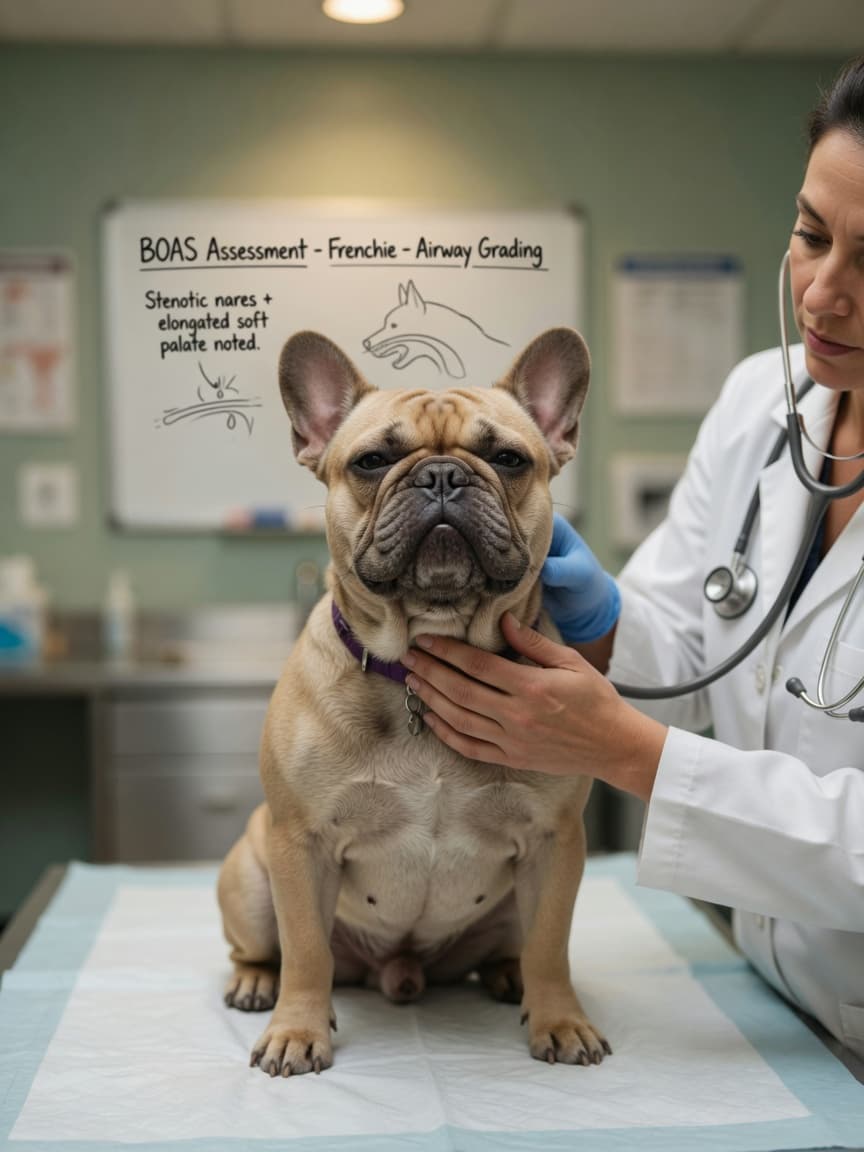
Veterinary assessment of BOAS has become increasingly structured in recent years. The BOAS Research Group at the University of Cambridge developed a functional grading system that classifies dogs from Grade 0 (clinically unaffected) to Grade 3 (severely affected and requiring surgical intervention). This grading involves a standardised exercise test followed by auscultation of the airway.
Your vet may also recommend endoscopy to assess the soft palate and larynx directly, or CT imaging to evaluate the trachea and surrounding structures. These diagnostics are particularly important before making decisions about surgery.
Treatment Options
Mild cases can sometimes be managed conservatively through weight management, avoiding exercise in warm weather, using a harness rather than a collar, and minimising stress. However, conservative management does not correct the underlying anatomy — it simply reduces the demands placed on a compromised airway.
Surgical intervention is recommended for moderate to severe cases, and ideally before secondary changes such as everted saccules develop. The most common procedures include widening the nostrils (rhinoplasty) and shortening the soft palate (staphylectomy). When performed together in younger dogs, the outcomes are generally very good. Research published in the Veterinary Journal has shown that dogs treated surgically before the age of two years have significantly better long-term outcomes than those treated later.
Heat, Exercise, and Daily Management
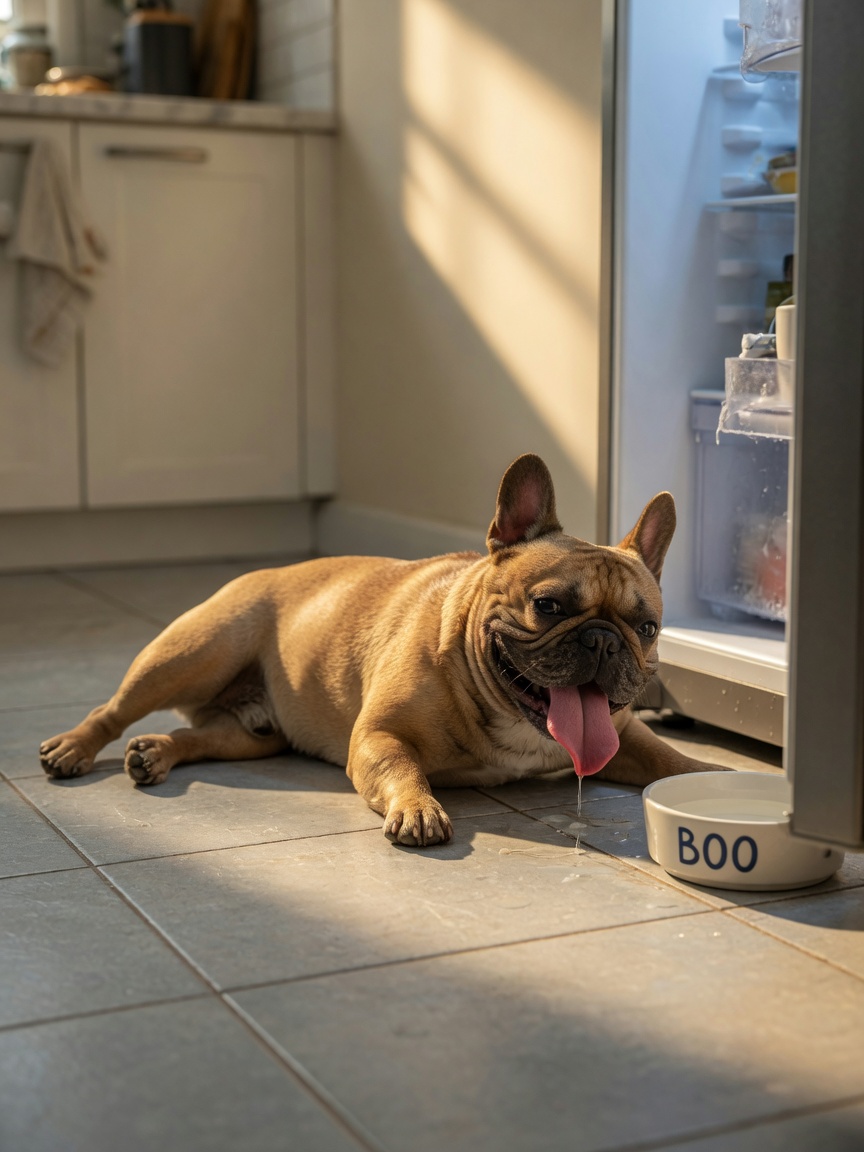
French Bulldogs are at serious risk of heatstroke. Unlike dogs with normal anatomy, they cannot cool themselves efficiently through panting. Even moderate temperatures can become dangerous, and deaths from heatstroke in brachycephalic breeds are unfortunately not uncommon during UK summers.
Practical steps to keep your French Bulldog safe include:
- Walking only during the cooler parts of the day — early morning or evening — during warm weather
- Never leaving your dog in a parked car, even for a few minutes
- Keeping the home cool with fans or air conditioning during hot spells
- Monitoring your dog closely after any exertion for signs of overheating
- Maintaining a healthy body weight, as obesity dramatically worsens respiratory symptoms
The Role of Responsible Breeding
The wider conversation around brachycephalic breeds has intensified in veterinary circles and among animal welfare organisations. The British Veterinary Association has called for prospective owners to consider carefully before purchasing extreme flat-faced dogs, and has advocated for breeding programmes that prioritise health over appearance.
The Kennel Club's Breed Health and Conservation Plan for French Bulldogs includes BOAS screening as a key priority. If you are looking to purchase a French Bulldog puppy, always ask to see evidence that both parents have been BOAS-tested and are graded 0 or 1. This is one of the most meaningful steps you can take to reduce the likelihood of your puppy developing severe problems.
When to Seek Urgent Help
Some situations require immediate veterinary attention. If your French Bulldog is breathing with visible effort, has blue or white gums, collapses, or becomes unresponsive, this is an emergency. Keep the dog cool and calm during transport and contact your vet or an emergency clinic immediately. Airway obstruction can deteriorate rapidly, and prompt treatment genuinely saves lives.
Living with a French Bulldog means committing to regular veterinary monitoring, honest conversations with your vet about your dog's breathing, and being willing to pursue surgical intervention when warranted. With informed ownership and proactive care, many French Bulldogs live happy, comfortable lives.