
Ragdoll Cat Health Guide: Heart Screening and Gentle Handling
Ragdoll cats are adored for their placid temperament, their tendency to go limp when picked up, their striking blue eyes, and their affectionate, dog-like attachment to their owners. They are genuinely wonderful companions — but their popularity has sometimes outpaced awareness of the significant health concerns that come with the breed. Chief among these is a hereditary heart condition that requires active screening and ongoing veterinary attention throughout a Ragdoll's life.
Hypertrophic Cardiomyopathy in Ragdolls
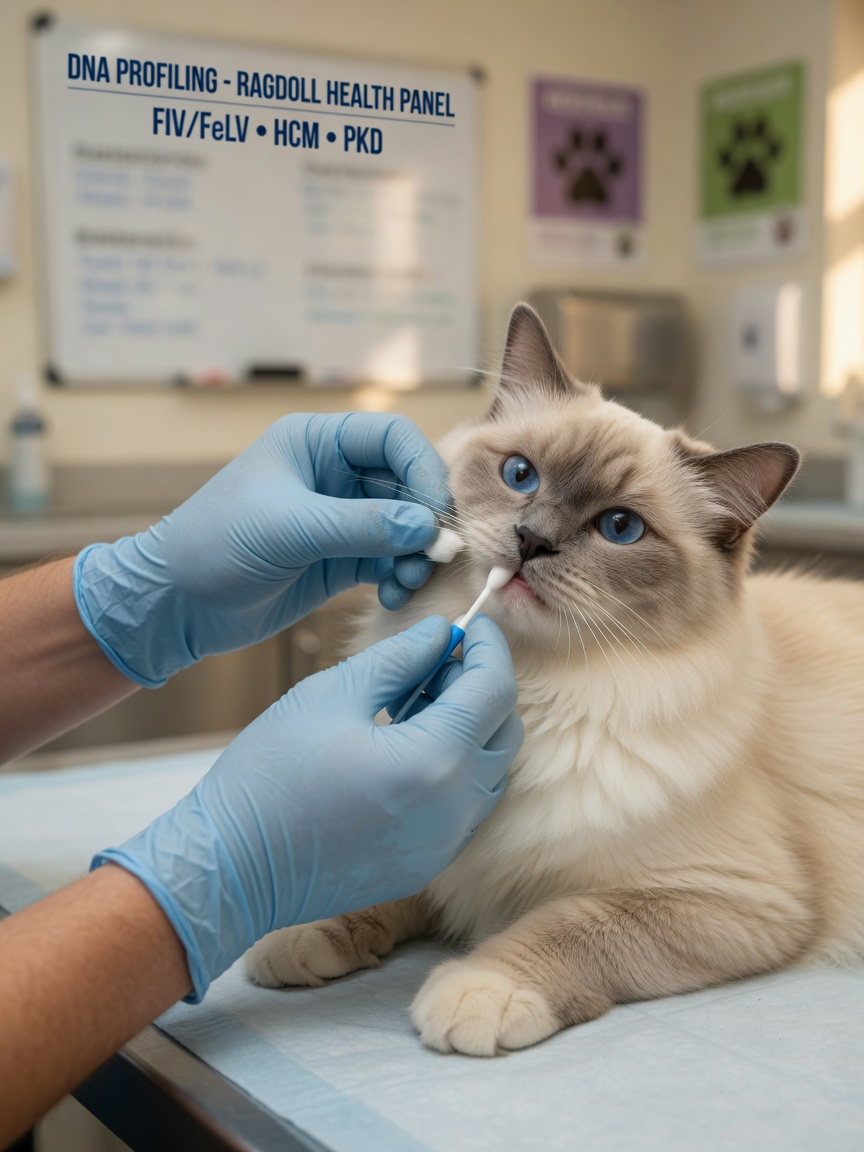
Hypertrophic cardiomyopathy, or HCM, is the leading cause of death in Ragdoll cats. Unlike many other breeds where HCM occurs sporadically, Ragdolls have a known genetic mutation — the MYBPC3 gene variant — that directly predisposes them to the condition. This mutation has been identified in a significant proportion of the Ragdoll population, with some studies suggesting prevalence rates of around 30 percent or higher in unscreened populations.
HCM causes the muscular walls of the left ventricle to thicken progressively. As the walls thicken, the chamber becomes stiffer and less able to fill and pump blood effectively. Over time, this places increasing strain on the heart and can lead to congestive heart failure, arrhythmias, and the formation of blood clots.
The Genetic Test
A DNA test for the Ragdoll-specific MYBPC3 mutation is widely available and can be performed from a simple cheek swab. The test identifies whether a cat carries zero, one, or two copies of the mutation. Cats with two copies — homozygous positive — are at highest risk and tend to develop the disease earlier and more severely. Cats with one copy — heterozygous — are also at elevated risk compared to clear cats, but the progression is often slower.
Critically, a negative genetic test does not entirely rule out HCM. The test only detects the known Ragdoll mutation; HCM can arise from other causes, and clear cats should still receive cardiac monitoring, though perhaps less frequently. Breeders who test their breeding animals and only pair clear-to-clear or clear-to-heterozygous cats significantly reduce the likelihood of producing severely affected offspring.
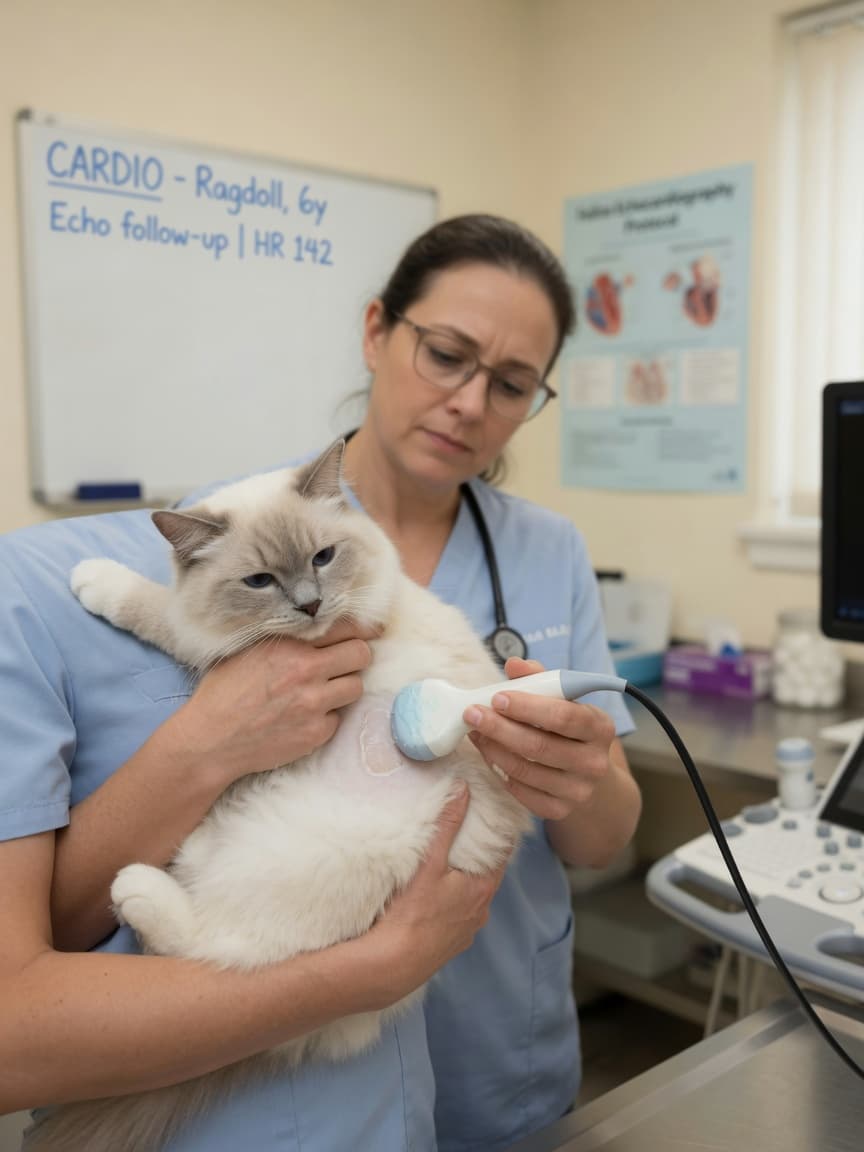
Echocardiography Screening
Genetic testing and echocardiography are complementary, not interchangeable. An echocardiogram (cardiac ultrasound) can detect structural changes in the heart regardless of the underlying cause. For Ragdolls, a baseline echo at around eighteen months to two years of age is generally recommended, with follow-up every one to two years. Cats that are heterozygous or homozygous positive for the MYBPC3 mutation may warrant more frequent monitoring.
Signs of HCM to watch for at home include increased respiratory rate during rest, laboured breathing, lethargy, reluctance to move, and sudden weakness or paralysis of the hindlimbs — which indicates aortic thromboembolism and is a veterinary emergency. Many cats with HCM show no obvious signs until the disease is advanced, which makes scheduled screening rather than symptom-watching the appropriate strategy.
The Ragdoll's Famously Relaxed Temperament: A Health Consideration
The trait that gives Ragdolls their name — the tendency to go floppy and relaxed when held — is part of their natural temperament, not a sign of illness. However, it does create a specific risk that owners should be aware of: Ragdolls may not react to pain or discomfort in the same dramatic way that other cats do. They are exceptionally stoic, and this can mask health problems that a more reactive cat would signal clearly.
This means owners need to be more observant, not less. Regular handling, checking for lumps, changes in muscle tone, and subtle shifts in behaviour or routine are all important. Any change in a Ragdoll's habits — altered appetite, different sleep positions, reduced interaction — warrants attention rather than assumption that the cat is simply having a quiet day.
Gentle Handling and Physical Care
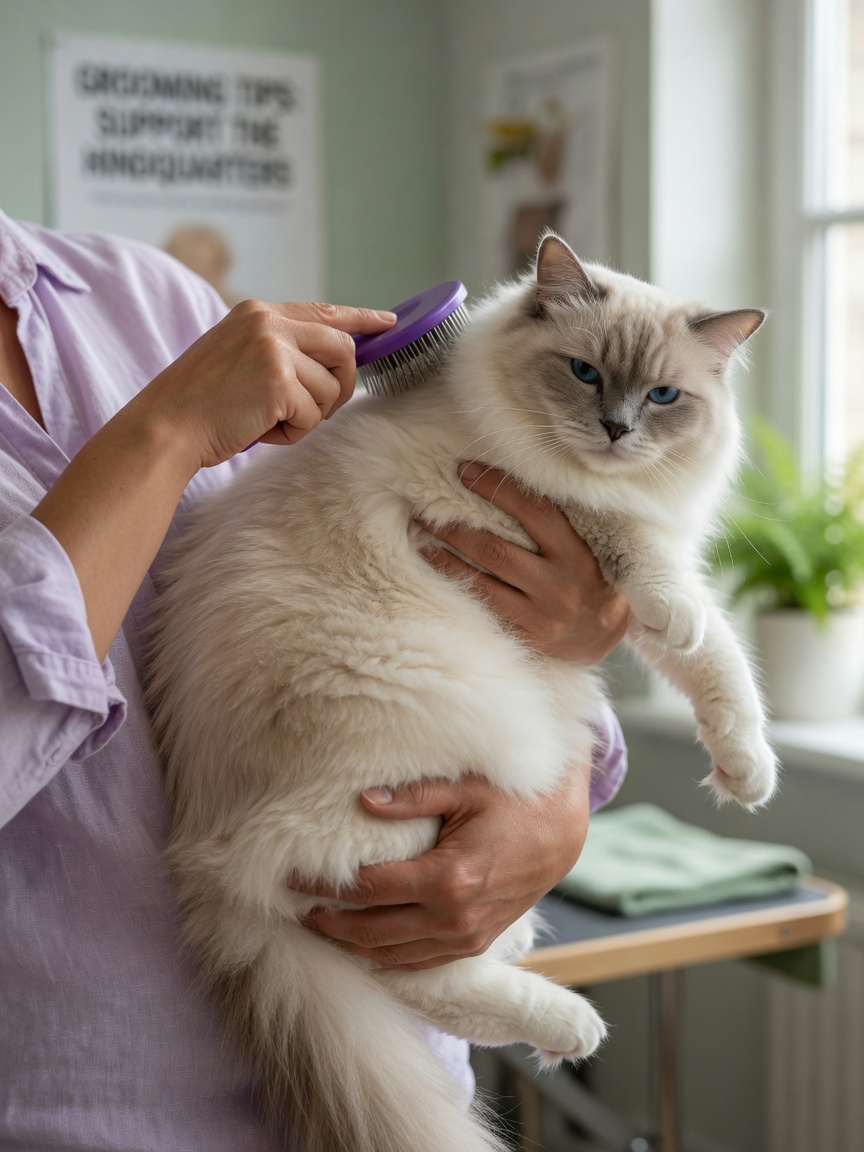
Ragdolls are large cats, with males often reaching six to nine kilograms. Their size combined with their relaxed musculature means they should always be supported fully when carried — never dangling from the front legs or held carelessly. Drops from height are particularly risky in large, less agile breeds, and Ragdolls are not always quick to right themselves as more athletic cats might be.
Their semi-long coat requires regular grooming to prevent matting, particularly behind the ears, under the armpits, and around the hindquarters. Weekly brushing is a minimum, and many owners find daily sessions easier to maintain. Mats left unchecked can cause skin irritation and hide underlying skin problems. Ragdolls generally tolerate grooming well when introduced to it gently as kittens.
Urinary Tract Health
Like many pedigree cats, Ragdolls appear to have a somewhat elevated risk of lower urinary tract issues, including the formation of urinary crystals and stones. Feeding a diet with good moisture content — wet food rather than predominantly dry — supports urinary tract health by promoting adequate hydration and more dilute urine.
Signs of urinary problems include straining to urinate, visiting the litter tray frequently with little output, blood in the urine, and crying out when attempting to urinate. In male cats particularly, a urinary blockage is a life-threatening emergency requiring immediate veterinary attention.
Weight Management
The Ragdoll's calm, indoor-oriented nature combined with its large frame can predispose the breed to weight gain if diet and activity are not managed thoughtfully. Obesity in cats significantly increases the risk of diabetes, joint problems, and cardiovascular strain — the last of which is particularly concerning in a breed already predisposed to heart disease.
Feeding measured meals rather than free-feeding, providing puzzle feeders to slow eating and encourage activity, and ensuring daily interactive play sessions all help maintain healthy body condition. Your vet can provide a target weight range and help you assess body condition score at each check-up.
With consistent cardiac screening, attentive observation, appropriate diet, and regular veterinary care, Ragdolls can live long and deeply affectionate lives — often well into their mid-teens. They are rewarding companions for owners who are prepared to take their health needs seriously.