
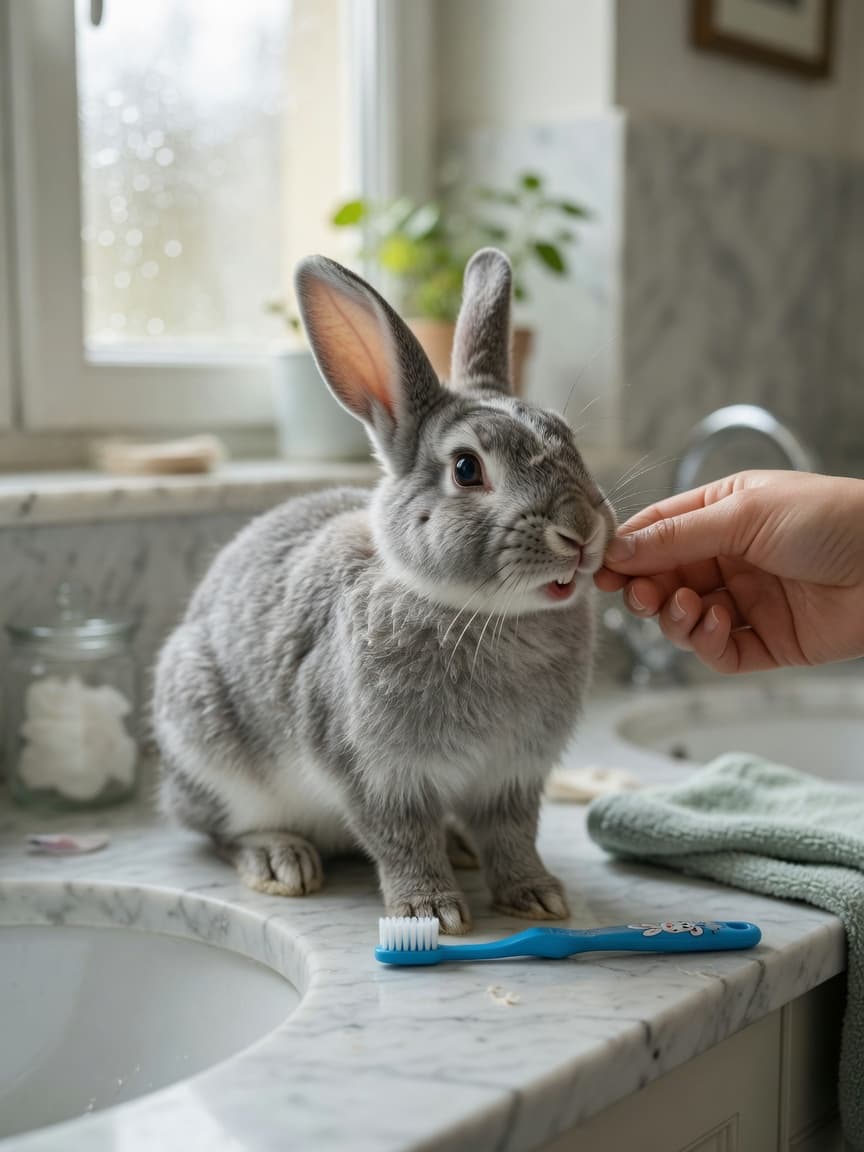
Why Rabbit Dental Disease Is So Common
Rabbits have a dental anatomy unlike most other domestic pets. All of their teeth — both incisors at the front and the cheek teeth (premolars and molars) further back — are elodont, meaning they grow continuously throughout the rabbit's life. In the wild, a rabbit's diet of tough grasses, bark, and fibrous plant material provides the constant, side-to-side chewing action needed to wear these teeth down at the same rate they grow.
In domestic settings, where many rabbits receive insufficient hay and too many soft foods, this natural wear does not occur. Teeth grow faster than they are worn down, leading to a cascade of problems that collectively fall under the term rabbit dental disease. It is one of the most frequent reasons rabbits are presented to veterinary practices across Europe, and in many cases it goes undetected until it has progressed to a serious and painful stage.
Understanding the Anatomy: Incisors and Cheek Teeth
Rabbits have four incisor teeth at the front of the mouth — two large uppers, two smaller lowers, and a pair of small peg teeth behind the upper incisors. Behind these, further back in the mouth and invisible without examination equipment, are the cheek teeth: six premolars and six molars on each side. These cheek teeth are responsible for the majority of grinding, and it is here that the most clinically significant dental disease tends to occur.
When cheek teeth do not wear evenly, sharp points or spurs develop along the edges. These spurs cut into the tongue and the inside of the cheeks, causing pain with every mouthful. The roots of the cheek teeth, which are very long and extend deep into the jaw and skull, can become elongated or develop abscesses. Malocclusion — where teeth do not meet in correct alignment — can affect both incisors and cheek teeth and often has a genetic component.
Which Breeds Are Most Affected
While dental disease can affect any rabbit, dwarf breeds and lop-eared breeds are significantly overrepresented. The selective breeding that produces the shortened, flattened skull shape characteristic of these rabbits results in the same number of teeth being compressed into a smaller space. This causes abnormal tooth alignment from the outset, making malocclusion and spur development almost inevitable over time.
Breeds such as Netherlanddwarf, Holland Lop, Mini Lop, and Lionhead rabbits all carry this increased dental risk. Owners of these breeds should be particularly vigilant about signs of dental problems and should discuss regular dental health monitoring with their vet.
Recognising the Signs of Dental Disease
One of the challenges of rabbit dental disease is that the signs are often subtle, particularly in the early stages. Rabbits are prey animals and will continue to attempt to eat even when experiencing significant oral pain. By the time obvious signs appear, disease is frequently well advanced. Signs to watch for include:
- Drooling or a consistently wet chin — saliva overflow due to pain or abnormal tooth positioning
- Dropping food — the rabbit picks up food and chews briefly, then drops it (known as quidding)
- Weight loss or a reduction in food intake, particularly a preference for soft foods over hay
- Eye discharge or weeping eyes — elongated upper cheek tooth roots can compress the nasolacrimal duct, causing a persistent watery or purulent discharge from one or both eyes
- Facial swelling, particularly along the lower jaw, which may indicate a root abscess
- A change in the texture or composition of faecal droppings, often becoming smaller or fewer in number due to reduced fibre intake
- Reduced grooming, matted fur, or caecotrophs (soft droppings) left uneaten
Any of these signs should prompt a prompt veterinary appointment. Dental disease is progressive and painful; early intervention leads to better outcomes.
How Vets Diagnose Dental Disease
A conscious rabbit can be checked briefly for obvious incisor abnormalities, but adequate examination of the cheek teeth requires sedation or a general anaesthetic. The back of a rabbit's mouth is narrow and deep, and any attempt to examine it thoroughly in an awake rabbit causes significant stress and yields incomplete information. Your vet will use a specialised scope or otoscope under sedation to visualise the cheek teeth and look for spurs, bleeding, food pocketing, or soft tissue trauma.
Skull radiographs are essential for assessing root length, root abscesses, and bone involvement. In many referral centres, CT scanning (computed tomography) is now the gold standard for rabbit dental assessment, providing detailed three-dimensional images of the tooth roots, surrounding bone, and any abscess cavities that cannot be fully visualised on standard X-rays.
Treatment: A Long-Term Commitment
Treatment for rabbit dental disease depends on the type and severity of the problem, but owners should be prepared for the likelihood of repeated procedures throughout their rabbit's life.
Dental Filing and Burring
The most common treatment for cheek tooth spurs is filing or burring under general anaesthesia. A specialist dental burr is used to shorten and smooth the points, relieving the trauma to the tongue and cheeks. In mild cases this may be required only once or twice a year. In more severe or rapidly progressive cases, a rabbit may require dental work every six to eight weeks. This is demanding for both the rabbit and the owner, but it remains the mainstay of management for many cases.
Tooth Extraction
In some cases, particularly where teeth are severely maloccluded, structurally unsound, or causing irreversible problems, extraction is the recommended course of action. Rabbit tooth extraction is a technically demanding procedure, particularly for cheek teeth with their deep, curved roots.
Abscess Treatment
Rabbit jaw abscesses are notoriously difficult to treat and have a guarded prognosis. Unlike the pus in cat or dog abscesses, rabbit abscess material is thick and caseous, making it impossible to drain in the conventional sense. Treatment typically involves surgical removal of the abscess wall and associated tooth, thorough debridement, and prolonged antibiotic therapy. Pasteurella multocida is one of the most common bacterial species involved. Some cases require multiple surgeries or long-term antibiotic treatment over months.
Prevention: The Role of Hay
Unlimited good-quality hay — ideally timothy or meadow hay — is the cornerstone of rabbit dental health. The long silica fibres in hay require extended side-to-side chewing, which provides the grinding action that wears cheek teeth evenly. Hay should make up at least 80 percent of a rabbit's diet.
Pellets should be offered only in small quantities — approximately one tablespoon per kilogram of body weight daily. Muesli-style mixed diets should be avoided altogether; rabbits selectively eat the starchy, sweet components and leave the fibrous parts, leading to uneven chewing patterns and poor dental wear. Fresh leafy greens can complement the diet but cannot replace hay's mechanical benefits.
While diet cannot reverse genetic malocclusion in predisposed breeds, it significantly slows disease progression and reduces the frequency of interventions needed. Combined with regular veterinary dental checks, a hay-rich diet gives your rabbit the best chance of a comfortable, healthy life.