

Your Puppy's First Night at Home: What to Expect
Bringing a puppy home for the first time is exciting, but the first night can be a genuine shock — for you and for your puppy. Understanding what your puppy is experiencing, and preparing properly in advance, makes an enormous difference. Most puppies settle into a good sleep routine within one to two weeks if you approach the first few nights with patience and consistency.
What Your Puppy Is Going Through
Your puppy has just left everything familiar: their mother, their litter mates, the smells and sounds of the only home they have ever known. The crying and whimpering you will almost certainly hear on the first night is not misbehaviour — it is a normal, instinctive response to isolation from the social group. In the wild, a puppy separated from the litter would be in genuine danger, so vocalising loudly is hardwired. Knowing this helps you respond with compassion rather than frustration.
Preparing the Space
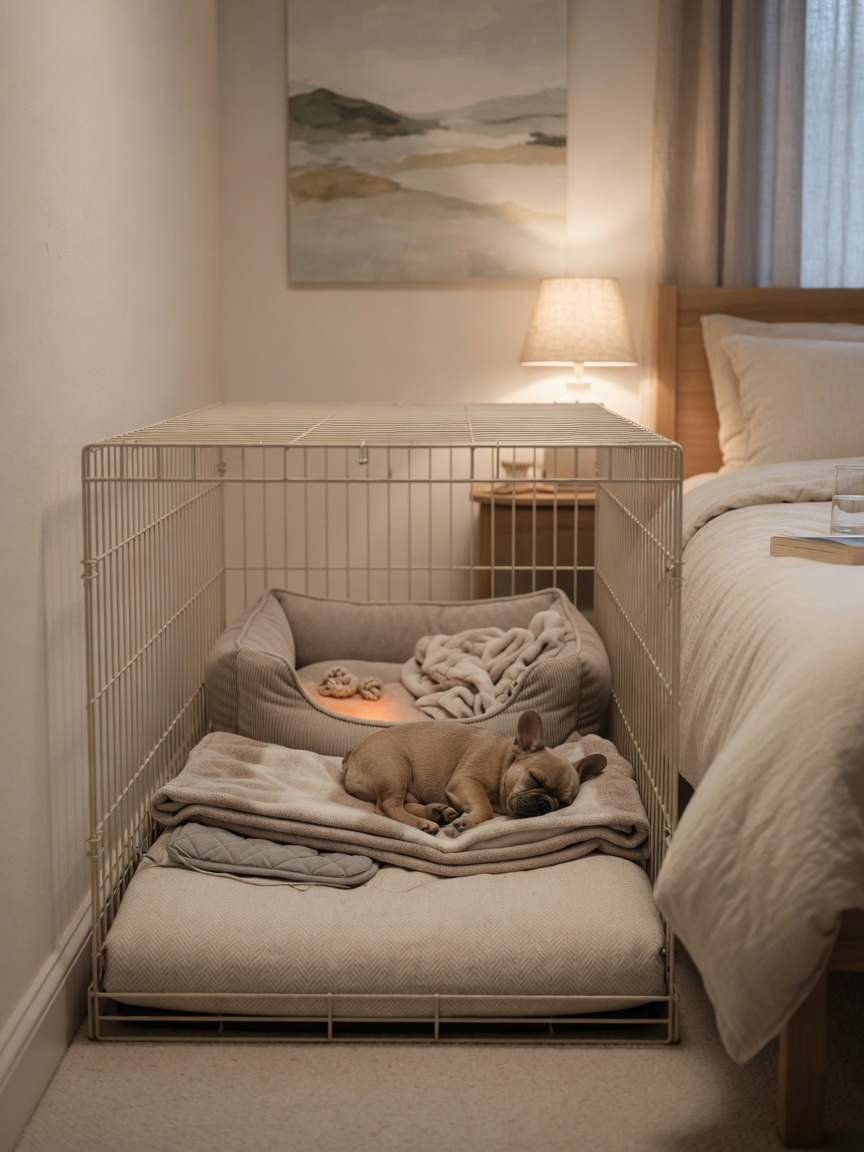
Decide before your puppy arrives where they will sleep. A crate or a small, enclosed sleeping space works well because it mimics the snug, den-like environment puppies feel safest in. Place the crate in your bedroom, or as close to it as practical. Being able to hear and smell you significantly reduces a puppy's distress. Leaving them alone in a separate room on the first night tends to produce longer and more intense crying and can set a difficult precedent.
Line the crate with soft, comfortable bedding. Zooplus offers a wide range of puppy beds and crate pads in different sizes, including machine-washable options that are very practical in the early weeks. Choose bedding that is easy to clean, as accidents overnight are common.
Bring Something From the Breeder
Before you collect your puppy, ask the breeder for a small item of bedding or a cloth that carries the scent of the mother and litter mates. Placing this in your puppy's crate on the first night provides significant comfort. Scent is the most powerful sense dogs have, and something familiar from the old environment tells your puppy that they are not completely alone in an alien world. Some breeders will do this without being asked; if yours does not, it is worth requesting specifically.
Feeding Timing on the First Evening
Avoid feeding your puppy too close to bedtime. A good approach is to give their last meal at least two to three hours before you plan to go to sleep. This gives their digestive system time to work before the night and reduces the chance of needing to go to the toilet in the small hours. Make sure fresh water is available throughout the day, but you can remove it about an hour before bedtime to help stretch the overnight gap. Always take your puppy outside immediately before placing them in the crate for the night.
A Calm Bedtime Routine
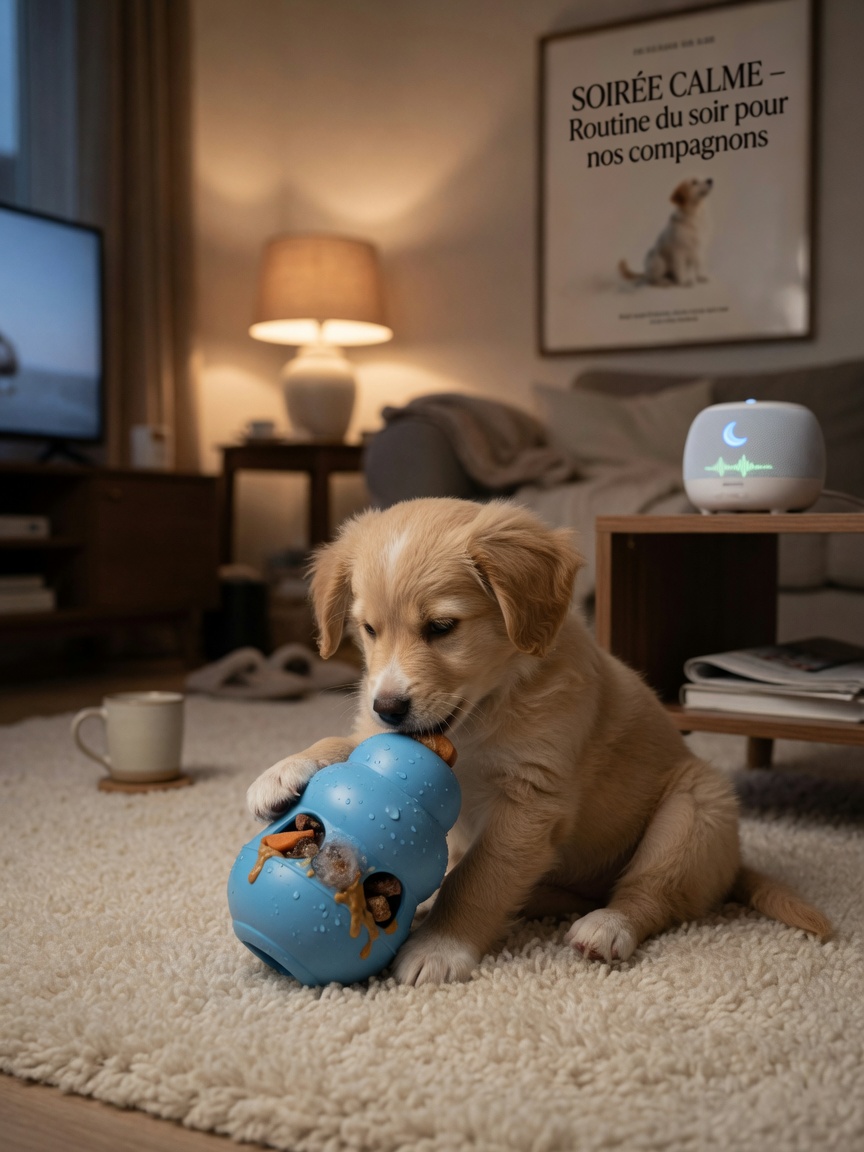
Begin winding down activity about 30 minutes before bed. Lower the energy in the household, reduce stimulation, and have a final, calm play session followed by a quiet cuddle or gentle handling. Then take your puppy outside for a final toilet trip, return inside calmly, and place them in the crate with a chew or a food-stuffed toy. A toy designed to be stuffed with food and frozen beforehand can occupy a puppy for long enough to help them settle without relying on your presence.
A low, quiet radio or a white noise machine near the crate can also be helpful — the background sound reduces the contrast between silence and any household noises that might startle a sleeping puppy.
Managing Crying: Comfort Versus Reinforcing Anxiety
This is the question every new puppy owner wrestles with. If you respond to every whimper by taking your puppy out of the crate, you risk teaching them that crying produces company, which makes settling harder over time. However, leaving a very young puppy to cry without any response can increase rather than reduce distress and damages trust in the early critical period.
A balanced approach: if your puppy cries, wait a short moment to see if they settle. If the crying escalates, place your hand on the crate door and speak very quietly and calmly — not excitedly — to let them know you are there. If they need a night-time toilet trip (which they will for the first several weeks), take them out quickly and with minimal fuss, return them to the crate, and avoid turning it into a play or social session. The goal is to be reassuring without being stimulating.
Temperature Needs
Puppies lose body heat more quickly than adult dogs and need a warmer environment, particularly at night. The room should be comfortably warm — around 20 to 22 degrees Celsius is appropriate. A low-level heat pad designed for pets, placed under one half of the crate bedding (so your puppy can move off it if they get too warm), can be very helpful in the early weeks. Never use human electric blankets, which can overheat.
What to Expect in the First Week
The first night is typically the hardest. Most puppies improve noticeably from night two or three as they begin to recognise the routine and find the new environment less threatening. By the end of the first week, many puppies are settling within 10 to 20 minutes of being placed in the crate. Full, uninterrupted nights are unlikely until your puppy is around twelve to sixteen weeks and has the physical capacity to hold on longer.
- Night one to two: expect crying, frequent waking, and toilet trips
- Night three to five: most puppies begin to settle faster
- Week two onwards: a recognisable sleep pattern usually starts to emerge
Building Good Habits From the Start
The investment you make in these first nights pays off quickly. Puppies that learn from the beginning that bedtime means crate time, and that the crate is a safe, comfortable place, become dogs that reliably and happily go to their own space at night. Zooplus has a broad range of calming products, including pheromone diffusers and calming sprays, that many owners find helpful in the first few weeks alongside the consistent routine described above.
Be realistic about the timeline, stay consistent, and remember that nearly every dog owner who has been through this period looks back and finds it passed faster than it felt at the time.