
The First Night Is Hard — But It Does Not Have to Be a Disaster
Around 60% of new puppy owners report their first night at home as the most stressful part of the entire early puppyhood period. That statistic is not surprising. A puppy who has spent every night of its short life nestled with its mother and littermates is suddenly alone in an unfamiliar space, surrounded by strange smells and silence. Some crying is not just normal — it is entirely expected. What you do in response makes all the difference.
What Is Actually Happening in Your Puppy's Brain

Puppies between 8 and 12 weeks are in a sensitive developmental window. Separation from the litter triggers a stress response that is genuinely physiological, not manipulative. Cortisol rises, body temperature drops slightly without the warmth of siblings, and the puppy vocalises to try to restore contact. Understanding this as a biological need rather than bad behaviour sets the right tone from the outset.
Setting Up the Sleep Space Before Your Puppy Arrives
Preparation done before the puppy crosses the threshold makes the night considerably smoother.
Choose the Right Location
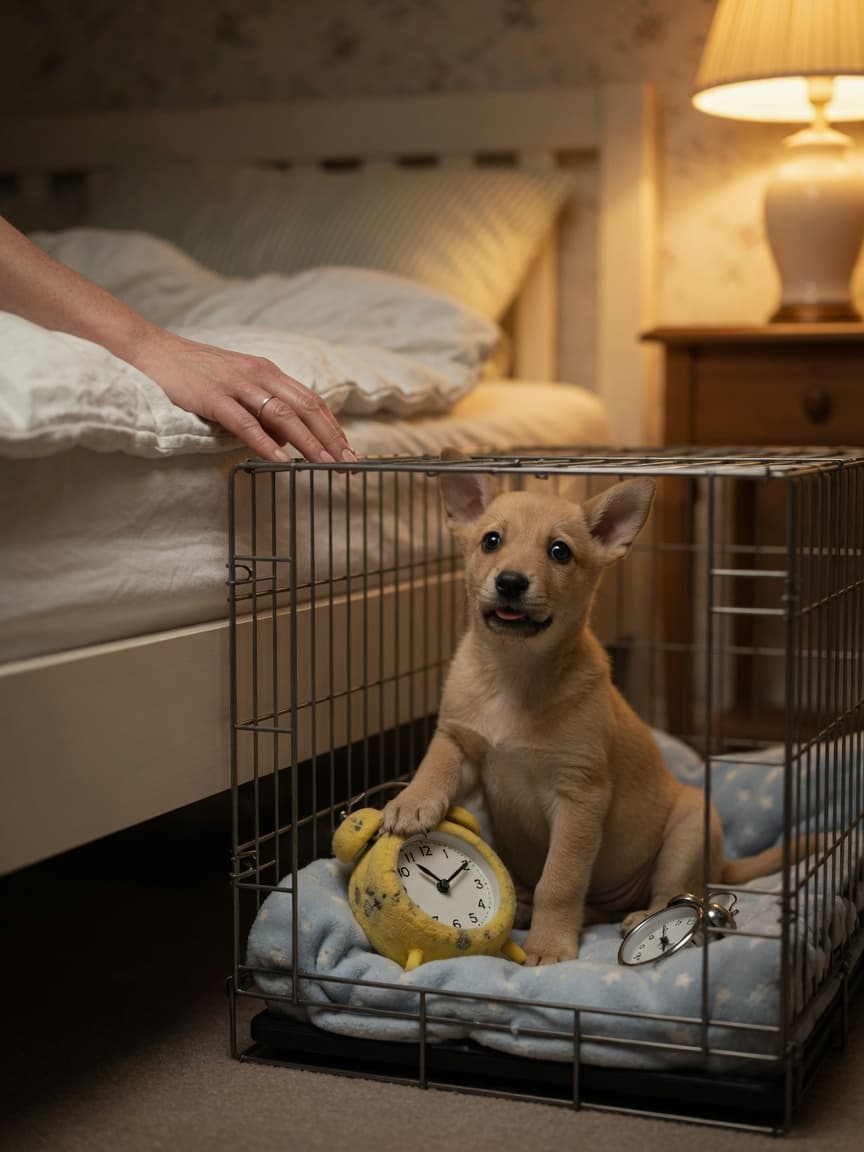
For the first few nights, the sleep space should be close to where you sleep — not necessarily in the bed, but within earshot. A crate or puppy pen in the bedroom allows the puppy to hear your breathing and sense your presence. This single decision reduces overnight crying more than almost any other intervention.
Warmth and Comfort
A low-wattage pet-safe heat pad placed under half the bedding gives the puppy a warm zone to settle into. A ticking clock wrapped in a fleece — an old trick that mimics the mother's heartbeat — has genuine anecdotal support, though results vary. More reliably, a piece of cloth that smells of the litter, requested from the breeder at collection, provides meaningful olfactory comfort.
Size Matters
The sleep space should feel snug, not cavernous. A crate large enough for the adult dog but used immediately will feel overwhelming. Use a divider to create a smaller den-like area for now.
The Evening Routine on Night One
Keeping the first evening calm and low-stimulation is important. Resist the temptation to invite everyone over to meet the puppy. A quiet evening with minimal handling allows the puppy's stress hormones to begin settling before bedtime.
Feed the last meal at least two hours before sleep. Take the puppy outside to toilet immediately before putting it to bed — consistency here begins building the house training association from day one. Once in the crate, keep goodbyes brief and neutral. Prolonged fussing communicates anxiety.
When the Crying Starts
Most puppies will vocalise at some point during the night. The question is how to respond without accidentally training the puppy that crying produces company on demand.
The First Hour
Give the puppy a few minutes before responding. Brief, low-key reassurance — a calm voice, a hand briefly placed on the crate — is appropriate. Avoid picking the puppy up unless it is clearly in distress. Return to your bed and repeat if needed.
Middle of the Night Toilet Needs
Puppies under 12 weeks typically cannot hold their bladder for more than three to four hours. Set an alarm and take the puppy outside quietly and without fuss. No play, no extended interaction — toilet, then straight back to the crate. Treat it as a boring necessity and the puppy will begin to do the same.
What Not to Do on the First Night
- Do not let the puppy sleep in the bed unless you intend to continue this long-term — changing the arrangement later is harder than setting the right precedent from the start.
- Do not ignore sustained distress. There is a difference between settling whimpers and genuine panic. The latter warrants a calm response.
- Do not punish vocalising. The puppy is communicating a real need and does not yet have the capacity to understand the correction.
- Do not exhaust the puppy with intense play before bed hoping it will sleep longer — overtired puppies are often harder to settle, not easier.
What to Expect Over the First Week
Most puppies show meaningful improvement between nights three and five. By the end of the first week, the majority are settling within 20 to 30 minutes of being put to bed, and overnight toilet trips become predictable rather than chaotic. If your puppy is showing no improvement after seven days, or if distress seems extreme and persistent, speak to your vet to rule out underlying anxiety or health concerns.
A Quick Summary for Night One
- Set up a small, warm, snug sleep space close to your bed before the puppy arrives.
- Keep the first evening calm and low-stimulation.
- Take the puppy outside immediately before bed and again every three to four hours overnight.
- Respond to crying calmly and briefly — do not ignore sustained distress, but avoid reinforcing it with extended attention.
- Expect improvement by nights three to five.
- Consult your vet if distress is severe or persists beyond the first week.
Night one is rarely perfect. But with the right setup and realistic expectations, it is very manageable — and it gets better quickly.