
Prevention Costs Less Than Treatment — In Every Sense
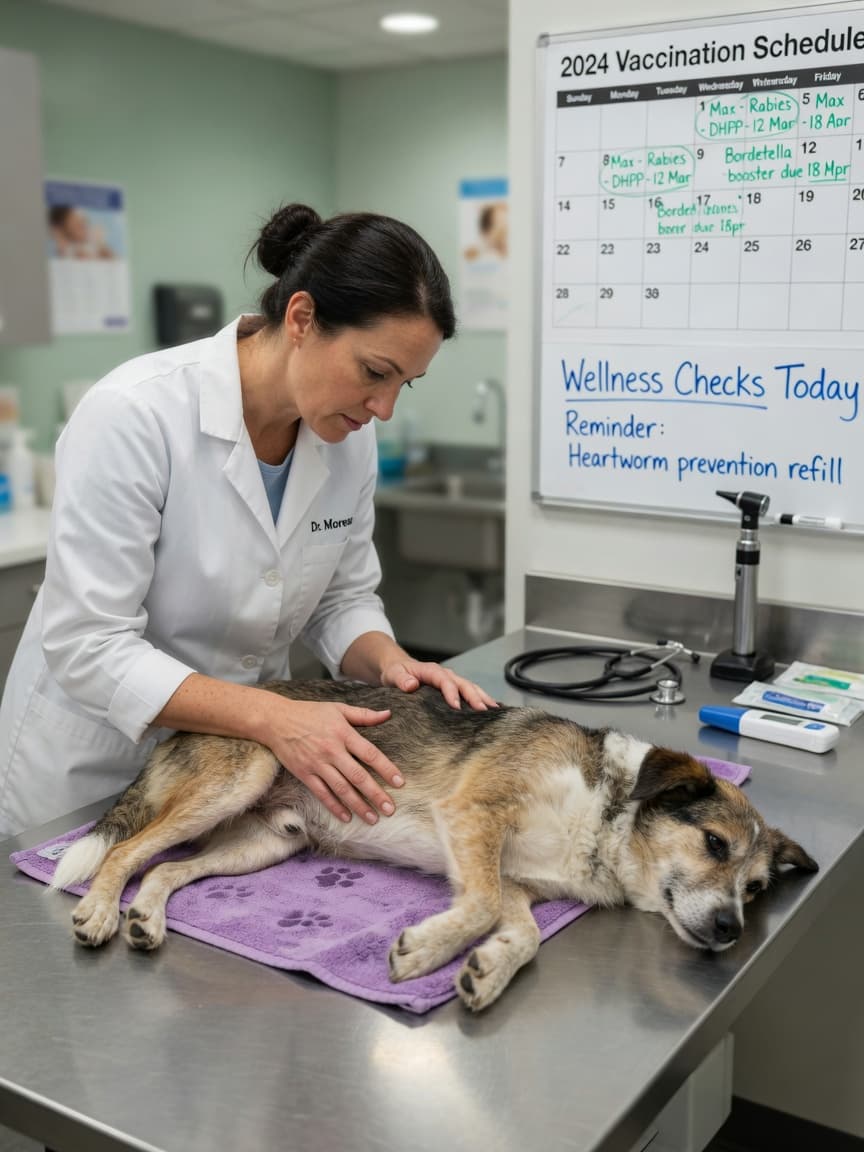
A dog that receives structured preventive care across its lifetime is statistically less likely to suffer from advanced dental disease, obesity-related conditions, and late-diagnosed cancers. Yet most dogs in the UK see a vet reactively — only when something is visibly wrong. A life-stage checklist does not replace your vet's clinical judgement, but it gives you a framework for what to expect and ask for at each visit.
Puppies: Birth to 12 Months
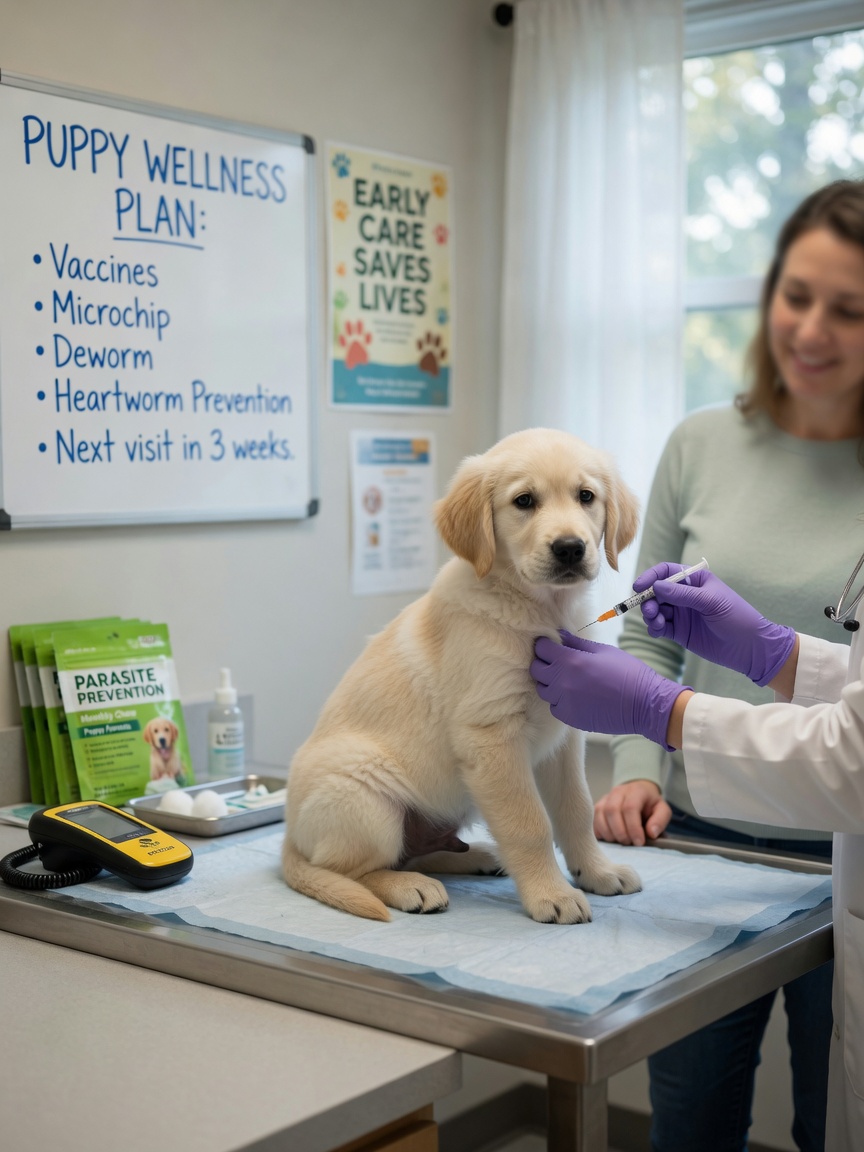
The first year of a dog's life involves more veterinary contact than almost any subsequent period. The immune system is immature, infectious disease risk is high, and several foundational interventions must happen within specific windows.
Vaccination Schedule
- First core vaccines at 8 weeks (distemper, hepatitis, parvovirus, leptospirosis)
- Booster at 10–12 weeks
- Final puppy booster at 14–16 weeks
- Kennel cough (Bordetella) vaccine if your dog will attend kennels, daycare, or training classes
Other First-Year Priorities
- Microchipping — legally required in England, Scotland, and Wales before 8 weeks
- Parasite prevention: establish a flea, tick, and worming protocol with your vet
- Neutering discussion at 4–6 months; timing varies by breed and size
- First dental check and guidance on tooth brushing
- Nutritional assessment and feeding plan appropriate to breed and projected adult size
- Socialisation and behaviour discussion — early behavioural intervention prevents significant problems later
Young Adults: 1 to 3 Years
Once the puppy vaccination course is complete, annual booster vaccinations maintain protection. At this stage, the focus shifts to establishing healthy baselines and monitoring for any early signs of breed-specific conditions.
- Annual vaccination boosters (your vet will advise on the specific antigens required each year)
- Annual physical examination including weight, dental scoring, and joint assessment
- Ongoing parasite prevention review — products may need updating based on lifestyle changes
- Weight management: dogs between 1 and 3 years are prone to gradual weight gain, particularly after neutering
- Breed-specific screening discussion — hip and elbow scoring for predisposed breeds, cardiac checks for certain breeds
Middle-Aged Dogs: 4 to 7 Years
This stage is often overlooked because dogs appear healthy. It is precisely this window where preventive monitoring pays dividends. Dental disease, for example, is present in the majority of dogs over five and is largely preventable with consistent oral hygiene and professional cleaning when indicated.
Checklist for This Life Stage
- Annual wellness examination
- Dental examination and professional cleaning if calculus accumulation warrants it
- Blood pressure check for breeds predisposed to hypertension
- Baseline bloodwork if not yet done — kidney and liver values, blood cell counts, thyroid in susceptible breeds
- Weight and body condition scoring: aim for a consistent healthy score, not just a stable number on the scales
- Joint health assessment, particularly for larger breeds — early osteoarthritis is manageable if caught before it limits mobility significantly
- Diet review: energy requirements typically decline in mid-life, and feeding amounts should be adjusted accordingly
Senior Dogs: 8 Years and Above
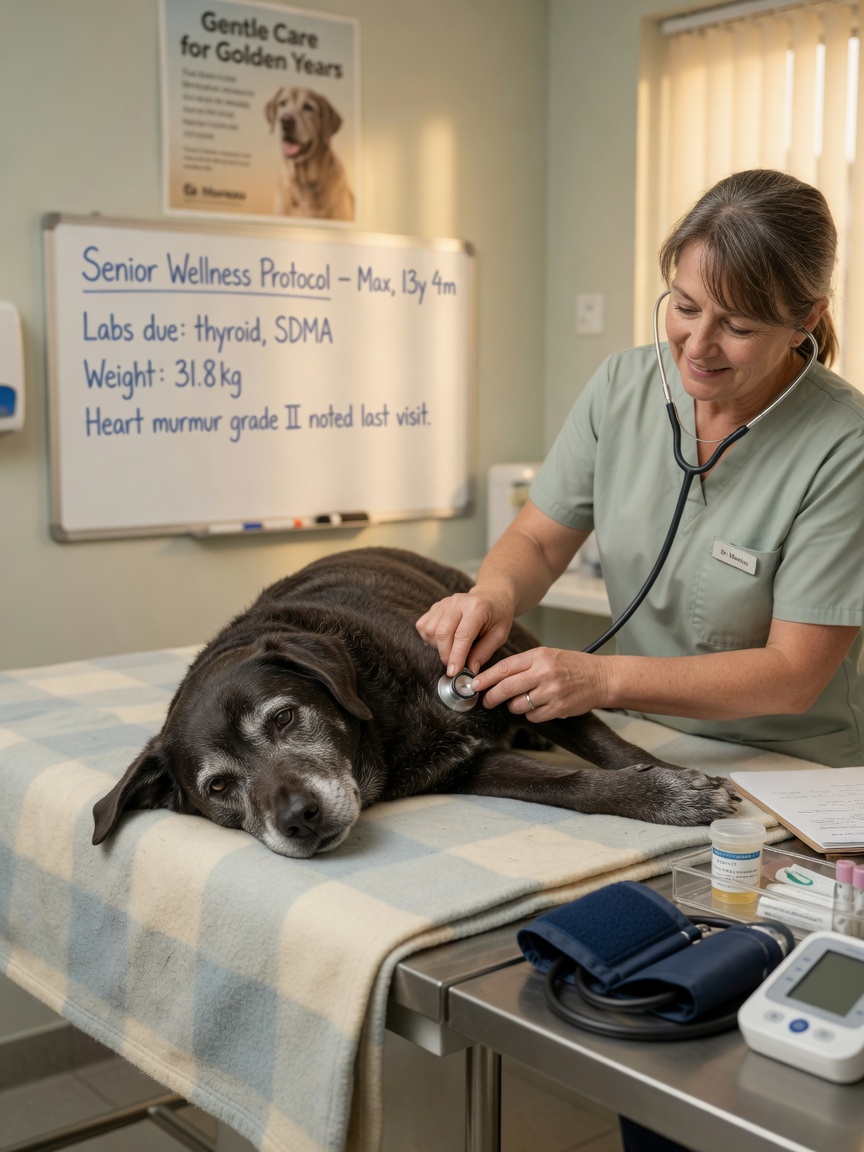
The transition to senior status varies by size. Giant breeds may be considered senior from 6–7 years; small breeds often not until 10–11 years. From this point, twice-yearly veterinary examinations are appropriate for most dogs, and annual bloodwork becomes standard rather than optional.
Senior Preventive Checklist
- Biannual physical examinations
- Annual bloodwork: full biochemistry panel, complete blood count, and thyroid hormone
- Urinalysis to screen for kidney disease, urinary tract infection, and diabetes
- Blood pressure measurement
- Dental assessment — extractions in older dogs are common but carry anaesthetic risk, making prevention earlier in life especially important
- Mobility and pain assessment: signs of chronic pain in dogs are often subtle and easily missed
- Cognitive assessment: canine cognitive dysfunction is underdiagnosed and has management options when identified early
- Nutritional review for senior-specific needs, including joint support, digestive health, and appropriate protein levels
Year-Round Responsibilities Between Vet Visits
Preventive care does not begin and end at the surgery door. A home routine that supports your dog's health includes monthly parasite treatments where indicated, weekly dental hygiene, regular weight monitoring, and attentive observation of daily habits. Changes in water intake, urination frequency, appetite, energy levels, or behaviour are worth noting and reporting.
Keep a simple health log. When you visit the vet with documented observations — "she has been drinking more for three weeks" or "he has been slow on stairs since February" — you give the clinician far more to work with than a general "he seems a bit off."
Your Core Preventive Checklist at a Glance
- Puppies: vaccines, microchip, parasite protocol, neutering, socialisation, dental start
- Young adults: annual boosters, weight management, breed screening
- Middle-aged: dental cleaning, baseline bloods, joint check, diet review
- Seniors: biannual exams, annual bloodwork, urinalysis, pain and cognitive assessment
- Every age: home observation, parasite prevention, dental hygiene, weight monitoring
Talk to your vet about which items on this list are most pressing for your dog's specific breed, size, and history. Preventive care is a conversation, not a one-size protocol.