
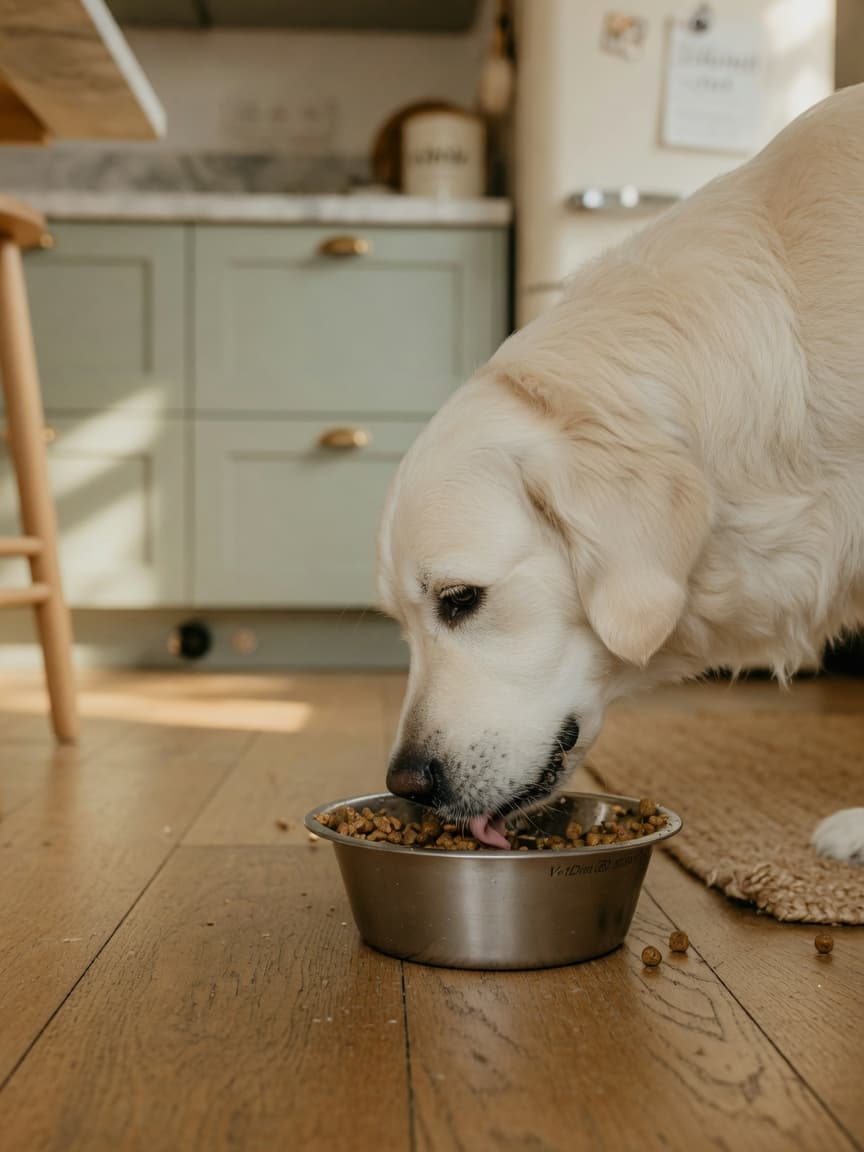
Prescription Pet Food Costs Three Times More — Is It Justified?
Prescription veterinary diets occupy a premium tier of the pet food market, often costing two to three times the price of high-quality commercial alternatives. They require veterinary authorisation to purchase, carry clinical branding, and are backed by research that most mainstream brands cannot match. For certain conditions, they are genuinely irreplaceable. For others, the premium is paying for a label rather than a meaningfully superior formulation. Knowing the difference matters, particularly over months or years of management.
What Makes a Diet "Prescription"
The prescription requirement exists not because the food contains controlled substances, but because the nutritional modifications it contains are intended to treat or manage a diagnosed medical condition and could be harmful if used inappropriately. A renal diet restricted in phosphorus and protein could harm a healthy growing puppy. A urinary dissolution diet formulated to acidify urine is inappropriate for cats with calcium oxalate stones. The gatekeeping function is legitimate, even if it is sometimes applied loosely in practice.
Manufacturers of veterinary diets also invest significantly in clinical research — feeding trials, long-term studies, palatability testing in ill animals — that general pet food brands rarely commission. This research base, while not always superior in outcome to well-formulated commercial foods, does provide a level of evidence accountability that matters in disease management.
Conditions Where Prescription Diets Have Clear Clinical Value
Chronic Kidney Disease
Veterinary renal diets reduce dietary phosphorus, adjust protein quality, modify potassium and sodium content, and typically contain added omega-3 fatty acids. Multiple studies show that cats and dogs with chronic kidney disease fed veterinary renal diets survive significantly longer than those on standard commercial food. This is one of the best-supported applications of prescription nutrition, and the clinical evidence is compelling enough that attempting to replicate the formulation at home or with standard food carries meaningful risk.
Struvite Urolithiasis
Struvite stones in cats can be dissolved non-surgically using specific prescription dissolution diets that acidify urine and restrict magnesium. This is a precise formulation task — the pH target is narrow and consistency matters. Generic alternatives are unlikely to achieve reliable stone dissolution and may not prevent recurrence as effectively as formulations validated for this purpose.
Severe Food Allergies Requiring Hydrolysed Protein
When a pet has developed reactions to multiple protein sources and novel proteins are genuinely unavailable, veterinary hydrolysed diets offer proteins broken down below the molecular weight threshold that triggers immune responses. These formulations are difficult to replicate and the hydrolysis process is not achievable in home preparation. For this specific application, veterinary diets fill a genuine gap.
Conditions Where Generic Options May Suffice
Weight Management
Veterinary weight management diets are often formulated to be high in fibre, lower in fat, and portion-controlled. Many high-quality commercial light or satiety diets achieve the same macro profile at considerably lower cost. For uncomplicated obesity in otherwise healthy pets, a carefully portioned standard food or a non-prescription high-fibre diet may perform equivalently. The key variable is owner compliance with portions — no diet, prescription or otherwise, produces results without accurate measuring.
Dental Disease
Veterinary dental diets use larger kibble size and specific fibre matrices to increase chewing contact time. Studies do show modest tartar reduction. However, the effect size is not dramatic, and regular tooth brushing combined with enzymatic chews produces comparable or superior results at lower cost. Prescription dental food should not replace active dental hygiene, and is rarely necessary as a standalone intervention.
Questions to Ask Your Vet Before Purchasing
- Is there clinical evidence that this specific diet improves outcomes for my pet's condition, or is it primarily a formulation precaution?
- Has my pet's diagnosis been confirmed with appropriate diagnostics, or is this a trial prescription?
- Are there published comparisons between this veterinary diet and high-quality commercial alternatives for this condition?
- How long will my pet need this diet, and what markers will we use to assess whether it is working?
- Is palatability likely to be an issue, and what is the protocol if my pet refuses to eat it?
Prescription diets are a genuine clinical tool when matched to the right condition. For chronic kidney disease, struvite dissolution, and severe multi-protein allergies, the investment is justified by the evidence. For weight management and mild digestive sensitivities, a thoughtful conversation with your vet about whether a well-formulated commercial food could meet the same goal is entirely reasonable. The decision should always be grounded in diagnosis first, and diet second.