
Why Pet Insurance Matters More Than Ever
Veterinary medicine has advanced enormously over the past two decades. MRI scanners, laparoscopic surgery, cardiac pacemakers, chemotherapy, and joint replacement procedures are now routinely available for dogs and cats at specialist referral centres across Europe. This is genuinely good news for pets — but it comes at a cost. A single orthopaedic operation for a cruciate ligament rupture in a dog can cost between €2,000 and €5,000 in the UK, Germany, or the Netherlands. A cancer diagnosis requiring surgery, chemotherapy, and follow-up imaging can easily exceed €10,000.
Without insurance, pet owners face an impossible choice: find the money at short notice, borrow it, or make a clinical decision based on finances rather than what is best for their animal. Pet insurance removes this dilemma by spreading the risk across monthly premiums. Uptake across Europe varies enormously, from approximately 40% of pets insured in Sweden — the highest in the world — to less than 5% in many southern European countries. But across all markets, interest in pet insurance is growing as vet costs increase.
Types of Pet Insurance Cover
Pet insurance policies across Europe are not standardised, and the differences between policy types are substantial. Understanding these differences before you buy is essential.
Accident-Only Cover
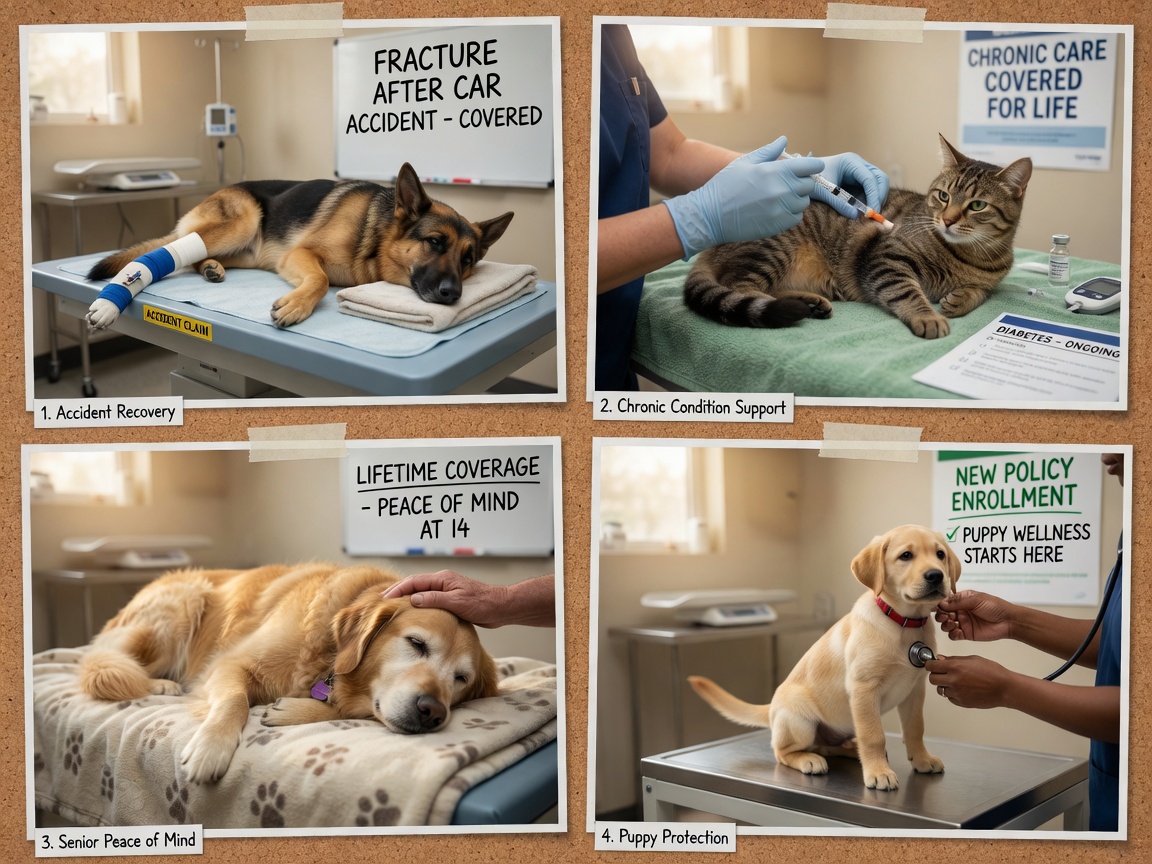
The most basic and least expensive type of policy, accident-only cover pays for treatment resulting from accidents — broken bones, swallowed foreign bodies, road traffic injuries, bite wounds. It provides no cover for illnesses, which account for the vast majority of significant veterinary bills. Accident-only policies are rarely good value in the medium to long term, as most pets will develop an illness-related condition during their lifetime. They may be appropriate as a very short-term, minimum safety net but should not be confused with comprehensive cover.
Time-Limited Cover
Time-limited policies cover both accidents and illnesses, but each condition is only covered for 12 months from the date it first occurs, after which it becomes an excluded pre-existing condition. This means that chronic or recurring conditions — such as diabetes, epilepsy, allergies, or joint disease — will be covered for the first year and then excluded. Time-limited policies are typically cheaper than more comprehensive options but can leave owners with large bills for ongoing treatment once the time limit expires. Read the policy documents carefully to understand exactly how the 12-month period is calculated.
Maximum Benefit Cover
Maximum benefit (or per-condition limit) policies set a maximum payout for each individual condition, with no time limit on how long treatment for that condition can be claimed. Once the per-condition limit is reached — which might be €3,000 or €10,000 depending on the policy — that condition becomes excluded. This structure is better than time-limited cover for chronic conditions, as long as the per-condition limit is high enough to cover the expected lifetime cost of treatment. For common chronic conditions such as epilepsy or Addison's disease, a generous per-condition limit is essential.
Lifetime Cover
Lifetime policies — sometimes called comprehensive or ongoing cover — provide a refreshed pot of money each policy year that can be used for any condition, including those that are ongoing and were diagnosed in a previous year. As long as you renew the policy without a break, chronic conditions that developed after the policy started remain covered year after year. This is the most comprehensive — and most expensive — type of pet insurance, but it is the type most likely to actually pay for the serious, expensive conditions that justify having insurance in the first place. Vets and insurance experts almost universally recommend lifetime cover as the best value long-term option for most pet owners.
What Pet Insurance Typically Excludes
No pet insurance policy covers everything. Standard exclusions across most European markets include:
- Pre-existing conditions: Any condition your pet has shown signs of, been treated for, or had investigated before the policy start date will typically be excluded — either permanently or for a specified period. The definition of "pre-existing" varies between insurers and is one of the most common sources of disputed claims.
- Breed-specific hereditary conditions: Many policies exclude conditions known to be hereditary or predisposed in specific breeds — hip dysplasia in German Shepherds, brachycephalic obstructive airway syndrome in French Bulldogs, dilated cardiomyopathy in Dobermanns. Always check whether breed-related conditions are covered before buying a policy for a predisposed breed.
- Routine preventative care: Vaccinations, neutering, flea and tick treatments, dental scaling (unless resulting from injury), annual health checks, and microchipping are almost never covered by standard policies.
- Pregnancy and breeding costs
- Elective or cosmetic procedures
- Treatment resulting from illegal activity
- Conditions arising in the waiting period — most policies impose a waiting period of 10–15 days for illness claims and 2–5 days for accident claims after the policy start date
Average Pet Insurance Costs Across Europe
Premium costs vary widely depending on species, breed, age, location, level of cover, and the insurer's own claims experience. The following figures give a rough indication of monthly premiums for a lifetime cover policy for a medium-sized, mixed-breed adult dog:
- United Kingdom: £30–£80 per month — the UK has the most mature and competitive pet insurance market in Europe, with dozens of providers
- Germany: €30–€70 per month — a growing market with both domestic providers and international insurers operating
- France: €20–€50 per month — the French market has grown significantly, with providers including Agria, Santevet, and AXA offering pet policies
- Spain: €15–€40 per month — a less mature market, though several providers including Mapfre and Adeslas now offer pet coverage
- Sweden: SEK 300–700 per month (approximately €25–€60) — the most established pet insurance market globally, with Agria Djurförsäkring and Folksam among the dominant providers. Sweden's high veterinary standards and widespread insurance uptake have reinforced each other over decades
Premiums typically increase as a pet ages, particularly after seven or eight years of age, when the risk of chronic disease increases substantially. Locking in a good lifetime policy while your pet is young and healthy — before any conditions develop — almost always results in better coverage and lower premiums than trying to insure an older animal.
Co-Payments and Excess
Most pet insurance policies include an excess (or deductible) — a fixed amount you pay towards each claim before the insurer contributes. Excess structures vary: some policies apply a flat excess per condition per year; others apply it per claim; some apply a percentage co-payment in addition to or instead of a flat excess. A 20% co-payment on a €5,000 claim means you contribute €1,000 regardless of any flat excess. Always calculate the total out-of-pocket cost under different claim scenarios before selecting a policy based on premium alone.
Multi-Pet Discounts
Many European pet insurers offer discounts of 5–15% when insuring multiple pets on the same policy or with the same provider. If you have more than one dog or cat, it is worth requesting multi-pet pricing from every insurer you approach, as the discount is not always advertised prominently. Some providers also offer small discounts for neutered pets, microchipped pets, or pets whose owners are members of specific breed clubs or kennel clubs.
How to Choose a Policy: Reading the Small Print
Before signing up for a policy, verify the following:
- Confirm the policy type — accident-only, time-limited, maximum benefit, or lifetime. This is the most important factor.
- Read the list of specific exclusions carefully — breed-specific conditions, dental disease, and behavioural conditions are commonly restricted
- Check the excess structure — flat amount, per-condition, per-claim, or percentage co-payment
- Understand the claims process — does your vet claim directly, or do you pay and reclaim?
- Check whether the insurer is registered and authorised with the financial regulatory authority in your country
- Read reviews from other pet owners — claims handling quality varies considerably between insurers, particularly when a condition is initially disputed as pre-existing
- Understand the renewal terms — insurers are legally permitted to increase premiums at renewal, and some increase them significantly year on year
The best time to buy pet insurance is when your pet is young and healthy, before any conditions are present to be excluded. A policy bought in a healthy puppy at three months of age will typically provide far broader coverage throughout that animal's life than one obtained after a health problem has already been identified.