
Pet CPR: Step-by-Step Guide for Dogs and Cats
Cardiopulmonary resuscitation for pets follows the same fundamental principles as human CPR — restore circulation and breathing until professional help can take over. The technique differs between species and even between sizes of animals, but the core sequence is consistent. Learning this skill before you need it is the only way to apply it effectively in an emergency.
When Is CPR Needed
CPR is indicated when an animal is unconscious and has no detectable heartbeat or is not breathing. It is not a technique for a distressed, seizing, or injured but conscious animal. Before beginning CPR, quickly assess three things.
- Is the animal conscious? Call their name, tap their paw. No response means you proceed to the next check.
- Are they breathing? Watch for chest movement for five to ten seconds. Look, listen, and feel for airflow near the nose and mouth.
- Is there a heartbeat? Place two fingers or your palm flat on the left side of the chest just behind the elbow. Feel for a pulse for five to ten seconds.
If the animal is unconscious with no breathing and no detectable heartbeat, begin CPR immediately and have someone call a vet or emergency clinic whilst you work.
Before You Begin
Open the airway first. Gently extend the neck into a neutral position — not hyperextended. Open the mouth and check for any obvious obstruction such as a toy, food, or vomit. If you can see a foreign object and can remove it safely with your fingers, do so. Do not perform a blind finger sweep — you may push an obstruction further in.
Place the animal on a firm, flat surface on their right side, with their back against you if possible. This position is standard for most dogs and cats.
Chest Compressions
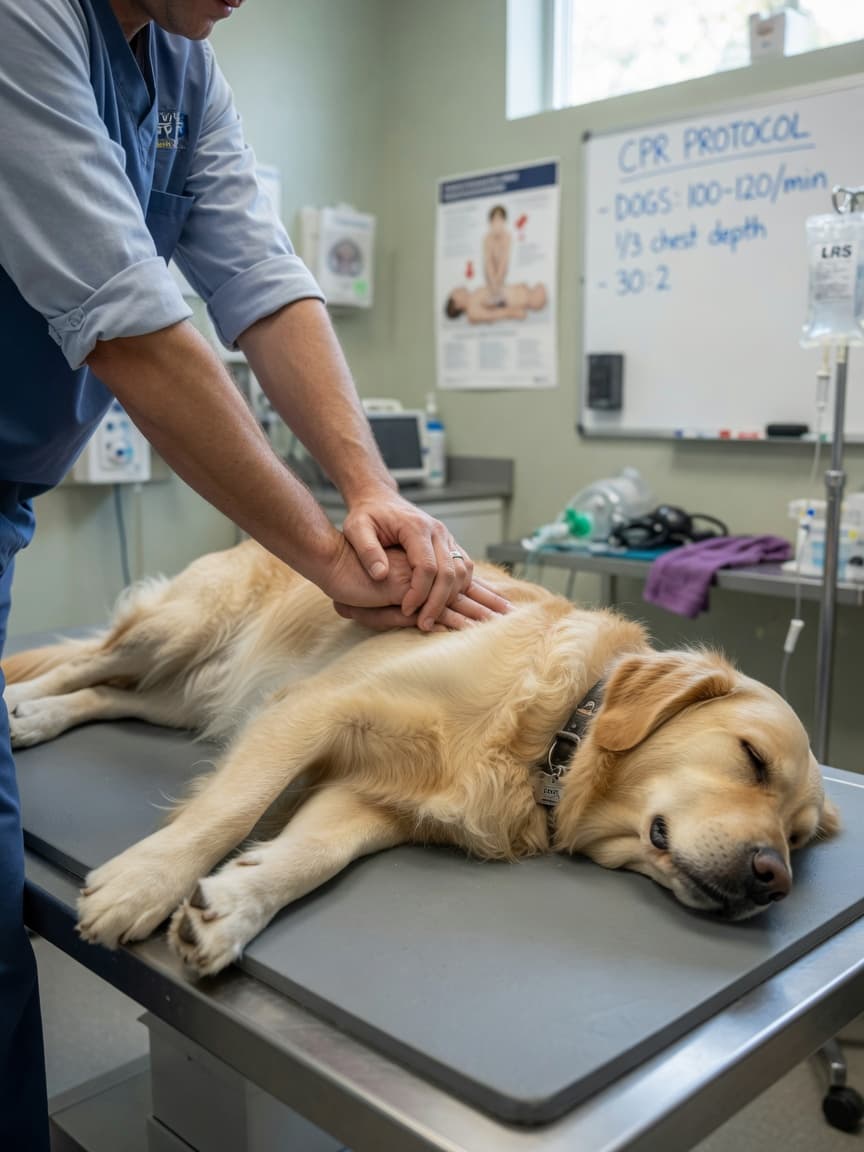
For medium to large dogs, place the heel of one hand over the widest part of the chest and place your other hand on top. Keep your arms straight and compress the chest by approximately one third of its width. The rate is 100 to 120 compressions per minute — roughly two per second.
For small dogs and cats, the technique changes. Use one hand to encircle the chest just behind the front legs, with your thumb on one side and fingers on the other, and compress by squeezing. Alternatively, place two fingers on the chest over the heart and compress with those two fingers alone. The rate remains 100 to 120 per minute.
For barrel-chested breeds such as English bulldogs, compressions may be more effective with the dog on their back and pressure applied directly to the sternum.
Rescue Breaths
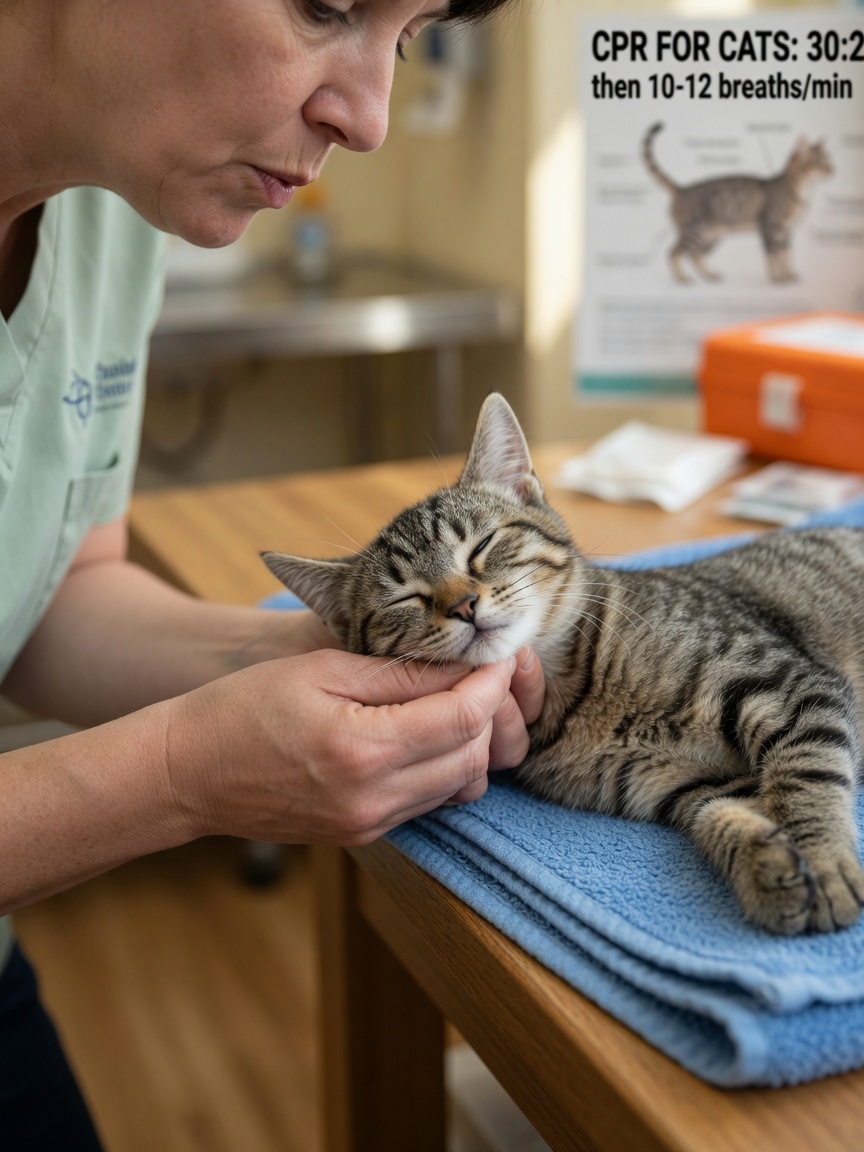
After every 30 chest compressions, give two rescue breaths. This is the standard ratio recommended by veterinary emergency guidelines.
- Close your pet's mouth gently and hold it shut.
- Place your mouth over their nose entirely and form a seal.
- Breathe in steadily until you see the chest rise. For cats and small dogs, use very small breaths — just enough air to make the chest rise.
- Allow the chest to fall before giving the second breath.
- Return immediately to chest compressions.
For cats and small dogs, take care not to overinflate the lungs. A small, steady breath is all that is required — a large breath can cause lung injury.
Continuing CPR

Continue cycles of 30 compressions and 2 breaths. If there are two people available, swap the person doing compressions every two minutes to maintain quality — effective compressions are physically demanding and deteriorate quickly with fatigue.
Check for signs of recovery every two minutes: spontaneous breathing, a return of pulse, or voluntary movement. If these appear, stop compressions and place the animal in a recovery position on their side. Keep them warm and get to a vet immediately even if they appear to be recovering.
If you are alone and must transport the animal to a vet, call ahead to alert them, perform CPR until you must move, and resume as soon as possible on arrival.
Realistic Expectations
It is important to be honest about what CPR can and cannot achieve. Survival rates for cardiac arrest in pets, even with immediate CPR, are significantly lower than in humans. In a hospital setting with full resuscitation equipment, survival to discharge after cardiac arrest in dogs and cats is estimated at roughly six to eight per cent. Outside of a clinical setting, these figures are lower still.
This does not mean CPR is not worth attempting — in some cases it makes the difference between life and death, or buys critical time for the animal to reach professional care. But managing expectations is important, particularly if an animal does not recover despite your best efforts.
Get Trained Before an Emergency Happens
Reading a guide is a useful starting point, but hands-on practice is what makes CPR an instinctive skill rather than a remembered set of instructions. Several veterinary charities and organisations in the UK offer pet first aid courses, some of which include CPR training with manikins. The Blue Cross and the British Red Cross both offer resources. If you have a dog or cat, investing a few hours in a practical course is genuinely one of the most useful things you can do as a pet owner.
Keep the number of your nearest out-of-hours emergency vet saved in your phone. In an emergency, every second matters and searching for a number whilst attempting CPR is time you cannot spare.