
Aggression Towards Other Dogs Is Not a Character Flaw
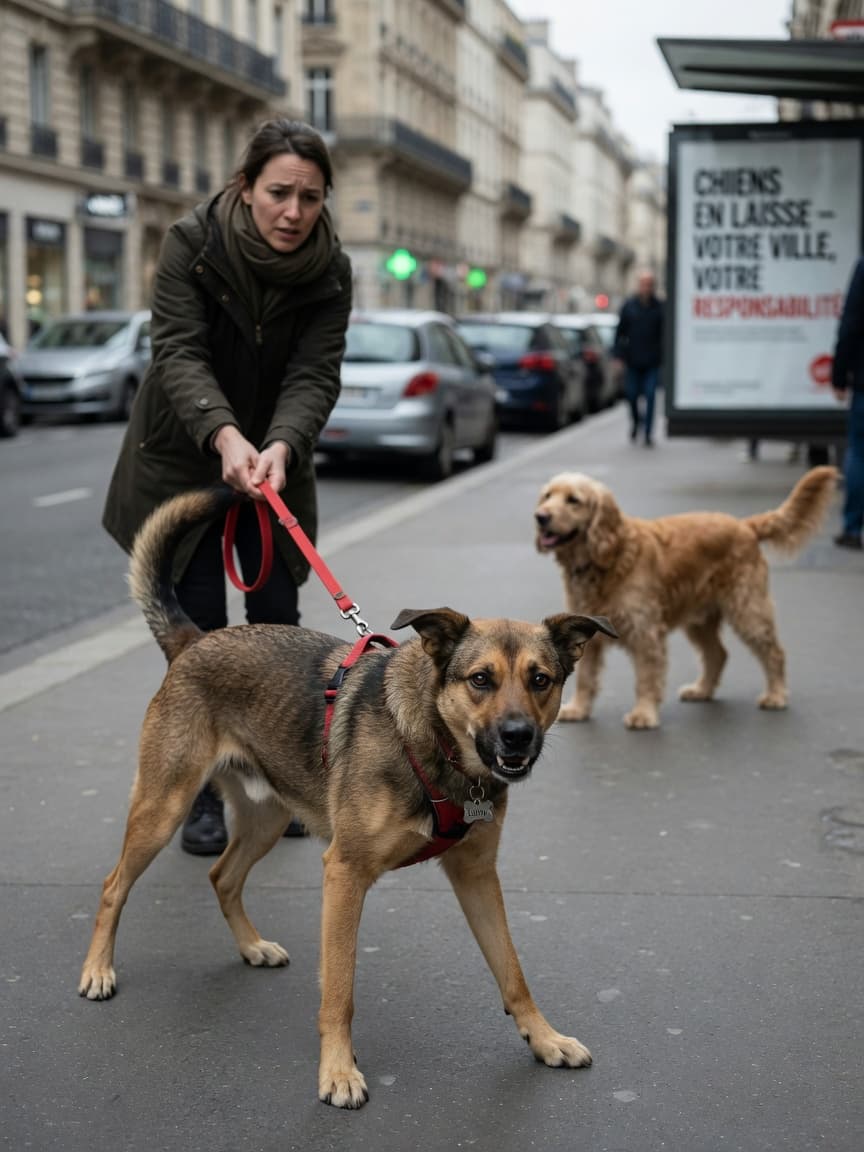
Inter-dog aggression is one of the most common reasons owners seek professional behavioural support. It is also one of the most misinterpreted. A dog that lunges, growls, or barks aggressively at other dogs on the street is frequently labelled as dangerous, dominant, or badly brought up. In most cases, the reality is considerably more nuanced.
Understanding what is driving the behaviour — and distinguishing between different types of inter-dog aggression — is essential before any management or training approach can be effective.
Types of Inter-Dog Aggression
Fear-Based Aggression
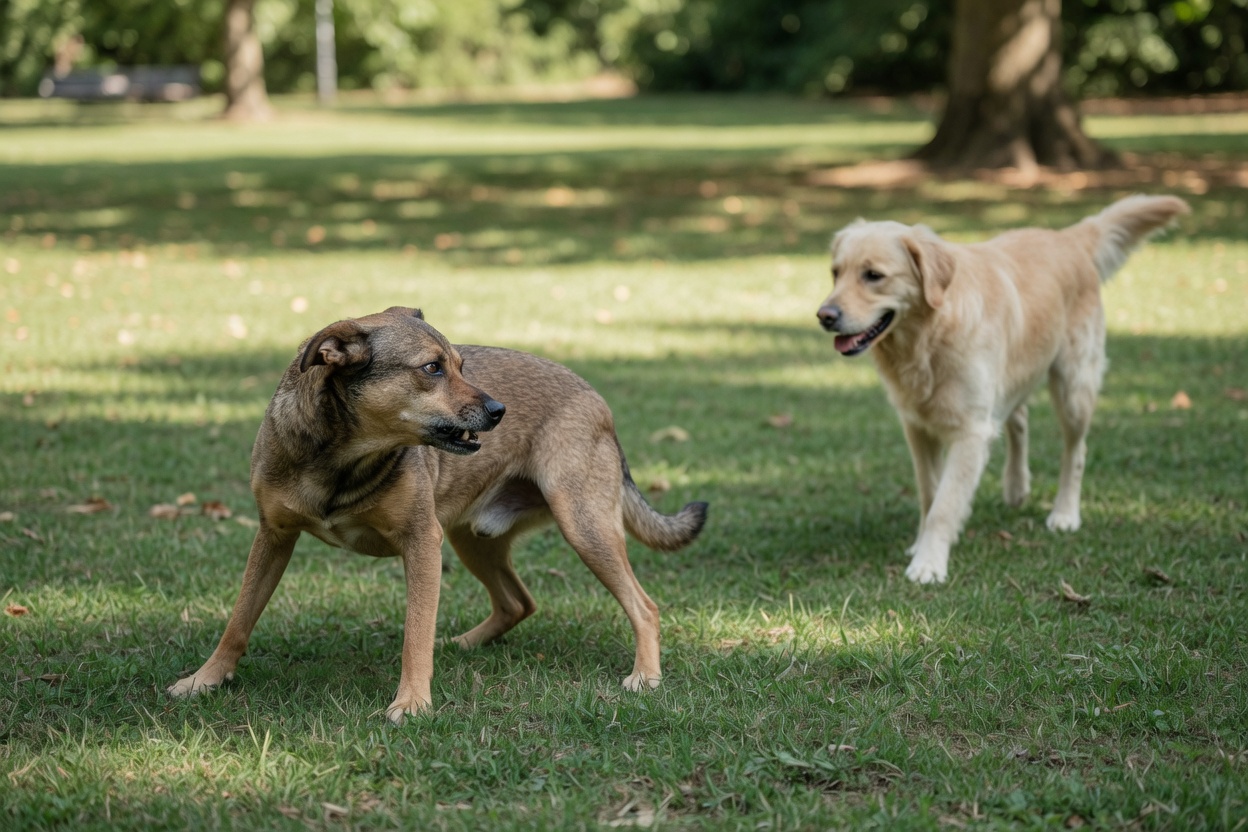
This is by far the most common form. The dog does not want conflict; they want the other dog to go away. Growling, barking, and lunging are threat displays designed to increase distance between themselves and the perceived threat. This type of aggression typically gets worse when the dog is on a lead, because the lead prevents them from using their preferred strategy — moving away.
Frustration-Induced Reactivity
Some dogs are not frightened of other dogs — they desperately want to interact with them. When that interaction is prevented by a lead, the arousal and frustration can spill over into barking and lunging that looks aggressive but is actually over-excitement. These dogs typically display loose, wiggly body language when they actually reach the other dog and greet normally.
Resource Guarding Aggression
A dog may be entirely relaxed around other dogs in neutral settings but become aggressive when a valued resource — food, a toy, their owner, or their resting space — is present. This is context-specific and often predictable once the trigger has been identified.
Pain-Related Aggression
Dogs experiencing chronic pain — particularly orthopedic conditions such as hip dysplasia or arthritis — may become aggressive towards other dogs when jostled or approached because contact is associated with discomfort. A sudden onset of inter-dog aggression in a previously sociable adult dog should always prompt a veterinary examination.
Common Triggers to Identify
Effective management depends on accurately mapping the specific triggers for an individual dog. Common triggers include:
- Direct eye contact from another dog at a distance
- Stiff, forward-oriented body posture in the approaching dog
- Fast or unpredictable movement from another dog
- Small dogs (some larger dogs are selectively reactive to smaller breeds)
- Dogs of the same sex
- Intact males encountering other intact males
- Confined spaces where passing requires close proximity
- High-arousal environments such as busy parks
Keeping a reactivity log — noting the location, the distance at which the reaction began, the other dog's behaviour, and your dog's response — can reveal patterns that are not obvious day to day.
The Threshold Concept
One of the most practically useful frameworks for understanding reactive dogs is the concept of threshold. Every dog has a distance at which they can perceive another dog without reacting — this is called being under threshold. When the other dog comes too close, or when multiple stressors combine, the dog tips over threshold into reactivity.
Once a dog is over threshold, learning is functionally impossible. The stress response has flooded the system with cortisol and adrenaline, and the brain is in survival mode rather than learning mode. This is why punishing a reactive response is so counterproductive — the dog is not capable of making rational decisions at that moment, and punishment adds another aversive element to an already overwhelming experience.
All effective behavioural work with reactive dogs happens under threshold.
Evidence-Based Management Strategies
Counter-Conditioning and Desensitisation
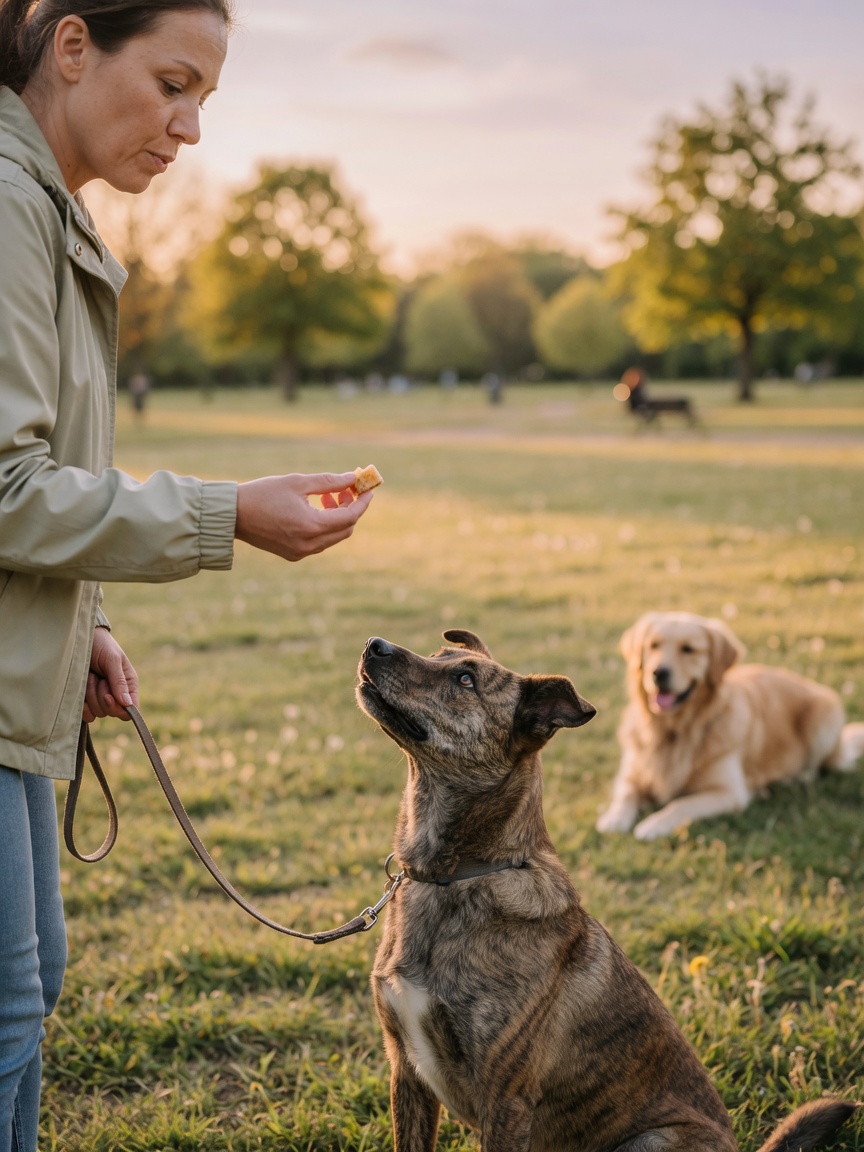
This is the clinical gold standard for fear-based and frustration-based inter-dog reactivity. The dog is exposed to another dog at a distance far enough to remain under threshold, and immediately receives something highly valuable — usually a high-value food reward. Over many repetitions, the sight of another dog begins to predict something positive rather than threat. The emotional response changes, and the behavioural response follows.
Progress is measured in weeks and months, not days. Consistency and realistic expectations are essential.
Management During the Training Process
While behavioural modification is underway, reducing the frequency of reactive episodes is important. Each full-blown reaction rehearses the behaviour and reinforces the emotional response. Practical management tools include:
- Walking at lower-traffic times — early morning or late evening
- Crossing the street proactively when another dog is visible ahead
- Using a head collar or front-clip harness to increase physical control
- Learning to read body language to spot dogs at distance before the dog does
- Using visual barriers such as parked cars between your dog and the trigger
Teaching an Alternative Behaviour
Training a strong default behaviour — such as eye contact with the owner or an automatic sit when another dog appears — gives the dog something to do with the arousal rather than just suppressing the reaction. This approach works best once the emotional response has been partially modified through counter-conditioning.
When to Involve a Professional
If a dog has made contact with another dog during a reactive episode, if the intensity of reactions is escalating, or if the owner is struggling to remain calm and consistent during training, professional input from a qualified force-free behaviourist is strongly advisable. Inter-dog aggression that involves genuine biting or injury should always be assessed by a clinical animal behaviourist, who can work alongside your veterinary team to rule out medical contributors and design an appropriate treatment plan.
Progress with reactive dogs is rarely linear, but with consistent, evidence-based work, meaningful improvement is achievable for the majority of dogs.