
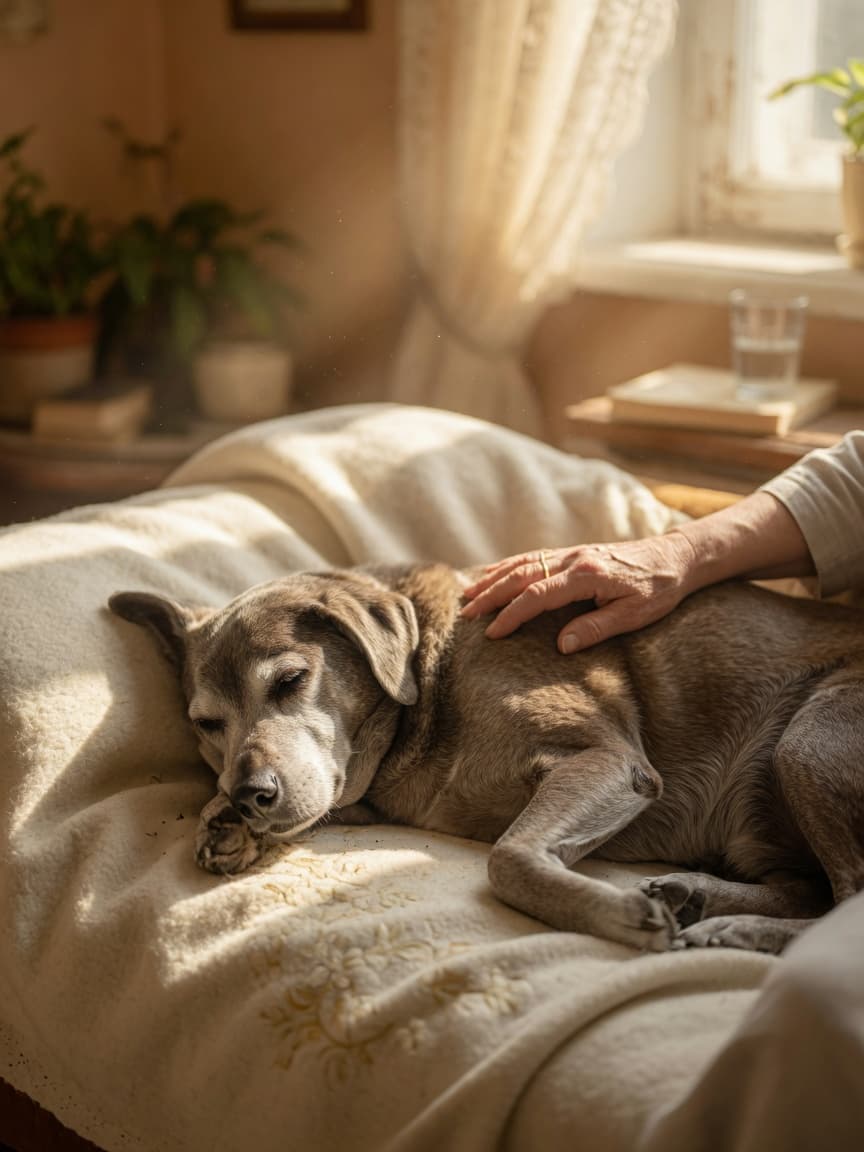
When Losing a Pet Feels Like Losing a Family Member
Studies suggest that the grief experienced after losing a pet can be as intense as that following the death of a close human relative — yet many people feel embarrassed to admit just how devastated they are. If you have found yourself unable to eat, sleep, or concentrate after your pet died, you are not overreacting. You are grieving, and that grief is entirely valid.
Pet bereavement is a recognised psychological experience, and understanding what you are going through is the first step towards moving forward without guilt.
Why Pet Loss Hits So Hard

Our relationships with pets are unique. Unlike most human relationships, the bond with a pet is built on unconditional presence. Your dog was there when you came home every single day. Your cat slept on your feet every night. That consistency, that daily physical companionship, creates neurological patterns of attachment that, when suddenly broken, produce genuine grief responses.
Pet owners also frequently experience what psychologists call disenfranchised grief — grief that society does not fully acknowledge. You may have been told to "just get another one" or been expected back at work the next day. This lack of social permission to grieve can compound your suffering significantly.
The Stages of Pet Bereavement
You may have heard of the five stages of grief — denial, anger, bargaining, depression, and acceptance. In pet bereavement, these stages rarely arrive in a neat sequence. Most people move between them fluidly, sometimes cycling back to stages they thought they had passed.
Common emotional experiences
- Shock and disbelief, even when the death was expected
- Guilt, particularly if euthanasia was involved
- Anger directed at yourself, your vet, or circumstances
- Profound loneliness and a disrupted daily routine
- Physical symptoms including fatigue, appetite changes, and difficulty concentrating
When grief becomes complicated
Most people find that the acute pain of pet loss eases within weeks to months. If you are still experiencing severe depression, inability to function, or persistent thoughts of self-harm after several months, please speak to your GP. Complicated grief is a real clinical condition that deserves professional support.
Practical Ways to Help Yourself Through Grief
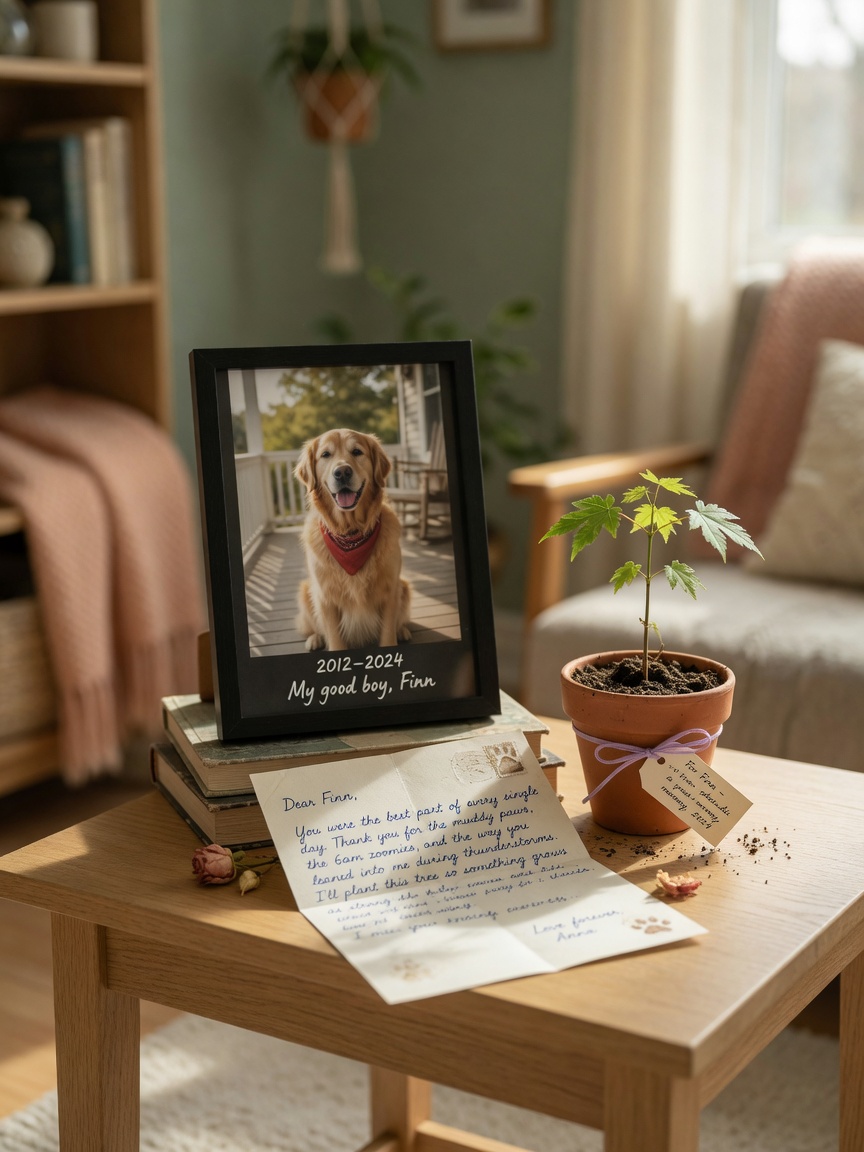
There is no shortcut through grief, but there are evidence-backed strategies that can ease the journey.
Acknowledge the loss properly
Give yourself formal permission to grieve. Tell people who matter to you what has happened. Take time off work if you can. Many employers are beginning to recognise pet bereavement leave — it is worth checking your workplace policy.
Create a ritual or memorial
Humans process loss through ritual. Consider planting a tree, creating a photo album, writing a letter to your pet, or holding a small gathering with people who knew your animal. These acts externalise your grief and mark the significance of the life that was lost.
Maintain your routine where possible
If you walked your dog each morning, consider keeping that walk in your day, even without them. Structure helps regulate the nervous system when everything else feels chaotic.
Connect with others who understand
The Blue Cross offers a free pet bereavement support service in the UK, including a phone line and online forums. Organisations such as the Society for Companion Animal Studies also provide resources for bereaved pet owners. You do not have to navigate this alone.
Supporting Others Through Pet Bereavement
If someone you know has lost a pet, resist the urge to minimise their grief. Do not suggest they get a new pet immediately. Instead, treat their loss as you would any bereavement: acknowledge it, offer presence, and check in regularly. A card, flowers, or a small donation to an animal charity in the pet's name can mean a great deal.
Moving Forward: What Healing Actually Looks Like
Healing from pet loss does not mean forgetting your animal or replacing the relationship. It means integrating the loss into your life in a way that allows you to function and, eventually, to feel joy again. Many people find that their grief transforms over time into gratitude — an appreciation for the years of companionship they were fortunate to have.
Some people choose to adopt another pet; others never do. Both are legitimate responses. The right choice is the one that feels true to you, made in your own time.
Practical Summary
- Allow yourself to grieve fully — pet bereavement is a legitimate and recognised form of loss
- Name your feelings: guilt, anger, and loneliness are all normal responses
- Create a meaningful ritual or memorial to honour your pet
- Use the Blue Cross pet bereavement support line if you need to talk to someone
- Maintain daily structure to support your nervous system during acute grief
- Seek professional support from your GP if grief remains debilitating after several months
- Give others space to grieve in their own way and timeline