
Understanding Canine Parvovirus
Canine parvovirus, commonly abbreviated to CPV or simply "parvo," is one of the most feared infectious diseases in veterinary medicine — and with good reason. First identified in the late 1970s, the virus spread globally within two years of its emergence and continues to cause significant illness and death in unvaccinated dogs today. Despite the availability of a highly effective vaccine, outbreaks remain common, particularly in areas with low vaccination coverage.
The virus exists in two primary forms: CPV-1 and CPV-2, with the latter causing the severe gastrointestinal disease most people associate with the term parvovirus. CPV-2 itself has evolved into several subvariants, but the core vaccine provides cross-protective immunity against all circulating strains.
How Parvovirus Spreads
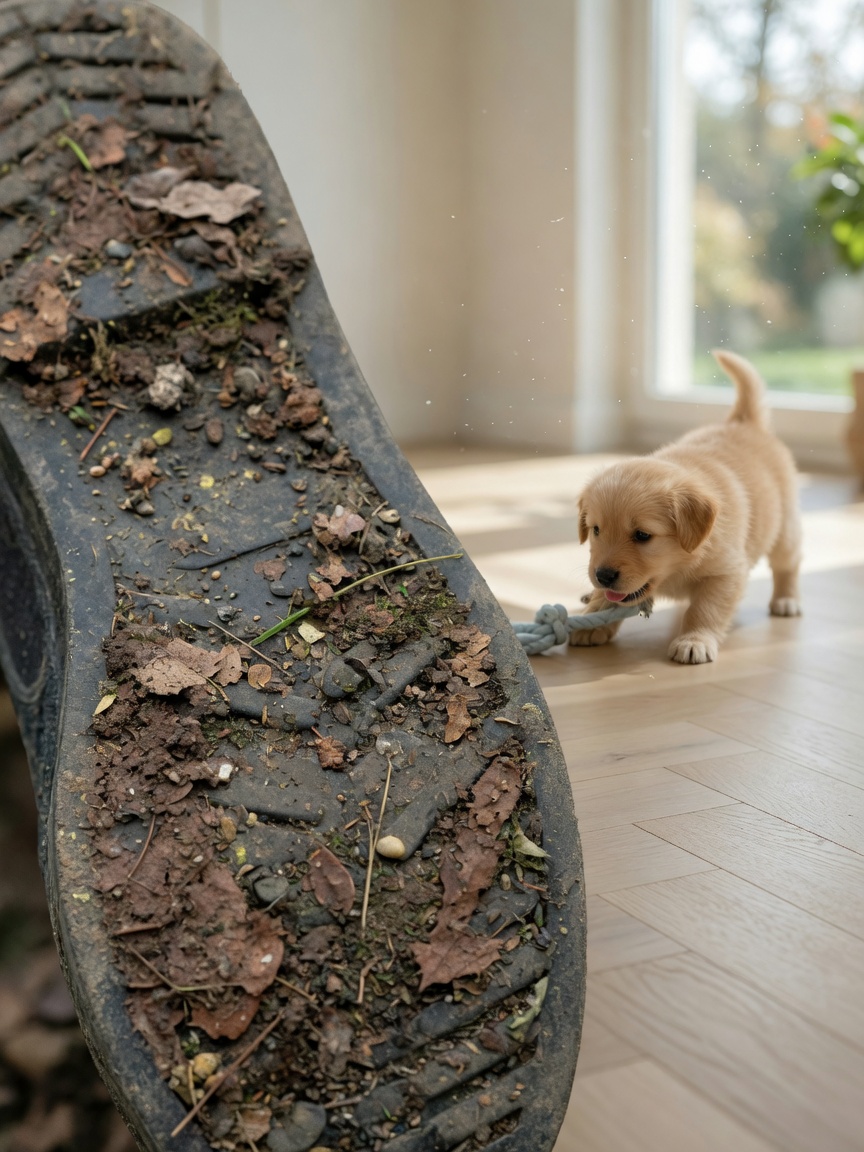
Parvovirus is extraordinarily resilient in the environment. It can survive on surfaces, soil, and clothing for months — in some conditions, potentially for more than a year. It resists many common household disinfectants, freezing temperatures, and heat, which makes environmental decontamination challenging.
Transmission occurs primarily through contact with infected faeces, either directly or via contaminated surfaces, objects, or soil. A dog does not need to come into contact with an infected animal directly — shoes, clothing, and car tyres can carry the virus from contaminated ground into a garden or home. This is why puppies who have not yet completed their vaccination course can be exposed even without ever leaving the house.
Infected dogs shed enormous quantities of virus in their faeces from around three to four days before clinical signs appear and for up to ten days into illness. This pre-symptomatic shedding means that apparently healthy dogs can be a source of infection without any obvious warning.
Symptoms and Disease Progression
Parvovirus attacks rapidly dividing cells with particular aggression. In the gut, it targets the intestinal lining, causing severe damage to the cells responsible for nutrient absorption and maintaining the gut barrier. It also suppresses the bone marrow, reducing white blood cell production and leaving the dog immunocompromised at precisely the moment they need a robust immune response.
Clinical signs typically appear between three and seven days after exposure and include:
- Profuse, often bloody diarrhoea with a distinctive foul odour
- Severe, persistent vomiting
- Complete loss of appetite
- Lethargy and collapse
- Fever, which may subsequently drop to dangerously low levels
- Rapid dehydration and deterioration
The collapse of the intestinal lining allows bacteria normally confined to the gut to enter the bloodstream, leading to secondary bacterial infection and sepsis. Without treatment, the disease is often fatal within 48 to 72 hours of the onset of severe symptoms.
Survival Rates and Prognosis
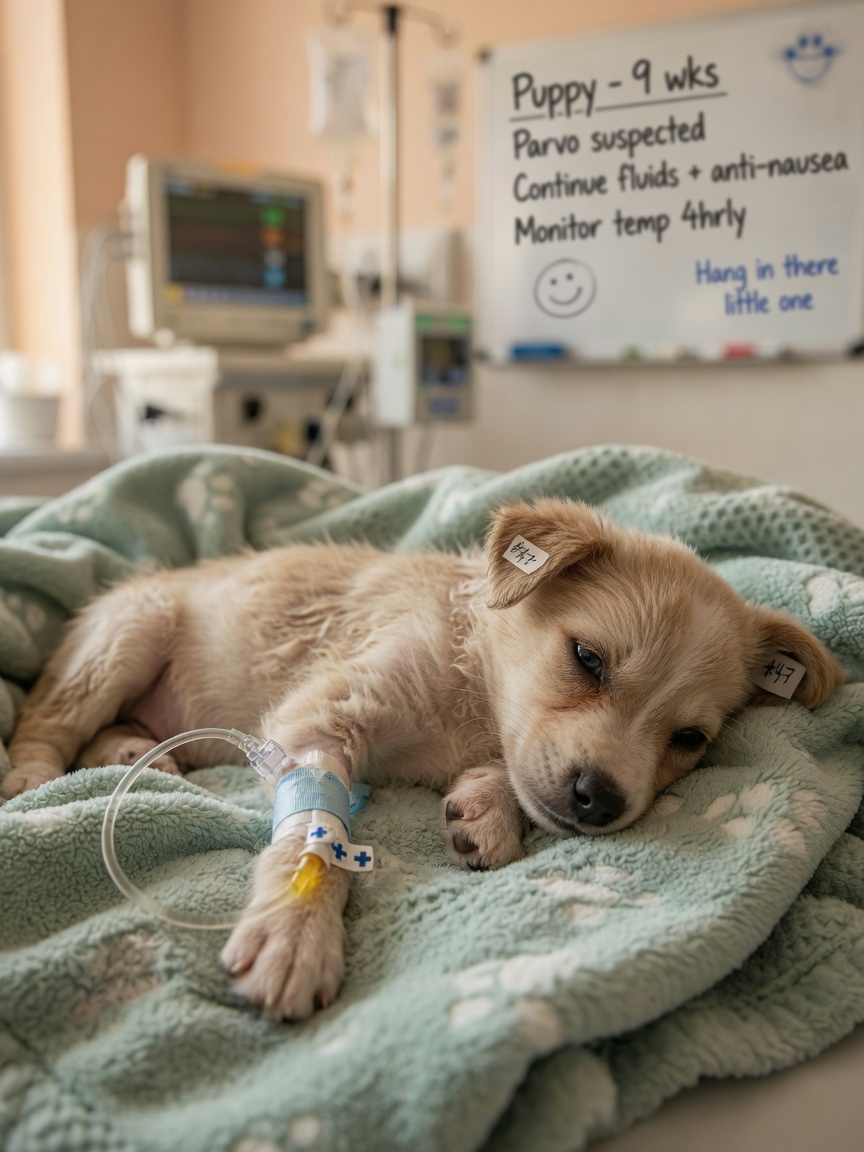
Survival rates for parvovirus depend heavily on how quickly treatment is initiated, the dog's age and immune status, and the quality of veterinary care available. With prompt, aggressive hospitalisation and supportive treatment, survival rates can reach 80 to 95 percent. Without treatment, the mortality rate in puppies approaches 90 percent.
Treatment is supportive rather than curative — there is no antiviral drug that directly neutralises the virus. Hospitalised dogs receive intravenous fluids to counteract dehydration, anti-nausea medications, antibiotics to prevent or treat secondary bacterial infection, nutritional support, and intensive monitoring. Treatment can extend over several days and is often expensive, which underscores the immense practical value of prevention through vaccination.
Puppies, particularly those between six weeks and six months of age, are at greatest risk. Very young puppies may have some protection from maternal antibodies passed through their mother's colostrum, but this passive immunity wanes between six and twelve weeks of age, creating a window of vulnerability before vaccination is complete. Breed can also play a role — Rottweilers, Dobermanns, and American Pit Bull Terriers appear to have higher susceptibility to severe disease.
The Role of Vaccination
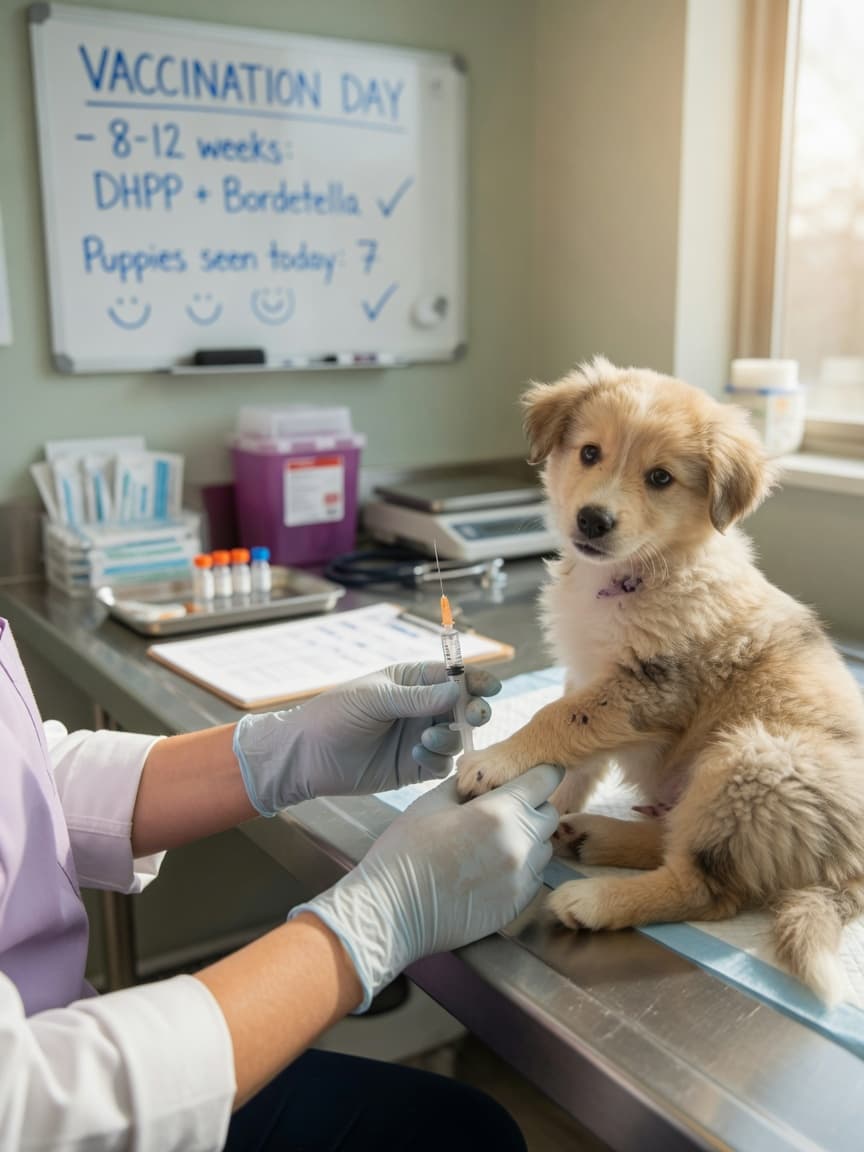
Vaccination against parvovirus is one of veterinary medicine's genuine success stories. The vaccine is highly effective, durable, and widely available. In the UK, it is included in the combination core vaccine administered to puppies starting at around eight weeks of age, with a second dose given at ten to twelve weeks and a third at sixteen weeks or beyond.
This schedule is not arbitrary. Maternal antibodies, while protective early in life, can also interfere with the puppy's response to vaccination, effectively neutralising the vaccine before an immune response can develop. Multiple doses are given to ensure that at least one dose lands after maternal antibody levels have dropped sufficiently to allow the immune system to respond. This is why completing the full puppy course is essential — two doses alone may not be sufficient if maternal antibody levels were high.
Adult dogs require booster vaccinations, with the frequency varying depending on the vaccine used and individual risk assessment. Many protocols now recommend triennial boosters for parvovirus in low-risk adult dogs with documented prior vaccination history, but annual health checks remain important regardless of booster frequency.
Environmental Decontamination
If a dog in your household has been diagnosed with parvovirus, thorough cleaning of the environment is critical before introducing any unvaccinated or incompletely vaccinated animals. Standard household cleaners are ineffective against parvovirus. A diluted bleach solution — typically one part bleach to thirty parts water — is one of the few readily available agents that can inactivate the virus on hard surfaces. Soft furnishings, soil, and outdoor areas are significantly harder to decontaminate.
Many vets advise waiting at least six months before allowing unvaccinated puppies onto ground where an infected dog has been, and some recommend waiting up to a year depending on the circumstances. This may seem extreme, but given the virus's environmental persistence, caution is warranted.
Parvovirus is a reminder of how devastating infectious disease can be in the absence of vaccination. It is preventable with a well-established, safe, and effective vaccine — the most powerful tool available against a genuinely life-threatening illness.