
What Is Canine Hydrotherapy?
Hydrotherapy is the therapeutic use of water to support rehabilitation and pain management in dogs. It exploits several unique physical properties of water to achieve effects that cannot be replicated by land-based exercise. Buoyancy reduces the amount of weight a dog must bear through its joints, allowing movement that would be too painful or too demanding on land. Hydrostatic pressure — the pressure water exerts on the submerged body — helps to reduce swelling in injured or post-surgical limbs and improves circulation. The resistance water provides when moving through it builds muscle strength. Warm water relaxes muscles and reduces pain perception, making movement easier and more comfortable.
Together, these properties make hydrotherapy particularly valuable for dogs that need to exercise to recover — rebuilding muscle, relearning movement patterns and maintaining cardiovascular fitness — but cannot yet do so normally on land. It is not a spa treatment. Properly delivered hydrotherapy is a clinical rehabilitation modality requiring professional assessment, equipment and supervision.
The Two Main Types of Hydrotherapy
Underwater Treadmill
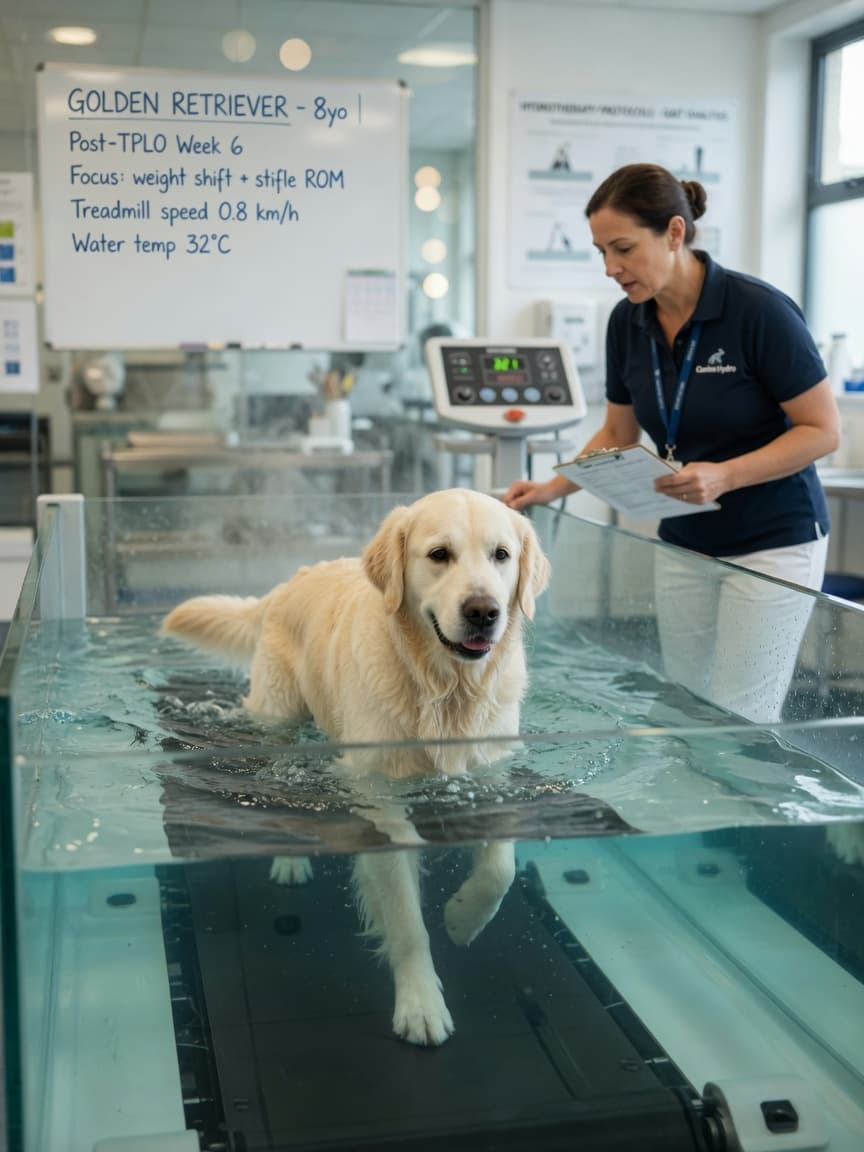
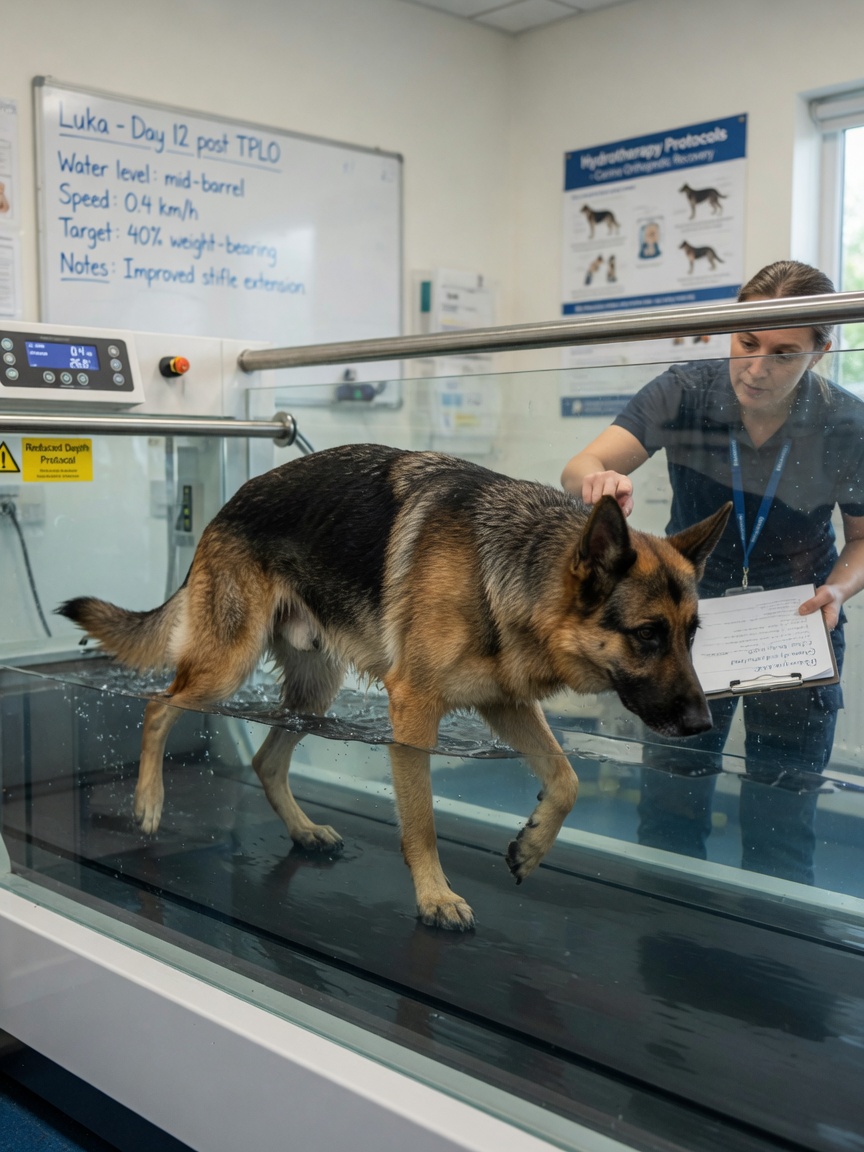
The underwater treadmill (UWTM) consists of a glass or perspex tank enclosing a treadmill, which the dog walks on while the tank fills with warm water to the appropriate level. The water depth is set deliberately: a higher water level increases buoyancy and reduces the proportion of body weight going through the limbs, while a lower level allows more weight-bearing. As rehabilitation progresses, the water level can be gradually lowered to increase the challenge. Treadmill speed and session duration are adjusted by the therapist in real time based on the dog's gait and response.
The UWTM is the preferred modality of many rehabilitation specialists because it allows highly controlled, consistent, repeatable exercise in a monitored environment. It is particularly well-suited to post-surgical recovery, neurological rehabilitation and gait re-education, where the quality and pattern of movement matters as much as the quantity.
Pool Swimming
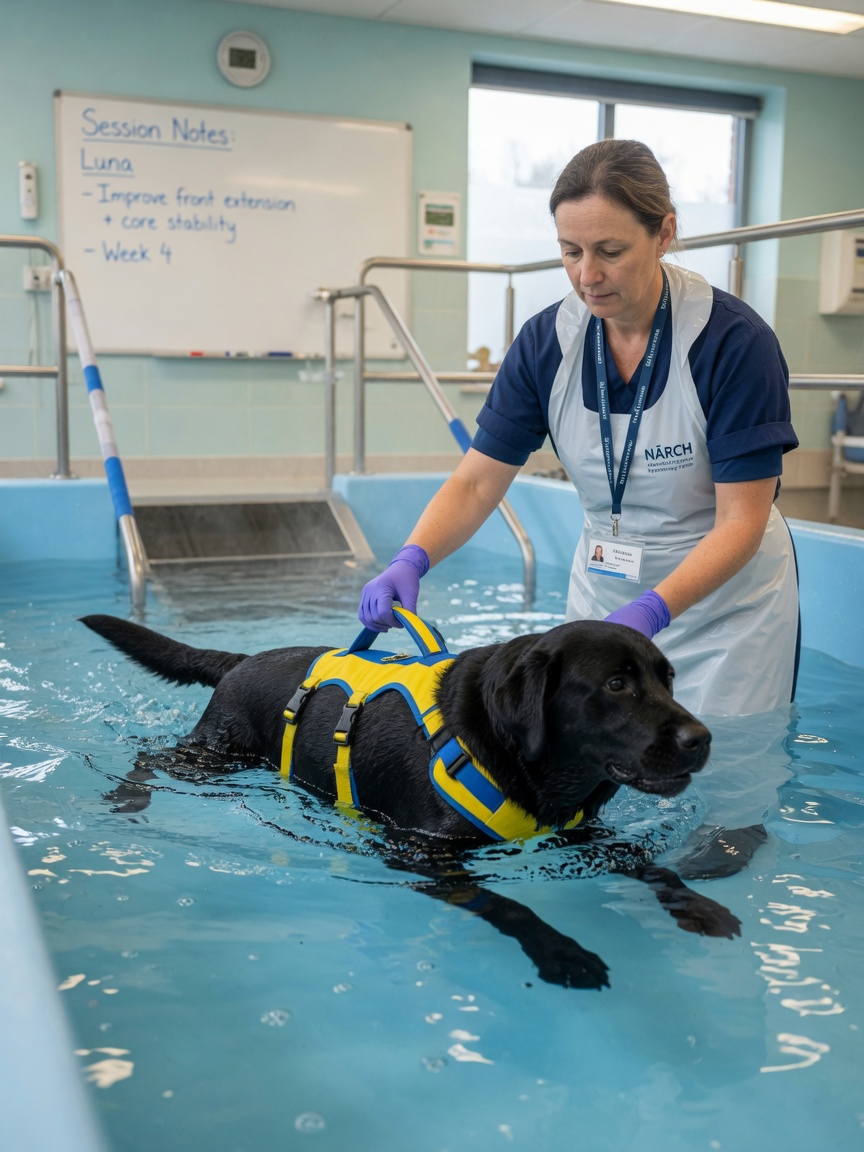
In pool-based hydrotherapy, the dog swims in a purpose-built, heated canine hydrotherapy pool. The therapist accompanies the dog in the water or manages the session from the poolside using a flotation harness or support jacket. Swimming provides excellent cardiovascular exercise and whole-body muscle engagement, and many dogs enjoy it. However, it is less controlled than the treadmill — speed, gait pattern and weight distribution cannot be as precisely managed. Dogs with poor forelimb strength or neurological conditions affecting the front limbs may struggle with swimming and are better suited to the treadmill initially. Some dogs are fearful of deep water, which needs to be factored into the approach.
NARCH Accreditation — Why It Matters
In the UK, the professional body for canine hydrotherapists is NARCH — the National Association of Registered Canine Hydrotherapists. NARCH accreditation is not a trivial credential. It requires completion of a recognised training qualification in canine hydrotherapy, proof of professional indemnity and public liability insurance, a commitment to continuing professional development and adherence to NARCH's standards of practice and code of conduct.
Always choose a NARCH-accredited therapist. The alternative — taking your dog for a swim in an unaccredited facility — is not the same as therapeutic hydrotherapy. An unqualified person running a dog pool cannot properly assess your dog's condition, modify the session appropriately, recognise signs of fatigue or deterioration, or respond safely if something goes wrong. Outside the UK, look for equivalent national professional bodies or membership of ESRAH (European Society of Rehabilitation Animal Hydrotherapy) or similar organisations. If in doubt, ask your vet for a recommendation to an accredited provider.
Veterinary Referral — Required by Professional Standards
Under NARCH standards, a veterinary referral is required before hydrotherapy can commence. Your vet must confirm the diagnosis and approve hydrotherapy as appropriate for your dog's specific condition. This requirement exists for good reason: it ensures that an underlying diagnosis has been made by a qualified clinician, that hydrotherapy is medically appropriate, and that any contraindications have been identified.
Some conditions actively contraindicate hydrotherapy and could be made worse by it: active skin or ear infections (warm water can exacerbate these), open wounds, uncontrolled epilepsy, certain cardiac conditions and some respiratory conditions. Your vet's referral serves as the clinical clearance that makes hydrotherapy safe to proceed. Do not be tempted to bypass this step — a NARCH-accredited therapist should ask for it, and any therapist who does not is not following professional standards.
Which Conditions Benefit Most?
Post-Orthopaedic Surgery Rehabilitation
This is the most common reason dogs are referred for hydrotherapy. After surgery for hip dysplasia (total hip replacement or femoral head and neck excision), cruciate ligament repair (TPLO or TTA), elbow surgery or other orthopaedic procedures, dogs are typically restricted from normal exercise for weeks to months. During this period, significant muscle wasting occurs. Hydrotherapy allows safe, progressive muscle strengthening during the restricted exercise phase, dramatically reducing the degree of muscle loss and speeding the return to full function.
Chronic Osteoarthritis and Musculoskeletal Pain
For dogs with chronic arthritis, hydrotherapy provides low-impact exercise that maintains muscle strength and joint mobility without the pain and concussive forces of normal land exercise. Strong muscles surrounding an arthritic joint act as a physical shock absorber, reducing pain and slowing joint deterioration. Many arthritic dogs exercise less because of pain, lose muscle mass, which then worsens the arthritis — hydrotherapy can break this cycle.
Neurological Rehabilitation
Dogs recovering from intervertebral disc disease (IVDD) surgery, degenerative myelopathy or other spinal conditions often have significant neurological deficits — weakness, reduced coordination and altered proprioception. The underwater treadmill is particularly valuable here, allowing the therapist to observe and encourage a normal gait pattern in a supported environment. Regular UWTM sessions can meaningfully improve neurological function and quality of life in affected dogs.
Weight Management
Obese dogs frequently have joint pain that prevents adequate land-based exercise, creating a vicious cycle of inactivity and weight gain. The buoyancy of water allows overweight dogs to exercise effectively without the joint-damaging impact of normal walking. Hydrotherapy combined with a calorie-controlled diet can initiate genuine weight loss in dogs that cannot otherwise exercise.
What to Expect at a Session
Before any exercise, the therapist will conduct a brief assessment of the dog's gait, muscle mass and condition. For dogs attending for the first time, the introduction to water is gradual and unhurried — anxious or nervous dogs are allowed to build confidence at their own pace, and the therapist adjusts accordingly. Pool water and treadmill water are maintained at approximately 30 to 32°C, which is warm enough to relax muscles without causing overheating. The therapist monitors the dog continuously throughout the session, adjusting the speed, depth or duration based on real-time response. Signs of fatigue are watched for closely and sessions end before the dog becomes exhausted. Initial sessions are typically short — sometimes only 5 to 10 minutes of active exercise — and are lengthened progressively.
Insurance and Costs
Many pet insurance policies cover hydrotherapy when it is vet-referred and delivered by an accredited therapist. Policy wording varies significantly — some policies have annual caps on complementary therapies, others cover it under their physiotherapy allowance. Always check your specific policy and obtain pre-authorisation from the insurer if required. Keep your vet referral letter and all receipts, as these will be required for a claim. If your dog is not insured, sessions typically cost between £30 and £60 per session in the UK, varying by region and facility.
Finding a Qualified Therapist
The NARCH website (www.narch.org.uk) maintains a searchable register of accredited hydrotherapists by postcode, making it straightforward to find qualified providers in your area. Your vet is also a reliable source of local recommendations — veterinary practices that frequently refer for hydrotherapy will have established relationships with trustworthy therapists. When making contact with any hydrotherapy provider, it is entirely reasonable to ask about their qualifications, accreditation and insurance before booking.