
The Numbers That Could Save Your Pet's Life
Imagine your dog is panting heavily at 11 pm. Is that normal post-exercise behaviour, or is something seriously wrong? If you know what a normal resting respiratory rate looks like for your dog, you can answer that question with something more reliable than instinct. Vital signs — heart rate, respiratory rate, temperature, and a few supporting indicators — are the basic physiological data points that tell you whether your pet's body is working within normal parameters. Every owner should know them.
Normal Heart Rate: Dogs and Cats
Dogs
A healthy adult dog at rest has a heart rate of between 60 and 140 beats per minute. The range is wide because size matters significantly here — small dogs have faster heart rates than large ones.
- Small breeds (under 10 kg): 100 to 140 beats per minute
- Medium breeds (10 to 25 kg): 80 to 120 beats per minute
- Large and giant breeds (over 25 kg): 60 to 100 beats per minute
- Puppies: up to 180 beats per minute
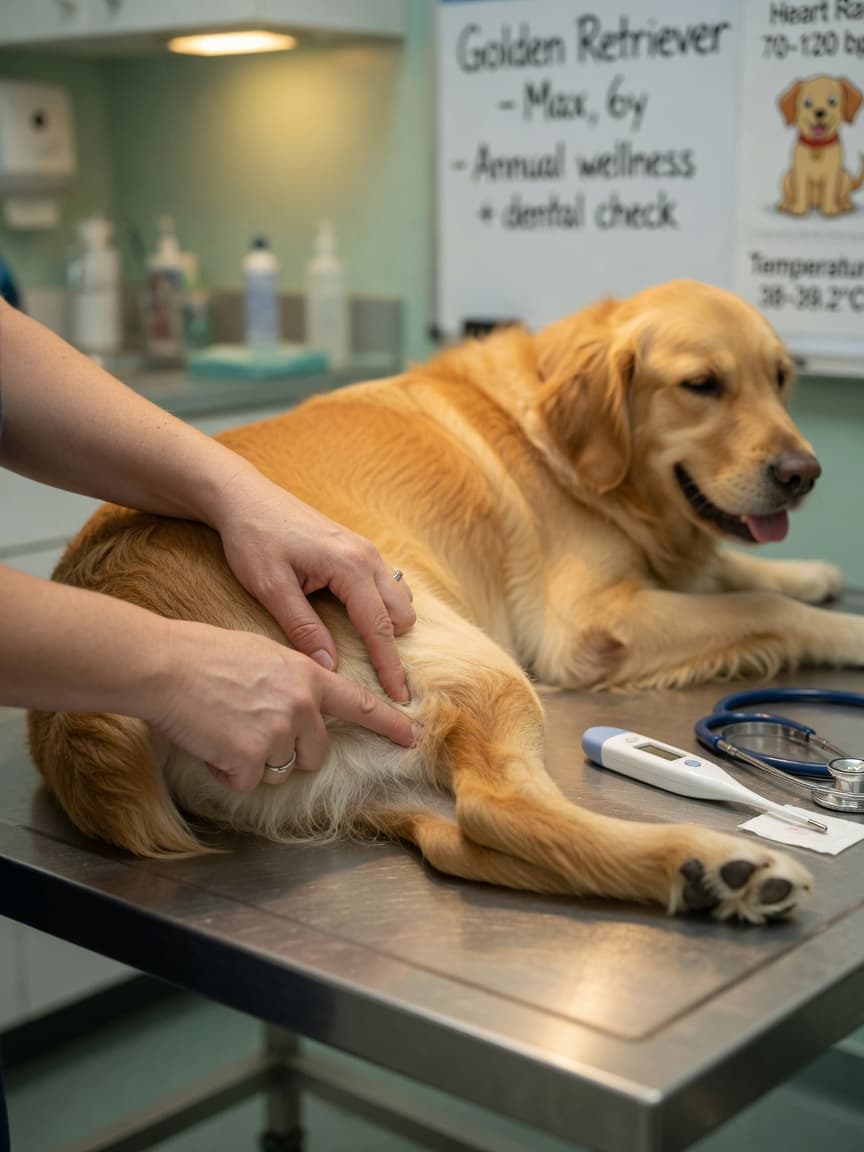
To measure your dog's heart rate at home, place two fingers on the inside of the hind thigh where the femoral artery runs, count the beats for 15 seconds, and multiply by four. Alternatively, place your hand on the left side of the chest just behind the elbow and count the heartbeats directly.
Cats
A healthy adult cat at rest has a heart rate of 140 to 220 beats per minute — notably faster than dogs. In a veterinary setting, anxiety and handling can push the rate to 240 or beyond, which is why home measurement when the cat is calm and relaxed gives more useful baseline data. Kittens have faster rates still, often exceeding 220 at rest.
Normal Respiratory Rate: What Counts as Normal Breathing

Dogs
Normal resting respiratory rate in dogs is 10 to 30 breaths per minute. Anything above 30 breaths per minute at rest — when the dog has not recently exercised and is not in a hot environment — warrants investigation. A respiratory rate above 40 breaths per minute at rest is concerning and merits urgent veterinary contact.
Count one full breath cycle (one inhalation and one exhalation) as one breath. Watch the rise and fall of the chest or flank for 30 seconds and multiply by two. The best time to do this is when the dog is lying down and fully relaxed, ideally asleep.
Cats
Normal resting respiratory rate in cats is 15 to 30 breaths per minute. Cats are notably susceptible to fluid accumulation around the lungs as a consequence of heart disease and other conditions, and elevated resting respiratory rate is often the earliest detectable sign. Several veterinary cardiologists now recommend that owners of cats with known or suspected cardiac disease monitor resting respiratory rate daily and contact a vet if it consistently exceeds 30 breaths per minute.
Normal Body Temperature
Normal body temperature in dogs and cats sits between 38.0 and 39.2 degrees Celsius (100.4 to 102.5 degrees Fahrenheit). Body temperature is measured rectally for accuracy — ear thermometers designed for humans are unreliable in pets.
When to be concerned
- Fever (pyrexia): temperature above 39.4 degrees Celsius. Causes include infection, inflammation, toxin exposure, and immune-mediated disease
- Hyperthermia: temperature above 40 degrees Celsius, which in warm weather often indicates heatstroke — a veterinary emergency
- Hypothermia: temperature below 37.5 degrees Celsius, which can indicate shock, severe illness, prolonged cold exposure, or end-of-life physiological shutdown
A single temperature reading outside the normal range should be interpreted in context. A dog who has just played vigorously in summer heat will have a temporarily elevated temperature. A cat who has been sitting on a cool floor may read slightly low. Recheck after 10 minutes at rest if you are uncertain.
Additional Indicators Worth Monitoring
Mucous membrane colour and capillary refill time
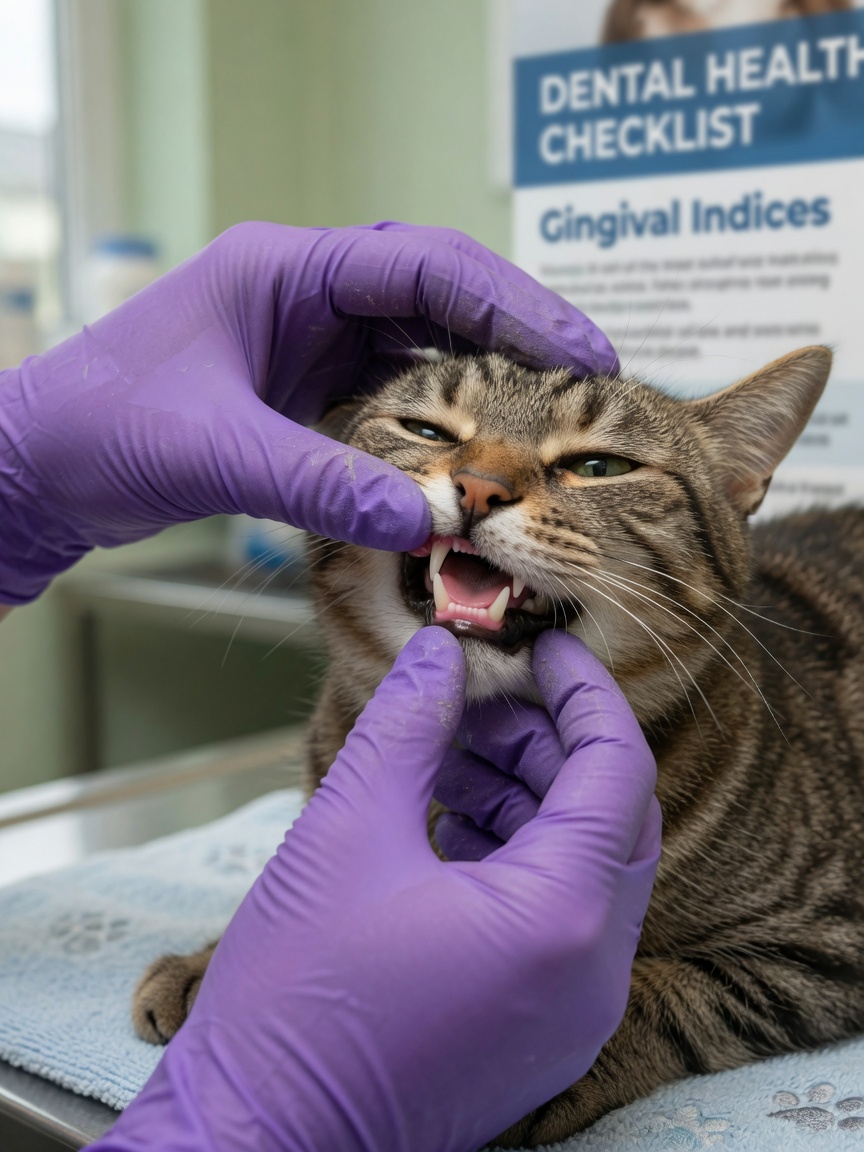
Gently lift your pet's lip and look at the gums. They should be pink and moist. Press a fingertip firmly onto the gum for two seconds and release — the blanched area should return to pink within two seconds. This capillary refill time reflects circulatory function.
- Pale or white gums: possible anaemia, shock, or internal bleeding
- Blue or purple gums (cyanosis): oxygen deficit — a veterinary emergency
- Bright red gums: possible heatstroke or carbon monoxide exposure
- Yellow-tinged gums: possible jaundice — requires urgent investigation
Pulse quality
When you feel a pulse, notice whether it feels strong and regular or weak and thready. A weak pulse alongside pale gums and rapid breathing indicates cardiovascular compromise and requires immediate veterinary attention.
Building a Baseline for Your Pet
- Measure and record your pet's resting heart rate and respiratory rate monthly when they are relaxed — this gives you a personal baseline that is more useful than published averages
- Check gum colour periodically so you know what normal looks like for your individual animal
- Learn to take a rectal temperature safely — your vet can demonstrate the technique at a routine appointment
- Keep a simple record in your phone: normal values, your pet's weight, and any known health conditions
- Contact a vet immediately if you observe: respiratory rate above 40 at rest, temperature above 40 or below 37.5, gum colour changes, or pulse irregularities
Vital signs are most useful when you already know what normal looks like for your specific animal. Invest ten minutes now in establishing those baselines, and you will be far better equipped to make clear-headed decisions in moments when time matters.