
The Case for Neutering — and Why Timing Is Everything
Neutering — the surgical removal of a male dog's testicles, also called castration or orchidectomy — is performed millions of times each year across the UK and is often presented as routine. And for many dogs, it is. But a growing body of research over the past decade has shifted the conversation from whether to neuter to when — and for some breeds, the answer is less straightforward than it once seemed.
What Neutering Actually Does
Removing the testicles eliminates the primary source of testosterone in male dogs. This has a range of physiological and behavioural consequences. Medically, it eliminates the risk of testicular cancer, reduces the risk of benign prostatic hyperplasia — an enlargement of the prostate gland that is extremely common in intact males over five years old — and significantly reduces the likelihood of perineal hernias and perianal adenomas, both testosterone-driven conditions.
Behaviourally, neutering can reduce roaming, mounting, and urine marking, particularly when performed before these behaviours are well established. However, it is not a reliable solution for fear-based aggression or anxiety, and owners should not expect neutering alone to resolve complex behavioural problems.
What the Research Tells Us About Timing
The University of California, Davis, produced some of the most influential research in this area, examining the relationship between neuter age and health outcomes across dozens of breeds. Their findings, published in multiple papers between 2013 and 2020, revealed striking breed-specific differences.
For Golden Retrievers, for example, males neutered before twelve months showed significantly higher rates of hip dysplasia and certain cancers compared to intact males or those neutered later. Similar patterns emerged in German Shepherds, Labrador Retrievers, and several other large breeds. In contrast, small breeds such as Chihuahuas and Jack Russell Terriers showed no such associations.
The biological explanation centres on testosterone's role in closing growth plates and supporting musculoskeletal development. Remove it too early, and bones may grow longer than intended, altering joint angles and increasing injury risk. The immune-modulating properties of sex hormones may also play a role in cancer susceptibility.
Current Guidance by Breed Size
Given what we now know, most progressive veterinary practices are moving away from a blanket six-month recommendation. A more nuanced framework looks like this:
- Small breeds (under 15 kg): neutering from six months remains broadly appropriate and evidence of harm is limited
- Medium breeds: consider waiting until nine to twelve months, ideally after full growth plate closure
- Large breeds (over 25 kg): many specialists now recommend waiting until 12 to 18 months minimum
- Giant breeds: some vets advise waiting up to 24 months for full maturity
These are guidelines, not rules. Your vet will consider your specific dog's breed, temperament, environment, and any behavioural concerns before making a recommendation.
Surgical Procedure and Recovery

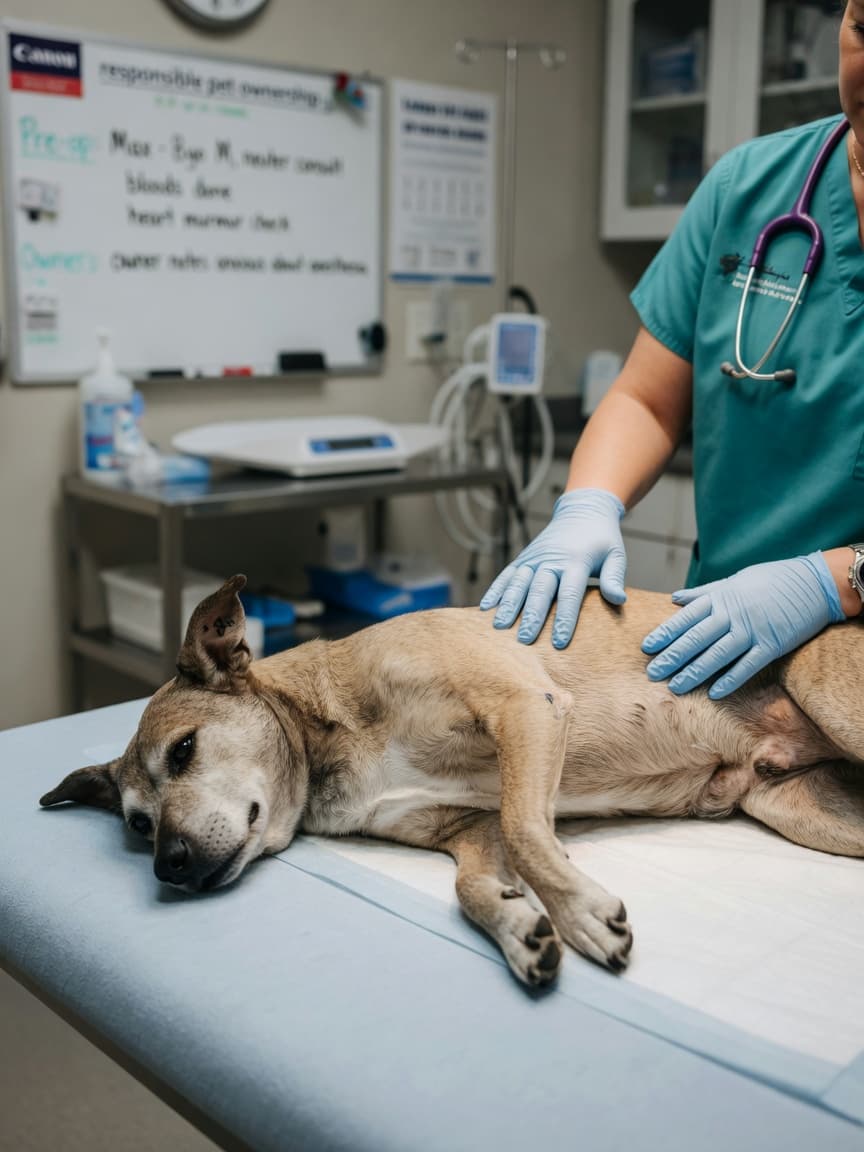
Castration is generally a quicker and lower-risk procedure than spaying a female. It is performed under general anaesthesia and typically takes 15 to 45 minutes. The testicles are removed through a small incision in front of the scrotum. The scrotal sac itself is usually left in place and shrinks over several weeks, which can occasionally confuse owners into thinking nothing has been removed.
Recovery expectations include:
- Restricted activity for seven to ten days post-surgery
- Daily inspection of the incision for swelling, discharge, or heat
- A buster collar or recovery suit to prevent licking
- Pain relief as prescribed — most dogs are noticeably more comfortable within 48 hours
Complications are uncommon but can include swelling, infection, or — rarely — internal haemorrhage. Contact your vet promptly if your dog seems distressed, is bleeding from the site, or has a visibly swollen abdomen.
Alternatives: Vasectomy and Chemical Castration
For owners who want to prevent reproduction without removing testosterone, two alternatives exist. Vasectomy — severing the vas deferens — renders a dog infertile while leaving testicular function intact. It is rarely performed in general practice in the UK but is available from some specialist surgeons.
Chemical castration via a hormonal implant (such as Suprelorin, containing deslorelin) temporarily suppresses testosterone for six to twelve months. It is reversible and useful for owners who want to trial the effects of hormone reduction before committing to surgery. It does not prevent testicular cancer and is not a permanent solution.
The Prostate Gland: A Compelling Reason to Neuter
One of the strongest arguments for neutering male dogs is prostate health. Benign prostatic hyperplasia affects the majority of intact male dogs over the age of five, causing straining to urinate or defecate, bloody discharge, and discomfort. It is almost entirely absent in neutered males. For dogs that will not be used for breeding, avoiding decades of prostate trouble is a significant quality-of-life argument in favour of neutering, even if the surgery is delayed until full maturity.
A Decision Worth Discussing Properly
Neutering is not a simple procedure to book and forget. Done at the right time for the right dog, it offers genuine health advantages and can simplify management considerably. Done too early in a breed that is vulnerable to hormonal removal, it may exchange some risks for others. The evidence base is now sufficient to say that a breed-informed, individualised approach is the standard of care — and any vet worth their salt will welcome that conversation with you.