
A Paralysing Disease With Roots in the Farmyard
Neosporosis is not a well-known disease among dog owners, yet it is one of the most significant causes of progressive paralysis in young dogs — particularly puppies under six months of age. Caused by the protozoan parasite Neospora caninum, it is intricately linked to cattle and farm environments, and it can be passed from mother to pup before birth. Understanding how this parasite operates is essential for breeders, working dog owners, and anyone whose dogs spend time around livestock.
The Life Cycle: Dogs, Cattle, and a Closed Loop
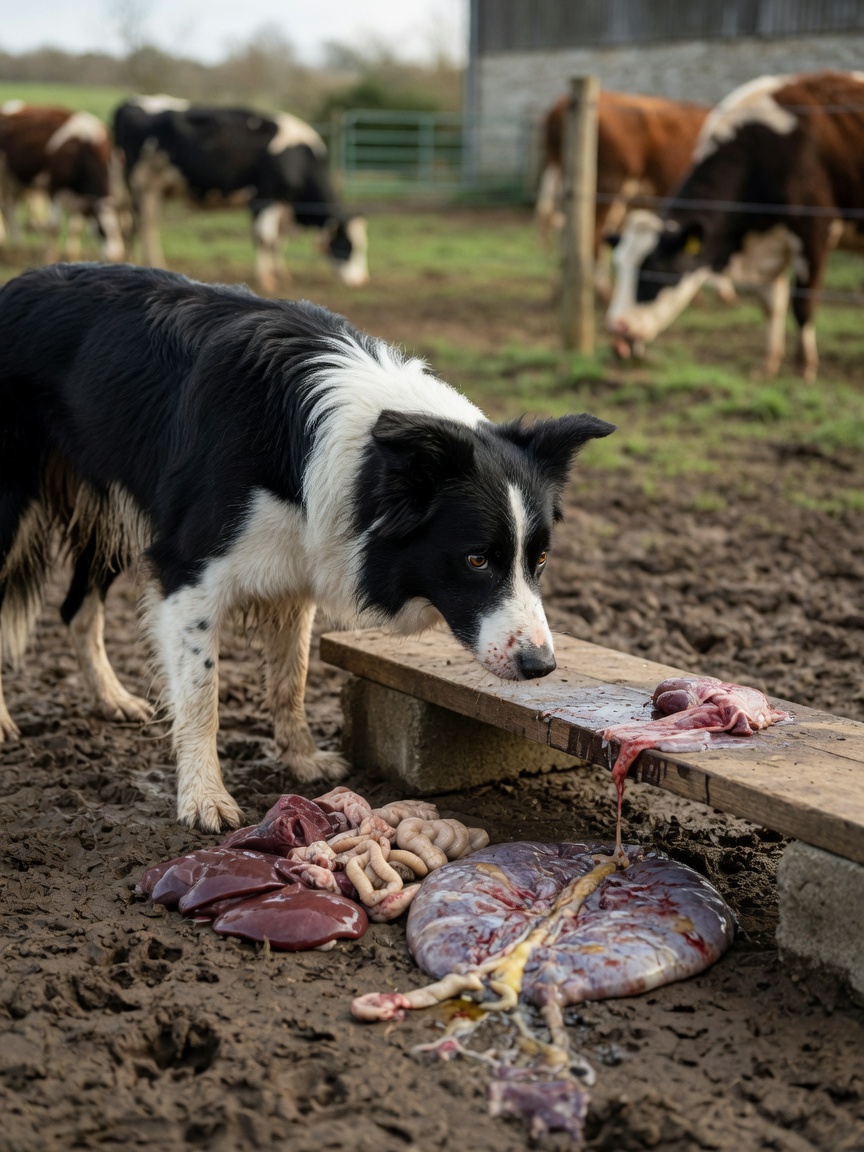
Neospora caninum has a two-host life cycle. Dogs — including wild canids such as foxes and dingoes — are the definitive host, meaning the parasite completes its sexual reproductive cycle in the dog's intestine. Cattle (and some other livestock) serve as intermediate hosts, harbouring tissue cysts in their muscles and nervous tissue.
Dogs become infected by consuming raw or undercooked beef, cattle placenta, aborted foetal material, or other bovine tissues containing Neospora cysts. Once infected, a dog can shed oocysts (environmental eggs) in its faeces for weeks. These oocysts contaminate pasture and water, where cattle then ingest them, continuing the cycle.
Critically, infected female dogs can pass the parasite directly to their pups across the placenta — a route called transplacental transmission. This is the primary cause of neosporosis in young puppies and explains why entire litters can be affected.
Who Is Most at Risk
Working dogs on farms and rural properties face the highest risk of exposure due to regular contact with cattle, raw bovine material, and contaminated environments. Breeds commonly used as farm dogs — collies, German Shepherds, and similar herding breeds — are frequently represented in reported cases, though this likely reflects exposure rather than breed susceptibility.
Puppies born to infected mothers are particularly vulnerable. Clinical disease in transplacentally infected pups tends to be severe and rapidly progressive. Adult dogs that acquire the infection post-natally are more likely to develop milder or subclinical disease, though immunocompromised adult dogs can develop serious neurological signs.
Clinical Signs: Progressive and Serious
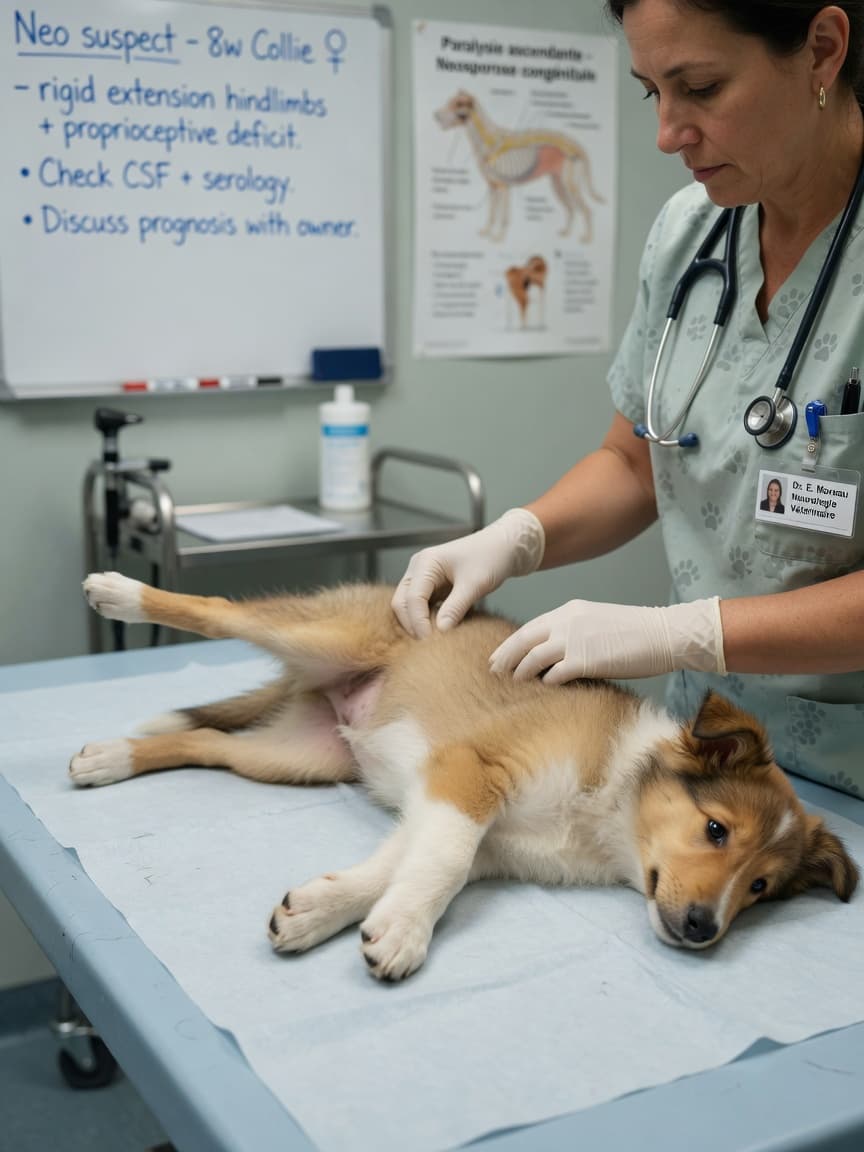
Neosporosis in young puppies typically presents as a distinctive ascending paralysis — weakness that begins in the hind limbs and moves forward. This pattern, combined with age and farm exposure, is a strong diagnostic indicator.
Signs in Puppies and Young Dogs
- Progressive weakness and stiffness in the hind limbs
- Rigid extension of one or both back legs — a hallmark sign of congenital infection
- Difficulty rising, walking, or climbing
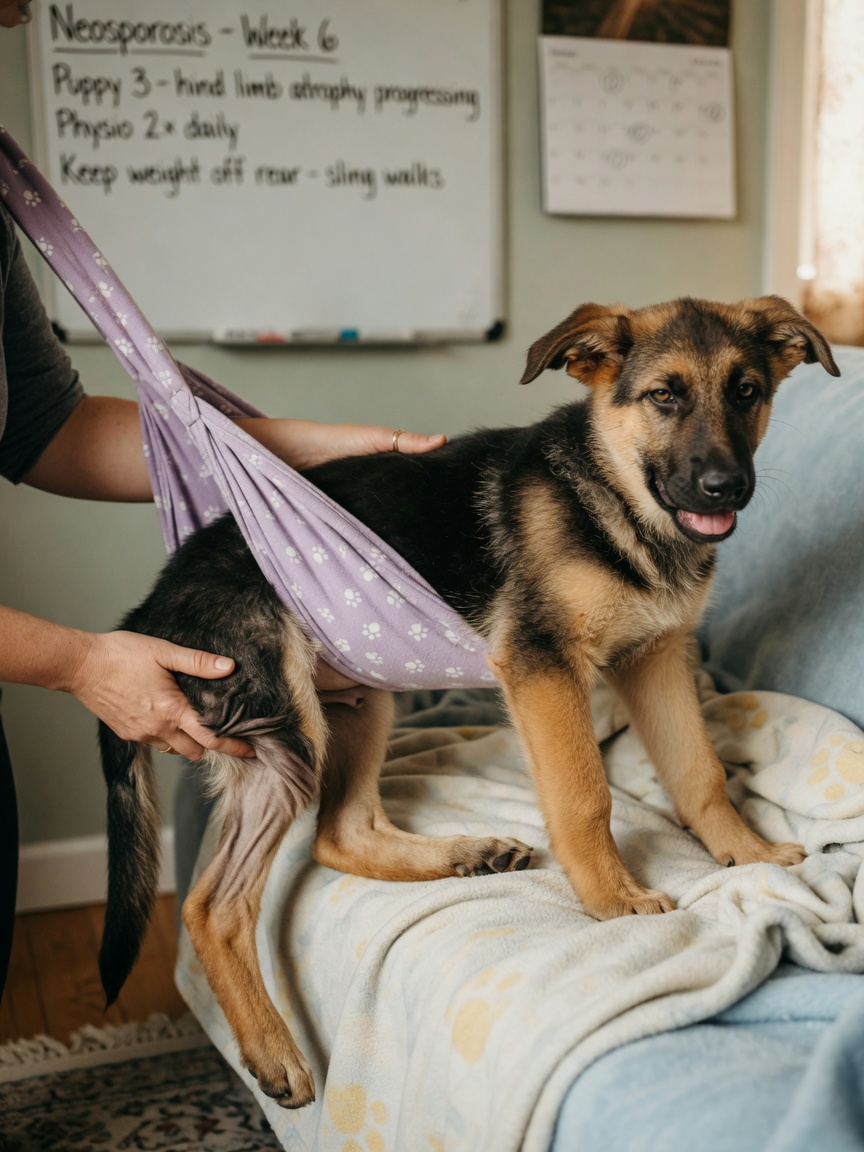
- Muscle atrophy (wasting) in affected limbs
- Dysphagia (difficulty swallowing) in some cases
- Progression to full paralysis without treatment
Signs in Adult Dogs
- Neurological signs including incoordination, circling, or seizures
- Muscle weakness or pain
- Heart muscle involvement (myocarditis) in some cases
- Skin lesions in a subset of immunocompromised adults
The rigid hind limb posture in pups is particularly characteristic and should prompt immediate veterinary attention. Progression can be rapid — days to weeks — and delay significantly worsens outcomes.
Diagnosis and Treatment
Diagnosis is based on clinical signs, history of farm exposure or birth to a potentially infected dam, and laboratory confirmation. Serology (antibody testing) can support a diagnosis, and PCR testing of blood, cerebrospinal fluid, or muscle biopsy offers greater sensitivity. In fatal cases, post-mortem examination with histopathology and immunohistochemistry provides definitive confirmation.
Treatment requires prompt initiation with antiprotozoal medications, most commonly clindamycin, with or without trimethoprim-sulphonamide. Pyrimethamine is sometimes added in severe cases. Treatment must be maintained for a minimum of four weeks, often longer.
Outcomes depend heavily on timing. Pups with early, mild signs treated promptly may stabilise or partially recover. Dogs with established rigid paralysis or severe neurological involvement have a guarded to poor prognosis. Some may survive but retain permanent neurological deficits. Your vet may refer complex cases to a veterinary neurologist.
Prevention on the Farm and Beyond
Preventing neosporosis requires breaking the transmission cycle between dogs and cattle.
- Never feed dogs raw beef, cattle offal, or bovine placentas — this is the single most important preventive measure for farm dogs
- Dispose of cattle afterbirth and aborted foetal material promptly and hygienically, preventing dog access entirely
- Test breeding bitches, particularly those on farms, before mating — an infected dam has a significant chance of passing infection to her entire litter
- Do not allow dogs to defecate near cattle feed, water troughs, or pasture where cattle graze
- Consider serological testing of dogs in affected litters and discuss preventive protocols with your vet if you breed working dogs on farmland
Neosporosis sits at the intersection of canine and bovine health, and its prevention is genuinely a farm biosecurity matter as much as a pet health one. If you breed dogs in a farming environment, or if a pup in your care develops hind limb weakness, consult your vet without delay. Early intervention is the clearest path to a better outcome — waiting to see if the pup "improves on its own" is rarely the right call with this particular disease.