
Why Pet Travel Changed After Brexit
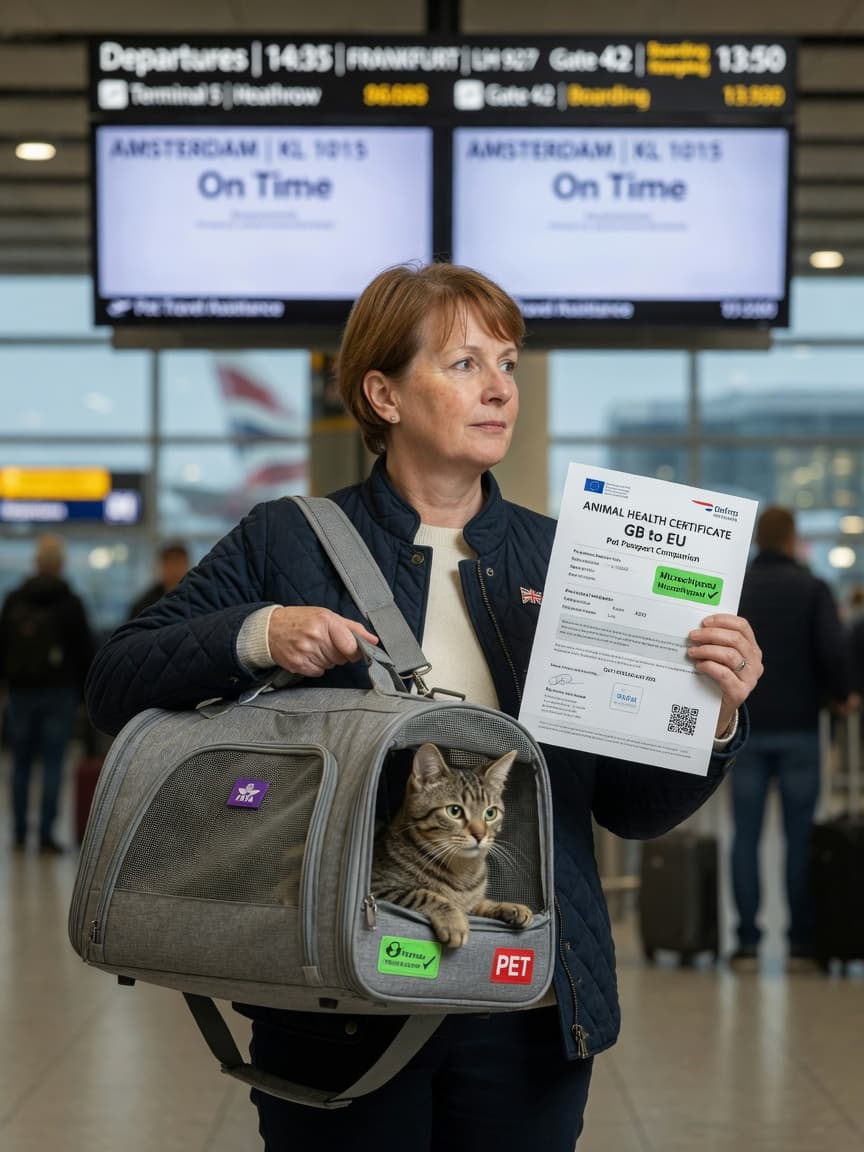
Before Brexit, UK pet owners could travel to EU countries using the EU Pet Passport — a document issued once and valid indefinitely. That arrangement ended on 1 January 2021. The pet passport issued in the UK is no longer accepted for entry to EU or EEA countries. In its place, UK owners must obtain an Animal Health Certificate (AHC) each time they travel.
This is not merely an administrative inconvenience — it changes the planning timeline significantly, and understanding the sequence of steps is essential to avoid your pet being turned away at the border or placed into quarantine.
The Core Requirements for EU and EEA Travel
The three non-negotiable steps, in the correct order, are as follows.
Step 1 — Microchipping
Your pet must be microchipped before any other step. If a rabies vaccination is given before the microchip is implanted, it does not count and will need to be repeated. For cats and dogs entering the EU, the microchip must comply with ISO Standard 11784/11785. Virtually all microchips implanted by UK vets already meet this standard, but it is worth confirming if your pet was chipped abroad or by a non-veterinary source.
Step 2 — Rabies Vaccination
Your pet must receive a valid rabies vaccination after the microchip is confirmed. Many pets will already be vaccinated if they have previously travelled internationally, but check that the vaccination is current — an expired vaccine is not sufficient. If your pet is receiving their first rabies vaccine, you must wait twenty-one days after the injection before travelling to most EU and EEA countries. This is a hard rule — there is no exception for a delayed journey.
Step 3 — The Animal Health Certificate
The Animal Health Certificate (AHC) replaces the old EU Pet Passport for UK-based owners. It must be issued by an Official Vet — a vet specifically authorised by the Animal and Plant Health Agency (APHA) to complete AHCs. Not every vet in practice holds this authorisation, so check with your clinic in advance, or use the APHA's online register to find one.
The AHC must be issued no more than ten days before you enter the EU. This is a strict window. If you obtain it too early and your travel is delayed, you may need a new certificate. Keep the original — photocopies are not accepted at border checks.
Once you have entered the EU with a valid AHC, you can move between EU member states without needing a new certificate, as long as you remain within the Schengen area. However, re-entering from a non-Schengen EU country may require a fresh certificate, so check the specific rules for your itinerary.
Tapeworm Treatment — Required for Certain Countries
Dogs (not cats) entering Finland, Ireland, Norway, or Malta must be treated for tapeworm (Echinococcus multilocularis) by a vet between 24 and 120 hours before arrival. The treatment must be recorded in the AHC by the vet who administered it. If you are travelling to one of these countries, factor this into your timing carefully — the window is narrow and cannot be applied retrospectively.
Travelling by Air — Cabin Versus Cargo
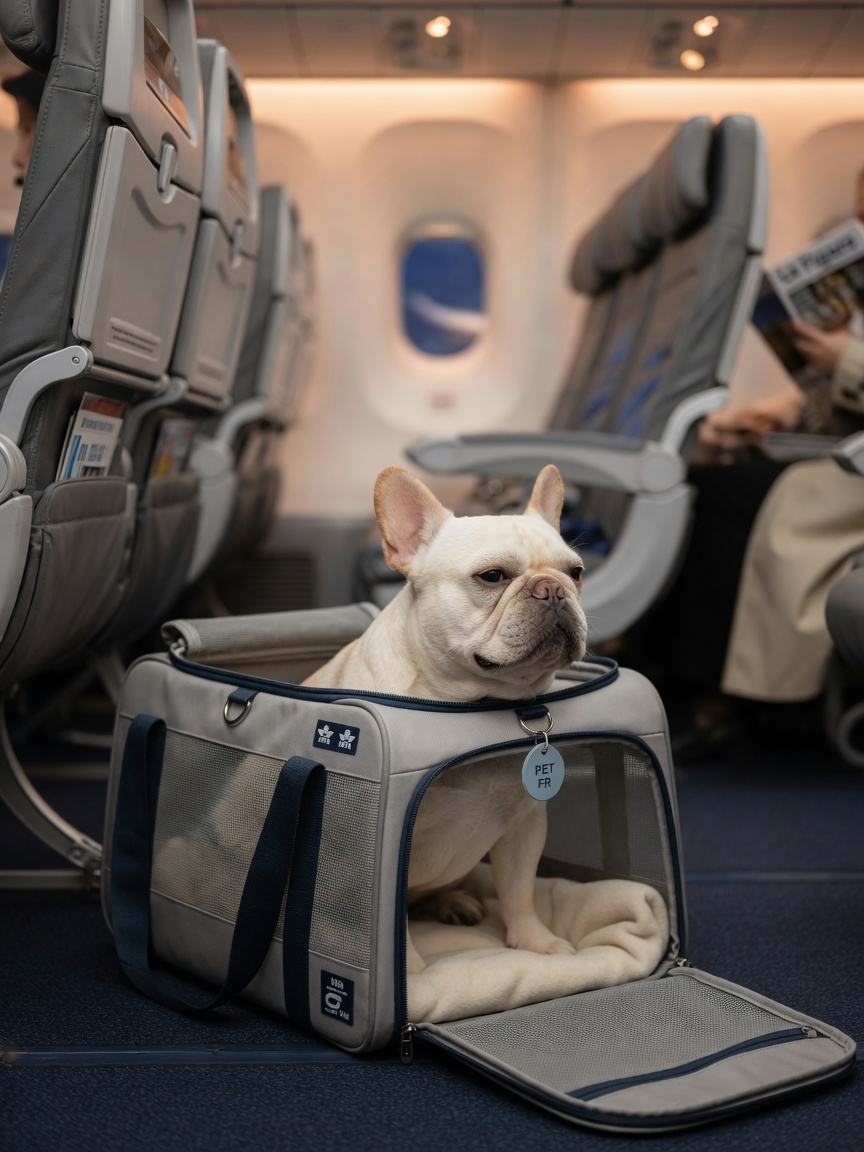
Airlines have their own rules about pet travel, and these vary considerably between carriers. It is essential to check the specific policy of your airline before booking, as rules change and exceptions are not always made at the gate.
Small dogs and cats — typically those in carriers weighing under 8kg in total — are allowed in the cabin on many European airlines, stored under the seat in front of you. Most long-haul carriers do not permit cabin travel for pets at all, regardless of size.
Larger animals travel as checked baggage or air cargo, in an approved pet carrier in the hold. The hold is pressurised and temperature-controlled, but the experience is stressful for many animals. Brachycephalic (flat-faced) breeds — such as French Bulldogs, Pugs, Persian cats — face an additional layer of complexity, as many airlines ban them from cargo travel entirely due to respiratory risk. If you have a brachycephalic pet, verify this before purchasing tickets.
Book your pet's place at the time you book your own ticket — space for pets in cabin and cargo is limited, and confirmation in writing is essential.
Countries That Require Quarantine
Most EU and EEA destinations do not require quarantine if all paperwork is correct. However, a handful of destinations around the world have strict biosecurity requirements that result in quarantine periods even for fully vaccinated, documented pets.
- Australia — pets require a mandatory quarantine period (typically ten days) at a government facility after completing a complex pre-export protocol that can take months to arrange from the UK.
- New Zealand — similar to Australia; pre-export preparation takes a minimum of several months and quarantine upon arrival is required.
- Japan — quarantine of up to 180 days is possible for pets without the correct documentation prepared well in advance; with the right preparation, this can often be reduced significantly.
- Hawaii (USA) — despite being a US state, Hawaii has its own strict biosecurity rules and requires a pre-arrival process; pets that meet all requirements may qualify for a five-day or less quarantine period.
If you are relocating to any of these destinations, begin the process at least six months in advance and contact the destination country's agricultural or biosecurity authority for current requirements — rules do change.
Practical Tips Before You Travel
- Find an Official Vet in your area before you need one — not every practice employs one, and availability can be limited in rural areas.
- Keep a folder with all your pet's health records, vaccination certificates, and microchip documentation.
- If travelling by ferry or Eurostar, check carrier rules — Eurostar permits pets in carriers on certain services; ferry operators vary widely.
- Consider a short-acting sedative or calming supplement for anxious pets — discuss this with your vet before travel, not at the last minute.
- Check whether your travel insurance covers veterinary emergencies abroad, and research emergency vets at your destination before you arrive.
The paperwork for international pet travel is genuinely more involved than it was before 2021, but it is entirely manageable with adequate planning. Start the process at least three months before a major international move, and give yourself a comfortable buffer for any delays.