
Not All Itching Is Caused by Fleas
When a pet scratches persistently but no fleas can be found, mites are a common culprit that often goes undiagnosed for weeks. Unlike fleas, mites are microscopic or near-invisible to the naked eye, their infestations can mimic other skin conditions, and different species require different approaches to treatment. Three mite types are particularly worth understanding: Cheyletiella, harvest mites (Neotrombicula autumnalis), and Demodex. Each has a distinct biology, presentation, and treatment pathway.
Cheyletiella: Walking Dandruff

Cheyletiella mites live on the surface of the skin and move through the coat, creating the appearance of animated dandruff — hence the nickname. They infest dogs, cats, and rabbits and are among the more contagious of the common pet mites, spreading readily between animals in close contact. Importantly, they can also cause temporary, itchy skin lesions in people who handle infested pets, though humans are not suitable permanent hosts.
Signs to Look For
- Visible scaling or flaking along the back and neck.
- Moderate to intense itching, though some animals show surprisingly little.
- In rabbits, large, crusty plaques on the back are characteristic.
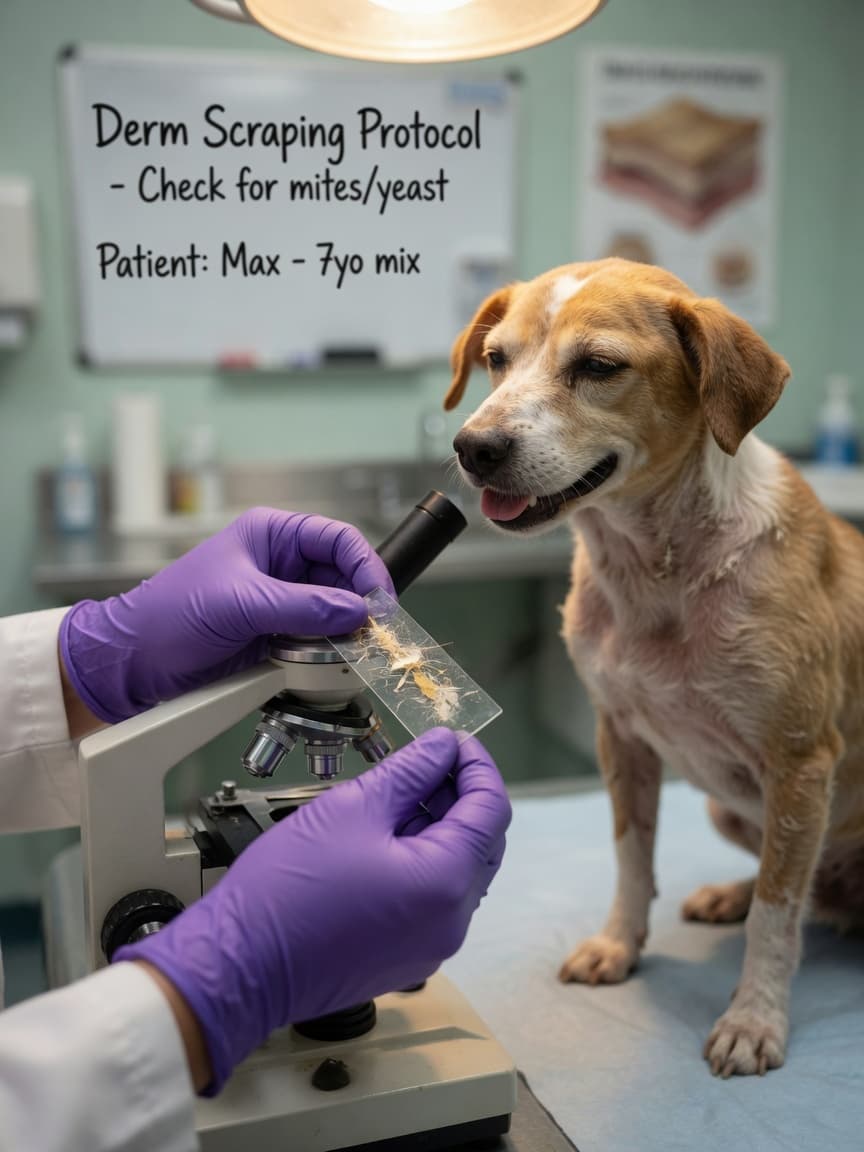
- Skin scrapes or coat brushings examined under a microscope by a vet can confirm diagnosis.
Treatment
Several parasiticide products are effective against Cheyletiella, including prescription spot-ons containing selamectin or ivermectin-based formulations (subject to species suitability). All animals in the household must be treated simultaneously. The home environment should also be addressed, as mites can survive off the host for several days. Your vet will advise on the most appropriate product for each species in your home.
Harvest Mites
Harvest mites are seasonal, typically appearing in late summer and autumn — from around August through October in the UK. Only the larval stage parasitises animals (and occasionally people). Larvae congregate in clusters, often visible as tiny orange-red dots, preferentially in areas of thin skin: between the toes, inside the ear flaps, around the face, and in the groin region.
Signs to Look For
- Intense, localised itching, often focused on the feet and ears.
- Clusters of tiny orange-red specks on close inspection.
- Secondary skin trauma from scratching or chewing.
- Seasonal pattern — symptoms resolving as autumn progresses is a useful diagnostic clue.
Treatment and Prevention
Some licensed spot-on treatments have activity against harvest mite larvae. Practical measures include avoiding areas of long grass and scrubland during peak season, particularly at dusk when larvae are most active. Bathing the feet after walks in known harvest mite habitats and checking for orange clusters can help reduce larval burden before itching begins. In dogs with recurring severe reactions, your vet may recommend prescription anti-itch medication alongside parasiticidal treatment to manage secondary inflammation.
Demodex: A Mite That Lives in Hair Follicles
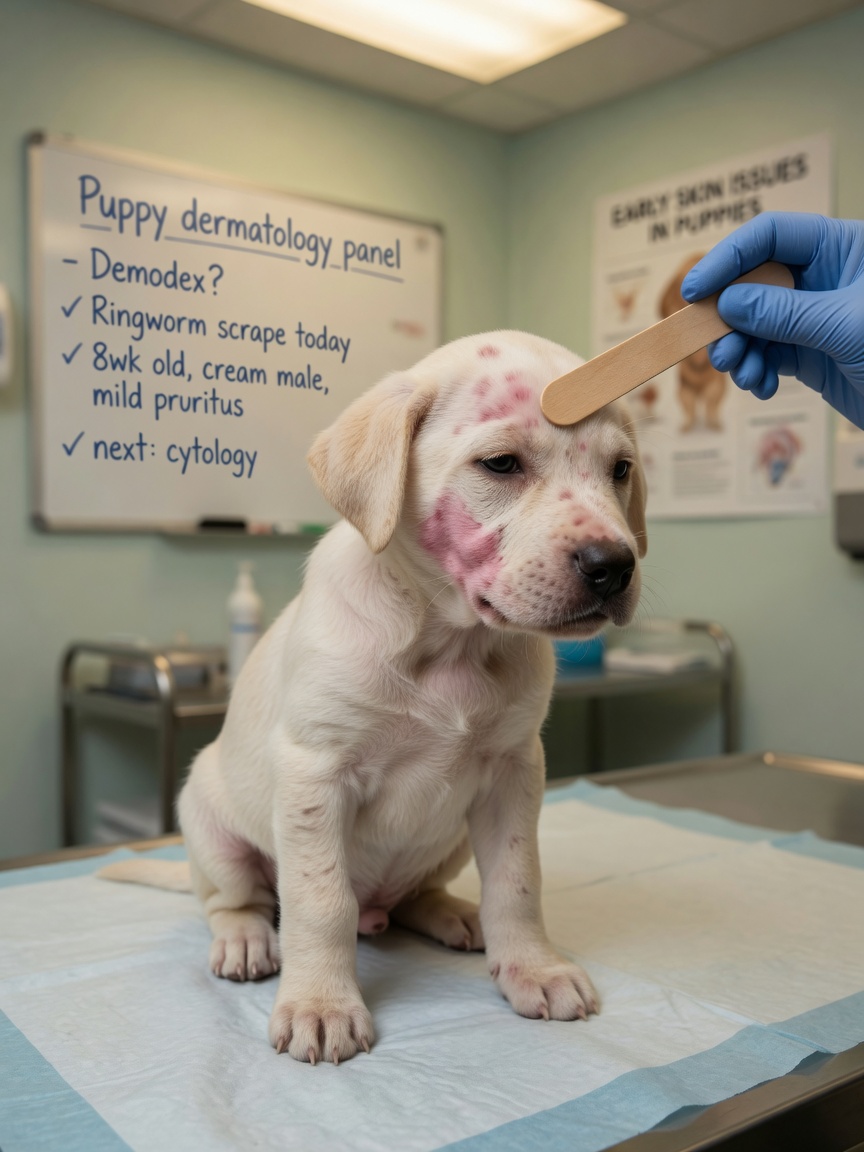
Demodex mites are a natural part of the skin fauna of most dogs and many cats, living in low numbers in hair follicles without causing disease. Problems arise when the immune system fails to keep mite populations in check, leading to demodicosis — a condition that can range from localised patches of hair loss in young dogs to severe, widespread skin disease in immunocompromised animals.
Localised Demodicosis
Typically seen in puppies under 18 months, localised demodicosis presents as small, discrete patches of hair loss, often around the face or forelimbs, with little or no itching. Many cases resolve spontaneously as the immune system matures. Veterinary monitoring is important to ensure localised disease does not progress.
Generalised Demodicosis
Generalised demodicosis involves widespread hair loss, scaling, skin thickening, and secondary bacterial infection. It carries a more guarded prognosis and always warrants investigation of underlying causes — including hormonal disorders, immunosuppressive disease, or immunosuppressive medication. Treatment involves licensed oral or topical parasiticide products and management of any underlying condition. This is not a condition to manage without veterinary oversight.
Feline Demodicosis
Demodicosis in cats is considerably rarer than in dogs and almost always associated with underlying systemic illness such as FIV, diabetes mellitus, or neoplasia. Diagnosis should prompt a thorough health screen.
Diagnosis Matters Before Treatment
Attempting to treat mite infestations without a confirmed diagnosis is a common source of frustration and wasted expenditure. Different mite species respond to different products, some of which are prescription-only and species-specific. A vet can perform skin scrapes, tape strips, or coat brushings to identify the mite involved. In suspected demodicosis, deep skin scrapes are typically required as the mite lives below the surface. Getting the diagnosis right first saves time, money, and unnecessary discomfort for your pet.
What to Do If You Suspect Mites
- Book a veterinary appointment — do not rely solely on over-the-counter products until a diagnosis is made.
- Note the location of lesions, seasonality of symptoms, and any other animals or people in the household affected.
- Bring a recent photo of the affected skin area if the presentation changes before your appointment.
- If other pets in the household show similar signs, mention this to your vet as it informs the diagnostic approach.
- Follow the full course of treatment prescribed even if signs improve early, as mites can persist at low numbers and relapse.
- For Demodex, schedule follow-up skin scrapes as directed to confirm clearance before stopping treatment.