
The Tumour That Looks Like Anything
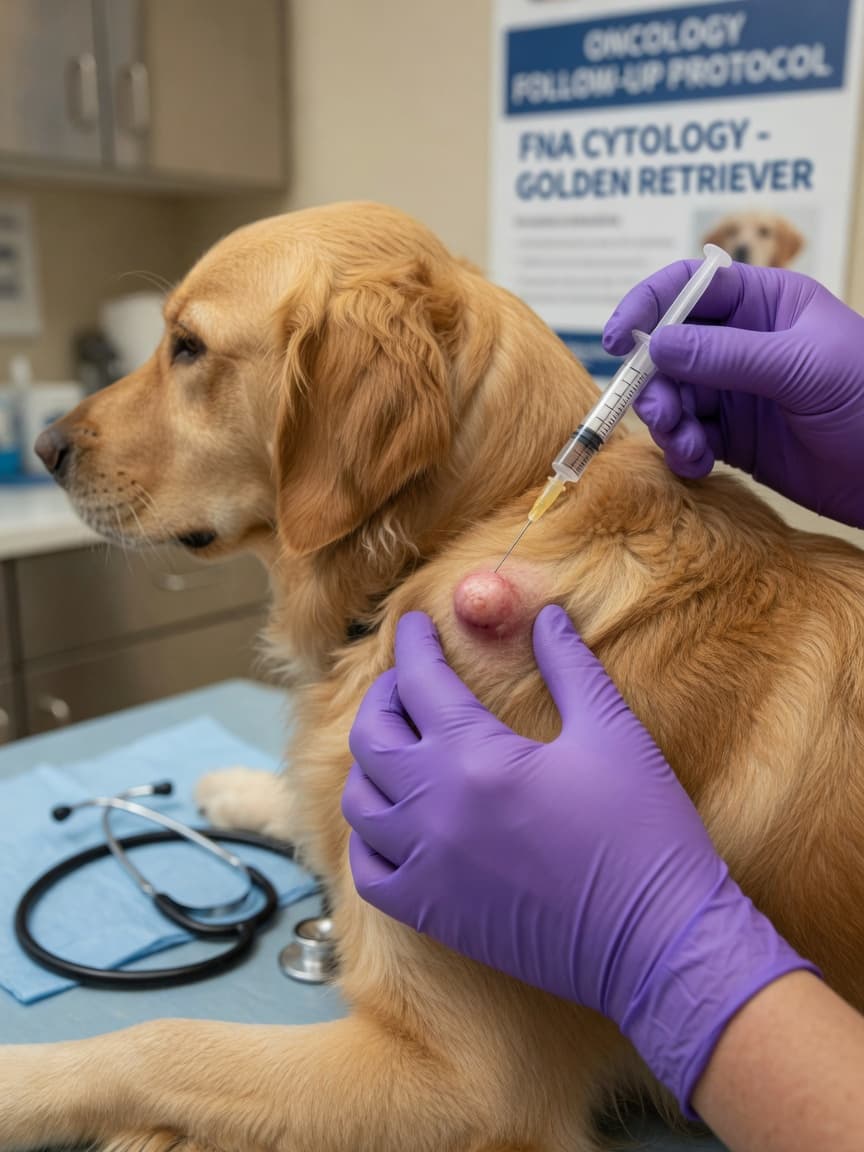
Mast cell tumours (MCTs) are frequently called the great imitators of veterinary oncology. They can appear as soft fatty lumps, small raised nodules, ulcerated skin lesions, or angry red welts — and any lump dismissed as a simple cyst can turn out to be a mast cell tumour on biopsy. MCTs are the most common malignant skin tumour in dogs, representing 16–21% of all cutaneous tumours. Early identification and grading are critical because the biological behaviour of these tumours varies enormously.
What Are Mast Cell Tumours?
Mast cells are immune cells found throughout body tissue, particularly in the skin, digestive tract, and respiratory system. They contain granules packed with histamine, heparin, and other inflammatory mediators. When mast cells become cancerous and form a tumour, these granules can release their contents — either spontaneously or when the tumour is manipulated — causing local swelling, systemic hypotension, gastrointestinal ulceration, and in severe cases, anaphylactic shock.
Certain breeds carry a significantly elevated risk, including Boxers, Bulldogs, Boston Terriers, Labrador Retrievers, Pugs, and Golden Retrievers. Flat-faced and brachycephalic breeds tend to develop MCTs that behave less aggressively than those seen in other breeds.
Grading: Predicting Biological Behaviour
Histological grading is the single most important prognostic factor in canine MCT. Two grading systems are in current use.
The Patnaik Three-Tier System
The traditional Patnaik classification divides MCTs into Grade I (well-differentiated, confined to dermis, excellent prognosis), Grade II (intermediate, extending into subcutis, variable behaviour), and Grade III (poorly differentiated, aggressive, high metastatic risk). Grade III tumours carry a median survival time of less than six months without aggressive treatment.
The Kiupel Two-Tier System
A more recent classification developed by Kiupel divides MCTs simply into low-grade and high-grade based on mitotic index and nuclear features. Studies suggest this system more reliably predicts outcomes, particularly for tumours that fell into the ambiguous Patnaik Grade II category. Many oncologists now use both systems together for a fuller picture.
Additional Prognostic Markers
Ki-67 index (a measure of cell proliferation) and c-Kit mutation status also inform prognosis. Mutations in the c-Kit receptor are found in approximately 15–40% of MCTs and are clinically significant because they predict responsiveness to tyrosine kinase inhibitor drugs.
Surgery: The First and Most Important Treatment
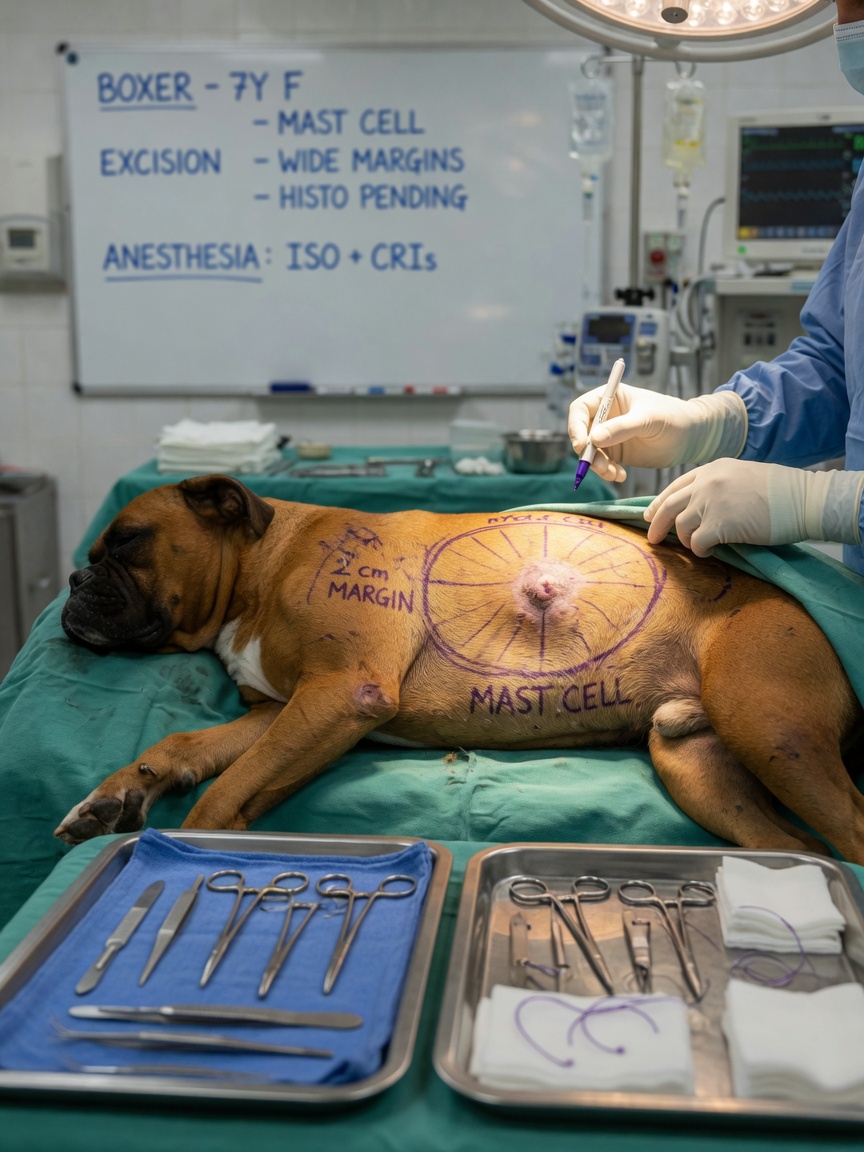
Complete surgical excision with wide, clean margins remains the primary treatment for localised mast cell tumours. Historically, surgeons aimed for margins of at least 2–3 cm laterally and one fascial plane deep. More recent evidence suggests that achieving histologically clean margins is what matters most, regardless of the exact centimetre measurement.
Before surgery, many oncologists recommend pre-treatment with diphenhydramine and an H2 blocker such as famotidine to reduce the risk of histamine-related complications during tumour manipulation. A fine-needle aspirate is usually performed first to identify the lump as an MCT before committing to surgery, though definitive grading requires full biopsy of the excised specimen.
For tumours in anatomically challenging locations — eyelids, digits, perineum — achieving clean margins can be difficult, and referral to a surgical specialist is often worthwhile.
When Chemotherapy and Targeted Therapy Are Needed
Low-grade MCTs with clean surgical margins often require no further treatment beyond monitoring. High-grade tumours, incompletely excised tumours, or those with evidence of lymph node or distant spread warrant additional therapy.
Tyrosine Kinase Inhibitors
For MCTs harbouring c-Kit mutations, oral tyrosine kinase inhibitors have demonstrated meaningful response rates in both measurable disease and post-surgical settings. These targeted drugs are administered at home as daily tablets, making them practical for many families. Side effects include gastrointestinal upset, protein-losing nephropathy, and hepatotoxicity, requiring regular monitoring blood tests.
Conventional Chemotherapy
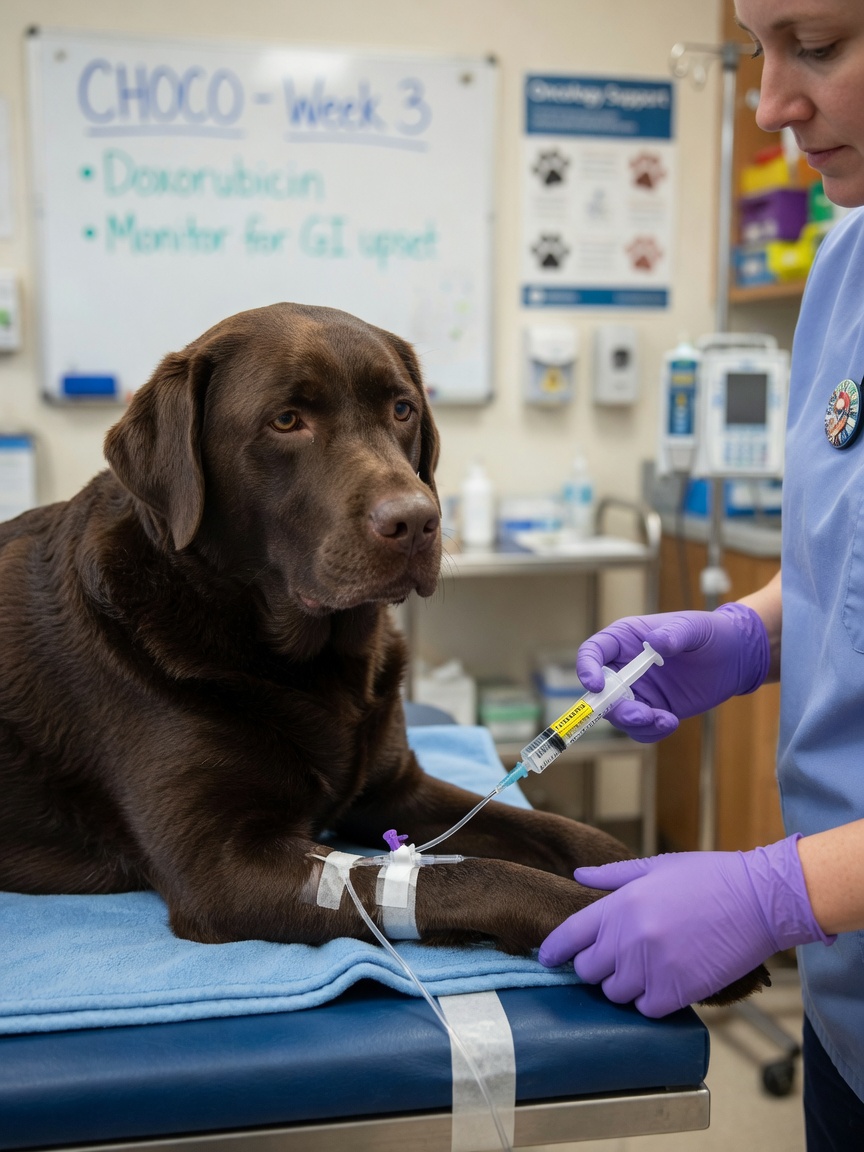
Vinblastine combined with prednisolone is the most established conventional chemotherapy protocol for high-grade or metastatic MCT. It is administered intravenously, usually on a fortnightly schedule. Response rates vary, and the aim is often disease control rather than cure in advanced cases.
Radiation therapy is also an effective adjunct where incomplete excision cannot be revised surgically, particularly for tumours on the limbs or face.
Monitoring and Long-Term Management
Dogs treated for MCT require structured follow-up. Regional lymph nodes should be assessed at every check-up. New lumps anywhere on the body should be aspirated promptly rather than observed — dogs who have had one MCT are at increased risk of developing additional tumours.
Long-term gastroprotection with famotidine or omeprazole is often recommended for dogs with high-grade disease, as circulating histamine promotes gastric acid secretion and ulceration.
Key Takeaways for Dog Owners
- Never assume a skin lump is benign — all new lumps warrant fine-needle aspiration
- Request histological grading using both Patnaik and Kiupel systems after excision
- Ask your vet about c-Kit mutation testing, which informs targeted treatment options
- Ensure surgical margins are assessed by the pathologist and discussed with your vet
- Establish a monitoring schedule with your vet, including lymph node palpation at each visit
- Seek referral to a veterinary oncologist for any high-grade, incompletely excised, or metastatic MCT
Mast cell tumours are unpredictable, but they are also one of the most actively researched cancers in veterinary medicine. With prompt diagnosis, appropriate grading, and tailored treatment, many dogs achieve excellent long-term outcomes. Your vet is your most important guide through this process.