

Massage Therapy for Dogs: Techniques and Real Benefits
Massage is one of the more intuitive forms of complementary therapy for dogs — most owners already stroke and handle their pets regularly, and the idea of extending that into something more deliberate feels natural. But canine massage therapy is a structured practice with a genuine evidence base, and understanding what it can and cannot do helps you make the most of it, whether you are working with a professional or learning basic techniques at home.
The Physiology Behind Canine Massage
Massage works through several overlapping mechanisms. Physically, it improves circulation to muscles and soft tissues, which helps deliver oxygen and nutrients while removing metabolic waste products. It reduces muscle tension and spasm, increases range of motion, and can break down minor adhesions in connective tissue.
Neurologically, massage stimulates mechanoreceptors in the skin and underlying tissue, which can reduce pain signalling through the gate control mechanism — essentially, the tactile input competes with and diminishes the pain signal. It also promotes the release of endorphins and reduces cortisol levels, which is why massage has measurable effects on anxiety and stress as well as physical symptoms.
What Conditions Can Benefit
Canine massage is most commonly used for:
- Arthritis and chronic joint pain — improving circulation and reducing muscle guarding around painful joints
- Post-surgical recovery — reducing swelling and preventing muscle atrophy during restricted activity
- Sports and working dogs — managing muscle soreness and improving recovery between training sessions
- Anxiety and stress — particularly in rescue dogs, dogs with separation anxiety, or those in recovery from trauma
- Older dogs — maintaining mobility and providing comfort as part of palliative care
- Dogs with neurological conditions — stimulating sensation and maintaining muscle condition
It is also used preventatively, particularly in high-performance breeds, to identify areas of tension or pain before they develop into more serious problems.
Core Techniques Used in Canine Massage
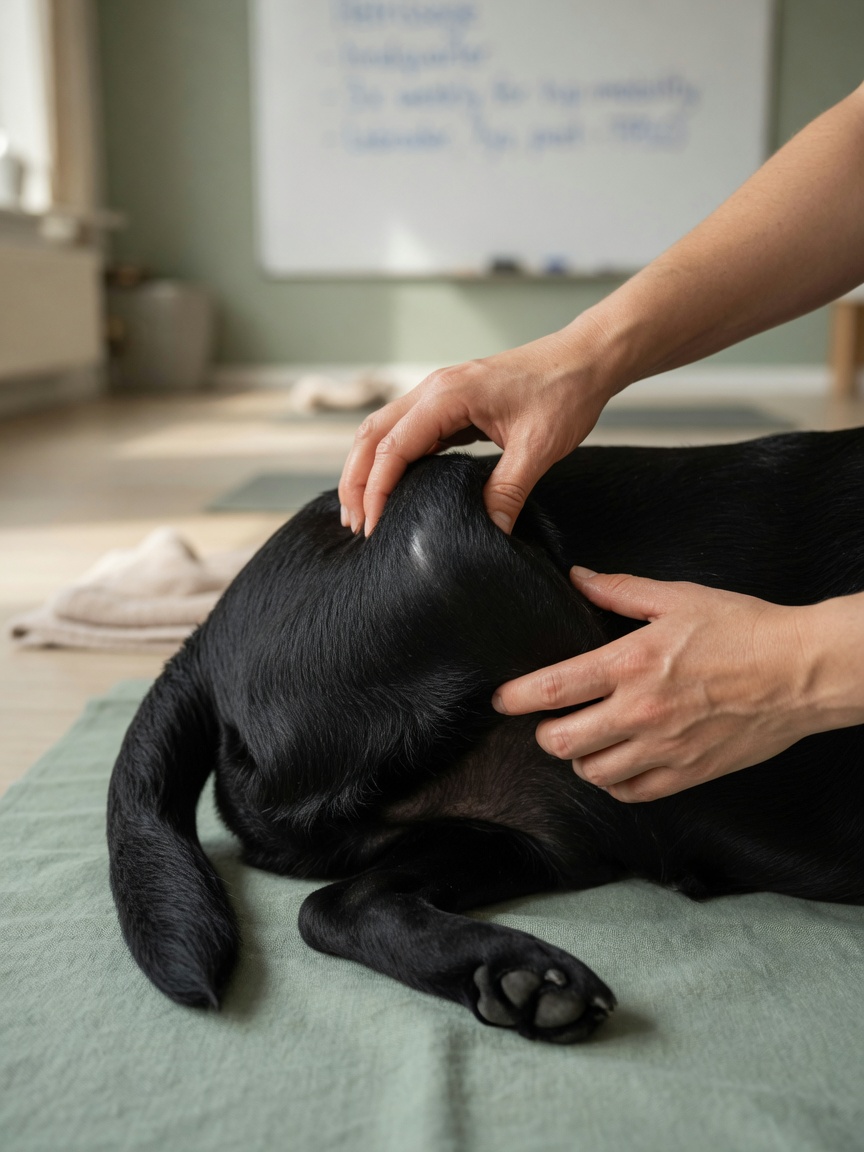
Professional canine massage therapists use a range of techniques, adapted from both human sports massage and traditional Swedish massage.
Effleurage involves long, smooth strokes along the direction of muscle fibres and is typically used to begin and end a session. It warms the tissue, improves circulation, and helps the dog relax and become comfortable with being handled. Petrissage involves kneading, lifting, and rolling of muscle tissue, targeting deeper layers to release tension and improve flexibility. It is more stimulating than effleurage and is used once the dog is relaxed.
Friction techniques use small, circular movements to address specific areas of tension, scar tissue, or muscle knots. Compression involves applying steady pressure to a muscle belly, which can help reduce hypertonicity — excessive muscle tension — and is particularly useful around the shoulder and hindquarter muscles in working dogs.
Trigger point therapy targets specific points of localised tightness within a muscle that can refer pain to other areas. These require more training to identify and treat correctly, and are better left to professionals.
What You Can Do at Home
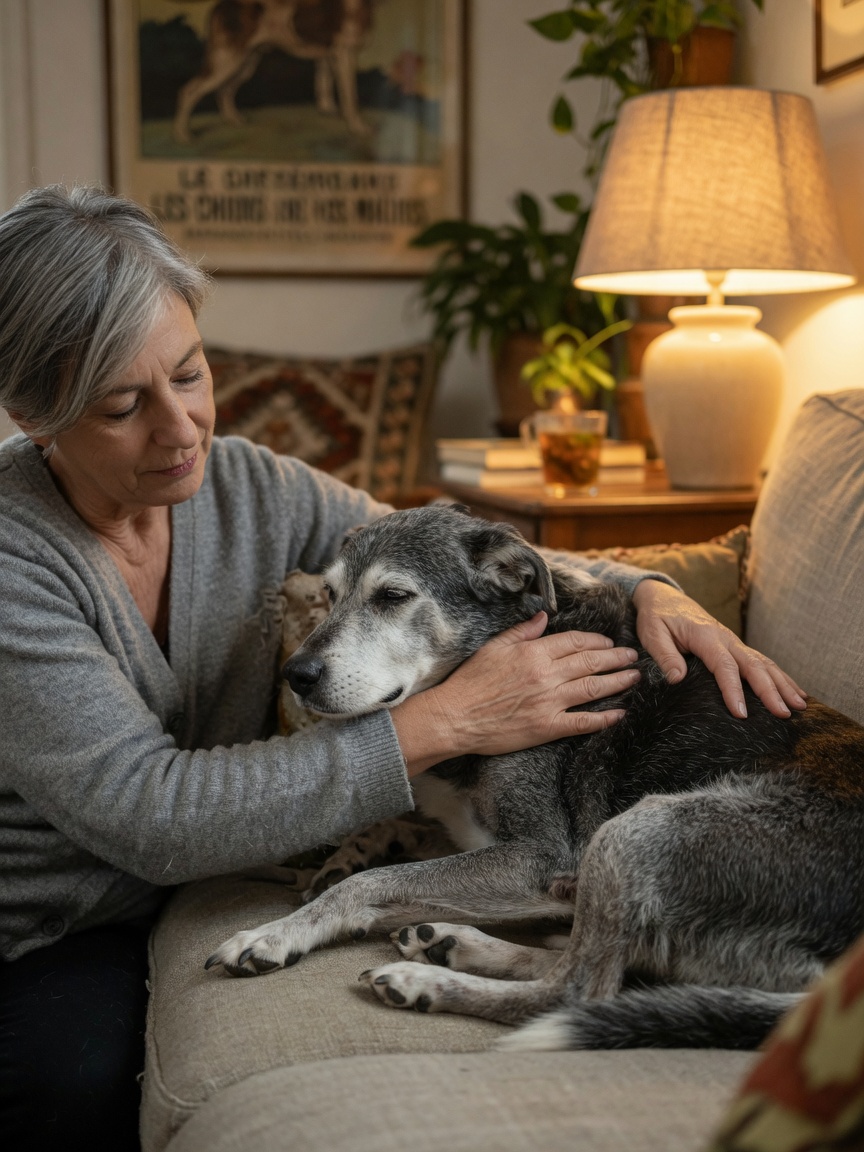
You do not need professional training to offer your dog basic massage. Simple effleurage strokes along the neck, shoulders, back, and hindquarters can be incorporated into your regular handling routine and provide genuine benefit — both physically and as a bonding activity.
Start with slow, gentle strokes and observe your dog's response. A dog that is enjoying massage will typically relax their muscles, lower their head, and may lean into your hands. A dog that stiffens, moves away, or shows any sign of discomfort should be respected — this may indicate a painful area that warrants veterinary attention, or simply a dog that needs more time to become comfortable with the experience.
Avoid applying heavy pressure around the spine, directly over joints, or on any area that appears swollen, warm, or obviously painful. Massage is not appropriate during acute injury, fever, or active infection.
The Evidence Base
Research specifically on canine massage is relatively limited compared to human massage therapy, but the existing studies are generally positive. A 2017 study in the journal Animals found that massage reduced anxiety behaviours in shelter dogs, and several studies have documented improvements in gait and comfort in arthritic dogs following regular massage sessions. The physiological mechanisms are well understood from human and equine research and are broadly applicable to dogs.
Most rehabilitation vets incorporate massage as part of a multimodal approach rather than as a standalone treatment, which reflects the current evidence — it is most useful alongside other interventions rather than in place of them.
Working with a Qualified Therapist
In the UK, canine massage practitioners should hold a recognised qualification. The Canine Massage Guild is the main professional body and maintains a directory of accredited practitioners. Veterinary physiotherapists — registered with the Association of Chartered Physiotherapists in Animal Therapy (ACPAT) — may also incorporate massage into rehabilitation programmes.
For dogs with significant health conditions, a referral from your vet ensures the therapist has the context they need to work safely and effectively. For healthy dogs, a series of professional sessions can also provide you with a personalised home care routine tailored to your dog's needs.