
Maine Coon Health: HCM, Hip Dysplasia & Joint Care
Updated June 2026
- Lifespan: 12–15 years
- Top Health Risks: Hypertrophic cardiomyopathy (HCM), hip dysplasia, spinal muscular atrophy (SMA), polycystic kidney disease (PKD)
- Genetic Tests Recommended: HCM MYBPC3 DNA test, SMA DNA test, PKD DNA test, annual echocardiogram
The Maine Coon is the largest domestic cat breed, often described as the "dog of the cat world" for its sociable, playful, and loyal personality. These magnificent cats can weigh up to 9 kg in males and live well into their teens with appropriate care. However, their size and genetic heritage predispose them to several serious conditions — most notably hypertrophic cardiomyopathy — that require regular screening and proactive management. Maine Coon owners who understand these risks are far better equipped to catch problems early and extend their cat's healthy, active years.
Most Common Health Problems in Maine Coons
Hypertrophic cardiomyopathy (HCM) is the most significant health concern in Maine Coons and one of the most common causes of death in the breed. Hip dysplasia — unusual in cats but genuinely prevalent in Maine Coons — causes joint pain and mobility problems. Spinal muscular atrophy (SMA) is a hereditary neuromuscular disease causing progressive hindlimb muscle wasting. Polycystic kidney disease (PKD), while more associated with Persian cats, has been reported in Maine Coons. Stomatitis (severe oral inflammation), obesity in indoor cats, and hip and stifle arthritis in older individuals round out the common clinical concerns.
Hypertrophic Cardiomyopathy (HCM)
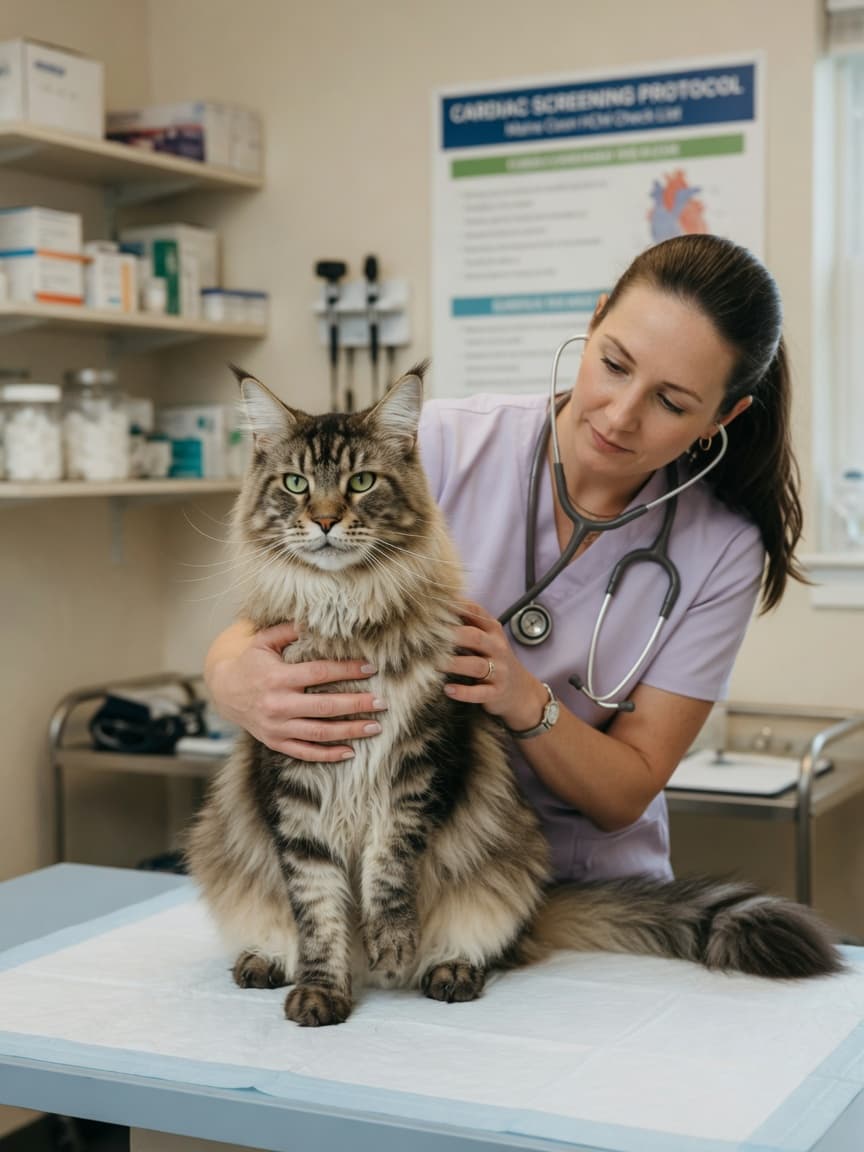
HCM is the most common cardiac disease of cats, and Maine Coons have one of the highest breed-specific prevalences. A mutation in the MYBPC3 gene (Maine Coon-specific: c.2453delC) causes abnormal cardiac myosin-binding protein, leading to progressive thickening of the left ventricular wall. As the wall thickens, the heart's ability to fill with blood diminishes, eventually leading to congestive heart failure, aortic thromboembolism (a devastating clot that blocks blood flow to the hindlimbs), or sudden cardiac death. DNA testing identifies cats with one or two copies of the Maine Coon MYBPC3 mutation — homozygous cats (two copies) develop disease more severely and earlier. However, the DNA test does not capture all cases, as other genetic variants causing HCM in Maine Coons exist. Annual echocardiography (cardiac ultrasound) is the gold standard for detection and monitoring — starting at two years of age for all breeding Maine Coons, and from age five for pets. Cats with confirmed HCM may be treated with atenolol, diltiazem, or clopidogrel (for clot prevention) under cardiologist guidance.
Hip Dysplasia in Maine Coons
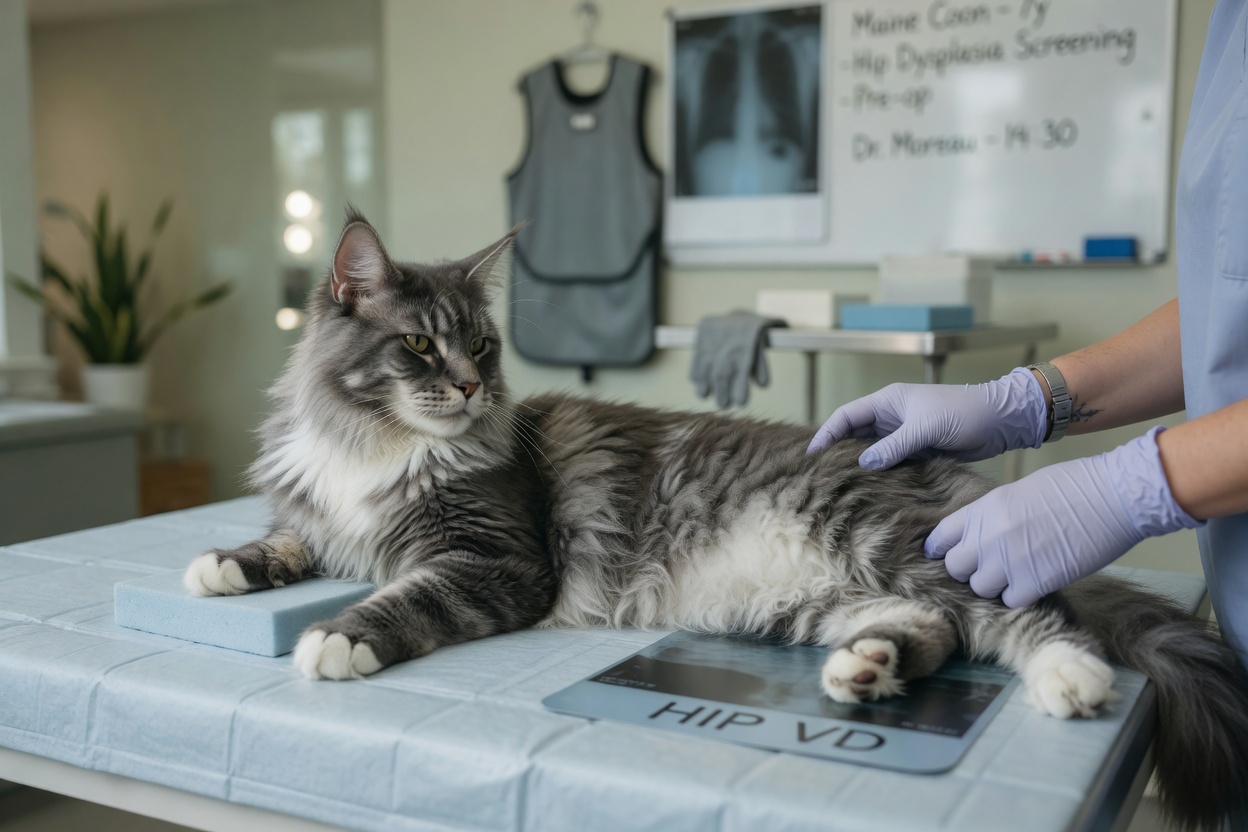
Feline hip dysplasia is often dismissed as a minor issue, but in large breeds like the Maine Coon, abnormal hip joint conformation causes genuine pain and functional impairment. Studies suggest that up to 18–20% of Maine Coons have radiographic evidence of hip dysplasia, making it the highest prevalence of any cat breed studied. Clinical signs are often subtle — reduced grooming of the lower back and hindquarters, reluctance to jump, stiffness after rest, or a changed gait — but owners familiar with their cat's normal movement can often detect changes early. Diagnosis is by hip radiograph. Management includes weight control (critical, given Maine Coons' tendency to be large and potentially overweight), environmental modifications such as ramps and lower-sided litter trays, and veterinary pain management with meloxicam or other feline-appropriate anti-inflammatory agents.
Spinal Muscular Atrophy (SMA)
SMA in Maine Coons is caused by a deletion in the LIX1 gene region and is inherited autosomal recessively. Affected kittens develop progressive weakness and muscle wasting in the hindlimbs from approximately 3–4 months of age, causing an unusual swaying gait and difficulty jumping. The condition is not painful and does not affect cognitive function, and affected cats can live relatively normal, comfortable lives with appropriate home modifications (litter boxes with low entry, ramps, avoiding high furniture). Carriers are clinically normal. A reliable DNA test is available and should be used in all breeding Maine Coons to prevent producing affected kittens.
Joint Care and Mobility in Senior Maine Coons
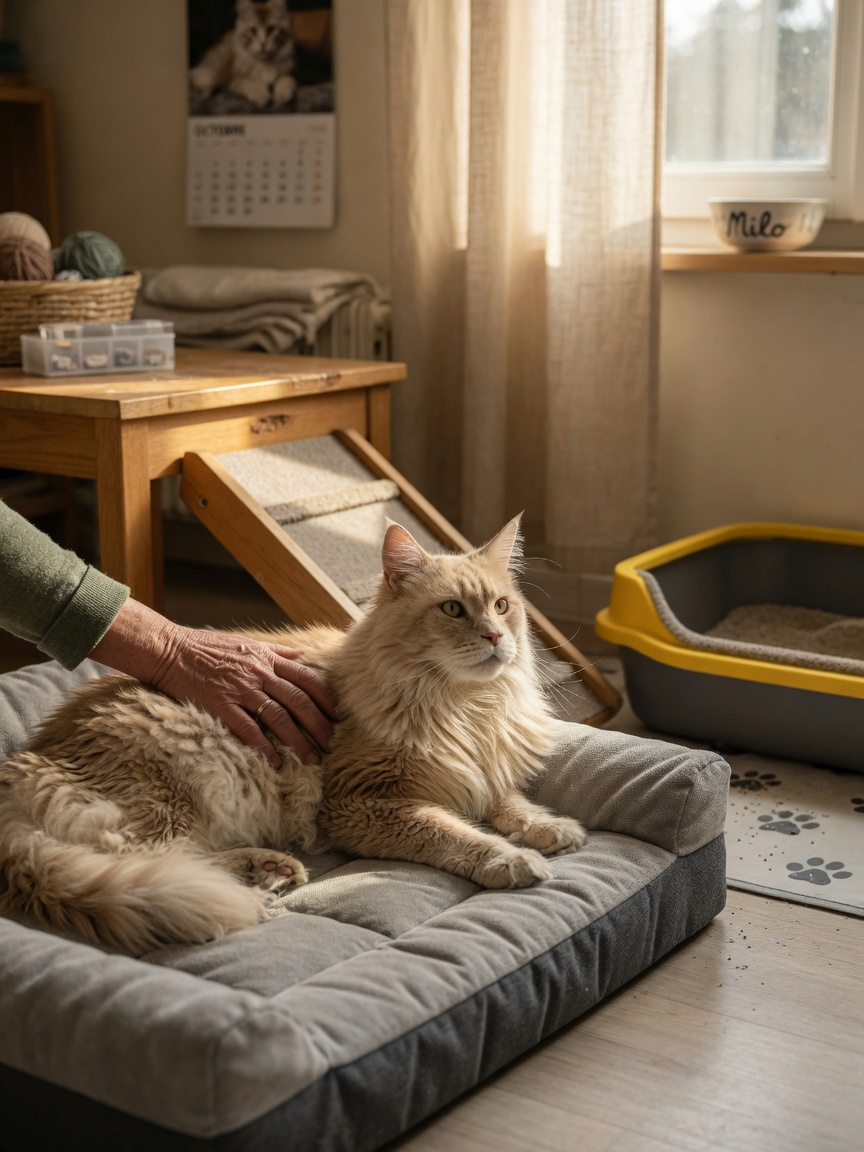
The combination of large body mass, predisposition to hip dysplasia, and long lifespan means that arthritis is extremely common in elderly Maine Coons. The condition is frequently under-recognised in cats because they hide pain and changes in mobility may be attributed to "normal ageing." Key signs include reduced grooming (especially of the back and tail base), changes in litter tray habits, reluctance to jump to previously frequented spots, and altered sleep locations. Environmental enrichment adapted for a less mobile cat — low entry litter trays, ramps to favourite perches, heated beds — dramatically improves quality of life. Veterinary pain management with licensed feline NSAIDs (never human ibuprofen or naproxen, which are toxic to cats) and newer monoclonal antibody treatments targeting nerve growth factor (frunevetmab) are available and effective.
Prevention and Proactive Care
Insist on HCM MYBPC3 DNA testing and recent echocardiograms for both parents before purchasing a Maine Coon kitten. Keep your cat at a lean body condition — Maine Coons can become very large and overweight, which accelerates both joint disease and cardiac strain. Provide a stimulating environment with varied heights (accessed by ramps as the cat ages), hunting games, and social interaction to maintain mental and physical health. Annual veterinary wellness exams should include cardiac auscultation, weight assessment, and joint mobility evaluation.
Recommended Supplements for Maine Coons
Omega-3 fatty acids from fish oil (EPA+DHA) are beneficial for Maine Coons at risk of or diagnosed with HCM — omega-3s have antiarrhythmic properties and support cardiac muscle function. For cats with hip dysplasia or arthritis, omega-3 supplementation at approximately 40 mg/kg combined EPA+DHA reduces joint inflammation. Glucosamine and chondroitin formulated for cats can be added as supportive joint supplements. Coenzyme Q10 is sometimes used as a cardiac antioxidant supplement in cats with HCM under specialist guidance. All supplements should be in cat-appropriate formulations, as many human or dog products contain ingredients (such as xylitol or high doses of certain fatty acids) that are harmful to cats.
Some owners report benefits from CBD oil for joint discomfort — always discuss with your vet first and choose a THC-free product like Candid Tails.
For high-quality breed-specific nutrition and supplements, browse the selection at Zooplus — one of Europe's leading pet supply retailers.
Key Takeaways
- HCM is the leading cause of early death in Maine Coons — annual echocardiograms from age 2 (breeders) and age 5 (pets) are the gold standard for detection.
- Hip dysplasia affects up to 1 in 5 Maine Coons — subtle changes in grooming or jumping behaviour should prompt veterinary assessment.
- SMA is fully preventable through DNA testing — no kitten from DNA-tested parents needs to be affected.
- Arthritis is very common in senior Maine Coons but is frequently hidden — proactive pain management and environmental adaptation dramatically improve quality of life.
- Omega-3 supplementation supports both cardiac and joint health in this large, long-lived breed.
References
- Meurs KM, Sanchez X, David RM, et al. A cardiac myosin binding protein C mutation in the Maine Coon cat with familial hypertrophic cardiomyopathy. Hum Mol Genet. 2005;14(23):3587-3593. PMID: 16236758
- Langenbach A, Giger U, Green P, Gregor TP, Rhodes H, Shofer FS. Relationship between degenerative joint disease and hip joint laxity by use of distraction index and Norberg angle measurement in a group of cats. J Am Vet Med Assoc. 1998;213(10):1439-1443. PMID: 9830423