
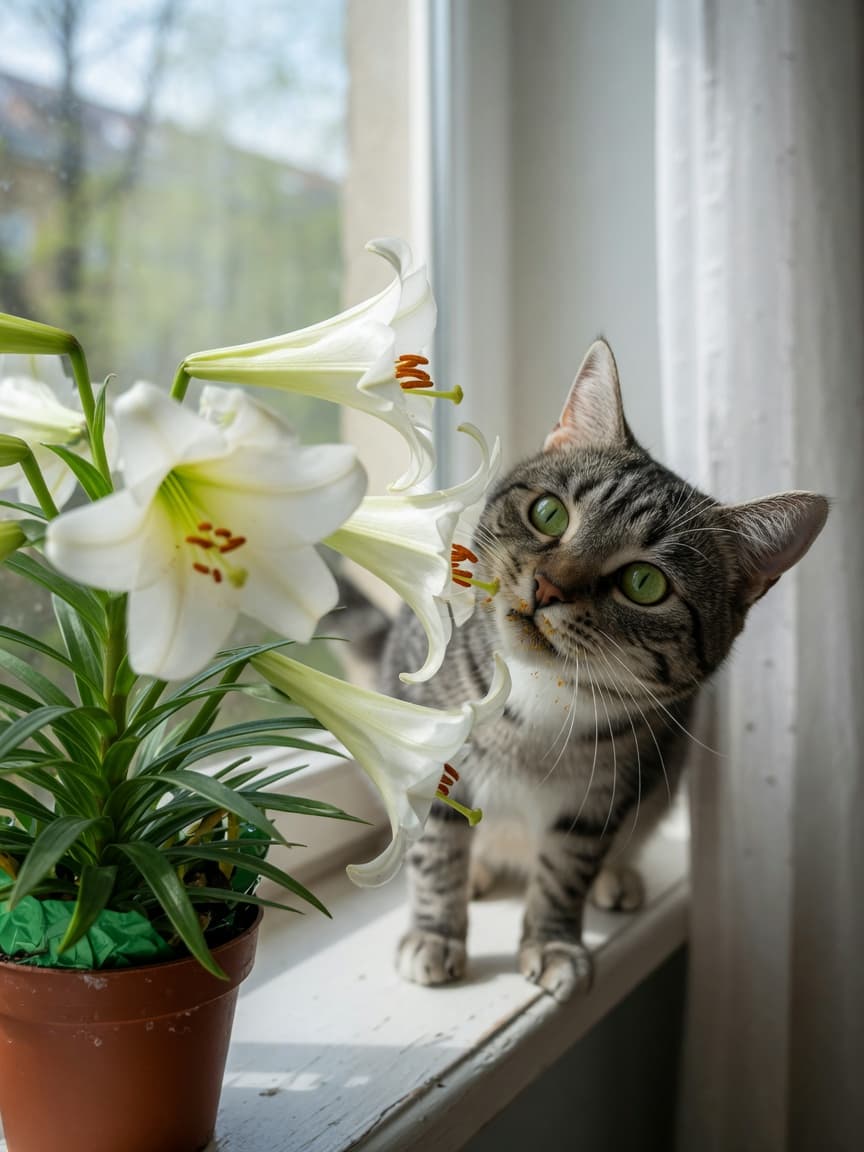
The Danger Hidden in a Common Flower
Lilies are among the most popular flowers in the UK, found in gardens, florists, and supermarket bouquets throughout the year. They are elegant, long-lasting, and deeply familiar. They are also one of the most dangerous plants a cat can encounter, and the severity of the risk is still not widely understood by pet owners.
What makes lilies so particularly treacherous is that the toxic threshold is extraordinarily low. A cat does not need to chew through a stem or eat a flower head to be poisoned. Brushing against the plant and then grooming pollen from the fur, drinking water from a vase containing cut lilies, or ingesting even a fragment of a leaf can be enough to trigger acute kidney failure.
Which Lilies Are Truly Dangerous

Not all plants that carry the word "lily" in their name are equally hazardous, but the distinction matters less than most people realise because the most toxic species are also the most commonly kept.
- True lilies from the genus Lilium, including Easter lily, tiger lily, Asiatic lily, Oriental lily, and stargazer lily, are all highly nephrotoxic to cats.
- Day lilies from the genus Hemerocallis are equally dangerous despite being a botanically distinct group.
- Peace lilies (Spathiphyllum) and lily of the valley (Convallaria) are toxic but through different mechanisms and are generally considered less acutely lethal, though still dangerous.
The critical point is that Lilium and Hemerocallis species cause rapid, often irreversible kidney damage, and this is what sets them apart from most other household toxins.
What Happens Inside the Body
Researchers have not yet isolated the precise compound responsible for lily toxicity in cats, which is itself a significant problem. What is well established is the pattern of injury. The toxin targets the renal tubular epithelial cells, the cells lining the tiny tubes within the kidney responsible for filtering blood and concentrating urine. These cells begin to die off rapidly, a process called acute tubular necrosis.
Cats lack certain metabolic pathways that other animals, including dogs, possess. This is why lily toxicity is specific to cats. Dogs can eat parts of Lilium plants with minimal consequence. For cats, the same exposure triggers organ failure.
The timeline is fast. Clinical signs typically begin within two to six hours of ingestion. The initial phase involves vomiting, lethargy, and loss of appetite. Within twelve to twenty-four hours, kidney function begins to deteriorate. Without intervention, complete kidney failure can occur within seventy-two hours, and at that point the prognosis becomes grave.
Recognising the Signs
Early recognition is everything with lily poisoning. The window for effective treatment is narrow, and once significant kidney damage has occurred, outcomes worsen sharply.
- Vomiting, often beginning within one to three hours of exposure
- Lethargy and unusual quietness
- Drooling or apparent nausea
- Reduced or absent appetite
- Increased thirst and urination in the early phase, followed by a decrease in urination as kidneys fail
- Tremors or seizures in severe cases
If you have any reason to suspect your cat has come into contact with a lily, do not wait for symptoms. Contact a veterinarian or the Animal Poison Line (in the UK: 01202 509000) immediately, even if the cat appears perfectly normal. Time is the most important factor in the outcome.
Treatment and What to Expect
If a cat is brought in within a few hours of ingestion, a vet may induce vomiting and administer activated charcoal to limit absorption of the toxin. The mainstay of treatment is aggressive intravenous fluid therapy, which helps to flush the kidneys and support function while the body attempts to recover.
Blood tests will be repeated at intervals to monitor kidney values, particularly blood urea nitrogen (BUN) and creatinine. If these continue to rise despite treatment, the prognosis deteriorates. Cats that receive treatment within six hours of ingestion have significantly better survival rates than those treated later.
Recovery, when it occurs, can still leave lasting kidney impairment. Some cats survive lily poisoning but go on to develop chronic kidney disease as a result of the initial injury.
Prevention Is the Only Reliable Strategy
Because the toxic dose is so small and the mechanism is so aggressive, the only genuinely safe approach is to keep lilies out of any home where cats live.
- Do not accept bouquets containing lilies if you have cats, or remove the lilies before bringing the flowers indoors.
- Ask florists to substitute safe flowers such as roses, sunflowers, or orchids.
- If you have an outdoor garden, avoid planting any species from the Lilium or Hemerocallis genera in spaces where cats roam.
- Be aware that seasonal displays, particularly around Easter and late spring, often feature lily arrangements in shops, markets, and offices.
It is worth having a conversation with any regular visitors or with people who send flowers to your home. Many people are unaware that lilies are dangerous to cats at all, let alone that the risk is so extreme.
A Risk Worth Taking Seriously
Lily poisoning is one of the leading causes of acute kidney failure in cats presenting to veterinary emergency services in the UK. The tragedy is that it is entirely preventable. The flowers are beautiful, but for a household with cats, they represent a risk that simply is not worth taking. Choosing cat-safe alternatives costs nothing and could, without any exaggeration, save your cat's life.