
Labrador Retriever Health: Weight, Joints & Common Conditions
Updated June 2026
- Lifespan: 10–12 years
- Top Health Risks: Obesity, hip and elbow dysplasia, exercise-induced collapse, centronuclear myopathy
- Genetic Tests Recommended: OFA hip/elbow, EIC DNA test, CNM DNA test, PRA-prcd DNA test
The Labrador Retriever has been the most popular dog breed in numerous countries for decades, and it's easy to see why — they are friendly, trainable, and endlessly enthusiastic. But that enthusiasm often extends to food, making Labs one of the breeds most prone to obesity. Combined with inherited joint problems and a handful of breed-specific genetic conditions, Labrador owners benefit enormously from understanding the health landscape before symptoms arise.
Most Common Health Problems in Labrador Retrievers
Obesity is the single greatest threat to Labrador health and quality of life, and it amplifies nearly every other condition on this list. Hip and elbow dysplasia are widespread orthopedic concerns, while exercise-induced collapse (EIC) affects a meaningful subset of the population. Progressive retinal atrophy (PRA) can lead to blindness, and centronuclear myopathy (CNM) causes generalized muscle weakness. Skin allergies, ear infections due to their floppy ear anatomy, and tricuspid valve dysplasia round out the common concerns.
Obesity and the POMC Gene Mutation

Labradors are uniquely predisposed to weight gain due to a deletion mutation in the POMC (pro-opiomelanocortin) gene, which impairs the brain's ability to register satiety. Research published in Cell Metabolism found that approximately 23% of pet Labradors and over 75% of assistance dogs carry at least one copy of this mutation. Dogs with two copies are on average 1.9 kg heavier than unaffected dogs. For owners, this means the standard "feed until satisfied" approach does not work — Labs require carefully measured portions, twice-daily feeding schedules, and minimal treats. Even 10–15% excess body weight accelerates cartilage breakdown in dysplastic joints and increases the risk of diabetes and cardiac disease. A body condition score of 4–5 out of 9 should be the target.
Hip and Elbow Dysplasia

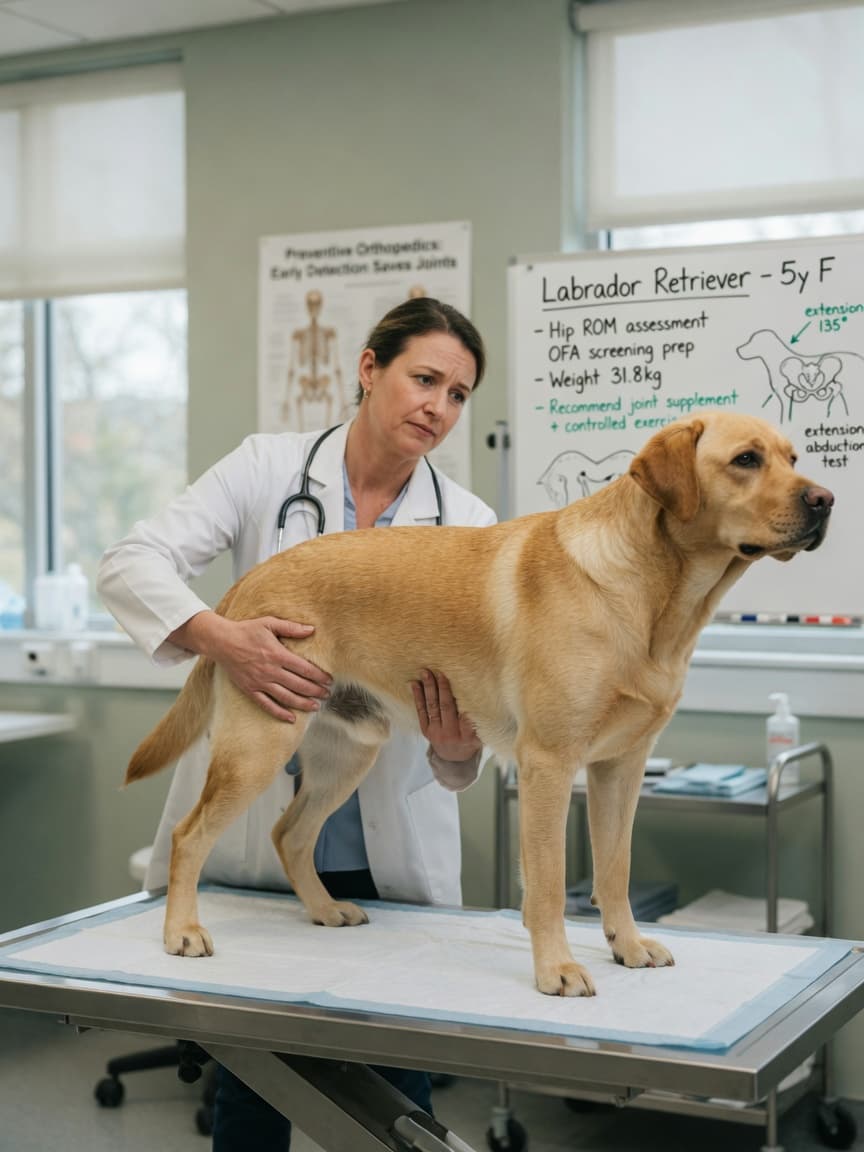
Labradors have among the highest rates of hip dysplasia of any large breed. OFA statistics consistently show that roughly 12–15% of Labs evaluated have dysplastic hips. Elbow dysplasia — encompassing conditions such as fragmented coronoid process and osteochondrosis dissecans — is similarly prevalent. Both conditions cause pain, reduced range of motion, and progressive osteoarthritis. Because they are polygenic, no single gene test can eliminate risk, but OFA-certified parents substantially reduce the odds. Puppies should avoid repetitive stair climbing and jumping during the first 12–18 months when growth plates are open. Diagnosis is confirmed by radiograph, and management includes weight control, physiotherapy, non-steroidal anti-inflammatory medications, and in some cases surgery such as arthroscopy or femoral head ostectomy.
Exercise-Induced Collapse (EIC)
EIC is an autosomal recessive condition caused by a mutation in the DNM1 gene, causing affected dogs to develop progressive muscle weakness and collapse after 5–25 minutes of intense exercise. Episodes typically last 5–25 minutes and are rarely fatal, but they can be frightening and dangerous if the dog collapses near water. A DNA test identifies carriers (who are clinically normal) and affected dogs. Responsible management involves avoiding intense sustained exercise, especially in warm weather, and ensuring affected dogs always cool down gradually. Affected dogs can often live normal lives with appropriate exercise modification.
Progressive Retinal Atrophy (PRA)
PRA-prcd is the most common form affecting Labradors, causing progressive degeneration of the retina's photoreceptor cells. Dogs first lose night vision, then peripheral vision, and eventually go blind, usually between ages four and eight. There is no treatment, but DNA testing allows breeders to avoid producing affected puppies by ensuring at least one parent is clear. Blind dogs adapt remarkably well to consistent home environments, and owners can support them with scent markers, consistent furniture placement, and verbal cues during exercise.
Prevention and Proactive Care
Weight management is the cornerstone of Labrador preventive care. Use a kitchen scale to measure kibble, avoid feeding table scraps, and use low-calorie treats such as carrot sticks or green beans for training. Annual vet visits should include body condition scoring, joint palpation, and an eye exam. From age six, biannual checkups are advisable given the breed's cardiac and joint disease burden. Dental disease is common — brush teeth three to five times per week and schedule annual professional cleanings.
Recommended Supplements for Labrador Retrievers
Fish oil providing 2,000–3,000 mg of combined EPA and DHA daily is one of the most evidence-supported supplements for Labs prone to joint disease. It reduces synovial inflammation and may slow cartilage degradation. Green-lipped mussel extract is another option with promising clinical data for joint support. For Labs carrying the EIC mutation or recovering from exercise-induced episodes, electrolyte supplementation may be recommended by your veterinarian after intense activity in warm weather.
Some owners report benefits from CBD oil for joint discomfort — always discuss with your vet first and choose a THC-free product like Candid Tails.
For high-quality breed-specific nutrition and supplements, browse the selection at Zooplus — one of Europe's leading pet supply retailers.
Key Takeaways
- A POMC gene mutation causes about 23% of Labs to feel perpetually hungry — strict portion control is essential.
- Hip and elbow dysplasia affect roughly 1 in 7 Labs; always request OFA certifications from breeders.
- Exercise-induced collapse is detectable by DNA test before purchasing a puppy from working lines.
- PRA causes progressive blindness — affected dogs can live well with environmental adaptation and owner support.
- Fish oil and weight control together offer the greatest preventive benefit for Lab joint health.
References
- Raffan E, Dennis RJ, O'Donovan CJ, et al. A deletion in the canine POMC gene is associated with weight and appetite in obesity-prone Labrador Retriever dogs. Cell Metab. 2016;23(5):893-900. PMID: 27184055
- Taylor SM, Shmon CL, Shelton GD, Patterson EN, Minor KM, Mickelson JR. Exercise-induced collapse of Labrador Retrievers: survey results and preliminary investigation of genetic prevalence. J Am Anim Hosp Assoc. 2008;44(6):295-301. PMID: 18981194