ForPetsHealthcare
Dogs

How To Use A Dog Car Harness - Whole Dog Journal

By Julia WrenfieldUpdated August 4, 20264 min read
Evidence-based · Sources checked
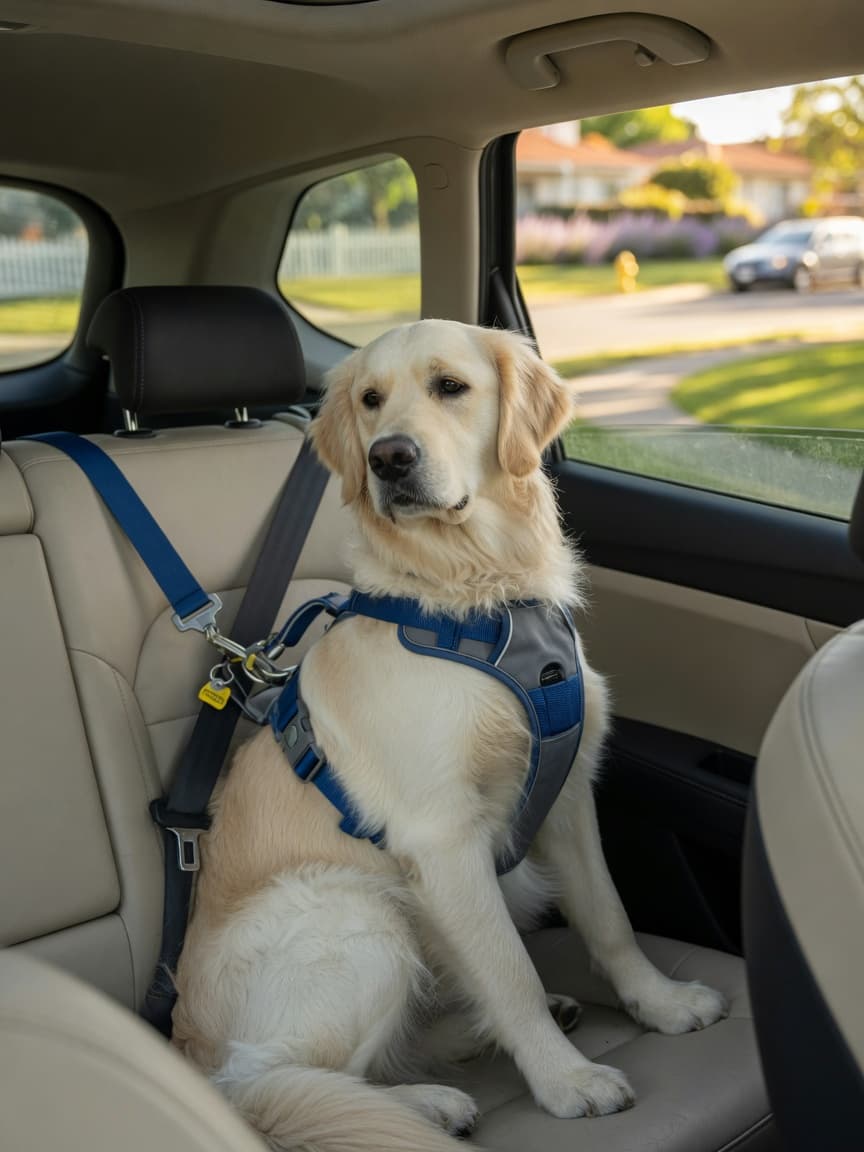
{"en": "Golden Retriever secured in car seat with black safety harness during vehicle travel", "es": "Golden Retriever asegurado en asiento de auto con arn\u00e9s de seguridad negro durante viaje vehicular", "fr": "Golden Retriever attach\u00e9 au si\u00e8ge auto avec harnais de s\u00e9curit\u00e9 noir pendant le transport", "de": "Golden Retriever mit schwarzem Sicherheitsgeschirr im Auto w\u00e4hrend der Fahrt gesichert", "nl": "Golden Retriever beveiligd met zwart veiligheidstuig in autostoel tijdens autorit", "pt": "Golden Retriever preso com arn\u00eas de seguran\u00e7a preto no banco de carro durante viagem", "it": "Golden Retriever assicurato con cintura di sicurezza nera nel seggiolino auto durante il viaggio"}

Driving with your dog doesn't have to be stressful or unsafe. A proper dog car harness is one of the most effective ways to keep your pet secure whilst travelling, protecting both your furry companion and yourself from potential injury during sudden stops or accidents. Whether you're heading to the vet, taking a weekend trip, or embarking on a longer holiday, understanding how to correctly fit and use a car harness is essential knowledge for every responsible dog owner.

Why Your Dog Needs A Car Harness
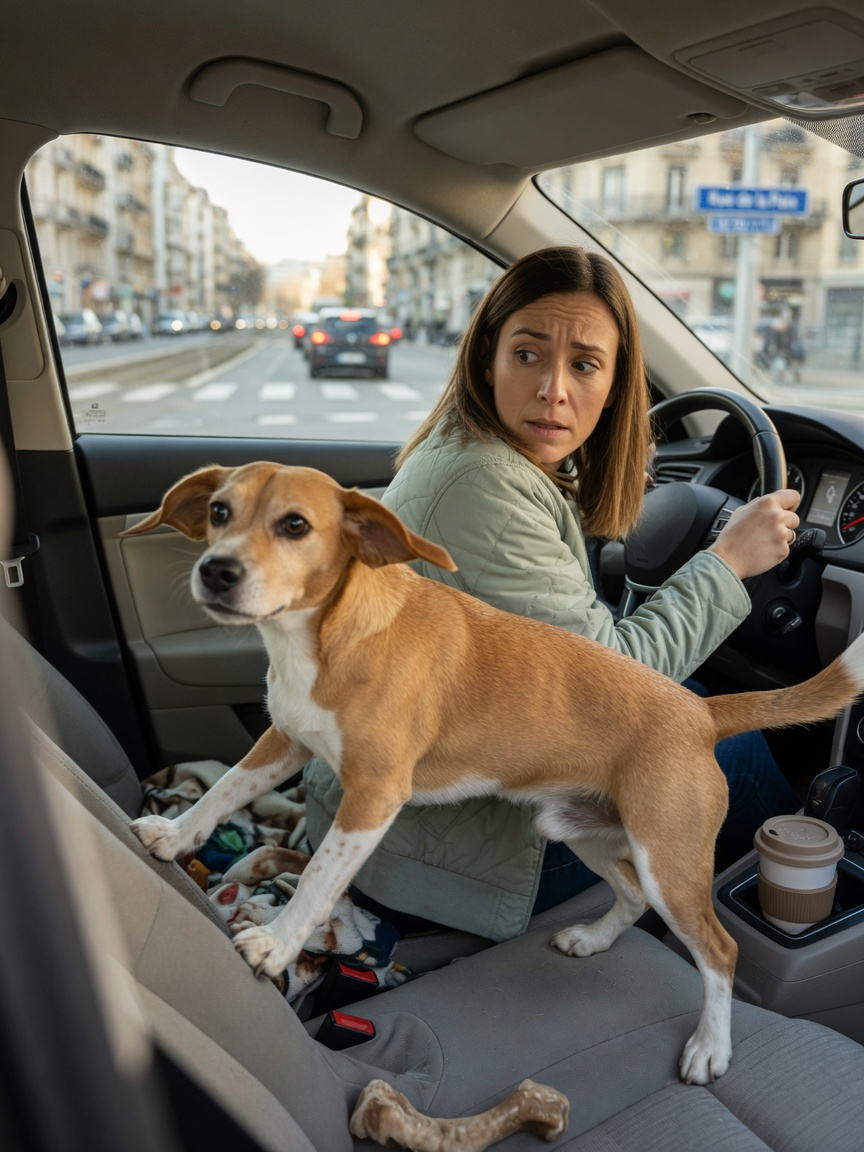
Car interior showing an unrestrained dog unbalanced during a sudden stop, illustrating safety risks

Unrestrained dogs pose a genuine safety risk in vehicles. In an emergency stop, a dog can become a projectile, potentially suffering serious injuries or causing accidents that harm everyone in the car. Research shows that an unrestrained 20kg dog in a crash at just 30 mph exerts roughly 300kg of force. A properly fitted car harness distributes impact forces across your dog's body, significantly reducing injury risk whilst keeping your attention on the road rather than managing an anxious or moving pet.

Choosing The Right Harness For Your Dog

Car harnesses come in several styles, and selecting the right one depends on your dog's size, temperament, and your vehicle type:

  • Crash-tested harnesses: Specifically designed to protect during accidents, these attach to your car's seatbelt system and provide maximum safety
  • Seat belt harnesses: Lightweight options that clip to existing seatbelts, ideal for smaller dogs
  • Travel crates: Excellent for securing larger dogs or nervous pets, offering space and security
  • Barrier systems: Metal or fabric barriers that contain your dog in the boot area

Always check manufacturer specifications to ensure the harness suits your dog's weight range and age. Puppies and senior dogs may require additional considerations for comfort.

Step-By-Step Installation Guide

  1. Read the instructions thoroughly before beginning, as different harnesses have varying attachment methods
  2. Position your dog on the passenger seat or back seat, depending on the harness design
  3. Fit the harness snugly around your dog's chest and body, ensuring no twisting or bunching of straps
  4. Attach to the seatbelt by connecting the harness clips securely to the vehicle's seatbelt buckle
  5. Check for proper fit by ensuring you can fit only one finger between the harness and your dog's body
  6. Test stability whilst the car is parked by gently pulling the harness to confirm it's firmly secured

Acclimating Your Dog To The Harness
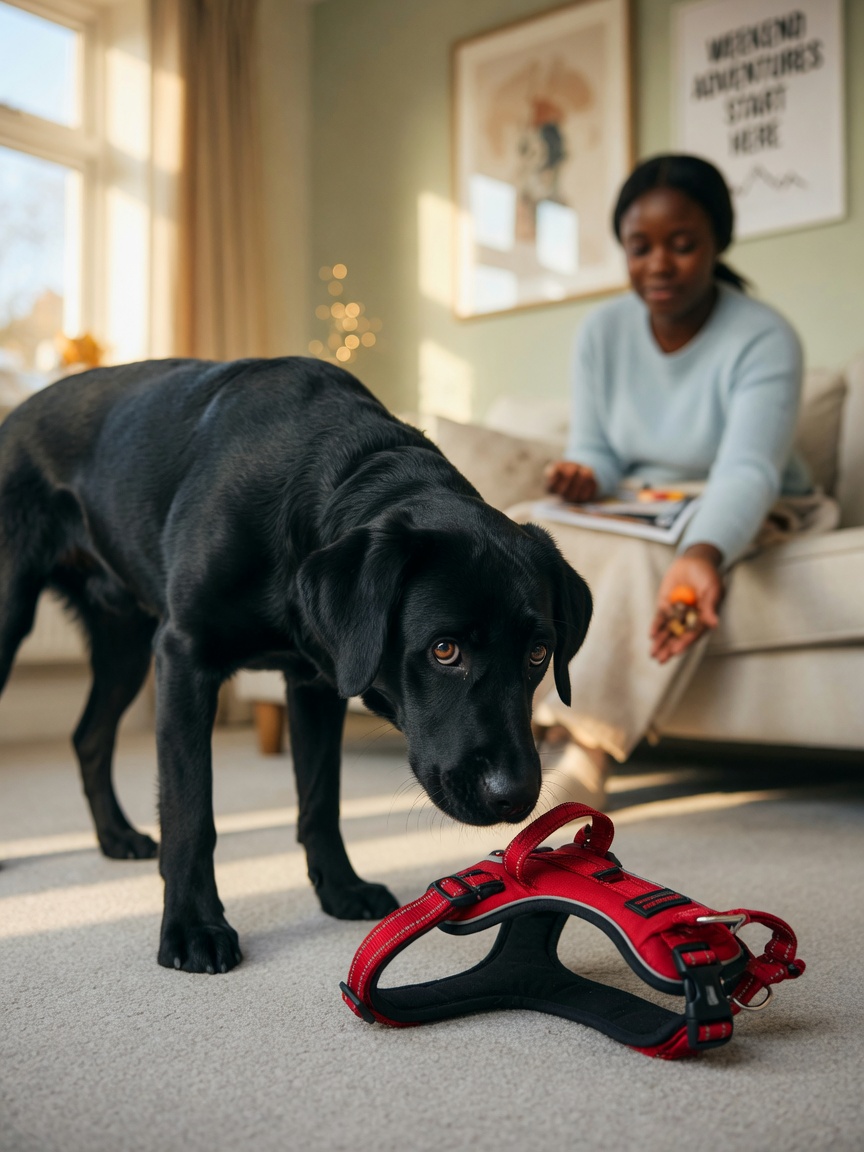
Black Labrador Retriever sniffing a car harness on the floor during indoor introduction training

Many dogs need time to adjust to wearing a car harness. Start by introducing the harness at home, allowing your dog to investigate and become comfortable wearing it whilst stationary. Reward positive interactions with treats and praise. Take short, short trips around your neighbourhood before attempting longer journeys. This gradual approach reduces anxiety and creates positive associations with car travel.

Safety Tips During Travel

  • Never leave your dog unattended in a parked vehicle, regardless of harness use
  • Ensure adequate ventilation and avoid overheating, particularly during warm weather
  • Take regular breaks on longer journeys for toilet breaks and stretching
  • Keep the harness properly maintained, checking for wear or damage before each trip
  • Avoid distracting your dog with toys that could become projectiles in sudden stops

Key Takeaways

A dog car harness is a non-negotiable safety investment for any pet owner who travels with their dog. Proper installation, correct fit, and gradual acclimation ensure maximum protection and comfort. By following these guidelines, you're creating safer journeys for everyone in your vehicle whilst giving your dog the security they need to travel confidently alongside you.

#how to use a dog car harness whole dog journal#dog health#dog nutrition#forpetshealthcare

Sources & further reading

This article is based on peer-reviewed veterinary research and reputable animal-health sources. Explore the underlying science in our Research Library.

Related articles

The 19 Best Animal Shelters in the Netherlands (2026)

the Netherlands's animal shelters, rescue associations and refuges save thousands of dogs, cats and other animals every year, almost always on tiny budgets and volunteer power. To build the most objective ranking possible, we analysed public Google reviews across more than 56 registered animal-prote…

Read more →

The 25 Best Animal Shelters in Italy (2026)

Italy's animal shelters, rescue associations and refuges save thousands of dogs, cats and other animals every year, almost always on tiny budgets and volunteer power. To build the most objective ranking possible, we analysed public Google reviews across more than 121 registered animal-protection org…

Read more →

The 48 Best Animal Shelters in Germany (2026)

Germany's animal shelters, rescue associations and refuges save thousands of dogs, cats and other animals every year, almost always on tiny budgets and volunteer power. To build the most objective ranking possible, we analysed public Google reviews across more than 152 registered animal-protection o…

Read more →

The 32 Best Animal Shelters in France (2026)

France's animal shelters, rescue associations and refuges save thousands of dogs, cats and other animals every year, almost always on tiny budgets and volunteer power. To build the most objective ranking possible, we analysed public Google reviews across more than 89 registered animal-protection org…

Read more →

The 8 Best Animal Shelters in Portugal (2026)

Portugal's animal shelters, rescue associations and municipal centros de recolha save thousands of dogs, cats and other animals every year, almost always on tiny budgets and volunteer power. To build the most objective ranking possible, we analysed public Google reviews across more than 86 registere…

Read more →

Sphynx Cat Skin care and hygiene: Causes, Signs & Care

Sphynx cats have little to no coat, which means the skin itself takes on jobs that fur normally does — insulation, oil dispersal, and barrier protection — leaving it prone to greasiness, blocked pores, fungal infections, and sunburn. The single most important thing to know is that a Sphynx's skin ne…

Read more →
Disclaimer:This article is for informational purposes only and does not constitute veterinary advice. Always consult a qualified veterinarian for your pet's health concerns.

Free newsletter

Pet health tips, straight to your inbox

Weekly science-backed advice for dog & cat owners. No spam, unsubscribe anytime.