
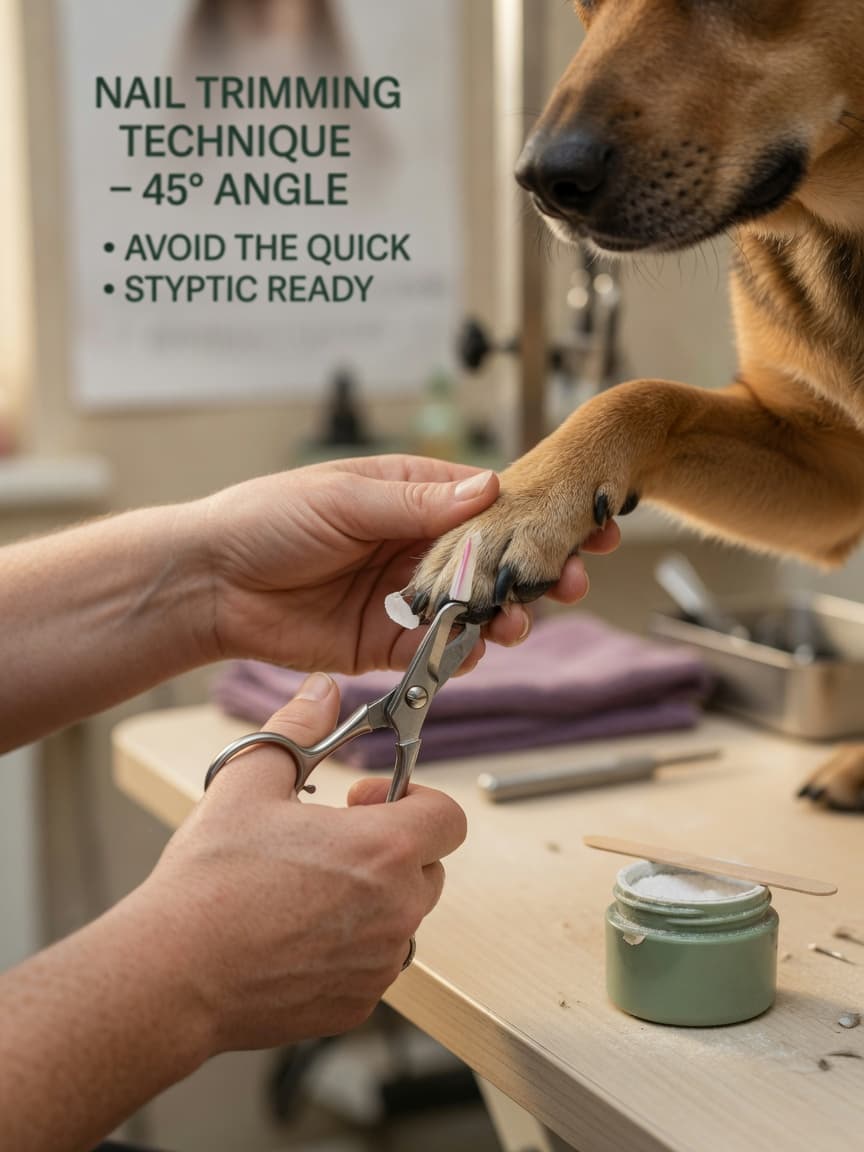
Why Nail Length Matters More Than You Might Think
Overgrown nails are not just a cosmetic issue. When a dog's nails are too long, they make contact with the ground at an angle that forces the toes to splay outward with each step. Over time, this alters the dog's gait, puts abnormal stress on the joints, and can contribute to arthritis — particularly in older dogs. Long nails also carry a higher risk of breaking or tearing, which is both painful and prone to infection.
Keeping nails at the correct length is a straightforward element of preventive care, yet many owners avoid it out of fear of hurting their dog. Understanding the anatomy involved and using the right technique removes most of that uncertainty.
Understanding the Quick
The quick is the living tissue inside each nail. It contains blood vessels and nerve endings, which is why cutting into it causes bleeding and pain. In dogs with white or light-coloured nails, the quick is usually visible as a pinkish area running through the centre of the nail, making it relatively easy to identify where to stop cutting.
Dark or black nails present a greater challenge because the quick is not visible from the outside. In these cases, you need to trim in small increments and look at the cut surface of the nail after each snip. As you get closer to the quick, the cross-section will begin to show a dark, circular spot at the centre — this is your warning to stop. The surrounding area may also appear slightly softer or take on a chalky white appearance.
Puppies and young dogs that are walked regularly on pavements may naturally wear their nails down to some degree, but the quick grows along with the nail when trimming is neglected. This is why dogs with chronically long nails have quicks that extend much further down the nail, making it harder to get nails short without risk. Regular trimming causes the quick to recede gradually over time.
Tools You Will Need
There are two main types of nail clippers for dogs: scissor-style (also called bypass clippers) and guillotine-style. Both are effective when sharp. A dull blade crushes the nail rather than cutting cleanly, which is more uncomfortable for the dog and more likely to cause splitting. Replace or sharpen your clippers regularly — at least once a year for most home users.
For very small dogs or puppies, human nail clippers can work adequately in the early stages, but purpose-made dog clippers give more control. Grinders or rotary tools are an alternative for dogs who react badly to the pressure of clippers; they file the nail down gradually and are particularly useful for managing dark nails where precision matters.
Keep a small pot of styptic powder within reach whenever you trim. This is a haemostatic agent that stops bleeding quickly if you do nick the quick. Cornflour is a reasonable substitute in an emergency, though it is less effective.
Step-by-Step Trimming Technique
Before starting, get your dog comfortable and calm. For dogs that are not used to having their paws handled, spend a few sessions simply holding and massaging their feet without any trimming at all. This desensitises them to the sensation and builds trust.
- Hold the paw firmly but gently, with your thumb on the pad and fingers on top of the foot. Press the pad slightly to extend the nail.
- Position the clippers at a slight downward angle — around 45 degrees — rather than cutting straight across. This mimics the natural angle of wear and leaves a neater edge.
- On light nails, cut just below where the pink quick ends, leaving a small margin of safety of a millimetre or two.
- On dark nails, take off a thin slice at a time and examine the cut surface between each snip. Stop as soon as you see the dark central spot emerge.
- Do not forget the dewclaws, which are located on the inner side of the leg just above the paw. These never make contact with the ground and can grow in a curve, sometimes looping back and embedding into the skin if left untreated.
What to Do If You Cut the Quick
Even experienced groomers occasionally cut the quick. The important thing is to respond calmly and quickly. Apply styptic powder to the tip of the nail and press gently for thirty seconds to a minute. Bleeding almost always stops within a few minutes. If it does not, or if it is more than a minor bleed, contact your vet.
After an incident like this, give your dog a treat, remain calm yourself, and do not make a fuss. Dogs read human anxiety very well, and an owner who becomes visibly distressed will make the dog associate nail trimming with something genuinely alarming, complicating future sessions considerably.
How Often to Trim
For most dogs, trimming every three to four weeks maintains a comfortable nail length. A reliable indicator is sound — if you can hear your dog's nails clicking on hard floors as they walk, it is time for a trim. The nail should not reach the ground when the dog is standing on a flat surface.
Dogs that walk frequently on concrete or asphalt may need less frequent trimming because those surfaces file the nails naturally. Dogs that spend most of their time on grass, carpet, or indoors will need more regular attention.
If your dog is too reactive for home trimming, a veterinary nurse or professional groomer can do it quickly and safely. Building regular nail trims into your dog's grooming routine from puppyhood makes the whole process far less stressful for everyone involved.