

Pulling Is Normal — Until You Teach Otherwise
Dogs pull on the lead because it works. They move forward, they reach the interesting smell, the other dog, the patch of grass — and pulling is immediately reinforced by the outcome. From a dog's perspective, it is entirely logical behaviour. The frustration for owners is that the dog is not being defiant or dominant; they simply have not yet learned that loose-lead walking is what gets them where they want to go. That distinction matters enormously for how you approach training.
A dog that pulls consistently is also a genuine physical risk. Straining at the lead contributes to tracheal damage when a collar is used, and to shoulder and neck strain in both dog and owner. Getting this right is worth the effort — for both of you.
Equipment: Starting With the Right Foundation
Harnesses
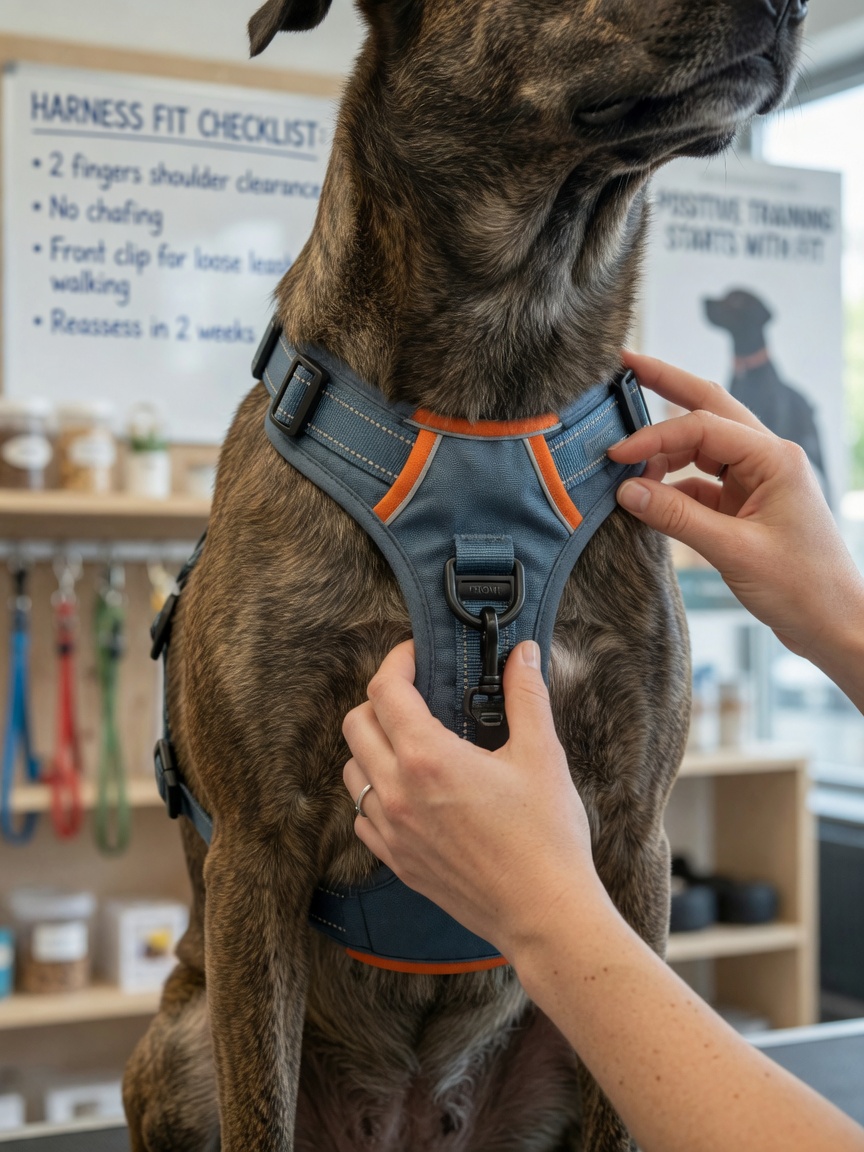
A well-fitted harness distributes pressure across the chest and back rather than concentrating it at the throat. For dogs that pull, a front-clip harness — where the lead attaches at the chest rather than the back — is particularly effective. When the dog pulls forward, the front clip causes them to turn slightly towards you rather than gaining forward momentum. This does not replace training, but it reduces the reinforcement that pulling provides while you build new habits.
Ensure the harness fits snugly without restricting shoulder movement. A harness that sits across the point of the shoulder will impede natural gait and can cause long-term discomfort. When in doubt, have a pet shop or behaviourist check the fit.
Head Collars
Head collars loop around the muzzle and attach at the back of the head, giving the handler control of the direction of the dog's head. They are highly effective for large, strong dogs where physical management is a safety concern. They require careful introduction — most dogs find them uncomfortable initially — and should never be used with sudden jerking movements, which can injure the neck. A slow, reward-based introduction over several sessions will dramatically improve acceptance.
What to Avoid
Choke chains, prong collars, and slip leads used as aversive tools may suppress pulling temporarily through discomfort but do not teach the dog what you actually want. They also carry a risk of physical injury and can generate anxiety around walking. Modern, reward-based methods are consistently more durable in their results.
The Core Training Method: Stop and Stand
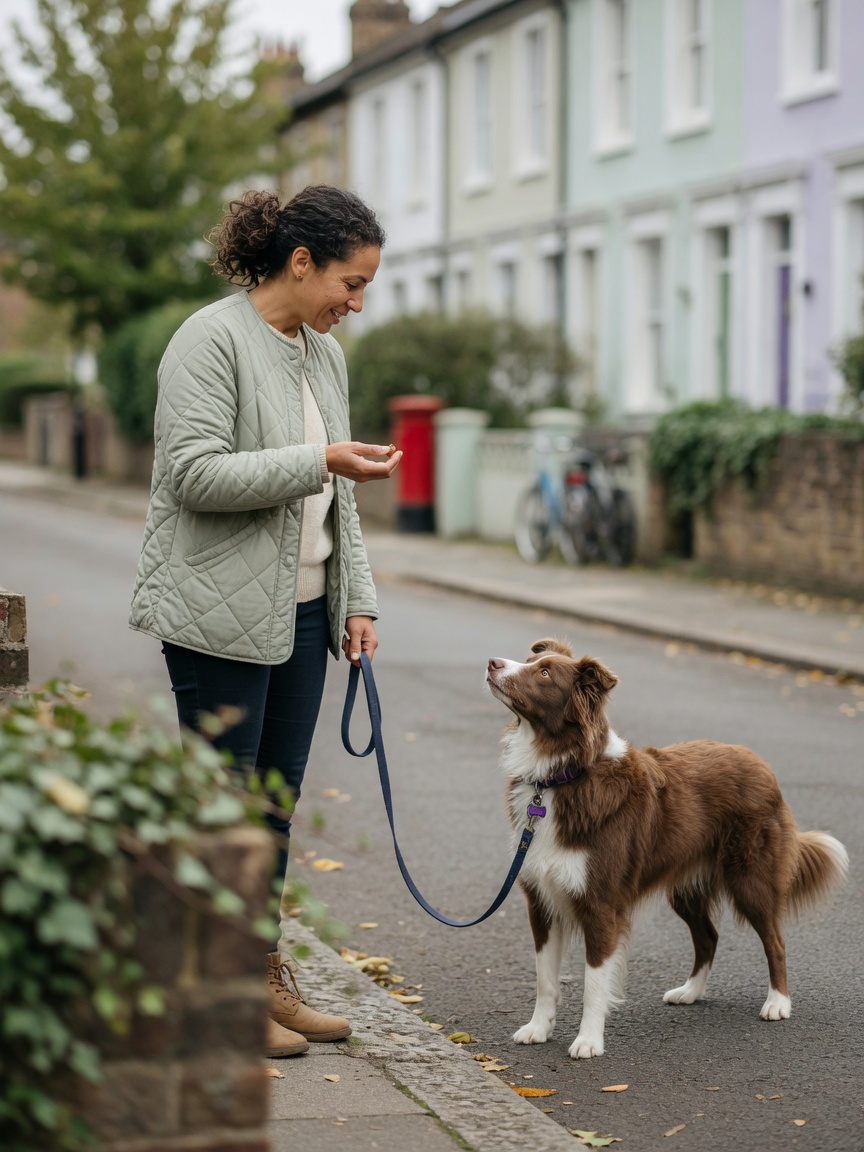
The simplest and most consistent technique for teaching loose-lead walking is to stop moving the moment the lead becomes taut. The dog learns that tension in the lead equals no forward progress. The instant the lead goes loose — whether because the dog steps back or simply turns to look at you — you mark the behaviour (a verbal marker such as "yes" or a clicker) and immediately move forward again.
This feels excruciatingly slow at first. A ten-minute walk may cover fifty metres. That is normal and expected. What you are doing is breaking the association between pulling and forward movement, and building a new one. Most dogs begin to understand the pattern within three to five sessions, provided the rule is applied consistently every single time.
Adding Engagement: The Check-In Reward
Once your dog understands that pulling does not work, the next step is to make walking near you actively rewarding. Carry high-value treats and intermittently reward your dog for walking at your side or glancing up at you voluntarily — this is called a check-in. Dogs that are frequently rewarded for being close to their owner begin to actively choose to stay there rather than racing ahead.
Keep early training sessions short — five to ten minutes — in low-distraction environments such as a quiet street or your garden. As the behaviour improves, gradually increase distraction levels. Asking a dog to practise loose-lead walking at a busy park before they have mastered it on a quiet road is a set-up for failure.
The Consistency Problem
The most common reason loose-lead training fails is inconsistency. If pulling is stopped on Tuesday but allowed on Thursday because you are running late, the dog learns that pulling sometimes works — which actually makes the behaviour more persistent, not less. Every person who walks the dog must apply the same rules.
This does not mean every walk must be a formal training session. Many owners find it helpful to designate a "sniff walk" where the dog is on a long line and allowed to explore freely, and a "training walk" on a shorter lead with expectations in place. This distinction gives the dog clear information about what the rules are in each context.
When to Seek Professional Help
If your dog is reactive — lunging, barking, or becoming highly agitated on lead around other dogs or people — this is a separate issue from simple pulling and benefits from targeted work with a qualified behaviourist. Pulling driven by anxiety or reactivity responds poorly to standard loose-lead methods and requires a more nuanced approach. Ask your vet for a referral to an accredited clinical animal behaviourist if you are not making progress.
A Practical Training Checklist
- Fit a front-clip harness or head collar appropriate to your dog's size and strength
- Begin training in a low-distraction environment
- Stop completely every time the lead goes taut — do not walk on
- Mark and reward the instant the lead loosens
- Reward check-ins generously to build engagement
- Keep initial sessions to five to ten minutes
- Ensure all household members and regular walkers apply the same rules
- Gradually increase distraction only once the behaviour is reliable in quiet settings
- Consult a behaviourist if reactivity is a component of the pulling