
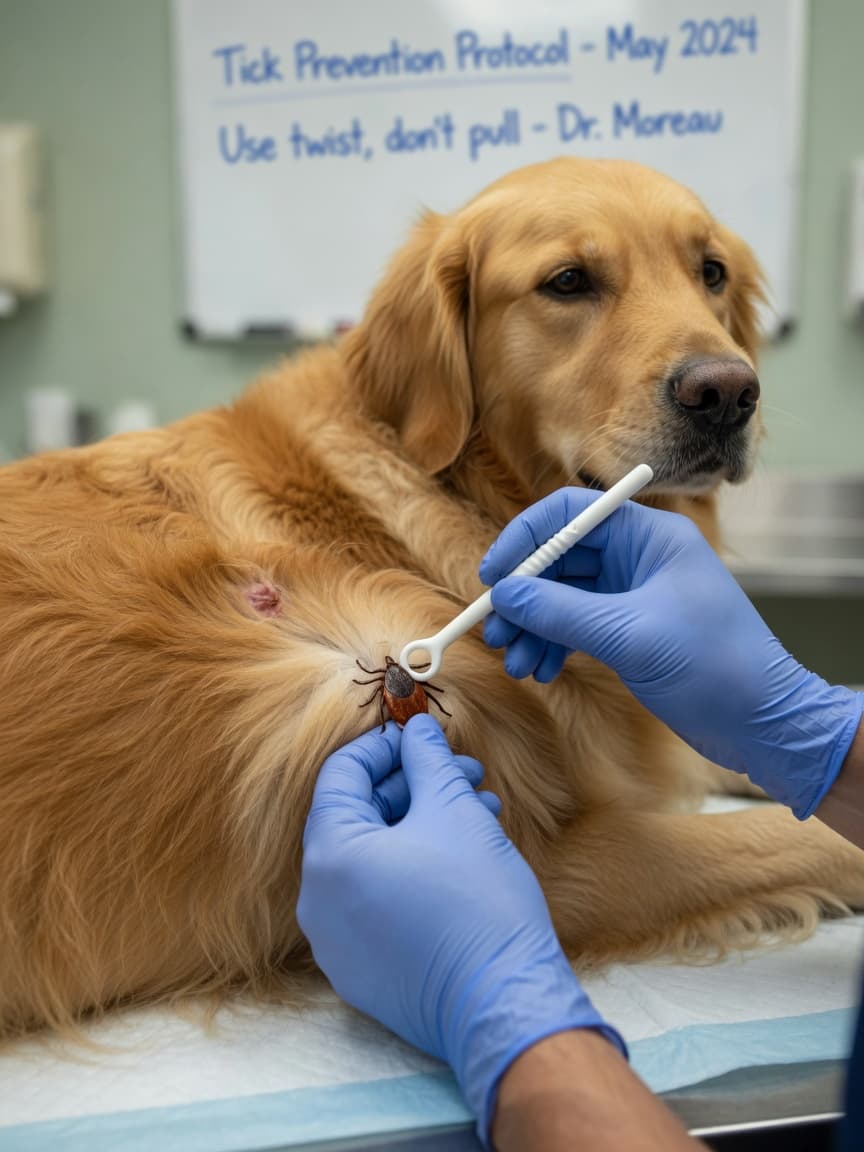
Why Tick Removal Needs to Be Done Correctly
Finding a tick on your dog is an unpleasant discovery, but the way you respond matters considerably more than most owners realise. Ticks are not merely an irritant — they are vectors for a range of serious diseases, including Lyme disease, caused by the bacterium Borrelia burgdorferi, as well as anaplasmosis, babesiosis, and in some regions, tick-borne encephalitis. The risk of disease transmission increases the longer a tick remains attached, which makes prompt and correct removal a genuine health priority.
The UK's most common tick species affecting dogs is Ixodes ricinus, the castor bean tick. It is widespread across heathland, moorland, woodland, and long grass throughout Britain and becomes particularly active from March through to October, with peaks in spring and autumn. However, mild winters have extended tick activity year-round in many areas.
How to Find Ticks on Your Dog
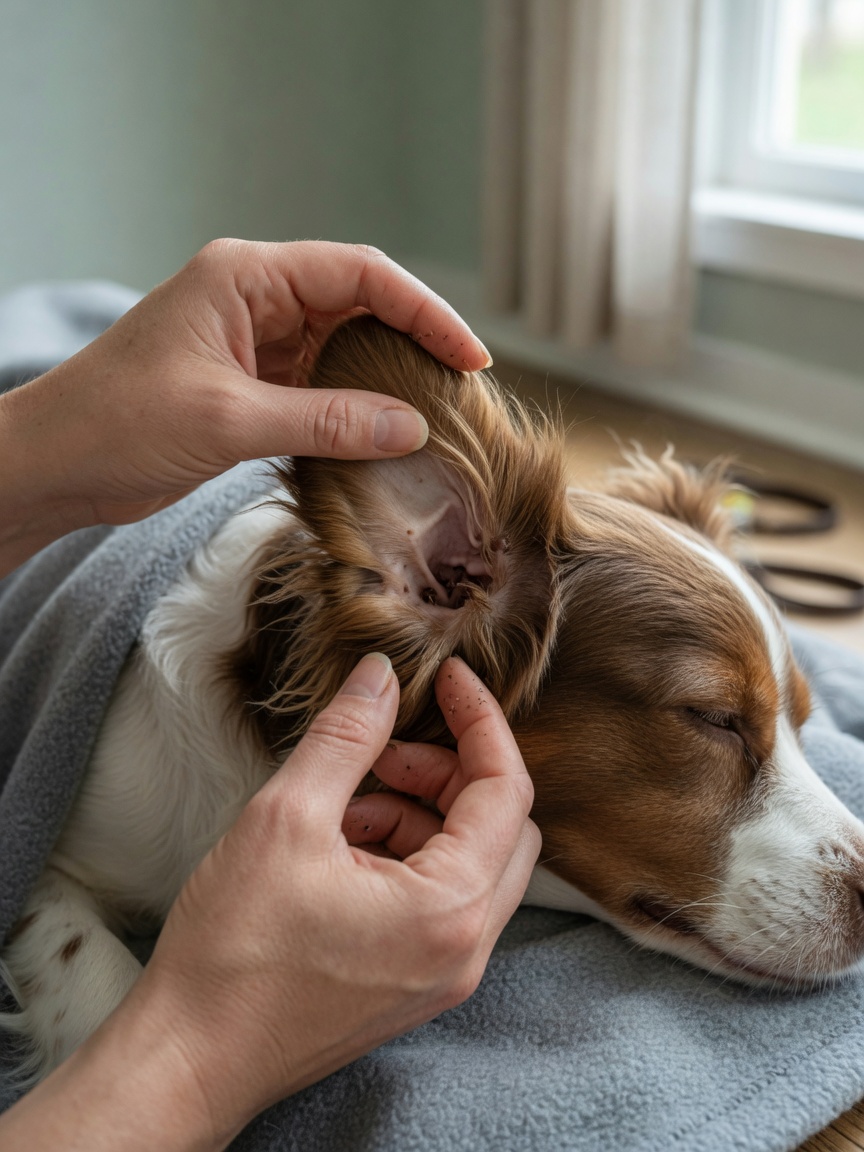
Ticks are easier to find when small — before they have fed — but also much easier to miss. An unfed tick may be no larger than a poppy seed. After feeding, it swells to the size of a small grape and becomes far more obvious.
After every walk in tick-prone areas, run your fingers slowly through your dog's coat against the direction of hair growth. Pay close attention to areas where ticks commonly attach:
- Around and inside the ears
- Between the toes and around the paw pads
- In the groin and around the tail base
- Under the collar or harness
- Around the eyelids
- In skin folds and along the underbelly
Ticks feel like small, firm bumps when you run your fingers through the coat. They do not move around — once feeding has begun, they stay fixed in place.
The Tools You Need
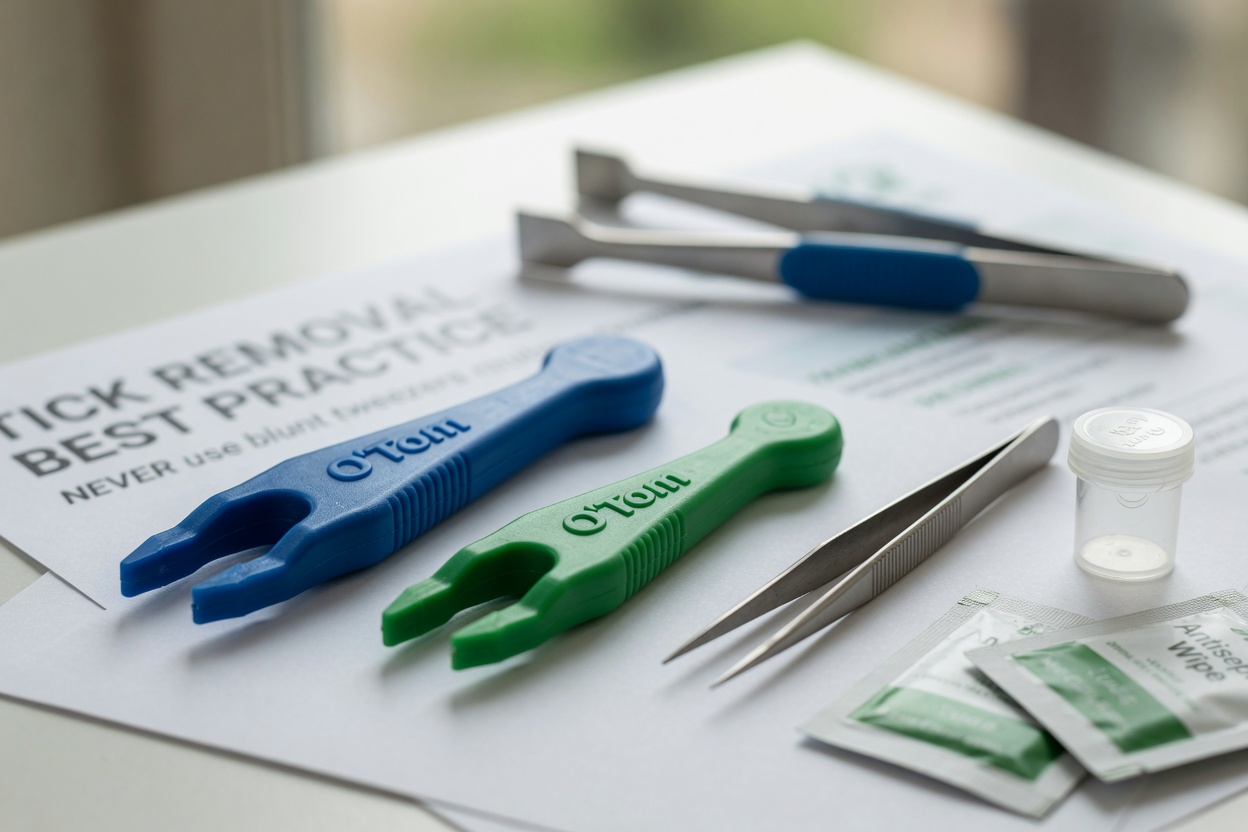
The only tool specifically recommended by veterinary professionals for tick removal is a tick hook or tick twister. These are small, fork-shaped devices that slip beneath the tick's body and allow it to be rotated and removed without compressing the body. They are inexpensive, widely available, and reusable.
The O'Tom Tick Twister is the brand most frequently recommended by UK veterinary practices. It comes in two sizes — one for small nymphs and one for larger adult ticks — and once you have used one correctly, the technique becomes second nature.
Fine-tipped tweezers can be used as an alternative if a tick hook is not available, but they require more care. Blunt, regular tweezers are not suitable as they are far more likely to compress the tick's body during removal.
What Not to Do
There is a great deal of outdated and harmful advice circulating about tick removal, and following it can significantly increase the risk of disease transmission.
Do Not Burn the Tick
Applying a lit match, cigarette, or any source of heat to a feeding tick causes it to regurgitate its stomach contents into the bite wound — which is precisely the mechanism by which pathogens are transmitted. This method should never be used.
Do Not Smother the Tick
Petroleum jelly, essential oils, nail varnish, alcohol, and similar substances are frequently recommended in popular culture as ways to suffocate or irritate the tick into detaching. Like heat, these methods cause stress-induced regurgitation. They do not work reliably and they increase transmission risk.
Do Not Squeeze the Body
Whether using tweezers or a hook, avoid compressing the tick's abdomen. Squeezing pushes the contents of the tick's digestive system into your dog's bloodstream. Always grip as close to the skin as possible — at the mouthparts — not around the swollen body.
Do Not Pull Straight Out
Pulling a tick straight out without rotating increases the likelihood of leaving the mouthparts embedded in the skin. While embedded mouthparts are not dangerous in themselves — the body will expel them naturally — they can cause localised irritation or a small abscess.
Step-by-Step: Correct Tick Removal
Step One: Stay Calm
If your dog senses your anxiety, they are more likely to fidget. Settle them in a comfortable position with good lighting and have your tick hook and a small sealed bag or container ready.
Step Two: Position the Hook
Part the fur around the tick so the attachment point on the skin is clearly visible. Slide the prongs of the tick twister under the tick's body, as close to the skin surface as possible. The tick should sit in the fork of the hook without being gripped or pressed.
Step Three: Rotate and Lift
Using a smooth, continuous motion, rotate the hook in one direction — either clockwise or anticlockwise, it does not matter which — while applying gentle, even upward pressure. Do not jerk or yank. After several rotations, the tick will detach cleanly.
Step Four: Dispose of the Tick
Place the tick in a sealed bag or container. Do not crush it with your fingers — ticks can carry pathogens that pose a risk to humans as well. You may wish to preserve it in case your dog develops symptoms later and your vet needs to identify the species.
Step Five: Clean the Bite Site
Clean the area with an antiseptic wipe or dilute chlorhexidine solution. Wash your hands thoroughly afterward.
What to Watch for After Removal
Monitor the bite site over the following days. Some localised redness is normal immediately after removal and should resolve within a day or two. A bull's-eye rash — a red ring expanding outward from the bite — is the classic sign of Lyme disease in humans, but dogs do not typically display this symptom. Instead, watch for:
- Lethargy or unusual fatigue
- Lameness or reluctance to move
- Loss of appetite
- Fever or shivering
- Swollen lymph nodes
Symptoms of tick-borne illness can take days to weeks to appear. If you notice any of the above signs in the weeks following a tick bite, inform your vet and mention the exposure. Early treatment with antibiotics is highly effective when Lyme disease is caught promptly. Waiting for symptoms to become severe before seeking help significantly complicates treatment and recovery.
Prevention remains the most effective strategy. Speak with your vet about prescription-strength tick preventatives — spot-ons, collars, or oral treatments — and continue tick-checking after every rural walk regardless of the season.