
What the Ingredient Order on Your Dog's Food Label Is Actually Telling You
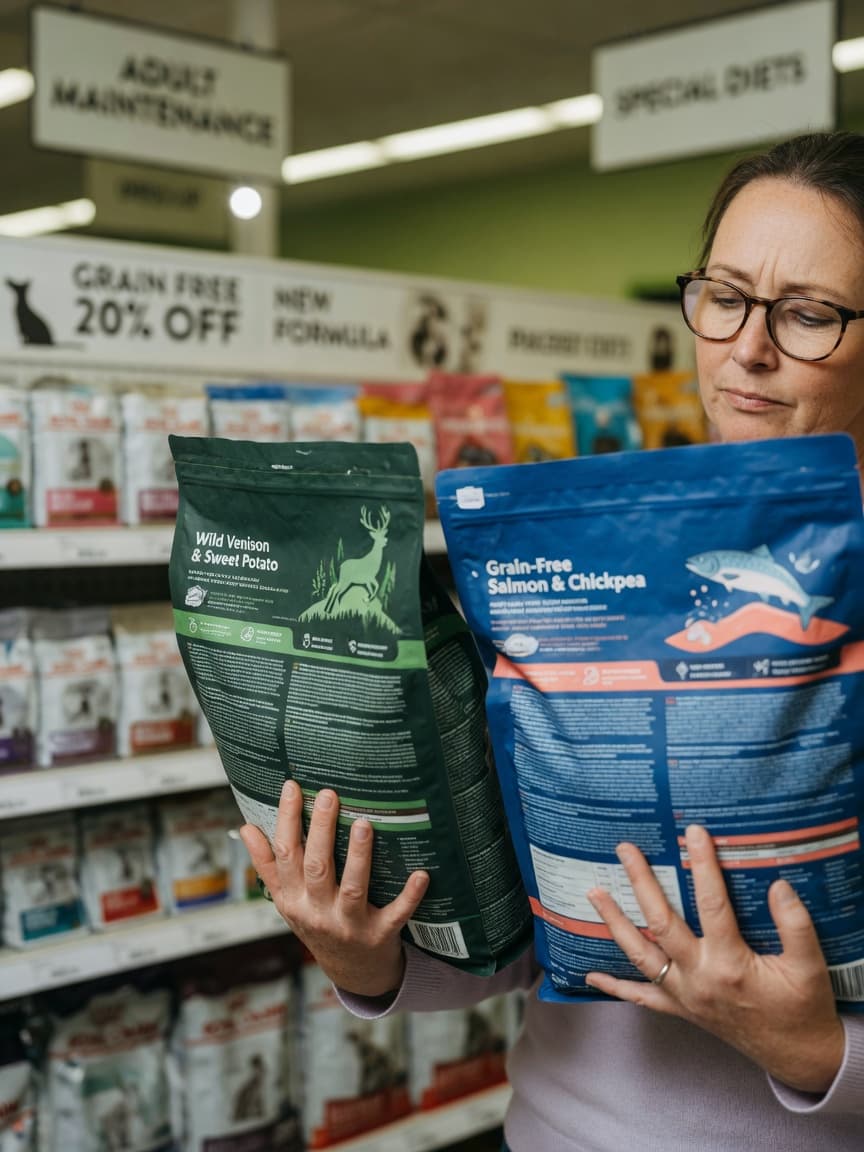
Standing in the pet food aisle holding two bags of dog food, squinting at the back panel trying to work out which one is actually better — most dog owners have been there. The ingredient list looks like a chemistry exam, and it is not always obvious what any of it means. But there is a system to it, and once you understand the basic rules, you will be able to make genuinely informed choices for your dog.
The Law Behind the List
In the UK and across the EU, pet food manufacturers are legally required to list ingredients in descending order by weight before processing. This sounds straightforward, but the phrase "before processing" is doing a lot of heavy lifting. It means the weight listed includes the moisture content of each ingredient at the time it goes into production — and that matters enormously when you are trying to judge whether a food is actually meat-heavy or not.
Fresh chicken, for example, is roughly 70–75% water by weight. That means a bag listing "fresh chicken" first might sound impressive, but once that moisture is cooked off during processing, the actual protein contribution from that chicken is considerably lower than its top-billing position suggests. This does not mean fresh meat first is bad — far from it — but it does mean you cannot read the list in isolation.
What the First Five Ingredients Tell You
Nutritionists and formulation specialists generally agree that the first five ingredients give you the clearest picture of what a food is predominantly made from. If grains, starches, or unnamed meat meals dominate those first five spots, the food is likely more filler than feed, regardless of how the front of the bag is marketed.
Here is what to look for in those first five positions:
- A named protein source — chicken, salmon, beef, lamb. "Meat and animal derivatives" is a legal catch-all that tells you very little about what is actually in the bag, or how consistent it is between batches.
- Whether fresh meat or meat meal comes first. Meat meals (such as chicken meal or salmon meal) have already had moisture removed, so their actual protein contribution per gram is higher than fresh meat. Neither is automatically superior — it depends on what follows.
- Identifiable whole food sources — sweet potato, brown rice, peas — rather than vague terms like "cereals" or "various sugars".
- The absence of unnamed by-products or derivatives in the top positions. By-products are not inherently harmful, but unnamed ones give you no traceability.
Splitting: The Trick You Need to Know About
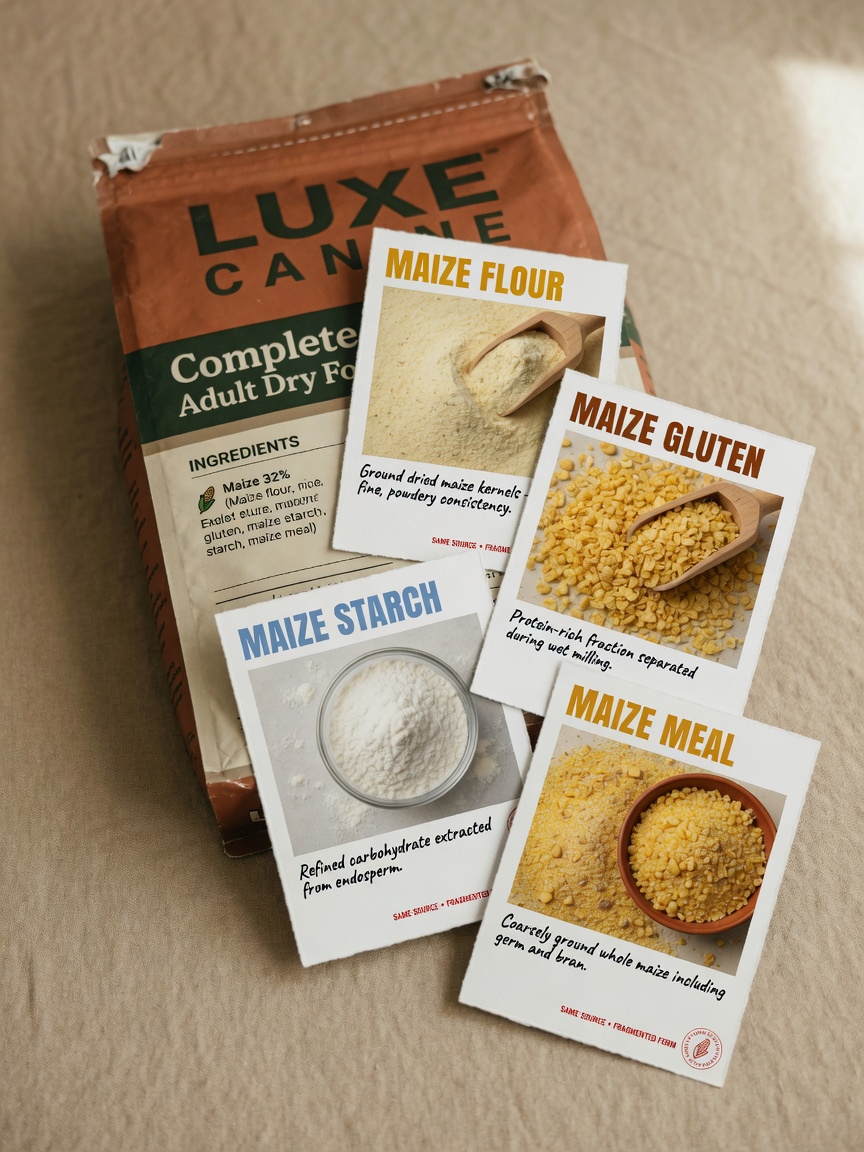
One of the most widely used tactics in pet food labelling is ingredient splitting. This is where a manufacturer divides a single ingredient into several sub-types so that each sub-type appears further down the list, allowing a more desirable ingredient to sit at the top.
A classic example: a food might list "chicken" first, then "maize flour," then "maize gluten," then "maize starch." Each maize derivative individually weighs less than the chicken — so chicken sits at the top. But if you combined all the maize components, they would likely outweigh the chicken considerably. You are essentially eating a maize-based food dressed up as a chicken food.
The way to spot splitting is to look for the same core ingredient appearing multiple times under different names. Grains and starches are the most common culprits: rice, rice flour, rice bran, and rice protein concentrate might all appear in the same list. Add them up mentally and ask yourself where that combined ingredient would actually sit.
How to Interpret Meat Meals and By-Products
Meat meals get a bad reputation in some pet food communities, but this is not always warranted. A named meat meal — chicken meal, herring meal — is simply meat that has been rendered (cooked and dried) to remove moisture and fat, leaving a concentrated protein source. When listed clearly with a species name, meals can be a sign of a well-formulated food.
The concern arises with unnamed meals: "meat meal," "poultry meal," or "animal by-product meal" give you no information about the source species, quality, or consistency. For dogs with known sensitivities or allergies, these vague listings make it impossible to manage their diet properly.
By-products themselves — organ meats, connective tissue, offal — are not necessarily low quality. Liver, kidney, heart, and lung are nutritionally dense and form a natural part of a dog's ancestral diet. The issue, again, is naming. "Chicken by-products" tells you the species; "meat and animal derivatives" tells you almost nothing.
Additives, Vitamins, and Minerals at the Bottom of the List
Towards the end of the ingredient list you will typically find vitamins, minerals, and various additives. These appear in small quantities and are essential for making a complete and balanced food. Do not be alarmed by long chemical names here — zinc sulphate, thiamine mononitrate, and similar entries are standard nutritional supplements.
What you should pay attention to at the bottom of the list is the presence of artificial colours, flavour enhancers, and certain preservatives. More on those in a separate article — but as a general rule, a shorter additive section with recognisable ingredients is preferable to a long list of code numbers.
Putting It All Together
Reading an ingredient list is not about finding a perfect food — it is about understanding what you are actually feeding your dog and making the best choice available within your budget and circumstances. A few practical habits will serve you well:
- Look for named protein sources in the first two to three positions.
- Check for ingredient splitting by scanning the full list for repeated base ingredients.
- Compare the first five ingredients across two or three competing products before deciding.
- Cross-reference the ingredient list with the guaranteed analysis panel — a high crude protein percentage alongside vague ingredient labelling can be a red flag.
- Remember that order reflects pre-processing weight, so context always matters.
The ingredient list is not the whole story — nutrient profiles, digestibility, and manufacturing standards all matter too — but it remains one of the most accessible and informative tools available to you as a dog owner. Once you know what you are looking at, it becomes much easier to cut through the marketing and focus on what is actually in the bowl.