
ForPetsHealthcare
Dogs

How To Read a Cat's Body Language

By Julia WrenfieldUpdated September 11, 20264 min read
Evidence-based · Sources checked
{"en": "Close-up of cat's face showing alert ears and focused eyes while observing surroundings intently", "es": "Primer plano de la cara de un gato con orejas alertas y ojos enfocados observando atentamente", "fr": "Gros plan du visage d'un chat aux oreilles attentives et aux yeux concentr\u00e9s observant attentivement", "de": "Nahaufnahme eines Katzengesichts mit aufmerksamen Ohren und konzentriertem Blick", "nl": "Close-up van kattenface met aandachtige oren en gefocuste ogen die intens observeren", "pt": "Close-up do rosto de um gato com orelhas alertas e olhos focados observando atentamente", "it": "Primo piano del viso di un gatto con orecchie attente e sguardo concentrato mentre osserva"}

Understanding your cat's body language is one of the most rewarding skills a cat owner can develop. Whilst cats cannot speak to us in words, they communicate constantly through their posture, ears, tail, and facial expressions. Learning to interpret these signals will deepen your bond with your feline companion and help you recognise when they're content, stressed, or need space. This guide will help you become fluent in cat communication.

The Tail: Your Cat's Emotional Barometer
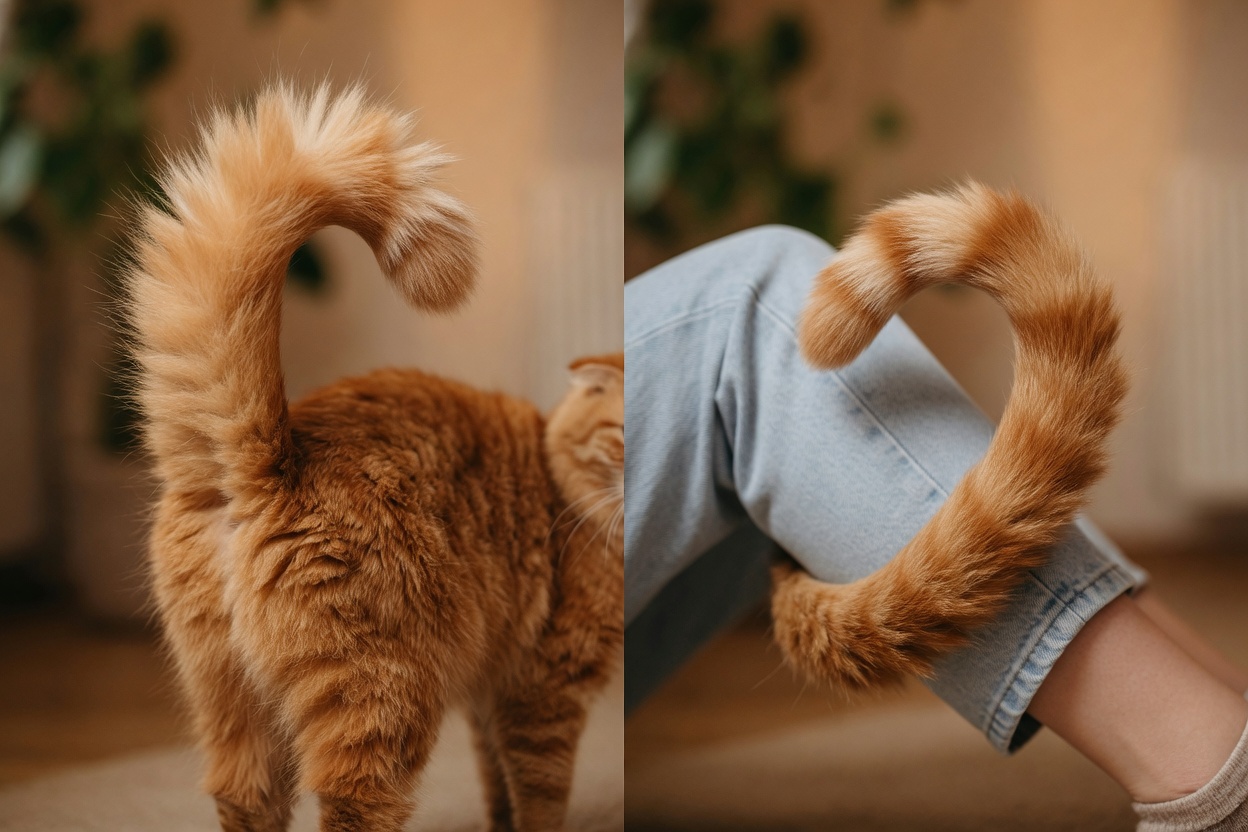
Close-up of ginger cat's tail showing puffed defensive posture and affectionate curved positioning

A cat's tail is perhaps the most expressive part of their body. Pay close attention to its position and movement:

  • Upright and straight: A vertical tail with a slight hook at the tip indicates a confident, friendly cat approaching to greet you. This is one of the most positive signals.
  • Puffed up or bushy: Your cat is frightened or trying to appear larger to seem more threatening. This often accompanies hissing or growling.
  • Low and tucked: A tail held between the hind legs shows fear, anxiety, or submission. Your cat is feeling vulnerable.
  • Swishing or thumping: Slow, deliberate swishes suggest annoyance or irritation. Fast, aggressive swishing may indicate preparation for pouncing or escalating aggression.
  • Curved around you: When your cat wraps their tail around your leg or arm, they're showing affection and trust.

Ears: Windows to Mood and Attention

Cat ears are highly mobile and reveal much about their emotional state and focus:

  • Forward-facing: Ears pointing slightly forward indicate interest and contentment.
  • Flattened back: Ears pressed against the head signal fear, anger, or aggression. Combined with a hiss, this is a clear warning to back away.
  • Swivelling: Ears rotating independently show your cat is focusing on different sounds and is alert.
  • Relaxed and natural: Ears in their normal resting position suggest a calm, content cat.

Eyes and Facial Expressions

Extreme close-up of black cat's face showing slow-blinking eyes expressing trust and affection

A cat's eyes communicate volumes about their state of mind:

  • Slow blink: If your cat blinks slowly whilst looking at you, they're showing trust and affection. This is often called a "cat kiss," and you can reciprocate by blinking slowly back.
  • Wide pupils: Dilated pupils can indicate playfulness, excitement, or fear depending on context.
  • Narrowed eyes: Squinting often suggests contentment, particularly when combined with a relaxed posture.
  • Direct stare: A long, unblinking stare can be threatening. Avoid prolonged eye contact with an unfamiliar cat.

Body Posture and Position

Your cat's overall body position tells you whether they're relaxed, playful, or defensive:

  • Lying on back: This is often a sign of trust and playfulness, though it's also a defensive position. Watch for other signals to clarify intent.
  • Crouched or hunched: A low-slung posture with weight on back legs suggests hunting mode or fear.
  • Relaxed sprawl: A cat lying stretched out is comfortable and content in their environment.
  • Arched back with puffed fur: The classic "Halloween cat" pose indicates fear or defensiveness.

Vocalisation and Body Language Together

Always consider sounds alongside physical signals for accurate interpretation. A purring, relaxed cat is happy, whilst a hissing, flattened-eared cat is clearly upset. Meows can mean various things, but their meaning becomes clear when combined with body language cues.

Key Takeaways

Reading your cat's body language requires observing multiple signals simultaneously. The tail, ears, eyes, and posture work together to paint a complete picture of your cat's emotional state. By learning these cues, you'll know when to engage in play, when to offer comfort, and—importantly—when to give your cat space. This communication skill strengthens your relationship and ensures your cat feels understood and secure in their home.

#how to read a cat s body language#cat health#feline nutrition#forpetshealthcare

Sources & further reading

This article is based on peer-reviewed veterinary research and reputable animal-health sources. Explore the underlying science in our Research Library.

Related articles

The 19 Best Animal Shelters in the Netherlands (2026)

the Netherlands's animal shelters, rescue associations and refuges save thousands of dogs, cats and other animals every year, almost always on tiny budgets and volunteer power. To build the most objective ranking possible, we analysed public Google reviews across more than 56 registered animal-prote…

Read more →

The 48 Best Animal Shelters in Germany (2026)

Germany's animal shelters, rescue associations and refuges save thousands of dogs, cats and other animals every year, almost always on tiny budgets and volunteer power. To build the most objective ranking possible, we analysed public Google reviews across more than 152 registered animal-protection o…

Read more →

The 25 Best Animal Shelters in Italy (2026)

Italy's animal shelters, rescue associations and refuges save thousands of dogs, cats and other animals every year, almost always on tiny budgets and volunteer power. To build the most objective ranking possible, we analysed public Google reviews across more than 121 registered animal-protection org…

Read more →

The 32 Best Animal Shelters in France (2026)

France's animal shelters, rescue associations and refuges save thousands of dogs, cats and other animals every year, almost always on tiny budgets and volunteer power. To build the most objective ranking possible, we analysed public Google reviews across more than 89 registered animal-protection org…

Read more →

The 8 Best Animal Shelters in Portugal (2026)

Portugal's animal shelters, rescue associations and municipal centros de recolha save thousands of dogs, cats and other animals every year, almost always on tiny budgets and volunteer power. To build the most objective ranking possible, we analysed public Google reviews across more than 86 registere…

Read more →

Yorkshire Terrier Collapsing trachea: Causes, Signs & Care

Yorkshire Terriers are one of the breeds most commonly affected by collapsing trachea, largely because their windpipe cartilage is naturally softer and more prone to weakening than in larger dogs. This means the rings of cartilage that hold the airway open can flatten during breathing, causing a cha…

Read more →
Disclaimer:This article is for informational purposes only and does not constitute veterinary advice. Always consult a qualified veterinarian for your pet's health concerns.

Free newsletter

Pet health tips, straight to your inbox

Weekly science-backed advice for dog & cat owners. No spam, unsubscribe anytime.