
Why Beagles Need More Than Just a Good Nose
Beagles are among the most popular family dogs in the world, and for good reason — they are sociable, sturdy, and endlessly curious. But beneath that cheerful exterior lies a breed with a handful of significant health vulnerabilities. Understanding these risks before they become emergencies is one of the most responsible things a Beagle owner can do.
Epilepsy in Beagles

Epilepsy is one of the most well-documented inherited conditions in the Beagle breed. Idiopathic epilepsy — meaning epilepsy with no identifiable underlying cause — is thought to have a strong genetic component in this breed, with seizures typically presenting between six months and five years of age.
What seizures look like
Seizures can range from brief absence episodes, where the dog appears to stare blankly, to full tonic-clonic events involving muscle convulsions, loss of consciousness, and involuntary urination. A cluster of seizures — more than two within 24 hours — constitutes a veterinary emergency.
Managing epilepsy long-term
Most epileptic Beagles can live full lives with appropriate anticonvulsant medication. Phenobarbitone and potassium bromide are commonly used, and regular blood monitoring is essential to track liver health and drug levels. Any Beagle experiencing a first seizure should be assessed by a vet promptly, as secondary causes including brain lesions, toxin ingestion, and metabolic disorders must be ruled out before a diagnosis of idiopathic epilepsy is confirmed.
Intervertebral Disc Disease
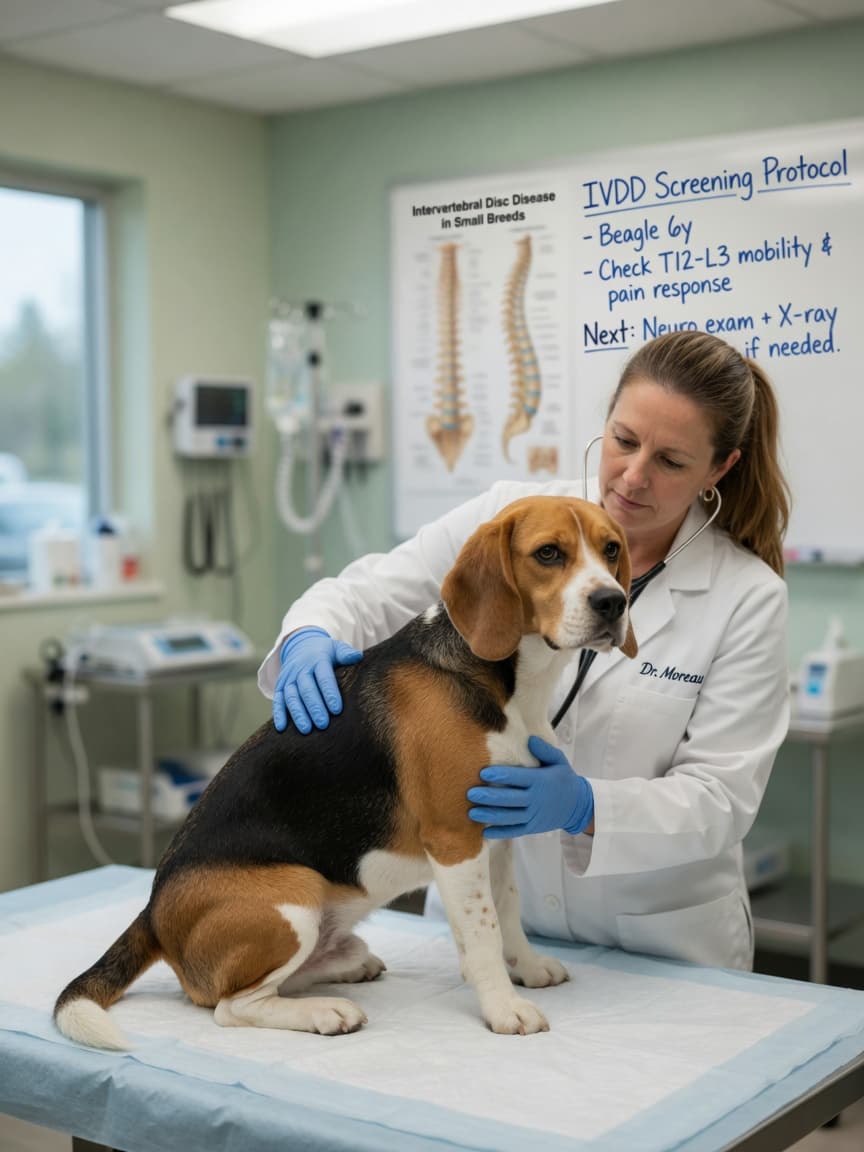
Beagles are a chondrodystrophoid-adjacent breed, meaning their cartilage and spinal disc composition puts them at elevated risk for intervertebral disc disease, or IVDD. In this condition, the gelatinous inner core of a spinal disc degenerates and can herniate, pressing on the spinal cord or nerve roots.
Signs to watch for
- Reluctance to jump onto furniture or use stairs
- Yelping when touched along the back or neck
- An arched or hunched back posture
- Weakness or uncoordinated movement in the hind limbs
- In severe cases, complete paralysis of the hindquarters
Treatment options
Mild cases are often managed conservatively with strict rest and anti-inflammatory medication. More severe cases — particularly those involving significant neurological deficits — frequently require surgical decompression. Time is critical: dogs treated surgically within 24 to 48 hours of onset have considerably better outcomes than those treated later. Physiotherapy and hydrotherapy play an important role in recovery regardless of the treatment route taken.
Obesity: The Silent Threat

If there is one health problem almost every Beagle owner will encounter, it is the relentless drive to eat. Beagles were bred as scent hounds, and their foraging instinct means they will seek out food constantly, show little satiety, and consume whatever is available. The result is a breed with an exceptionally high rate of obesity.
Excess weight compounds virtually every other health problem a Beagle may face. It increases spinal load, worsening IVDD risk. It contributes to joint stress, diabetes, heart disease, and shorter overall lifespan. Studies suggest that even moderately overweight dogs live up to two years less than their lean counterparts.
Practical weight management
- Use a measuring cup — never free-feed a Beagle
- Account for treats within daily caloric targets
- Feed two to three measured meals per day rather than one large meal
- Prioritise high-protein, lower-carbohydrate diets to support satiety
- Weigh your Beagle monthly and adjust portions based on body condition score
Mental enrichment — puzzle feeders, sniff walks, scatter feeding — can satisfy the foraging drive without adding excess calories.
Other Health Considerations
Beyond the three conditions above, Beagles are also predisposed to hypothyroidism, cherry eye, and certain ear infections due to their long, floppy pinnae restricting airflow. Hip dysplasia is less common in Beagles than in larger breeds but should not be entirely dismissed, particularly in lines not health tested. Regular dental care is also essential, as periodontal disease is widespread in the breed.
Building a Preventive Health Plan
A proactive approach to Beagle ownership pays dividends over a lifetime. Below is a practical checklist for keeping your Beagle in the best possible health:
- Schedule annual veterinary check-ups, with six-monthly visits from middle age onwards
- Monitor body condition score monthly and keep weight in the lean-to-ideal range
- Be aware of your Beagle's neurological baseline — note any subtle behavioural changes
- Limit high-impact jumping, particularly from heights, to reduce spinal disc stress
- Keep a seizure diary if epilepsy is diagnosed, recording frequency, duration, and recovery time
- Ensure ears are checked and cleaned regularly to prevent infection
- Discuss genetic health testing with your vet if you are purchasing from a breeder
Beagles are robust, affectionate dogs that reward attentive ownership. Knowing the conditions that most commonly affect this breed puts you in the best possible position to respond early, seek appropriate veterinary care, and give your dog the longest, healthiest life possible. Always consult your vet before making changes to your dog's diet, medication, or exercise routine.