
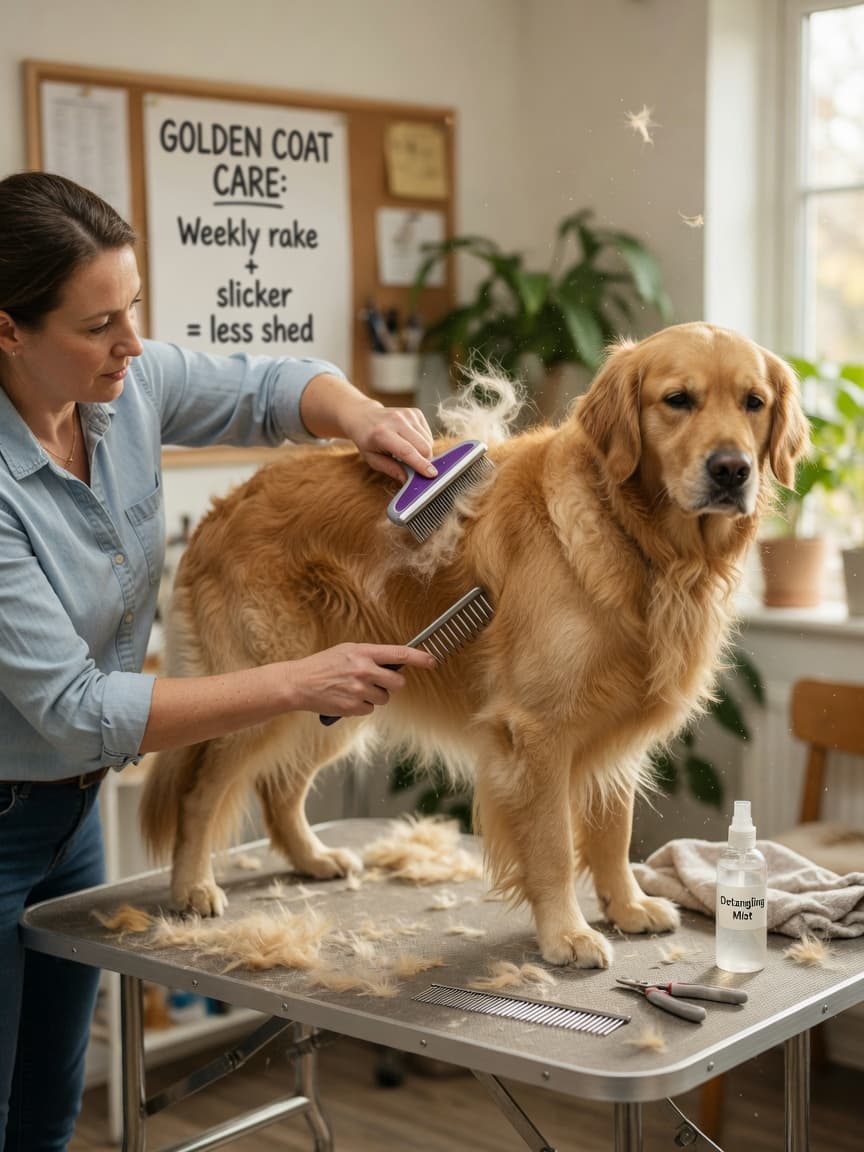
Why Breed Matters When It Comes to Grooming
Grooming a Labrador and grooming a Bichon Frise are two entirely different undertakings. The tools required, the frequency of maintenance, and the techniques involved vary enormously based on coat type, texture, and length. Using the wrong approach — or the wrong tools — can result in coat damage, skin irritation, matting, or a dog that learns to dread every grooming session.
Understanding your dog's coat type is the first step toward a practical home grooming routine that keeps them comfortable, healthy, and looking their best without requiring a professional every fortnight.
Short, Smooth Coats
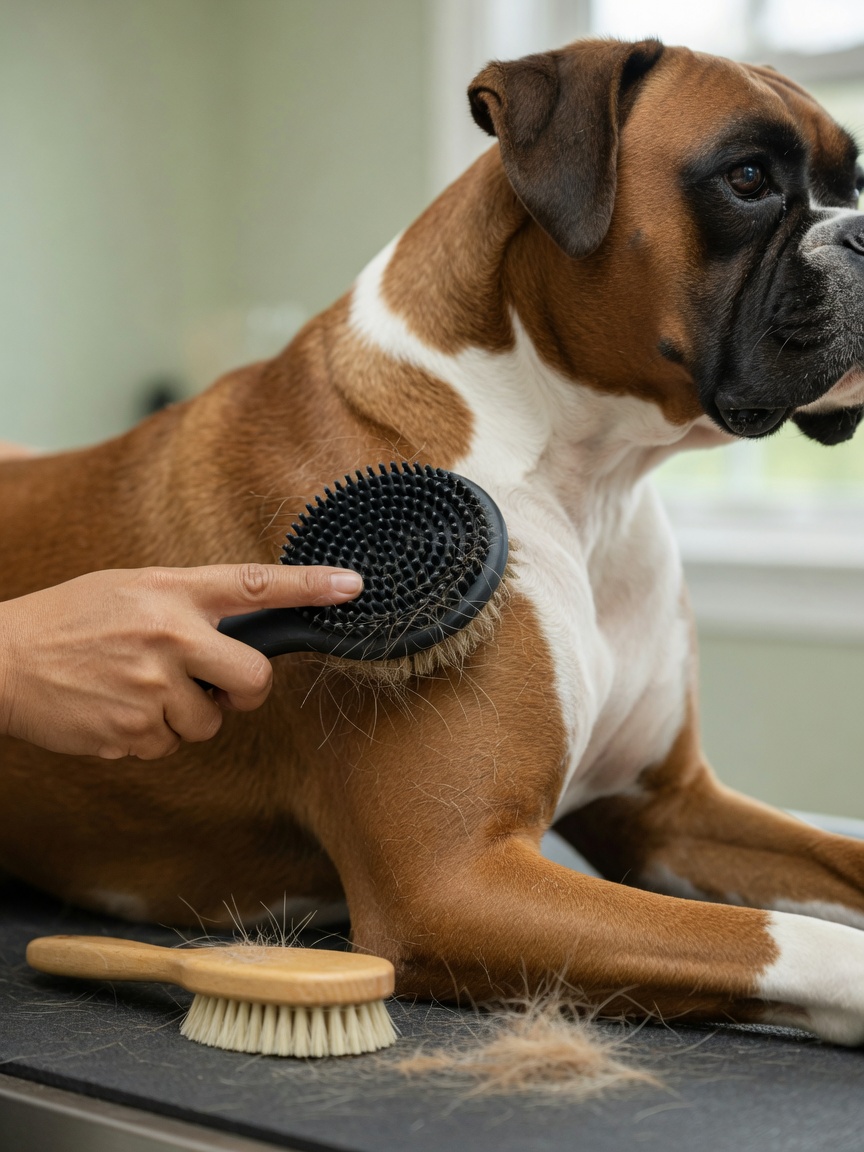
Breeds with short, smooth coats include Beagles, Boxers, Weimaraners, Whippets, Staffordshire Bull Terriers, and Dachshunds. These are the lowest-maintenance coats in terms of grooming time, but they still shed and benefit from regular attention.
What They Need
A rubber curry brush or grooming mitt used weekly removes dead hair and stimulates circulation in the skin. This is particularly important for heavy shedders like Boxers, who may not look like they shed but produce a surprising volume of fine hair. Follow up with a soft bristle brush to distribute natural oils and give the coat a healthy shine.
These coats rarely mat and do not need professional trimming. Bathing every four to six weeks, combined with weekly brushing, is generally all that is required.
Double Coats
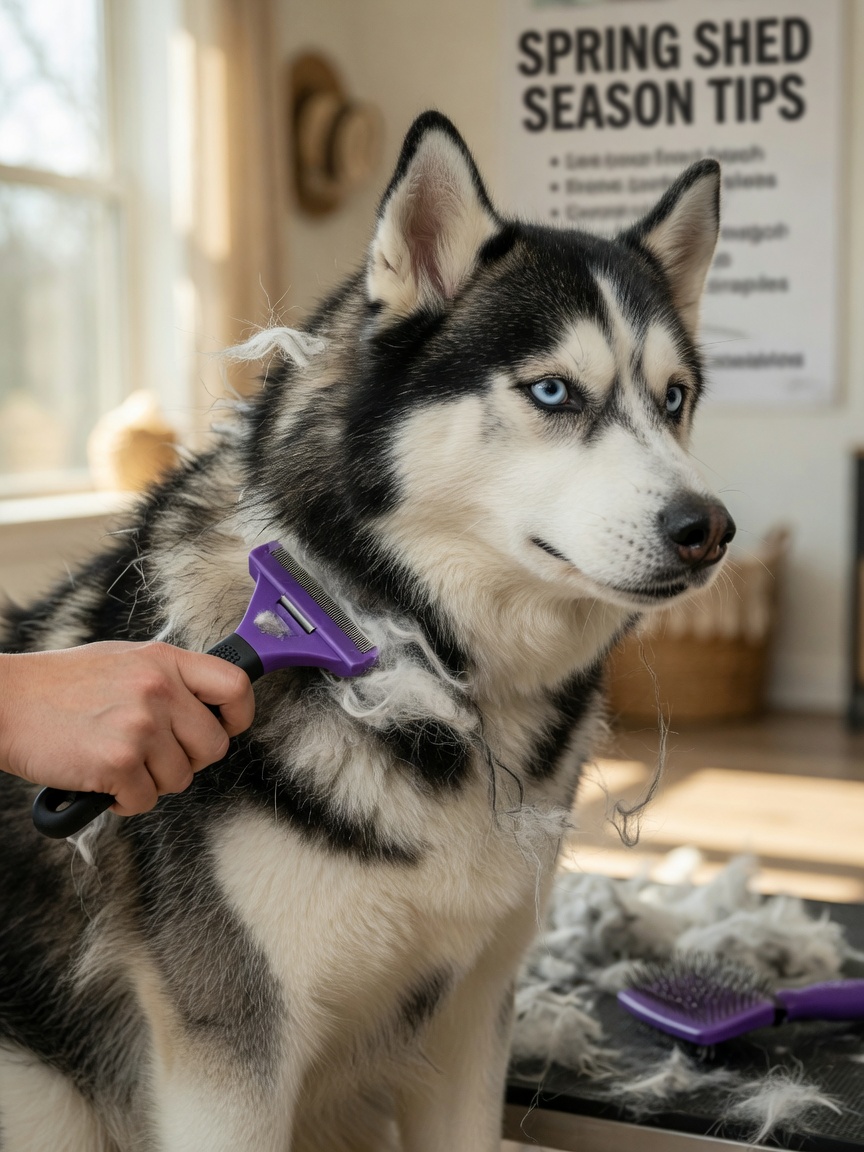
Many of the UK's most popular breeds — including Labrador Retrievers, Golden Retrievers, Border Collies, German Shepherds, Huskies, Corgis, and Shetland Sheepdogs — carry a double coat consisting of a dense, insulating undercoat and a coarser outer topcoat. These coats shed heavily twice a year during seasonal blows, and managing the undercoat is the key challenge for owners.
What They Need
An undercoat rake or de-shedding tool used several times a week during heavy shedding periods is essential. The Furminator is a widely recommended option, though it should be used sparingly as excessive use on the topcoat can damage the guard hairs. A slicker brush used afterward removes any remaining loose fur and smooths the coat.
Never shave a double-coated dog in summer to keep them cool. The undercoat actually acts as insulation in both directions — trapping cool air in summer and warmth in winter. Shaving disrupts this system, exposes the skin to UV damage, and can permanently alter coat texture.
Wire Coats
Wire-coated breeds include Border Terriers, Wire Fox Terriers, Airedales, and Schnauzers. Their harsh, dense topcoat is designed to repel weather and resist dirt, and maintaining its texture requires a specific technique.
What They Need
Wire coats are traditionally hand-stripped — a process of pulling dead hair out by the root rather than cutting it — to maintain the correct texture and natural weatherproofing. Clippered wire coats gradually lose their characteristic hardness and colouring, becoming softer and lighter over time.
Hand stripping is a skill that takes practice and is best learned from a professional groomer initially. Between strips, a slicker brush and comb keep the coat tidy. Most wire-coated terriers need stripping every three to four months if shown, or twice a year for pet dogs.
Curly and Wavy Coats
Poodles, Lagotto Romagnolos, Spanish Water Dogs, and increasingly popular doodle crosses fall into this category. Their coats do not shed in the traditional sense — loose hairs become trapped in the curl rather than falling away — which means they mat quickly without regular brushing.
What They Need
Daily or near-daily brushing with a slicker brush and a metal comb is non-negotiable for curly-coated dogs. Pay particular attention to high-friction areas: behind the ears, under the collar, in the armpits, and at the base of the tail, where mats form first.
Professional clipping every six to eight weeks is standard for most Poodle crosses. In between, owners need to keep on top of brushing to prevent the groomers from having to shave the coat down completely due to matting — a procedure that is uncomfortable for the dog and distressing for everyone involved.
Long, Silky Coats
Afghan Hounds, Shih Tzus, Yorkshire Terriers, Maltese, and Cavalier King Charles Spaniels all carry long, flowing coats that are beautiful when maintained and problematic when neglected.
What They Need
Daily brushing using a pin brush, followed by a wide-toothed comb to check for hidden tangles, is the foundation of silky coat care. Begin brushing from the tips of the hair and work upward toward the roots — this is called line brushing and prevents breaking fragile strands.
Regular trimming of the hair around the eyes, paws, and sanitary areas keeps the dog comfortable and hygienic even between professional appointments. Many owners opt to keep their long-coated dogs in a short trim — sometimes called a puppy cut — for practical reasons, which reduces daily grooming requirements substantially.
Building a Home Grooming Kit
Regardless of breed, a well-stocked grooming kit should include:
- A slicker brush suitable for the coat type
- A metal comb with both wide and narrow teeth
- Nail clippers or a grinder
- Ear cleaning solution and cotton wool pads
- A detangling spray for longer coats
- Blunt-ended scissors for tidying paws and sanitary areas
Quality tools are a worthwhile investment. Cheap clippers drag through coats rather than cutting cleanly, making the experience uncomfortable. A good slicker brush from a brand like Chris Christensen or Resco will outlast multiple budget alternatives and produce noticeably better results.
A consistent grooming routine — ideally started in puppyhood — transforms what could be a difficult task into a simple, pleasant part of your dog's week. Even dogs who are initially wary of being handled nearly always settle into a routine when it is approached with patience, reward, and the right technique for their coat.