

Cats are masters of communication, yet their messages are often misunderstood by their human companions. Unlike dogs, who wear their emotions openly, felines communicate through subtle shifts in posture, tail position, and ear orientation. Learning to read these signals transforms your relationship with your cat, helping you understand their emotional state, anticipate their needs, and create a harmonious household. This comprehensive guide reveals the secrets behind your cat's non-verbal communication.
The Tail: Your Cat's Emotional Barometer
A cat's tail is perhaps the most expressive part of their body. The position and movement of this appendage tells you precisely what your feline friend is thinking.
- Vertical tail with a slight hook: This is the ultimate sign of contentment and confidence. Your cat is happy to see you and feels secure in their environment.
- Puffed-up tail: Your cat is frightened or defensive. This makes them appear larger to potential threats and indicates they feel threatened.
- Tail held low or tucked beneath the body: This signals fear, anxiety, or submission. Your cat is uncomfortable and may need reassurance.
- Tail thrashing or swishing rapidly: Irritation and agitation. Your cat is reaching their patience limit—leave them alone.
- Slow tail swish: Concentration. Your cat is focused, often just before pouncing on a toy or prey.
- Tail wrapped around you: Affection and bonding. Your cat considers you part of their family unit.
Ear Position: The Windows to Mood

Cat ears rotate independently and communicate volumes about their emotional state. Paying attention to ear positioning helps you gauge your cat's comfort level instantly.
- Forward-facing ears: Indicates interest, contentment, and confidence. Your cat is engaged with their surroundings positively.
- Ears swivelling or rotating: Your cat is alert and monitoring multiple sounds in their environment.
- Flattened ears: A clear sign of fear, anger, or defensive behaviour. Combined with other signals, this warns of potential aggression.
- Ears slightly to the side: Relaxation and partial attention. Your cat is comfortable but not fully engaged.
Facial Expressions and Eye Contact
Your cat's face reveals their true feelings. Eyes, in particular, are powerful communicators in feline language.
- Slow blinks: One of the highest compliments a cat can give. This is actually a cat kiss—slow blink back to strengthen your bond.
- Dilated pupils: Often indicates excitement, fear, or aggression, depending on context. Consider the situation and other body signals.
- Constricted pupils: Shows contentment and relaxation, particularly when combined with half-closed eyes.
- Staring directly: Can signal confidence or aggression. A prolonged stare from an unfamiliar cat warrants caution.
- Head bunting: When your cat rubs their head against you, they're marking you with scent glands and showing deep affection.
Body Posture: Reading the Overall Picture
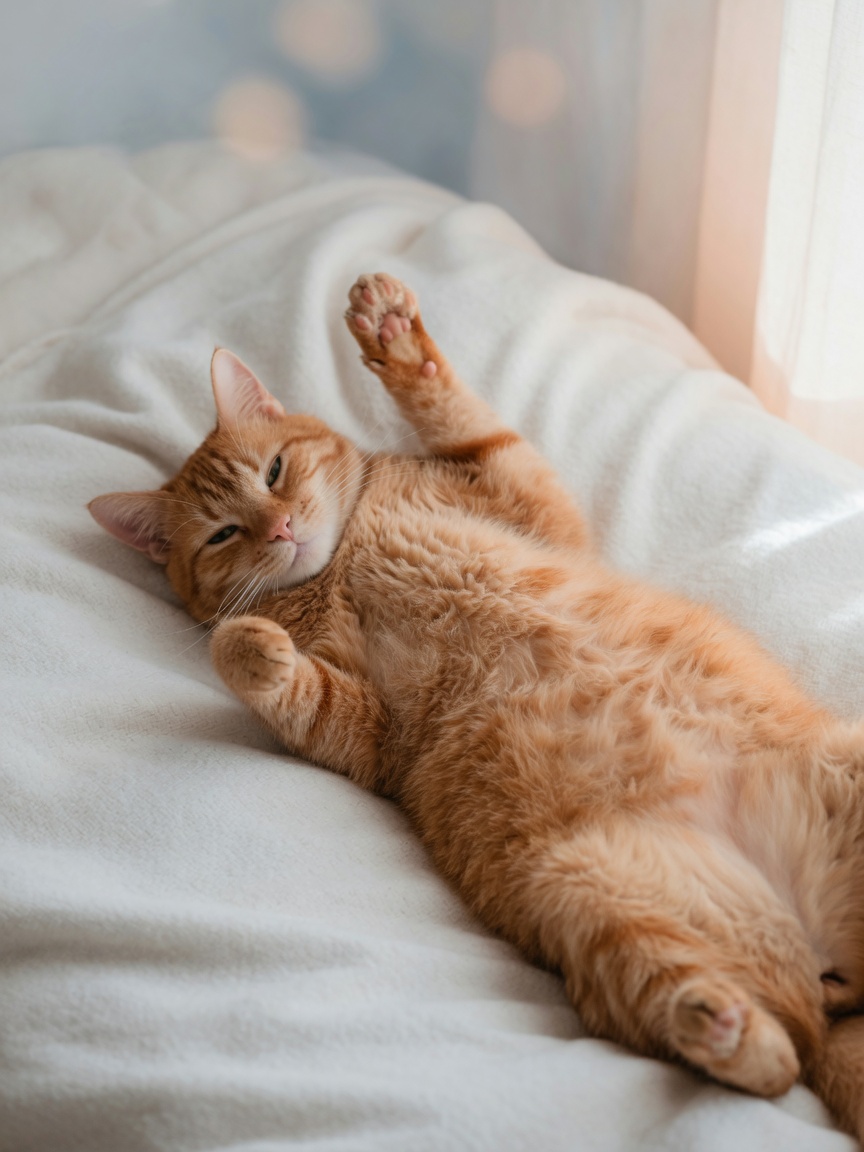
Your cat's entire body posture provides context for their emotional state:
- Relaxed posture: Muscles loose, weight distributed evenly, normal breathing. Your cat feels safe and content.
- Crouched low: Indicates fear or hunting mode. Assess the situation to determine which applies.
- Arched back with puffed fur: The classic defensive posture. Your cat is frightened and trying to appear larger.
- Stretched and exposed belly: Shows extreme trust and contentment. Only give belly rubs if your cat actively seeks them.
Vocalisations Combined with Body Language
Whilst meowing, chirping, and hissing are important, they must be interpreted alongside physical signals. A purr combined with a relaxed body and slow blinks confirms happiness, whilst a purr from a tense, crouched cat might indicate stress or pain.
Key Takeaways
Understanding your cat's body language requires observing the complete picture—tail, ears, eyes, posture, and vocalisations working together. By becoming fluent in feline communication, you'll anticipate your cat's needs, respect their boundaries, and deepen your relationship. Remember, each cat has unique personality quirks, so spend time learning your individual pet's specific communication style. This investment in understanding creates a more harmonious and enriching life for both of you.