
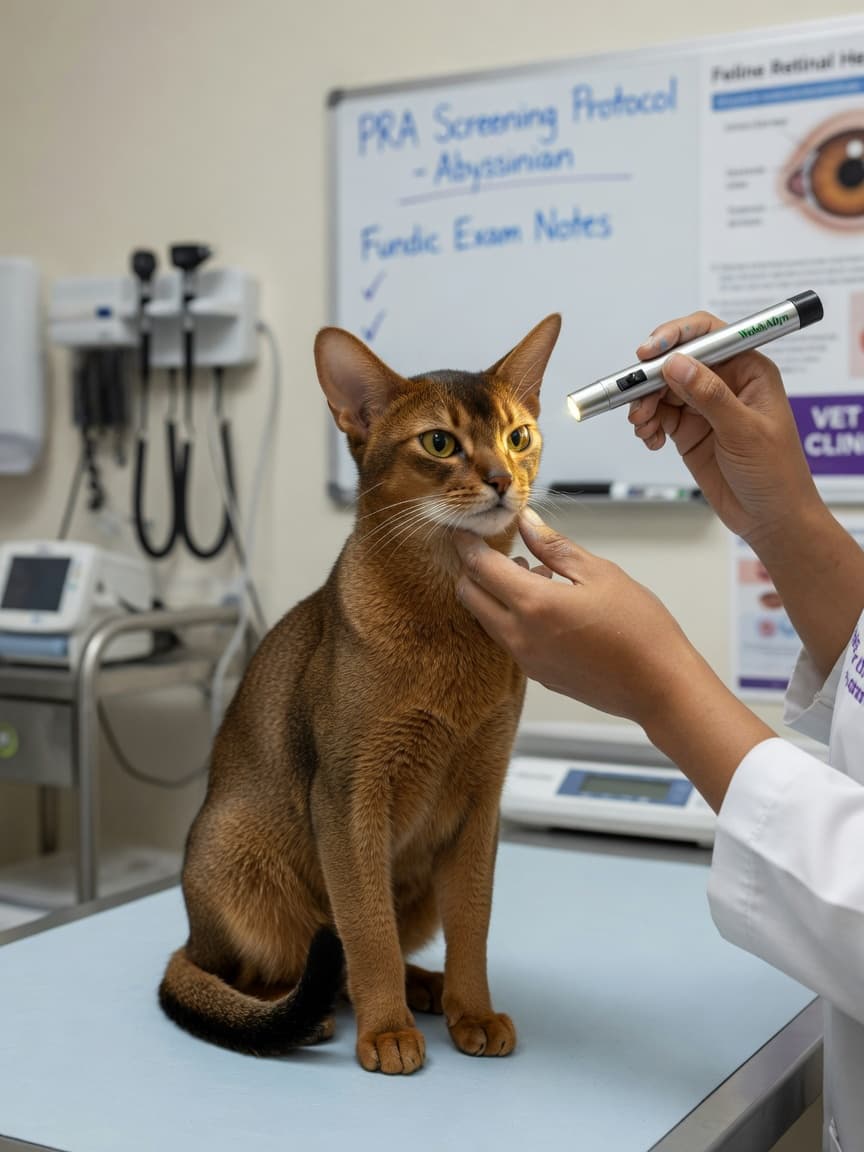
A Athletic Breed With a Complex Genetic Profile
The Abyssinian is one of the oldest and most recognisable cat breeds — slender, alert, and perpetually in motion. These are not cats that sit quietly on a lap; they climb, explore, and interact with extraordinary energy. That vitality makes it all the more sobering that the Abyssinian carries a notable burden of hereditary disease. Three conditions in particular — progressive retinal atrophy, renal amyloidosis, and pyruvate kinase deficiency — can significantly affect quality and length of life. Understanding them is the first step towards protecting your cat.
Progressive Retinal Atrophy
Progressive retinal atrophy (PRA) encompasses a group of inherited disorders that cause gradual degeneration of the photoreceptor cells in the retina, leading to progressive vision loss and, eventually, complete blindness. Two forms have been identified in Abyssinians: rdAc-PRA (caused by a mutation in the CEP290 gene) and a less common rdy form.
How PRA progresses
The rdAc form typically begins with loss of night vision, which owners may notice as reluctance to move in low light, increased caution navigating familiar spaces after dark, or bumping into objects. Day vision deteriorates more slowly. Cats adapt remarkably well to vision loss, especially in a stable, familiar environment, but the condition is not treatable and will culminate in blindness.
DNA testing and breeding implications
Reliable DNA tests for both the rdAc and rdy mutations are commercially available. PRA follows an autosomal recessive pattern of inheritance: two copies of the mutant allele are required for a cat to be affected. Carriers are clinically normal but can produce affected offspring when mated with another carrier. Responsible breeders test all breeding stock and avoid carrier-to-carrier pairings. When acquiring an Abyssinian kitten, request DNA test results for both parents as a baseline expectation. Cats diagnosed with PRA should have their environment kept consistent to support navigation, and annual ophthalmologic assessments are worthwhile to monitor progression.
Renal Amyloidosis
Abyssinian cats are predisposed to a hereditary form of renal amyloidosis, in which abnormal amyloid protein deposits accumulate within the kidney tissue, progressively destroying functional cells and leading to irreversible kidney failure. Unlike the more common reactive amyloidosis triggered by chronic inflammation, the Abyssinian form appears to be a primary familial condition.
Clinical presentation
Affected cats typically present between one and five years of age with signs of chronic kidney disease: increased thirst and urination, weight loss, vomiting, reduced appetite, and lethargy. The disease is usually well advanced by the time clinical signs are apparent, as the kidneys have considerable functional reserve. Blood and urine tests will reveal elevated creatinine and urea, and proteinuria is often marked.
Management and prognosis
There is no cure for renal amyloidosis. Management focuses on slowing progression of kidney disease through dietary modification (phosphorus restriction, high-quality protein), hydration support (including subcutaneous fluids if required), and management of secondary complications. Prognosis is guarded; the condition progresses inexorably, though the rate varies between individuals. Regular kidney function screening from early adulthood is advisable for all Abyssinians. If abnormalities are detected early, management can begin before the cat is clinically unwell. Always work closely with your vet on the management plan.
Pyruvate Kinase Deficiency
Pyruvate kinase deficiency (PK deficiency) is an inherited haemolytic anaemia caused by a mutation in the PKLR gene. Pyruvate kinase is an enzyme critical to red blood cell energy metabolism. Deficient red blood cells have a shortened lifespan, and the resulting chronic anaemia places ongoing strain on the cat's system.
Signs of PK deficiency
Clinical signs vary considerably in severity. Some cats are mildly affected, whilst others develop significant anaemia with lethargy, pale gums, jaundice, abdominal enlargement (from splenomegaly), and exercise intolerance. Periods of compensated anaemia may be interrupted by acute haemolytic crises. The condition follows an autosomal recessive pattern; DNA testing identifies clear, carrier, and affected status reliably.
Treatment options
Mildly affected cats may require no intervention beyond monitoring. More severely affected cats may need supportive treatment during crises, including blood transfusions. Bone marrow transplantation has been explored experimentally but is not routinely available. Affected cats should be monitored with regular complete blood counts, and any deterioration should prompt immediate veterinary review.
Routine Health Management for Abyssinians
- Request DNA test results for PRA (rdAc and rdy) and PK deficiency before acquiring any kitten.
- Discuss renal amyloidosis screening with your vet — annual urine protein checks and kidney function panels from two years of age are reasonable.
- Arrange an ophthalmologic assessment if you notice any change in your cat's confidence in low-light environments.
- Have blood counts checked annually to establish a baseline and detect anaemia early.
- Maintain a consistent home layout to support any cat with developing vision impairment.
- Feed a nutritionally balanced, high-quality diet; discuss renal diets with your vet if kidney disease is identified.
- Ensure your Abyssinian receives adequate environmental enrichment — physical and cognitive stimulation support wellbeing in this highly active breed.
The Abyssinian is a cat of extraordinary character, and its health challenges, whilst real, are not inevitable outcomes for every individual. Genetic testing, regular monitoring, and early intervention give these cats the best possible chance of a long, fulfilling life.