ForPetsHealthcare
Dogs

How to Help a Territorial Dog

By Julia WrenfieldUpdated August 4, 20264 min read
Evidence-based · Sources checked
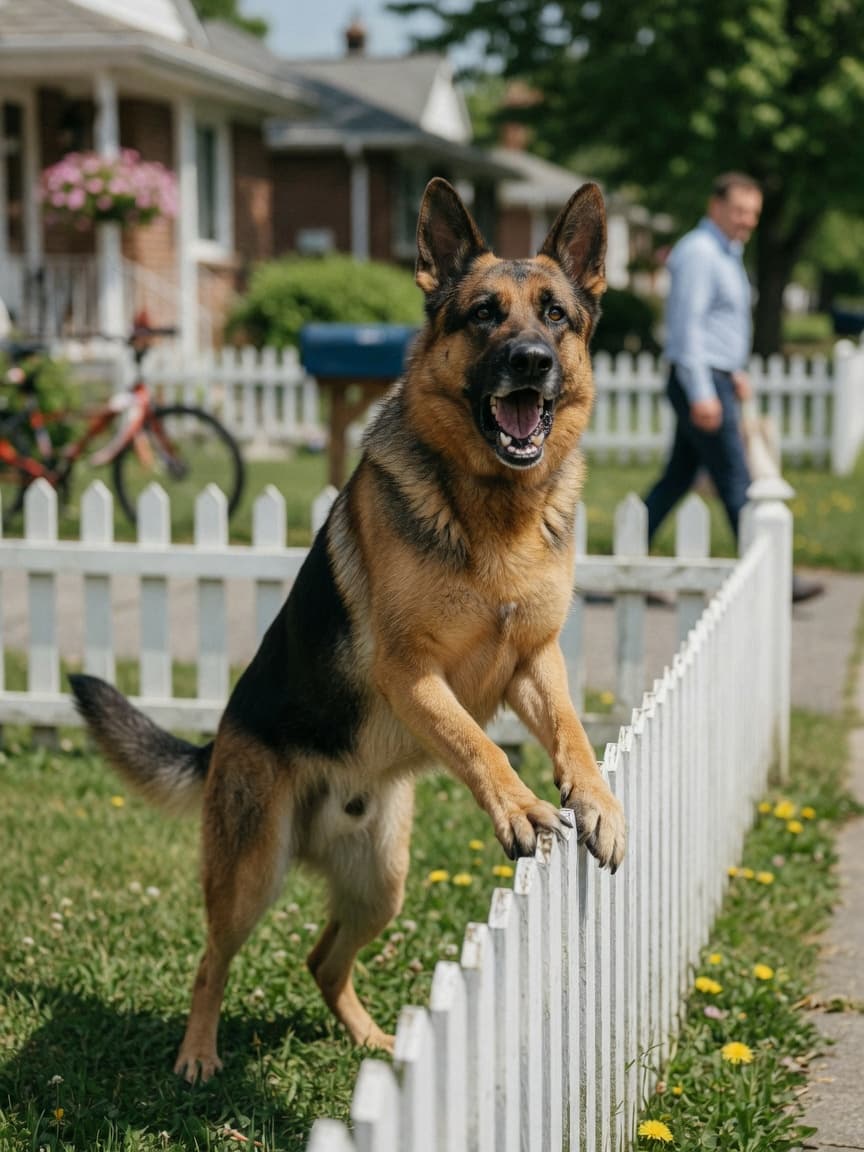
{"en": "Alert dog barking at garden fence, demonstrating territorial behavior that owners can manage with training", "es": "Perro alerta ladrando en la valla del jard\u00edn, demostrando comportamiento territorial que los due\u00f1os pueden controlar", "fr": "Chien attentif aboyant \u00e0 la cl\u00f4ture du jardin, d\u00e9montrant un comportement territorial que les propri\u00e9taires peuvent g\u00e9rer", "de": "Aufmerksamer Hund bellt am Gartenzaun und zeigt Territorialverhalten, das Besitzer trainieren k\u00f6nnen", "nl": "Alert hondje blafte bij tuinhek, dat territoriaal gedrag toont dat eigenaren kunnen trainen", "pt": "C\u00e3o atento latindo na cerca do jardim, demonstrando comportamento territorial que os donos podem controlar", "it": "Cane vigile che abbaia al recinto del giardino, mostrando comportamento territoriale gestibile dai proprietari"}

Territorial behaviour in dogs is one of the most common challenges pet owners face, whether it manifests as barking at the garden fence, reacting aggressively to visitors, or displaying resource guarding inside the home. The good news is that with patience, consistency, and the right approach, you can significantly reduce territorial aggression and help your dog feel more secure and relaxed. Understanding what drives this behaviour is the first step towards meaningful change.

Understanding Territorial Behaviour

Territorial behaviour stems from your dog's natural instinct to protect their space, resources, and family members. It's a survival mechanism that once helped wild dogs establish safe areas for resting and raising puppies. In our homes, this instinct can become problematic when it causes excessive barking, fence aggression, or prevents your dog from relaxing around guests.

Some breeds, such as German Shepherds and Akitas, have stronger territorial tendencies, but any dog can develop these behaviours if they feel anxious or insecure about their environment.

Establish Clear Leadership and Boundaries
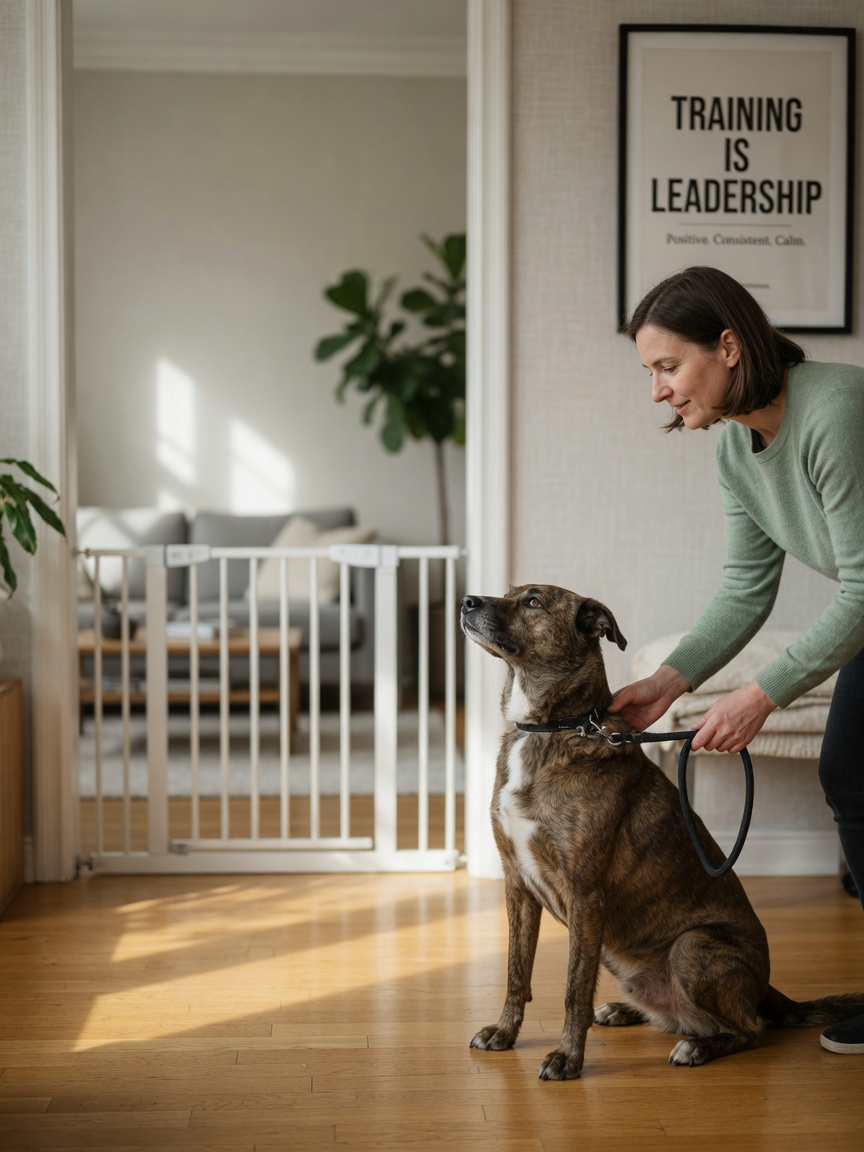
Dog handler demonstrating calm leadership with a dog sitting obediently beside them, with a baby gate visible in the doorway behind them

Dogs feel most secure when they understand the rules and who is managing their space. This doesn't mean harsh punishment, but rather consistent, calm guidance:

  • Decide which areas of your home your dog is allowed to access, and stick to these boundaries consistently
  • Control access to doors and windows where territorial responses are triggered
  • Use baby gates to manage movement and prevent your dog from rushing to perceived threats
  • Establish a predictable daily routine, which helps anxious dogs feel more secure
  • Be the first to greet visitors, then allow your dog to follow your lead rather than taking charge

Desensitisation and Counter-Conditioning

Gradually changing your dog's emotional response to territorial triggers is highly effective. This process involves exposing your dog to the trigger at a low intensity whilst pairing it with something positive:

  1. Start at a distance where your dog notices the trigger but doesn't react intensely
  2. Reward calm behaviour with high-value treats or praise
  3. Slowly decrease the distance over weeks or months
  4. Practice consistently, at least three to four times weekly

For example, if your dog reacts to people walking past the window, ask a friend to walk by at a distance whilst you reward your dog for looking at you instead of the window.

Increase Exercise and Mental Stimulation
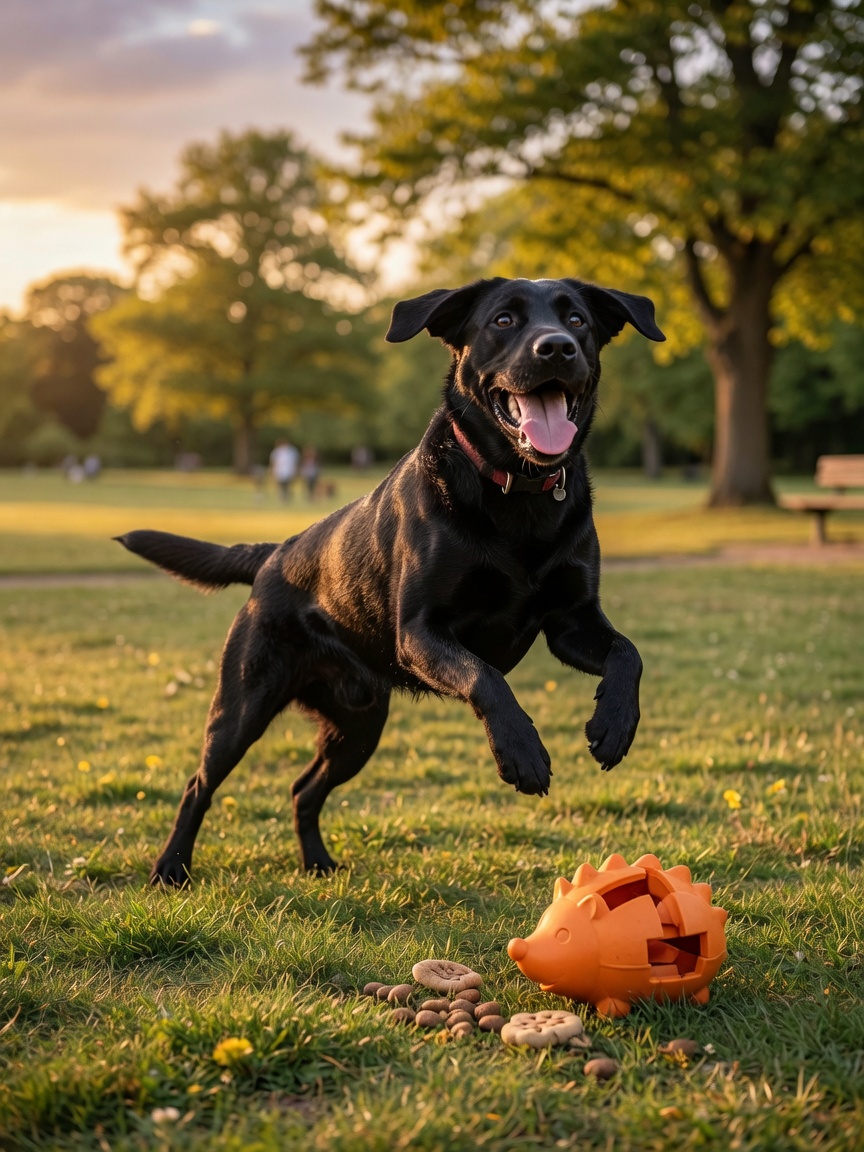
Energetic black Labrador Retriever leaping with joy in a park with puzzle toys visible, demonstrating physical exercise and mental stimulation

A tired dog is often a calmer dog. Territorial dogs frequently have excess energy that manifests as vigilance and reactivity. Aim for at least 30 to 60 minutes of physical exercise daily, plus mental enrichment through puzzle toys, training sessions, or scent work games.

Mental stimulation is particularly valuable, as it exhausts the brain and reduces hypervigilance. Consider hiring a professional dog walker or using daycare services a few times weekly if your schedule is demanding.

When to Seek Professional Help

If your dog shows signs of severe aggression, has bitten someone, or your efforts haven't produced improvement after three months, consult a certified animal behaviourist. They can assess whether anxiety, fear, or medical conditions are contributing to the behaviour and create a tailored management plan.

Key Takeaways

  • Territorial behaviour is instinctive but manageable through consistent training and environmental control
  • Establish clear boundaries and leadership in your home
  • Use desensitisation and counter-conditioning to change your dog's emotional responses
  • Provide adequate physical exercise and mental stimulation daily
  • Seek professional help if aggression is severe or improvement is slow
  • Be patient—meaningful behaviour change typically takes weeks to months, not days

With dedication and the right strategies, most territorial dogs can learn to feel secure without resorting to protective aggression. Your consistency and calm presence are your greatest tools in this journey.

#how to help a territorial dog#dog health#dog nutrition#forpetshealthcare

Sources & further reading

This article is based on peer-reviewed veterinary research and reputable animal-health sources. Explore the underlying science in our Research Library.

Related articles

The 19 Best Animal Shelters in the Netherlands (2026)

the Netherlands's animal shelters, rescue associations and refuges save thousands of dogs, cats and other animals every year, almost always on tiny budgets and volunteer power. To build the most objective ranking possible, we analysed public Google reviews across more than 56 registered animal-prote…

Read more →

The 25 Best Animal Shelters in Italy (2026)

Italy's animal shelters, rescue associations and refuges save thousands of dogs, cats and other animals every year, almost always on tiny budgets and volunteer power. To build the most objective ranking possible, we analysed public Google reviews across more than 121 registered animal-protection org…

Read more →

The 48 Best Animal Shelters in Germany (2026)

Germany's animal shelters, rescue associations and refuges save thousands of dogs, cats and other animals every year, almost always on tiny budgets and volunteer power. To build the most objective ranking possible, we analysed public Google reviews across more than 152 registered animal-protection o…

Read more →

The 32 Best Animal Shelters in France (2026)

France's animal shelters, rescue associations and refuges save thousands of dogs, cats and other animals every year, almost always on tiny budgets and volunteer power. To build the most objective ranking possible, we analysed public Google reviews across more than 89 registered animal-protection org…

Read more →

The 8 Best Animal Shelters in Portugal (2026)

Portugal's animal shelters, rescue associations and municipal centros de recolha save thousands of dogs, cats and other animals every year, almost always on tiny budgets and volunteer power. To build the most objective ranking possible, we analysed public Google reviews across more than 86 registere…

Read more →

Sphynx Cat Skin care and hygiene: Causes, Signs & Care

Sphynx cats have little to no coat, which means the skin itself takes on jobs that fur normally does — insulation, oil dispersal, and barrier protection — leaving it prone to greasiness, blocked pores, fungal infections, and sunburn. The single most important thing to know is that a Sphynx's skin ne…

Read more →
Disclaimer:This article is for informational purposes only and does not constitute veterinary advice. Always consult a qualified veterinarian for your pet's health concerns.

Free newsletter

Pet health tips, straight to your inbox

Weekly science-backed advice for dog & cat owners. No spam, unsubscribe anytime.