
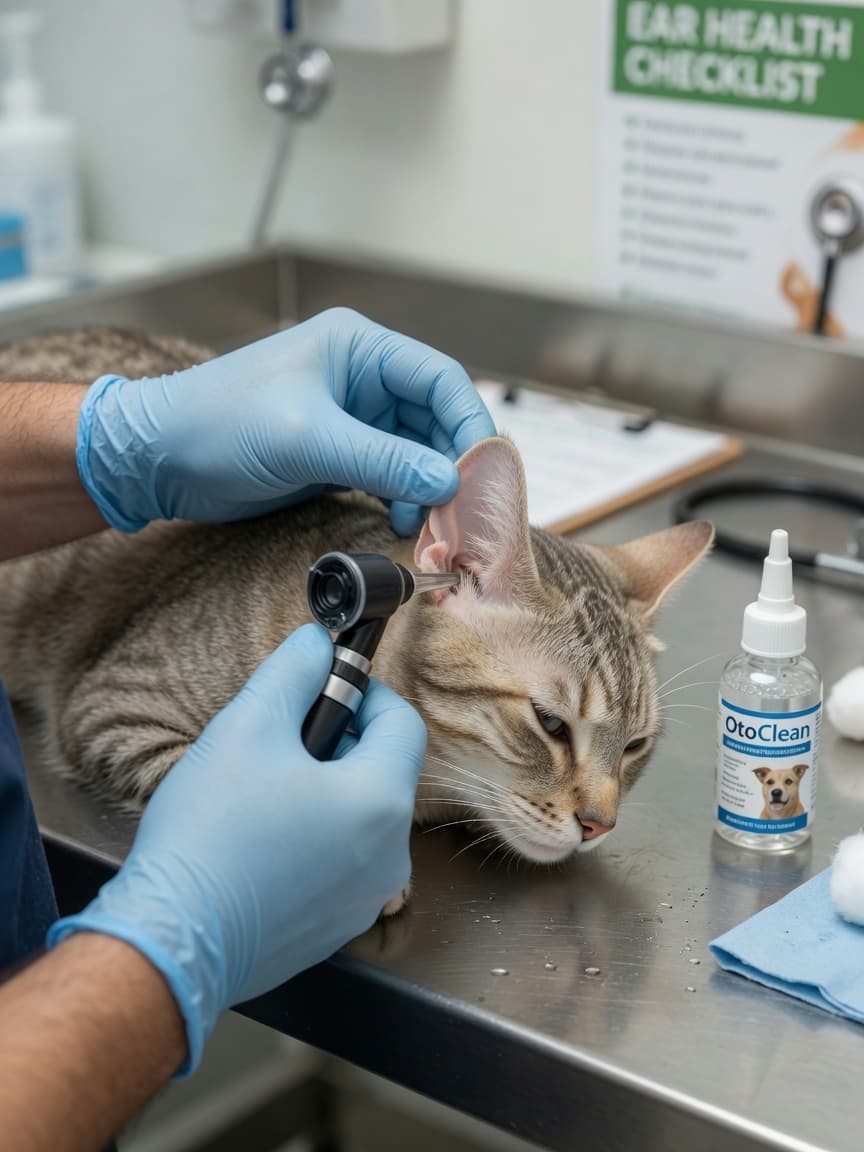
Why Cat Ear Cleaning Matters
Most cats are remarkably good at keeping themselves clean, but the ears are one area where they genuinely cannot manage on their own. Debris, wax, and moisture can accumulate inside the ear canal, creating the perfect environment for bacterial or yeast infections. Catching problems early — or preventing them altogether — is one of the simplest things you can do to protect your cat's long-term health.
That said, healthy cat ears do not require frequent cleaning. Over-cleaning is a real concern and can strip the ear canal of its natural protective oils, actually increasing the risk of infection. The goal is to clean when necessary, not on a rigid schedule.
How to Tell When Your Cat's Ears Need Cleaning
Before you reach for the cotton wool, take a moment to examine your cat's ears in good light. A healthy cat ear is pale pink, has no odour, and contains only a minimal amount of light-coloured wax.
Signs that cleaning may be needed include:
- Visible dark brown or black debris inside the ear
- A mild, musty smell
- Your cat shaking its head or scratching at its ears more than usual
- Wax buildup visible near the ear opening
Signs that something more serious is going on — and that you should see a vet rather than clean at home — include a strong, foul odour, discharge that looks like coffee grounds (a classic indicator of ear mites), redness or swelling, your cat flinching when you touch the ear, or any sign of pain. These are not situations where home cleaning is appropriate.
What You Will Need
Gather your supplies before you start so you are not rummaging through cupboards with a wriggling cat in your lap. You will need:
- A veterinary-approved ear cleaning solution (never use water, hydrogen peroxide, or alcohol)
- Cotton wool balls or gauze pads
- A towel to wrap your cat if needed
- Treats for positive reinforcement
Cotton buds are not recommended for cats. The ear canal is fragile, and it is far too easy to push debris deeper or cause damage, even with the best intentions.
Step-by-Step: How to Clean Your Cat's Ears Safely
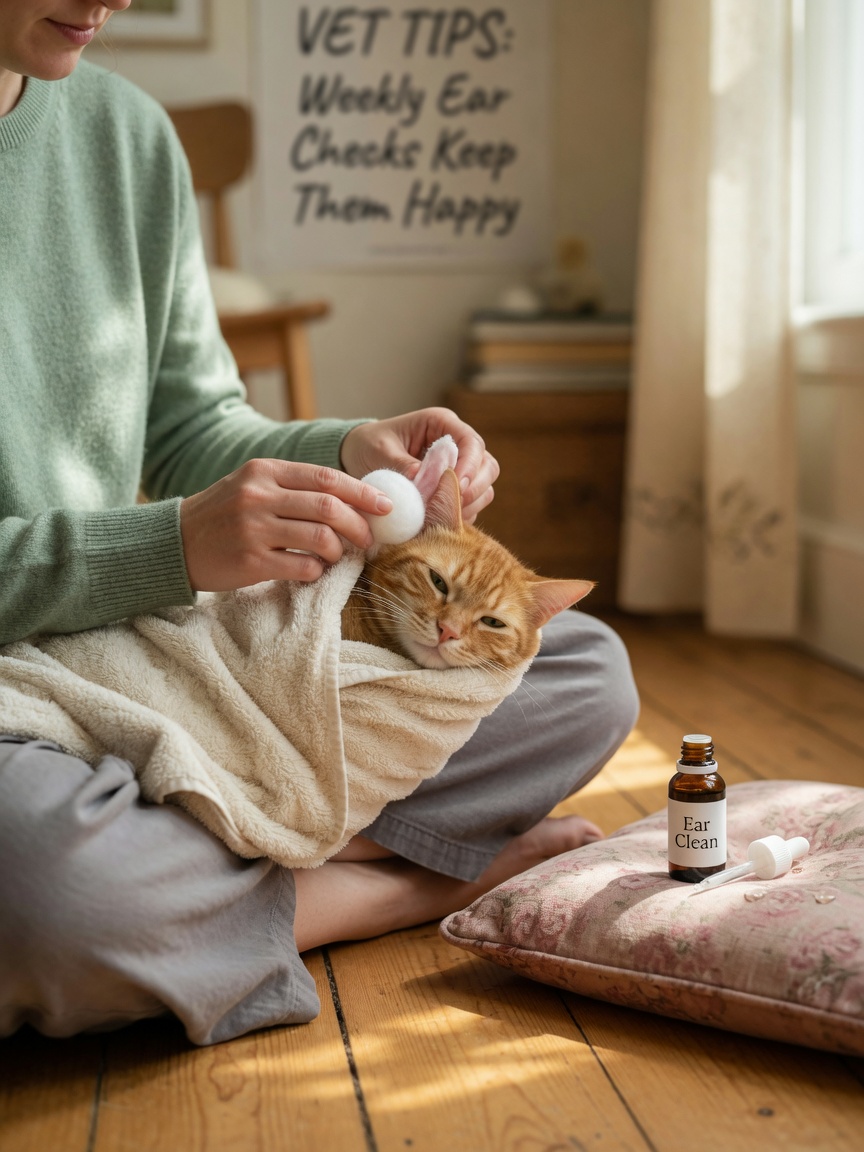
Step 1 — Settle Your Cat
Choose a calm moment, not right after a meal or when your cat is already agitated. Sitting on the floor often works better than a high surface, as cats feel more secure at ground level. If your cat tends to struggle, you can wrap them gently in a towel, leaving just their head exposed. This technique, sometimes called the "purrito," can reduce flailing without causing distress.
Step 2 — Examine the Ear
Gently fold back the ear flap and look inside. If the ear looks healthy and you can see only a small amount of debris near the entrance, proceed. If anything looks abnormal, stop and book a vet appointment instead.
Step 3 — Apply the Cleaning Solution
Hold the ear flap up and place the tip of the bottle just at the entrance of the ear canal — do not insert it deeply. Apply the recommended number of drops as stated on your chosen product. Most veterinary ear cleaners are designed to break down wax and debris on contact.
Step 4 — Massage the Base of the Ear
Gently hold the base of the ear between your fingers and massage it in small circular motions for around 20 to 30 seconds. You will likely hear a soft squelching sound, which is normal and means the solution is working its way through the debris. Your cat may find this quite soothing once they get used to it.
Step 5 — Let Your Cat Shake
Release the ear and allow your cat to shake their head. This brings loosened debris up and out of the canal naturally. Have the towel ready — you may get some solution splattered your way.
Step 6 — Wipe Away Debris
Using a cotton wool ball, gently wipe the visible parts of the inner ear flap and the outer portion of the canal. Only clean what you can see without inserting anything into the canal itself. Repeat with a fresh cotton wool ball until it comes away clean.
Step 7 — Reward Generously
Finish with praise and a treat, even if the session was imperfect. Positive associations make each subsequent cleaning easier. With young cats especially, building this routine early pays dividends for life.
How Often Should You Clean a Cat's Ears
For most cats, ear cleaning is only needed every few weeks at most, and some cats with naturally clean ears may rarely need it at all. Cats who spend time outdoors, have had ear infections previously, or have narrower ear canals may need more regular attention. Breeds with folded ears, such as Scottish Folds, also warrant closer monitoring as their anatomy can trap more debris.
Making a quick visual check part of your regular grooming routine — say, during weekly brushing — means you will catch any changes early without over-intervening when everything looks fine.
When to See a Vet
Regular home checks are valuable, but they are not a substitute for professional care. If your cat's ears look inflamed, if cleaning does not resolve the visible debris within a session or two, or if your cat is clearly uncomfortable, get a vet involved. Ear infections in cats can escalate quickly and, if left untreated, can affect deeper structures including the middle and inner ear.
With the right approach and a little patience, ear cleaning can become a quick, low-stress part of your cat's care routine — and a genuinely useful way to monitor their health between vet visits.