
How to Bathe a Dog Without the Struggle: Step-by-Step
Bath time is one of those dog-care tasks that sounds straightforward but can quickly turn into a soaking-wet, shampoo-everywhere ordeal. Many dogs resist baths — not because they dislike being clean, but because previous bath experiences were rushed, uncomfortable, or frightening. The good news is that with the right preparation, the correct products, and a calm, methodical approach, most dogs can learn to tolerate — and even enjoy — a bath.
This guide walks you through every stage of the process, from setting up your space to the final dry, with tips for dogs who find the whole experience particularly stressful.
Before You Start: Preparation Is Everything
The single biggest mistake people make when bathing a dog is starting without adequate preparation. Mid-bath, you cannot leave your dog unattended in the tub to fetch a forgotten towel. Get everything ready in advance:
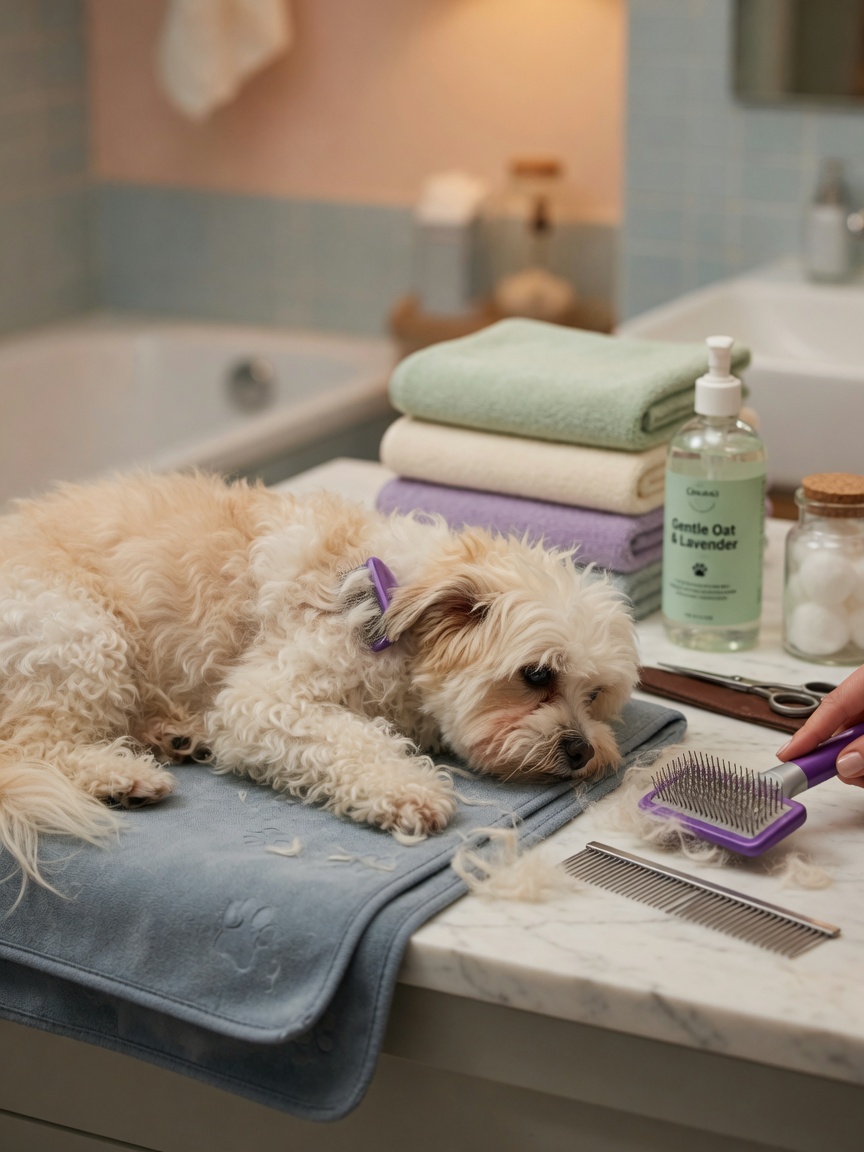
- Brush first: Always brush your dog thoroughly before bathing. Water tightens mats and tangles, making them far harder to remove afterwards. Detangle the coat completely before a single drop of water touches your dog.
- Gather your supplies: Dog shampoo, conditioner (if needed), a non-slip mat for the tub or shower floor, at least two absorbent towels, a cup or shower attachment for rinsing, and cotton balls to loosely place in the ears.
- Plug the drain: Have a drain catcher in place — dog hair in large quantities will block your drain quickly.
- Wear appropriate clothing: Assume you will get wet.
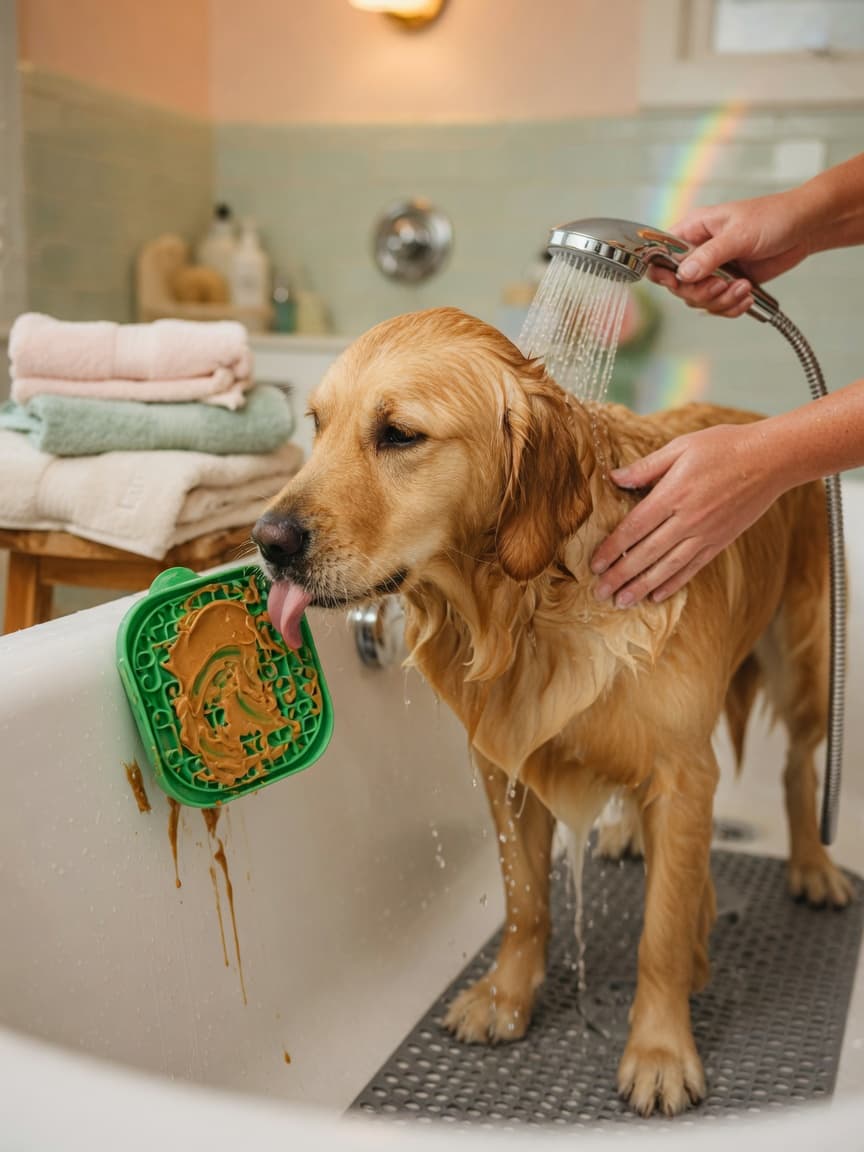
Placing a lick mat with a thin smear of peanut butter or cream cheese on the wall of the bath or shower is one of the most effective ways to keep a dog still and positive during bathing — it gives them something to focus on and associates the experience with something enjoyable.
Choosing the Right Shampoo
Never use human shampoo on a dog. Human skin has a pH of around 5.5, while dogs have a skin pH between 6.2 and 7.4. Human shampoos are formulated for acidic skin and will disrupt a dog's skin barrier, leading to dryness, irritation, and increased susceptibility to bacterial and fungal infections — a finding supported by research in the Veterinary Dermatology journal.
When selecting a dog shampoo, consider the following:
- General maintenance shampoo: Suitable for most dogs bathed regularly. Look for gentle, pH-balanced formulas with natural moisturizers like aloe vera or oat extract.
- Sensitive skin shampoo: For dogs with allergies, redness, or dry skin. Fragrance-free and hypoallergenic formulas reduce the risk of reactions.
- Medicated shampoo: Prescribed or recommended by a vet for specific conditions such as seborrhea, ringworm, or bacterial infections. These should only be used as directed.
- Whitening or color-enhancing shampoos: Safe for cosmetic use on appropriate coat colors; follow dilution instructions carefully.
- Puppy shampoo: Extra-gentle formulas designed for young or sensitive dogs, safe if it gets near the eyes.
Finding the right shampoo for your dog's coat type doesn't have to be expensive. Zooplus stocks a comprehensive range of dog shampoos — from everyday maintenance to medicated and sensitive-skin formulas — often with multi-buy discounts that make regular bathing more affordable.
Getting the Water Temperature Right
Water temperature is more important than most owners realise. Too hot, and you risk burning sensitive skin or causing overheating — dogs cannot regulate temperature through sweating the way humans can. Too cold, and you'll have a panicked, shivering dog who associates baths with discomfort.
Aim for lukewarm water — approximately 37–38°C (98–100°F). This feels comfortably warm to the touch, not hot. Run the water and test it on the inside of your wrist (as you would for a baby's bath) before your dog steps in. Dogs with thick double coats may need slightly warmer water to penetrate to skin level, but never exceed 40°C.
Step-by-Step Bath Process
Step 1 — Wet the coat thoroughly
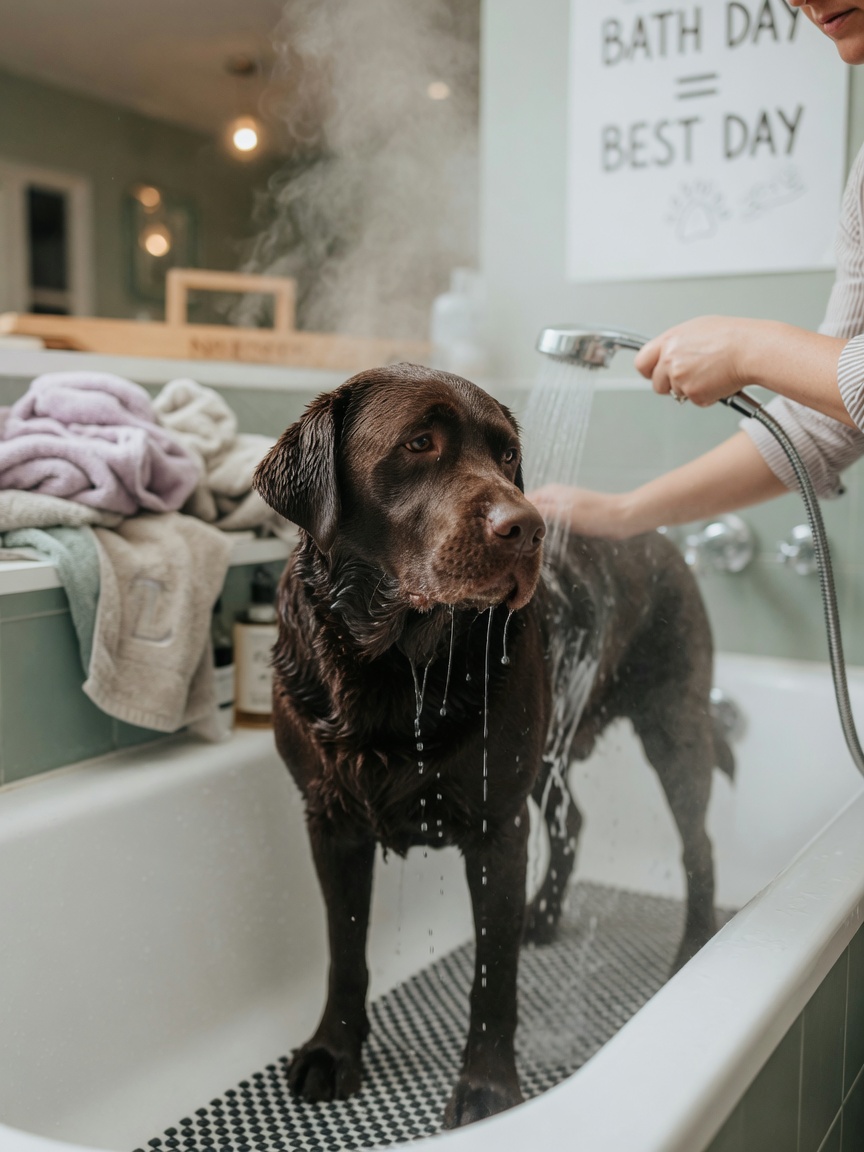
Use a shower attachment or cup to wet your dog completely, starting from the neck and working towards the tail. Leave the head for last. Make sure water penetrates all the way to the skin — this is especially important for double-coated and thick-coated breeds, where it's easy to wet only the surface. Take your time; rushing this step leads to poorly rinsed shampoo.
Step 2 — Apply shampoo
Dilute the shampoo if the instructions recommend it (many professional-grade shampoos require dilution). Work from the neck backwards in gentle, circular motions, massaging the product into the coat and down to the skin. Avoid the eyes, ears, and mouth. For the face, use a damp cloth and a tiny amount of shampoo, wiping carefully rather than pouring water directly over the head — most dogs find this extremely stressful.
Step 3 — Let it sit (if required)
Medicated and deep-cleansing shampoos often require a contact time of 5–10 minutes to be effective. General maintenance shampoos can be rinsed after a thorough massage. Check the product instructions.
Step 4 — Rinse completely
This is the most critical step. Shampoo residue left on the skin causes itching, dryness, and irritation — and is the most common cause of post-bath scratching. Rinse until the water runs completely clear and you can no longer feel any slipperiness in the coat. Then rinse again. For thick-coated dogs, this may take several minutes per section.
Step 5 — Condition (optional but recommended)
For long-haired, curly, or frequently groomed dogs, a dog-specific conditioner after shampooing helps to detangle, add shine, and reduce static. Apply from mid-shaft to ends, leave for the recommended time, and rinse thoroughly.
Step 6 — Remove excess water
Before your dog shakes (and they will), place a large towel over their back and gently press — don't rub — to absorb as much water as possible. Rubbing can cause tangles in longer coats. Then allow them to shake — it removes a surprising amount of water and is a natural, healthy behaviour.
Drying Methods
How you dry your dog matters as much as how you bathe them. Options include:
- Towel drying: Sufficient for short-coated breeds. Use absorbent microfibre towels and press rather than rub to avoid matting.
- Air drying: Fine in warm weather, but dogs should not be left to air dry in cold conditions — especially double-coated and thick-coated breeds, where the inner coat can stay damp for hours, creating an environment for mould and yeast.
- Blow drying: The most thorough method. Use a dog-specific dryer set to low heat, or a human hair dryer on the lowest heat setting. Keep it moving constantly and maintain a distance of at least 20 cm from the coat. Never use a high-heat setting — dog skin burns easily. The National Dog Groomers Association of America recommends blow-drying as the standard professional method for all but the shortest coats.
How Often Should You Bathe Your Dog?
The AKC's grooming guidelines suggest that most dogs benefit from a bath approximately once a month, though individual needs vary considerably. Over-bathing strips the coat of natural oils, leading to dry, flaky skin and a dull coat. Under-bathing allows dirt, allergens, and bacteria to accumulate.
General guidance by coat type: short coats every 6–8 weeks; medium coats every 4–6 weeks; long and curly coats every 3–4 weeks (or as recommended by your groomer); double coats every 4–6 weeks, with additional baths during heavy shedding season. Dogs who swim frequently or spend time outdoors may need more frequent bathing.
Tips for Anxious Dogs
For dogs who are genuinely distressed by bathing — not just reluctant — a slow, desensitisation approach is far more effective than powering through. According to guidance from the British Veterinary Association, forcing a fearful dog through a bath can intensify the anxiety response and create long-lasting negative associations.
Instead, work in stages: spend a few days just getting the dog comfortable standing in the empty tub with treats. Then introduce running water without bathing. Gradually build up to a full bath over a week or two. Keep sessions short, reward generously throughout, and end on a positive note — even if you didn't complete the full bath.
Key Takeaways
- Always brush before bathing — water tightens mats and makes them much harder to remove.
- Use lukewarm water (37–38°C) and a dog-specific, pH-balanced shampoo — never human products.
- The most important step is thorough rinsing — residue causes itching and skin irritation.
- Most dogs need a bath every 4–6 weeks; over-bathing strips natural oils.
- Blow-dry on low heat rather than leaving double or long-coated dogs to air dry indoors.
- For anxious dogs, use gradual desensitisation and positive reinforcement rather than forcing the process.