
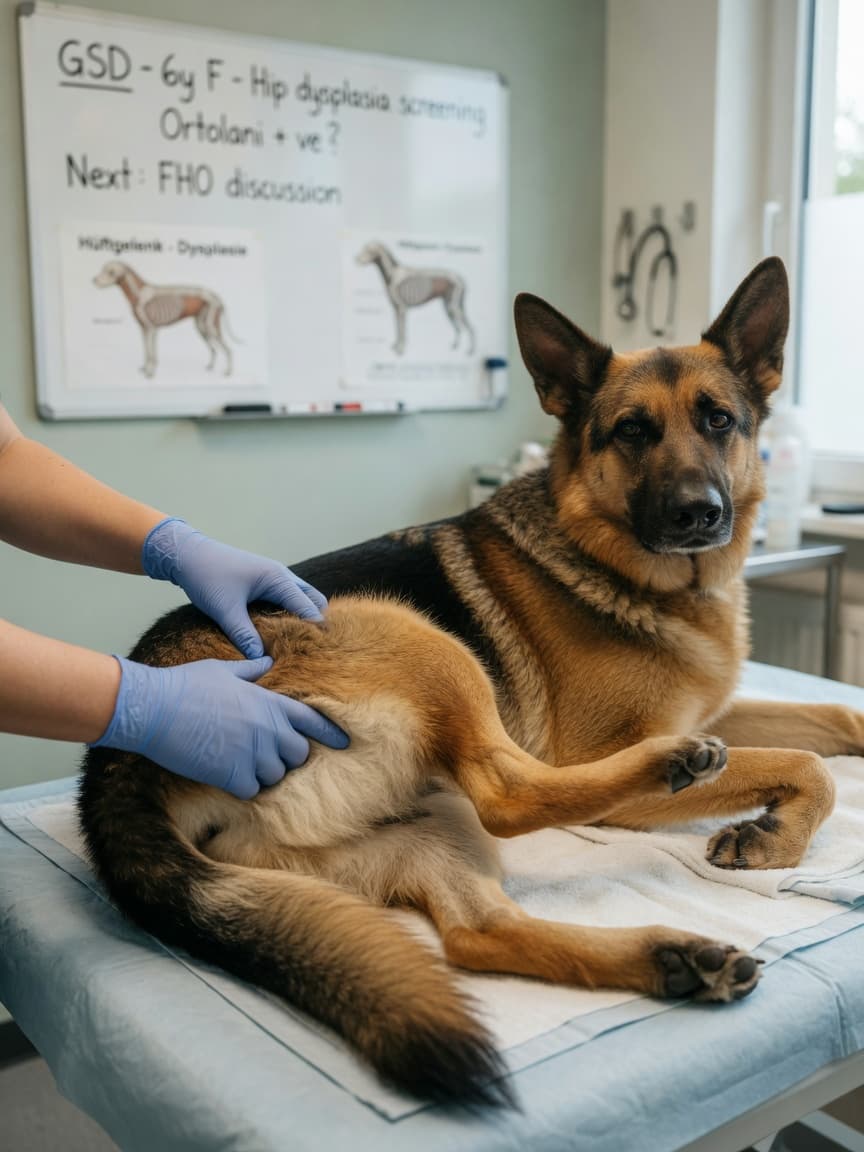
What Is Hip Dysplasia?
Hip dysplasia is an abnormal development of the hip joint, in which the ball (femoral head) and socket (acetabulum) do not fit together correctly. In a normal hip, the femoral head sits snugly within the acetabulum, allowing smooth, stable movement. In a dysplastic hip, there is excessive laxity — looseness — in the joint, which causes the bones to move abnormally against one another. Over time, this repeated abnormal movement damages the joint surfaces and leads to the development of osteoarthritis (OA).
Hip dysplasia is a polygenic condition, meaning that multiple genes contribute to its development. Environmental factors — most importantly body weight and growth rate — also influence how severely the condition manifests, even in a genetically predisposed individual. It is among the most common hereditary orthopaedic conditions encountered in veterinary practice, and it affects not only dogs but, less commonly, cats as well.
Which Dogs Are Most Commonly Affected?
Hip dysplasia is most frequently diagnosed in large and giant breeds, though it can theoretically affect any dog. Breeds with a particularly high prevalence include German Shepherd Dogs, Golden Retrievers, Labrador Retrievers, Rottweilers, Bernese Mountain Dogs, Great Danes and Bulldogs. The condition also occurs in cats, where it is generally underdiagnosed due to cats' tendency to mask signs of pain and discomfort.
In dogs, clinical signs typically begin to emerge during the rapid growth phase — often between five months and two years of age — though in some individuals, signs may not become apparent until middle age, when osteoarthritis has progressed sufficiently to cause visible discomfort.
Recognising the Signs
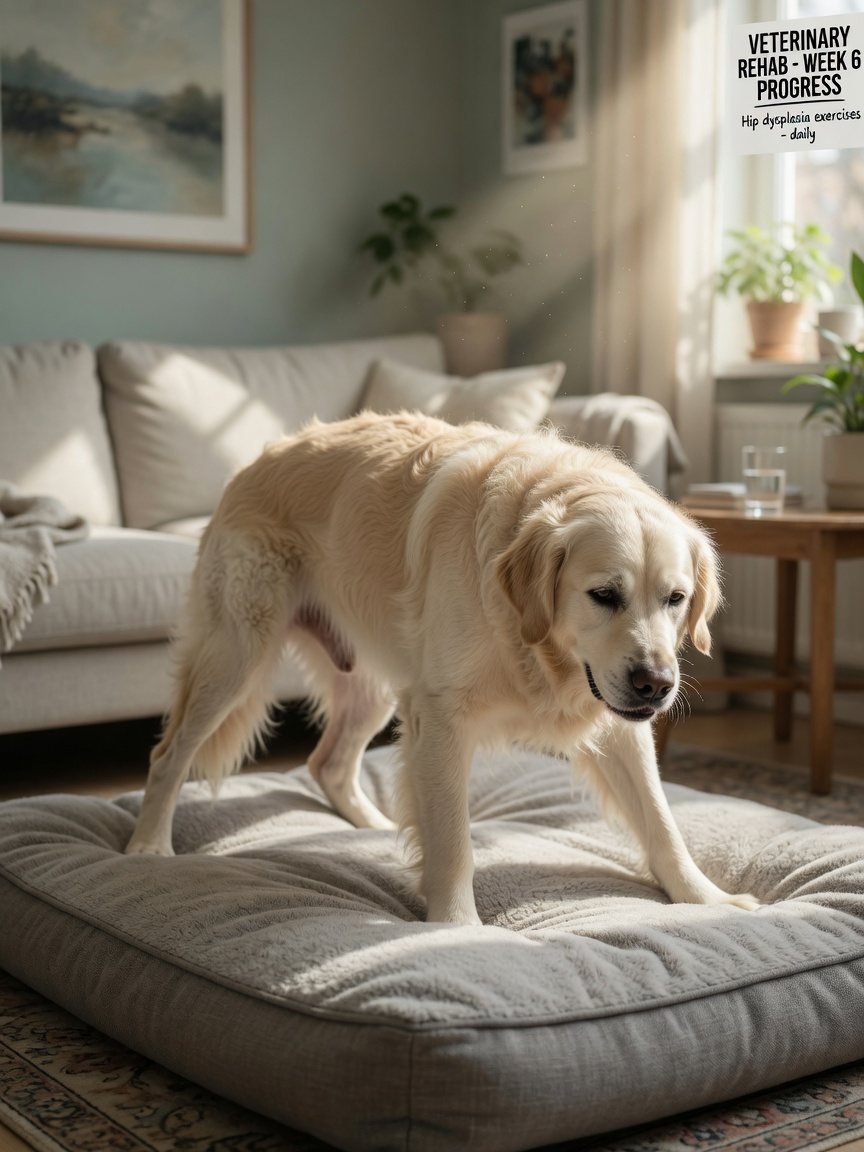
Hip dysplasia can present in a range of ways depending on the dog's age, the severity of joint laxity, and the degree of secondary osteoarthritis present. Common signs include difficulty rising from rest, reluctance to jump or climb stairs, reduced exercise tolerance or a reluctance to exercise at all, and a characteristic bunny-hopping gait in which both hindlimbs move together rather than alternating normally. Muscle wasting over the hindquarters is often visible in more advanced or longer-standing cases, and some dogs exhibit an audible clicking or grinding sound from the hip area during movement. Pain is often worst after rest and may improve briefly with gentle movement before worsening again with prolonged exercise.
How Hip Dysplasia Is Diagnosed
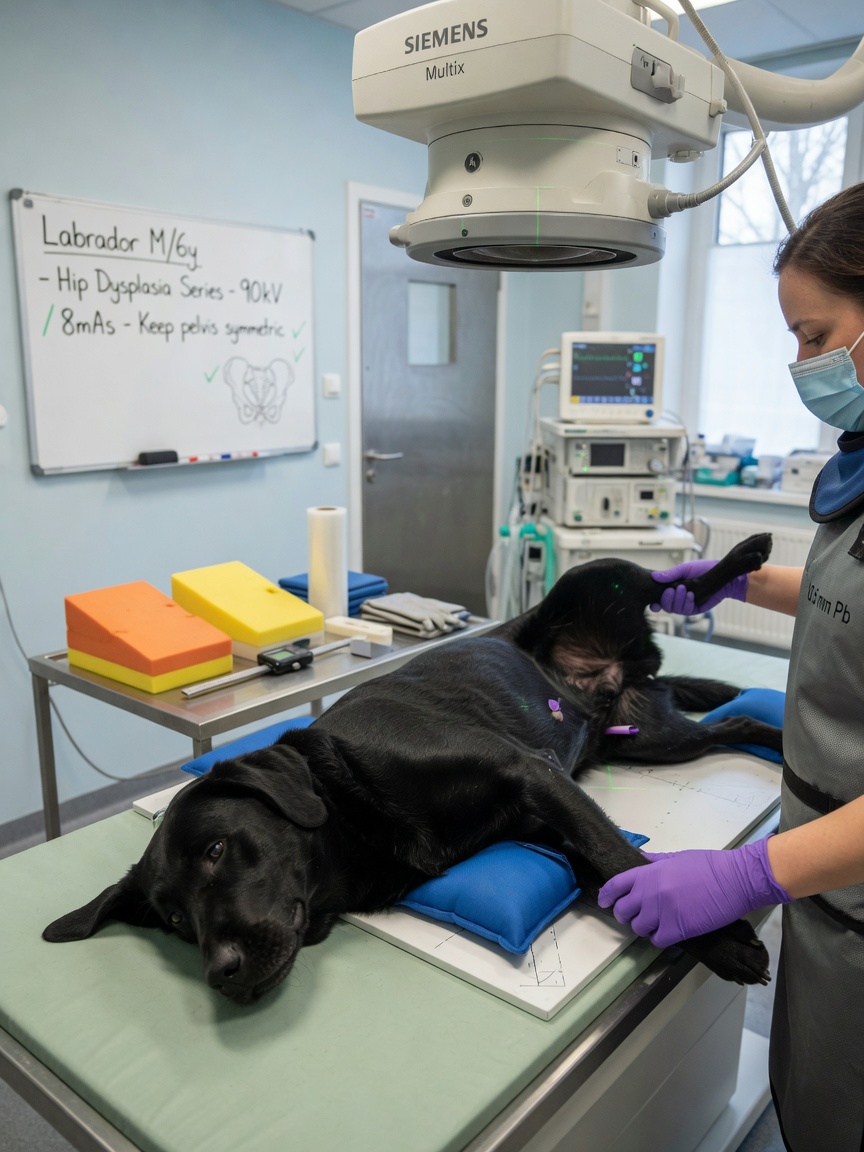
Veterinary diagnosis begins with an orthopaedic examination. The Ortolani test involves manipulating the hip joint to detect the characteristic click or clunk that indicates significant joint laxity. Pain on extension of the hip is also assessed. These findings, combined with the dog's history and breed, guide the decision to proceed with radiography.
Radiographs (X-rays) taken under sedation or general anaesthesia allow assessment of the hip joint conformation, the degree of laxity, and any evidence of secondary osteoarthritis such as new bone formation. Positioning is critical to obtaining diagnostic-quality hip radiographs, which is one reason sedation is necessary.
BVA/KC Hip Scoring in the UK
In the United Kingdom, the British Veterinary Association (BVA) and the Kennel Club (KC) operate a hip scoring scheme that is used both for clinical diagnosis and as a tool to support responsible breeding decisions. Under this scheme, hip radiographs are submitted to a panel of scrutineers who assess nine specific features of each hip, each scored on a scale from zero to six. The scores for both hips are added together to give a total score ranging from zero (indicating no abnormal features — the best possible result) to 106 (the worst).
Dogs submitted for scoring must be at least 12 months of age at the time the radiographs are taken, as the hip joints are not fully mature before this point. Scores are recorded on the Kennel Club database and published online for registered breeds, allowing prospective puppy buyers to check the scores of a litter's parents.
The most important figure to reference is not the absolute score but the breed median score — the middle score for all dogs of that breed that have been scored under the scheme. Dogs should only be considered for breeding if their hip score is below their breed's median, ensuring that each generation is, on average, improving upon the previous one. For high-prevalence breeds, checking parental hip scores before purchasing a puppy is an important step in reducing the risk of acquiring a dog affected by dysplasia.
The FCI Grading System
Outside the UK, particularly across continental Europe, the FCI (Fédération Cynologique Internationale) grading system is commonly used. This classifies hip status into five grades: Grade A (excellent to normal hip conformation), Grade B (near normal, with minor deviations), Grade C (mild dysplasia), Grade D (moderate dysplasia) and Grade E (severe dysplasia). As with the BVA/KC scheme, breeding decisions should take account of these grades, and dogs with Grade C, D or E hips are generally not recommended for breeding.
PennHIP: An Alternative Assessment Method
PennHIP (Pennsylvania Hip Improvement Program) uses a distraction radiograph technique to measure joint laxity directly, expressed as a distraction index (DI) ranging from zero (no laxity) to one (complete laxity). A key advantage of PennHIP is that it can be performed from as early as 16 weeks of age, making it a useful tool for early assessment of breeding stock and for helping breeders make earlier informed decisions. It requires specific training to perform correctly and is available through accredited veterinary practices.
Why Weight Management Is the Most Important Intervention
Excess body weight is the single most impactful modifiable risk factor in hip dysplasia. Every additional kilogram a dog carries increases the load passing through already compromised hip joints, accelerating the development of osteoarthritis and worsening clinical signs. Research has repeatedly demonstrated that lean body condition — assessed using a body condition score (BCS) scale — is associated with delayed onset of osteoarthritis and reduced severity of clinical signs throughout a dog's life.
For owners of dogs diagnosed with hip dysplasia or predisposed breeds, keeping the dog at a lean, healthy body weight throughout its life is one of the most effective things they can do. This is especially important during the growth phase, when excessive weight gain can worsen the expression of dysplasia even in genetically predisposed individuals.
Conservative and Medical Management
Many dogs with hip dysplasia, particularly those with mild to moderate disease, are managed conservatively rather than surgically. Non-steroidal anti-inflammatory drugs (NSAIDs) — including meloxicam and carprofen — are the mainstay of pain management, reducing inflammation and improving comfort sufficiently to maintain quality of life. These are prescription medications and require regular veterinary monitoring.
Joint supplements are widely used, though evidence for their efficacy varies. Omega-3 fatty acids, particularly those found in marine fish oil, have the strongest evidence base for a modest anti-inflammatory effect. Physiotherapy and hydrotherapy (particularly underwater treadmill work) help maintain muscle mass and joint range of motion without placing excessive impact on painful joints. Acupuncture is used by some veterinary practitioners as an adjunct to other pain management strategies.
Surgical Options
Several surgical procedures are available for dogs with hip dysplasia, and the most appropriate option depends on the dog's age, the severity of disease, and whether significant osteoarthritis has already developed.
Triple Pelvic Osteotomy (TPO) is performed in young dogs, ideally under ten months of age, before significant arthritis has developed. The procedure involves cutting the pelvis in three places and rotating the acetabulum to improve coverage of the femoral head, creating a more stable joint. It is most effective when performed early and is not appropriate for dogs with established OA.
Juvenile Pubic Symphysiodesis (JPS) is a procedure for very young puppies, ideally under 20 weeks of age. It involves closing one of the pubic growth plates, which alters the subsequent direction of acetabular growth and improves hip joint coverage as the puppy matures. Timing is critical — it is ineffective once the growth plates have closed.
Femoral Head and Neck Excision (FHO or FHE) involves removing the femoral head entirely, eliminating bone-on-bone contact and allowing the body to form a fibrous false joint. It is most successful in small to medium-sized dogs and in cats. In large and giant breeds, results are more variable, and it is generally considered a salvage procedure rather than a first-line option.
Total Hip Replacement (THR) is the gold standard surgical treatment for end-stage hip dysplasia in dogs. It involves replacing the femoral head and acetabulum with prosthetic implants, restoring normal joint mechanics and eliminating arthritic pain. Outcomes are excellent in most cases, with the majority of dogs returning to full activity. However, it is a complex procedure requiring specialist surgical expertise and specialist referral, and carries a significant cost. It is performed at referral centres rather than in general practice.
Living With Osteoarthritis Long-Term
In the majority of dogs with hip dysplasia, secondary osteoarthritis is an inevitable long-term consequence. OA is a progressive condition, meaning that joint changes worsen over time, though the rate of progression varies considerably between individuals. Long-term management involves ongoing pain assessment, regular NSAID monitoring, weight management, controlled exercise, and periodic reassessment of whether the current management plan remains appropriate. With careful, consistent management, many dogs with hip dysplasia maintain a good quality of life well into old age.