
Understanding Canine Heart Disease
Heart disease affects an estimated 10% of dogs in the UK, making it one of the most common health conditions veterinary professionals encounter. As a vet tech, I have sat with countless worried owners who noticed something was off with their dog long before a diagnosis was made. The good news is that early recognition of symptoms can meaningfully change outcomes, giving your dog more quality time with you.
Canine heart disease is not a single condition. It is an umbrella term covering a range of structural and functional problems that affect how efficiently the heart pumps blood. Some conditions are congenital, meaning dogs are born with them. Others develop progressively over a lifetime, particularly in middle-aged and senior dogs.
The Two Main Categories of Canine Heart Disease
Most cases of heart disease in dogs fall into one of two broad categories: valve disease and muscle disease.
Valve Disease
Myxomatous mitral valve disease, commonly called MMVD, accounts for roughly 75–80% of heart disease cases in dogs. It involves the gradual degeneration of the mitral valve — the structure separating the left atrium from the left ventricle. Over time, the valve leaflets thicken and deform, allowing blood to leak backwards with each heartbeat. Small and toy breeds are disproportionately affected, particularly Cavalier King Charles Spaniels, Dachshunds, and Chihuahuas.
Muscle Disease
Dilated cardiomyopathy, or DCM, affects the heart muscle itself. The ventricles become enlarged and weakened, losing their ability to contract effectively. This condition is far more common in large and giant breeds such as Dobermanns, Great Danes, and Irish Wolfhounds.
Recognising the Symptoms

One of the most challenging aspects of canine heart disease is that symptoms often develop gradually. Dogs are remarkably good at compensating for declining cardiac function, which means noticeable signs can take months or even years to appear after disease onset.
The most commonly reported early symptoms include:
- A persistent cough, particularly at night or after lying down
- Reduced exercise tolerance or tiring more quickly on walks
- Faster or more laboured breathing at rest
- Lethargy and general decrease in energy levels
- Reduced appetite or unexplained weight loss
- Abdominal bloating caused by fluid accumulation
- Fainting or collapsing episodes, especially during or after exertion
A cough is often the first sign owners notice. In heart disease, fluid can build up in the lungs — a condition called pulmonary oedema — which triggers a reflexive cough. This is different from the typical kennel cough sound and tends to be soft, moist, and persistent.
The Stages of Canine Heart Disease
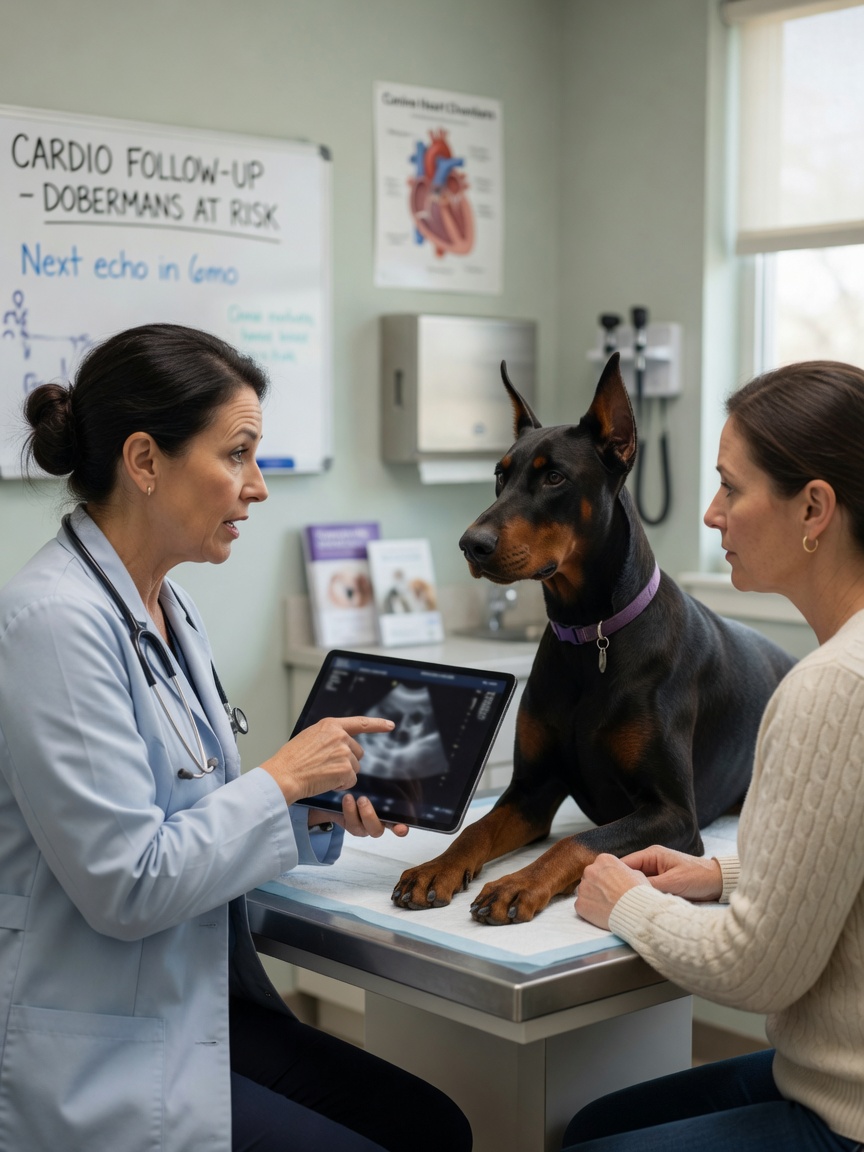
The American College of Veterinary Internal Medicine developed a staging system that most vets now use to classify canine heart disease. Understanding where your dog sits within this framework helps set expectations and guides treatment decisions.
Stage A
Dogs in Stage A are at high risk of developing heart disease due to breed predisposition but show no structural abnormalities at the time of examination. No treatment is required at this stage, but regular cardiac screening is strongly recommended.
Stage B1
Dogs in Stage B1 have a detectable heart murmur and evidence of structural heart disease, but the heart has not yet begun to enlarge and the dog shows no clinical symptoms. Medication is not typically started at this stage, though monitoring every six to twelve months is advised.
Stage B2
Stage B2 represents a significant threshold. Dogs at this stage have a murmur alongside measurable cardiac enlargement, yet still show no outward symptoms. Research published in the Journal of Veterinary Internal Medicine has demonstrated that starting medication — specifically pimobendan — at Stage B2 significantly delays the onset of heart failure. This is why regular chest X-rays and echocardiograms are so valuable even in apparently healthy dogs.
Stage C
Dogs in Stage C are experiencing or have previously experienced clinical signs of heart failure. This is when symptoms such as coughing, breathlessness, and reduced exercise tolerance become apparent. Treatment typically involves a combination of medications including pimobendan, diuretics like furosemide, and ACE inhibitors. Dogs can often be managed well in this stage for considerable periods with appropriate veterinary care.
Stage D
Stage D represents end-stage heart disease refractory to standard treatment. Dogs in this stage require more aggressive management and the focus shifts increasingly toward comfort and quality of life.
How Is Heart Disease Diagnosed?
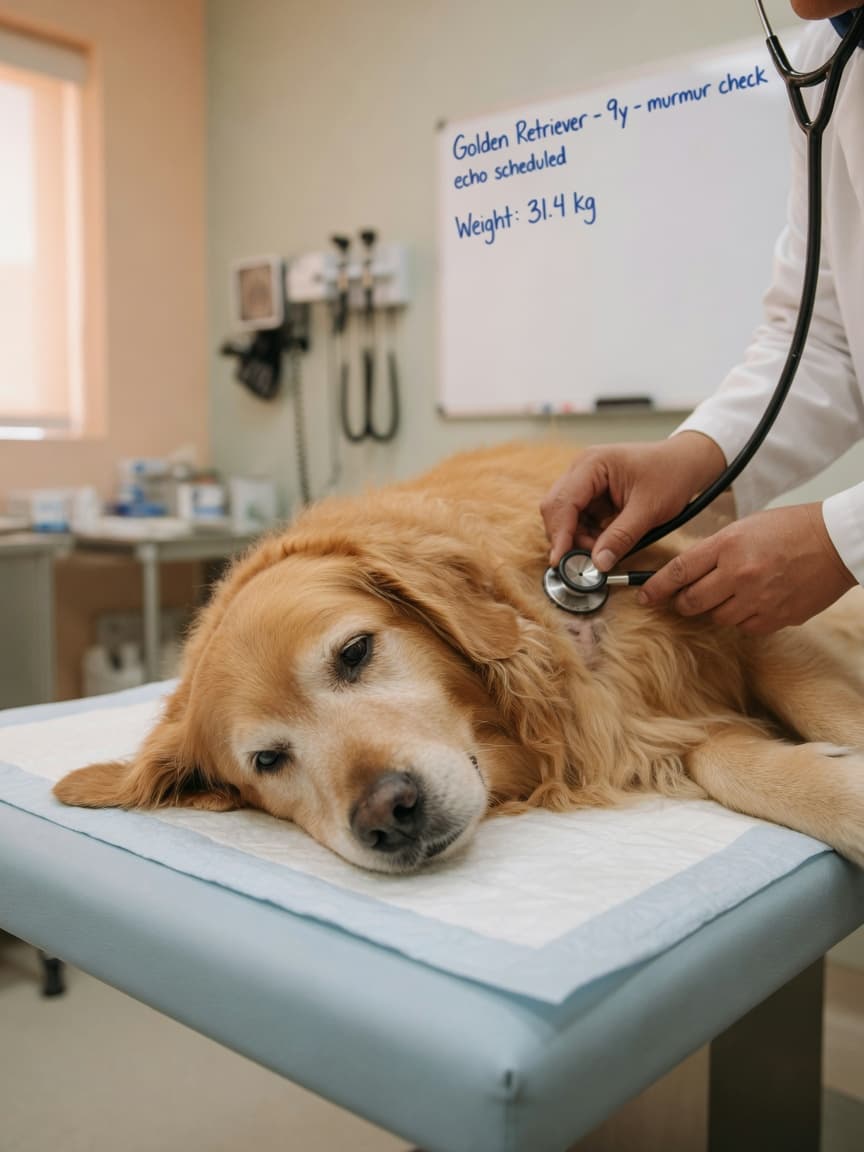
A diagnosis of heart disease typically begins with a stethoscope. A heart murmur — an abnormal sound caused by turbulent blood flow — is often the first clinical finding. Murmurs are graded from one to six, with higher grades generally indicating greater severity, though grade alone does not tell the whole story.
Following detection of a murmur, your vet may recommend:
- Chest X-rays to assess heart size and check for fluid in the lungs
- Echocardiography, which is an ultrasound of the heart, providing detailed images of valve function and chamber dimensions
- An electrocardiogram to assess heart rhythm
- Blood pressure measurement
- Blood and urine tests to evaluate organ function and suitability for medication
Breed Screening Programmes
If you own a breed with known cardiac risk, proactive screening is one of the most useful things you can do. The British Veterinary Association and the Kennel Club run formal heart testing schemes for Cavalier King Charles Spaniels, and many breed clubs encourage annual cardiac screening from a young age. Early detection genuinely saves lives.
Living Well With a Cardiac Diagnosis
A heart disease diagnosis is not a full stop. Many dogs live comfortably for years after diagnosis with appropriate management. The key is consistent veterinary monitoring, adherence to prescribed medications, sensible lifestyle adjustments, and learning to recognise changes that warrant prompt attention.
Knowing what to watch for, understanding the staging system, and maintaining open communication with your vet puts you in the strongest possible position to support your dog through every stage of this condition.