
Heart Disease in Cavalier King Charles Spaniels
Myxomatous mitral valve disease, known as MMVD, is so prevalent in Cavalier King Charles Spaniels that the breed has become central to veterinary cardiology research worldwide. Studies suggest that virtually all Cavaliers will develop some degree of mitral valve disease if they live long enough, with many showing early changes by the time they reach middle age. For owners of this beloved breed, understanding how the condition progresses, recognising the early signs, and knowing when to seek veterinary input are all essential to giving a Cavalier the best possible quality of life.
How Mitral Valve Disease Develops
The mitral valve sits between the left atrium and the left ventricle of the heart. Its function is to ensure that blood flows in one direction — from the atrium into the ventricle during filling, and not back again when the ventricle contracts. In MMVD, the valve leaflets gradually thicken and deform due to a build-up of abnormal tissue. Over time, the valve fails to close properly, allowing blood to leak backwards — a condition known as mitral regurgitation.
This regurgitation forces the heart to work harder to maintain adequate circulation. Initially, the heart compensates through enlargement, particularly of the left atrium and left ventricle. As the disease progresses, these compensatory mechanisms eventually fail, fluid builds up in the lungs, and the dog develops congestive heart failure.
The Staging System
The American College of Veterinary Internal Medicine (ACVIM) has published consensus guidelines for staging MMVD that are widely used in veterinary practice:
- Stage A — breeds at high risk but with no detectable murmur
- Stage B1 — a murmur is present but the heart is not yet enlarged
- Stage B2 — a murmur is present and cardiac enlargement is confirmed on imaging
- Stage C — congestive heart failure, either currently or previously managed
- Stage D — congestive heart failure refractory to standard treatment
This staging system is not merely academic — it directly guides treatment decisions. Dogs at Stage B2, for instance, are now known to benefit from specific medication that delays progression to heart failure, based on landmark clinical trial data.
Early Warning Signs to Watch For

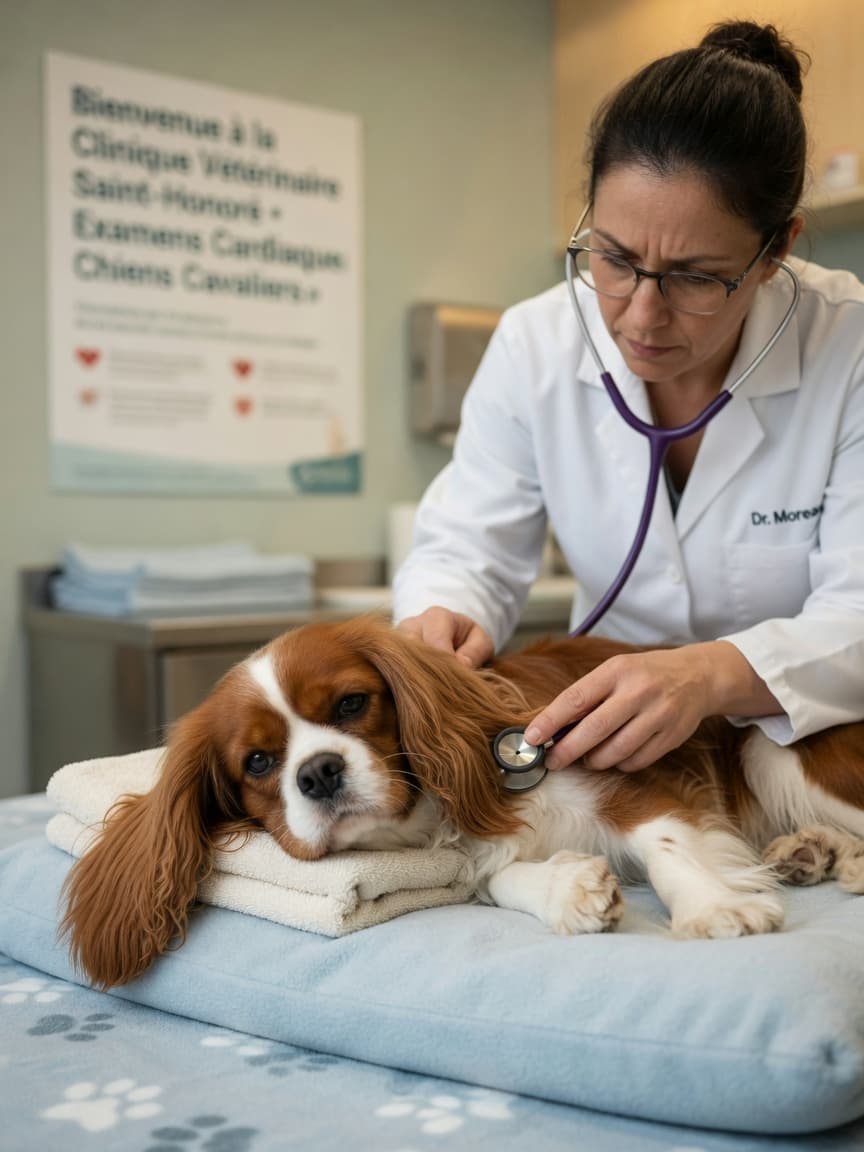
One of the most important things to understand about MMVD is that dogs can be in Stage B1 or even B2 with no obvious symptoms at home. The heart is compensating, and the dog may appear entirely normal. This is why regular veterinary auscultation is so important — a murmur can be detected by a stethoscope long before the dog shows any clinical signs.
As the disease progresses toward Stage C, signs typically begin to emerge. These include:
- A new or worsening cough, particularly at night or after lying down — this occurs because fluid accumulates in the lungs and is exacerbated when the dog is horizontal
- Increased respiratory rate at rest — counting breaths per minute while the dog is sleeping is one of the most sensitive early indicators of fluid accumulation
- Exercise intolerance or tiring more quickly than usual on walks
- Reduced appetite or unexplained weight loss
- Abdominal distension in some cases, due to fluid accumulation in the abdomen
- Fainting or collapse, which can occur due to reduced cardiac output
The Resting Respiratory Rate
Monitoring resting respiratory rate at home has become a cornerstone of owner-led monitoring for dogs with known MMVD. A healthy dog at rest typically breathes between 15 and 30 times per minute. A consistent rate above 30 breaths per minute, or a notable increase from the dog's personal baseline, warrants prompt veterinary contact as it may indicate the early development of pulmonary oedema.
Several smartphone applications have been developed to help owners count and track their dog's resting respiratory rate over time. This simple, cost-free monitoring tool can genuinely save lives by prompting earlier intervention.
Diagnosis and Monitoring
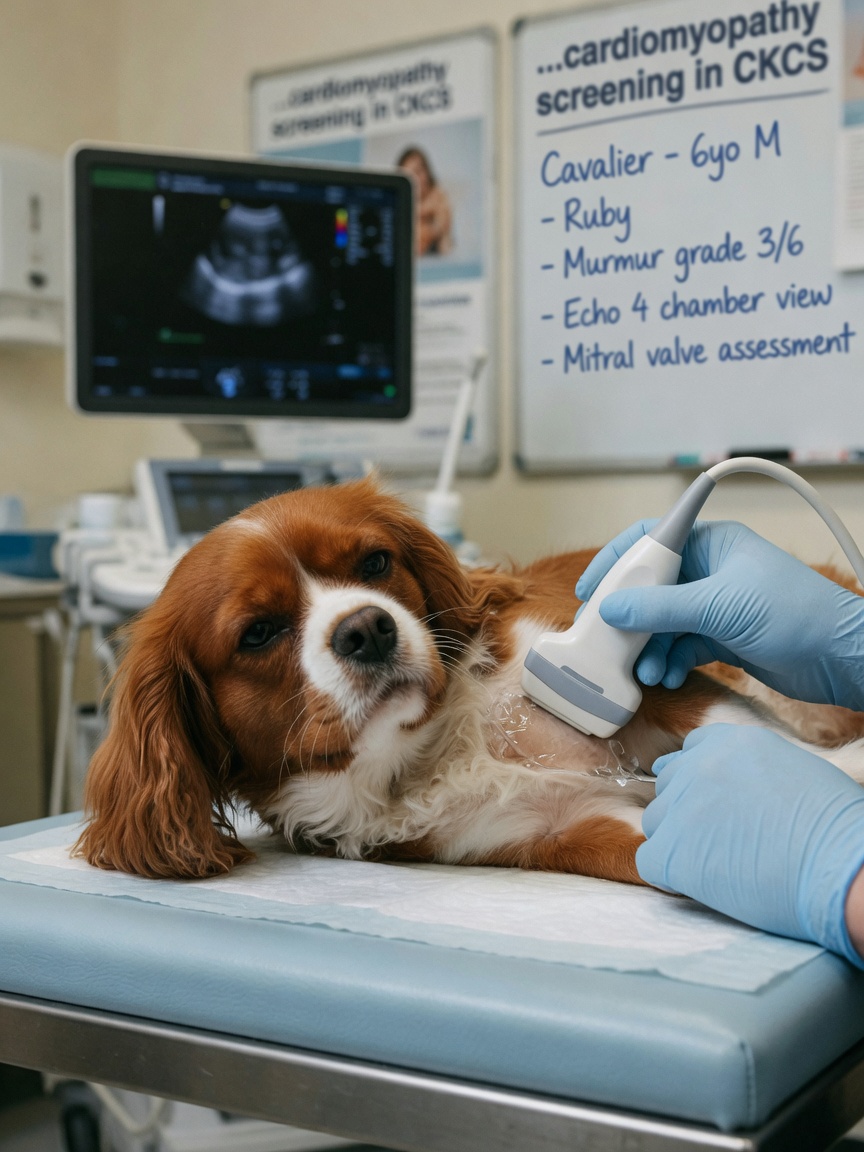
Once a murmur is detected, your vet will typically recommend further investigation. Chest x-rays allow assessment of heart size and can detect fluid in the lungs. Echocardiography — an ultrasound of the heart — provides detailed information about valve function, the degree of regurgitation, and cardiac chamber dimensions. These measurements are used to stage the disease accurately and inform treatment decisions.
Cavaliers with MMVD require regular monitoring, typically every six to twelve months depending on their stage. Changes in murmur intensity or new clinical signs should prompt a check-up outside of scheduled appointments.
Treatment and Medication
The EPIC trial, published in 2016, provided strong evidence that treatment with pimobendan at Stage B2 significantly delayed the onset of congestive heart failure. This was a landmark finding for Cavalier owners and has changed standard of care across the veterinary profession. Dogs at Stage B2 — confirmed by echocardiography — are now routinely started on pimobendan even in the absence of symptoms.
Once a dog reaches Stage C, treatment typically involves a combination of pimobendan, diuretics such as furosemide to reduce fluid accumulation, and ACE inhibitors. Some dogs require additional medications depending on their response. With appropriate treatment, many dogs with Stage C disease can be stabilised and maintained at a good quality of life for months to years.
The Cavalier Health Breeding Protocol
The Cavalier Health organisation has developed a cardiac breeding protocol aimed at reducing the prevalence of early-onset MMVD in the breed. The protocol recommends that breeding dogs should be at least 2.5 years old and free of a murmur at the time of mating, and that both parents should have a murmur-free parent over the age of 5. While not universally adopted, this protocol has shown promise in reducing the frequency of early murmur development in offspring. If you are purchasing a Cavalier puppy, ask whether the breeding pair were health-screened under this protocol.