

Your Dog Was Never Mated — So Why Does She Think She Is Pregnant?
Imagine your female dog, who has never been near a male dog during her heat cycle, begins nesting obsessively, producing milk, and mothering a collection of soft toys with fierce protectiveness. For many owners, this is bewildering. For the dog, it is entirely real. False pregnancy — also known as phantom pregnancy or pseudopregnancy — is a common hormonal condition that affects unspayed female dogs, and understanding it can make the experience far less distressing for both of you.
Why False Pregnancy Happens
To understand false pregnancy, it helps to know a little about the canine reproductive cycle. After a heat cycle, all female dogs — whether mated or not — experience a prolonged phase of elevated progesterone. This is unique to dogs compared with many other species. When progesterone eventually drops, prolactin levels rise. Prolactin is the hormone responsible for milk production and maternal behaviour, and in dogs, this hormonal shift occurs regardless of whether conception took place.
From an evolutionary standpoint, this mechanism may have served pack animals well. Females who had not reproduced could lactate and help nurse a litter from a dominant female, improving the pups' chances of survival. For the modern domestic dog, however, it manifests as an often confusing and sometimes distressing episode of phantom motherhood.
False pregnancy typically develops four to nine weeks after the end of oestrus and usually resolves on its own within two to three weeks. However, the severity varies considerably between individuals, and some dogs experience repeated or prolonged episodes that warrant intervention.
Recognising the Symptoms
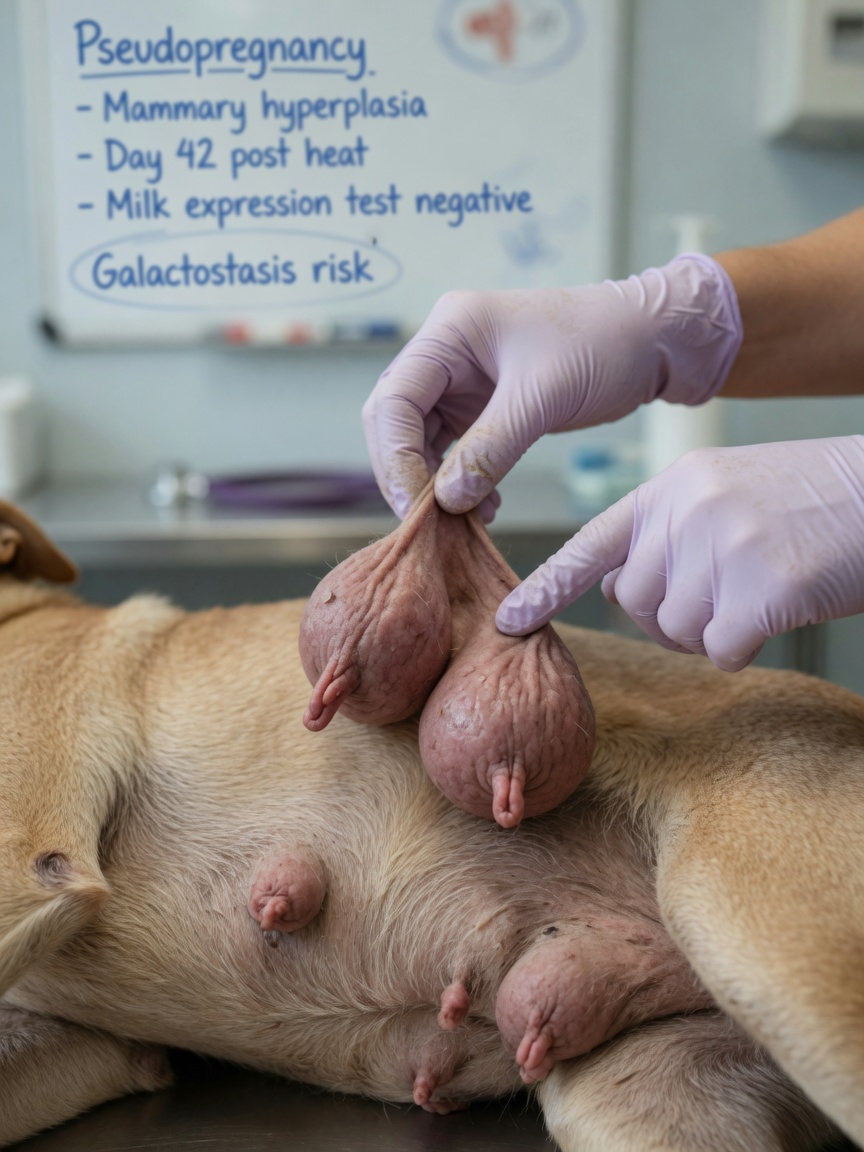
Physical Signs
- Mammary gland enlargement and engorgement
- Milk production, ranging from a small amount to a significant flow
- Abdominal distension that can mimic a genuine pregnancy
- Vulval discharge in some cases
Behavioural Signs
- Nesting — rearranging bedding, seeking out hidden or enclosed spaces
- Mothering of inanimate objects such as toys, shoes, or cushions
- Restlessness and anxiety
- Loss of appetite
- Increased affection-seeking or, conversely, withdrawal
- Aggression when the "nest" or adopted objects are approached
The behavioural component is often what causes the most distress. A dog who becomes fiercely protective of a soft toy and growls at family members is not misbehaving — she is acting under the influence of hormones that are telling her she has offspring to protect. This distinction matters for how you respond.
Managing False Pregnancy at Home

For mild cases, supportive management at home is usually sufficient. The goal is to reduce stimulation that prolongs milk production and to gently discourage nesting behaviour without creating additional stress.
- Avoid allowing your dog to lick her mammary glands, as this stimulates further milk production — a soft medical vest or T-shirt can help if she is persistent
- Remove nesting materials and adopted objects calmly, without making a dramatic event of it
- Increase exercise and mental stimulation to redirect focus
- Do not express milk from the mammary glands — this signals the body to produce more
- Ensure she has access to fresh water at all times, as lactation increases fluid requirements
Cold compresses applied gently to engorged mammary glands can provide relief, but always check with your vet before doing this regularly.
When to See a Vet
False pregnancy usually resolves without medical treatment, but there are circumstances where veterinary involvement is important.
Contact your vet if your dog:
- Shows signs of mastitis — hot, painful, red mammary glands, or a foul-smelling discharge from the nipples
- Is refusing food for more than 24 hours
- Displays aggression that poses a risk to people or other animals
- Appears to be in significant distress, panting excessively, or unable to settle
- Experiences false pregnancies repeatedly or with increasing severity
Your vet may prescribe cabergoline, a dopamine agonist that suppresses prolactin and typically resolves symptoms within a week. It is effective and well-tolerated in most dogs. In cases of mastitis, antibiotic treatment is also necessary.
Prevention and the Long-Term Picture
Spaying is the only reliable way to prevent future episodes of false pregnancy. The timing of spaying relative to the heat cycle can influence recovery from an active false pregnancy — your vet will advise on the best window. In general, it is preferable to wait until the episode has fully resolved before surgery.
If your dog experiences recurring false pregnancies, the risk of developing mammary tumours increases over time due to repeated hormonal stimulation. This alone makes spaying a serious consideration for intact females not used in breeding programmes.
Practical Takeaways
- False pregnancy is a normal hormonal event in unspayed dogs — it does not mean something has gone wrong
- Most cases resolve within two to three weeks with calm, consistent home management
- Avoid stimulating milk production by preventing licking and not expressing glands manually
- Watch for signs of mastitis, significant behaviour change, or prolonged episodes and contact your vet
- Discuss spaying with your vet to prevent recurrence, particularly if episodes are severe or frequent
False pregnancy can be unsettling to witness, but with the right understanding and a measured response, most dogs pass through it comfortably. When in doubt, your vet is always the right first call.