
What Are Electrolytes and Why Do They Matter?
Electrolytes are minerals that carry an electrical charge when dissolved in body fluids. They are essential for virtually every physiological process: nerve signal transmission, muscle contraction and relaxation (including the heart), regulation of fluid distribution between body compartments, and maintenance of acid-base balance. The key electrolytes in dogs include sodium, potassium, chloride, bicarbonate, calcium, magnesium, and phosphorus.
The body maintains the concentrations of these ions within very tight ranges. When illness, injury, or environmental stress disrupts this balance, the consequences can escalate rapidly — from muscle weakness and lethargy to cardiac arrhythmias, seizures, and circulatory collapse. Understanding the basics of electrolyte physiology helps owners recognise warning signs early and make informed decisions about when home management is appropriate and when veterinary care is urgent.
Key Electrolytes and Their Roles
Sodium
Sodium is the principal extracellular cation and the primary determinant of extracellular fluid volume. It governs the movement of water between body compartments and is essential for nerve impulse generation. Hyponatraemia (low sodium) causes neurological signs including lethargy, disorientation, seizures, and coma. Hypernatraemia (high sodium) typically results from severe dehydration and produces similar neurological dysfunction due to cellular dehydration in the brain.
Potassium
Potassium is the major intracellular cation and is critical for cardiac muscle function, skeletal muscle contraction, and maintaining resting membrane potential in nerve cells. Hypokalaemia (low potassium) causes muscle weakness, generalised lethargy, neck ventroflexion (particularly in cats), and potentially life-threatening cardiac arrhythmias. It is especially common in cats with chronic kidney disease (CKD) who are eating poorly, and in any animal with prolonged vomiting or diarrhoea. Hyperkalaemia (high potassium) is associated with Addison's disease and acute kidney injury, and can cause bradycardia and cardiac arrest.
Chloride, Bicarbonate and Acid-Base Balance
Chloride and bicarbonate work in concert to maintain acid-base equilibrium. Persistent vomiting causes loss of hydrochloric acid from the stomach, leading to metabolic alkalosis; severe diarrhoea causes loss of bicarbonate-rich fluid, leading to metabolic acidosis. Either extreme impairs enzyme function and cellular metabolism.
Calcium, Magnesium and Phosphorus
These three minerals are interrelated and collectively important for bone mineralisation, muscle function, and enzymatic reactions. Hypocalcaemia causes neuromuscular excitability and tetany; hyperphosphataemia is a major consequence of CKD and drives further calcium dysregulation. Magnesium deficiency can exacerbate both hypokalaemia and hypocalcaemia by impairing the renal conservation mechanisms for these ions.
Common Causes of Electrolyte Imbalance in Dogs

- Vomiting and diarrhoea: The most frequent cause, producing rapid losses of sodium, potassium, chloride, and water
- Chronic kidney disease: Impairs the kidney's ability to regulate sodium, potassium, phosphorus, and acid-base balance
- Hypoadrenocorticism (Addison's disease): Deficiency of aldosterone causes severe sodium loss and potassium retention, producing the characteristic low sodium/high potassium ratio that is pathognomonic for this condition
- Heat stroke: Excessive panting and sweating-equivalent mechanisms cause significant water and electrolyte losses
- Prolonged strenuous exercise: Working dogs (sled dogs, hunting dogs) may develop hyponatraemia if losses are replaced with plain water alone
- Certain medications: Diuretics such as furosemide commonly cause hypokalaemia and require monitoring and potassium supplementation
Signs of Dehydration in Dogs
Dehydration occurs when fluid losses exceed intake. The following assessments help gauge severity at home:
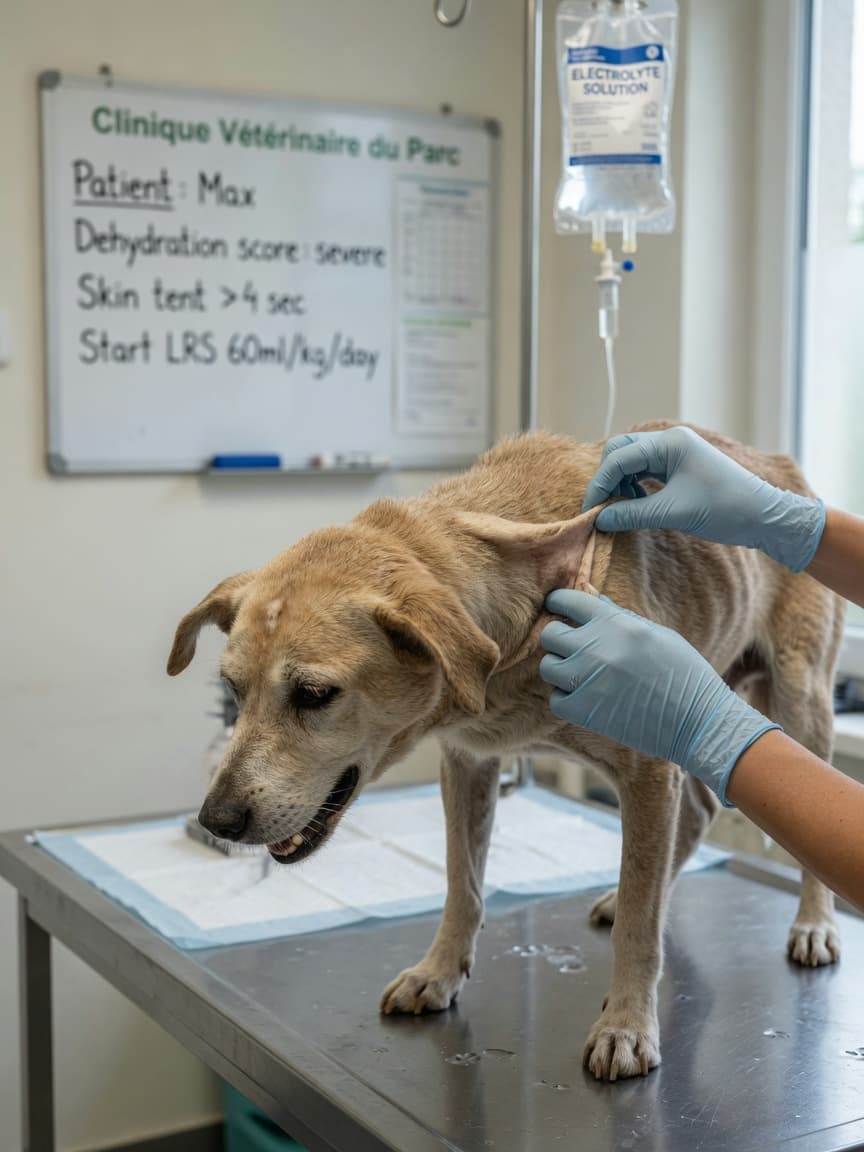
- Skin turgor test: Gently lift a fold of skin at the back of the neck or between the shoulder blades and release. In a well-hydrated dog, the skin snaps back immediately. Delayed return (more than 1–2 seconds) suggests moderate dehydration; a skin tent that stays raised indicates severe dehydration.
- Mucous membrane moisture: Healthy gums should feel moist and slippery. Tacky or dry gums indicate at least 5% dehydration.
- Capillary refill time (CRT): Press a finger firmly on the gum above the canine tooth for 1–2 seconds. Colour should return within 1–2 seconds. Prolonged CRT suggests impaired perfusion.
- Sunken eyes: A sign of significant fluid loss, particularly around the orbital tissues
- Lethargy and reduced skin elasticity in combination indicate a need for prompt veterinary assessment
When Is Oral Rehydration Appropriate?

Oral rehydration is appropriate for mild dehydration (estimated at less than 5%) following a single episode of vomiting or a brief bout of loose stools, provided the dog remains alert, is not vomiting continuously, and shows no other signs of systemic illness.
Oral rehydration solutions (ORS) designed for dogs — such as Lectade (available in the UK and EU from veterinary practices) — are formulated to contain appropriate concentrations of glucose and electrolytes that promote intestinal absorption. Human sports drinks such as isotonic energy drinks are not suitable for dogs: they typically contain sodium concentrations that are too high and flavourings or sweeteners (including xylitol, which is toxic to dogs) that make them inappropriate and potentially dangerous.
Offer small, frequent amounts of water or veterinary ORS — do not allow a dehydrated dog to drink large volumes rapidly, as this can precipitate vomiting and worsen fluid loss.
When to Go to the Vet Urgently
The following signs indicate that home management is insufficient and veterinary assessment is required urgently:
- Estimated dehydration greater than 8% (marked skin tenting, very tacky gums, sunken eyes, lethargy)
- Continuous or repeated vomiting preventing fluid retention
- Blood in vomit or diarrhoea
- Collapse, extreme weakness, or inability to stand
- Suspected Addison's crisis (acute collapse with low sodium and high potassium — an Addisonian crisis is life-threatening)
- Signs of heat stroke — panting, hypersalivation, high rectal temperature, disorientation
- Any dog with known kidney disease, heart disease, or Addison's disease who develops vomiting or diarrhoea
Intravenous Fluid Therapy in Practice
In moderate to severe dehydration or electrolyte imbalance, intravenous (IV) fluid therapy is the standard of care. The WSAVA fluid therapy guidelines outline a structured approach: the vet calculates the animal's fluid deficit, ongoing losses, and maintenance requirements, then selects an appropriate crystalloid solution (such as Hartmann's/lactated Ringer's solution for most cases, or 0.9% sodium chloride for specific scenarios such as vomiting-induced metabolic alkalosis).
Electrolyte supplementation — particularly potassium chloride — is frequently added to IV fluids once urine output is confirmed, as potassium must not be administered at rates exceeding 0.5 mEq/kg/hour without risk of cardiac toxicity. Regular monitoring of electrolyte levels guides adjustments throughout treatment.
Understanding the basics of electrolyte balance and dehydration helps you act quickly and appropriately when your dog is unwell. When in doubt, always consult your veterinarian — electrolyte disturbances that appear minor can deteriorate rapidly, and early intervention typically leads to better outcomes.
Written by Julia Wrenfield, pet health writer at ForPetsHealthcare.com. This article is for informational purposes only and does not replace professional veterinary advice.