
Understanding the Types of Wounds Your Dog May Suffer
Dogs are curious, active creatures, and injuries are an inevitable part of their lives. Before you reach for the first aid kit, it helps to understand what kind of wound you are dealing with, because each type carries different risks and requires a slightly different approach.
- Cuts and lacerations — clean slices from glass, wire, or sharp edges. Edges are usually well-defined. Shallow cuts may stop bleeding quickly; deep ones may need stitches.
- Abrasions — superficial scrapes caused by rough surfaces such as tarmac or gravel. They look raw and weep rather than bleed heavily, but they are prone to contamination.
- Puncture wounds — narrow, deep holes from thorns, nails, or teeth. Deceptively minor on the surface, these are the most dangerous type because bacteria are driven deep into the tissue and the entry point may seal over, trapping infection inside.
- Bite wounds — combine punctures with crushing tissue damage. Even small-looking bite marks from another dog or cat can cause significant damage beneath the skin and carry a high bacterial load.
Step-by-Step First Aid for Dog Wounds
Stay calm — your dog will take emotional cues from you. Work in a well-lit area and, if necessary, ask someone to hold your dog gently so both of you remain safe.
Step 1: Control the Bleeding
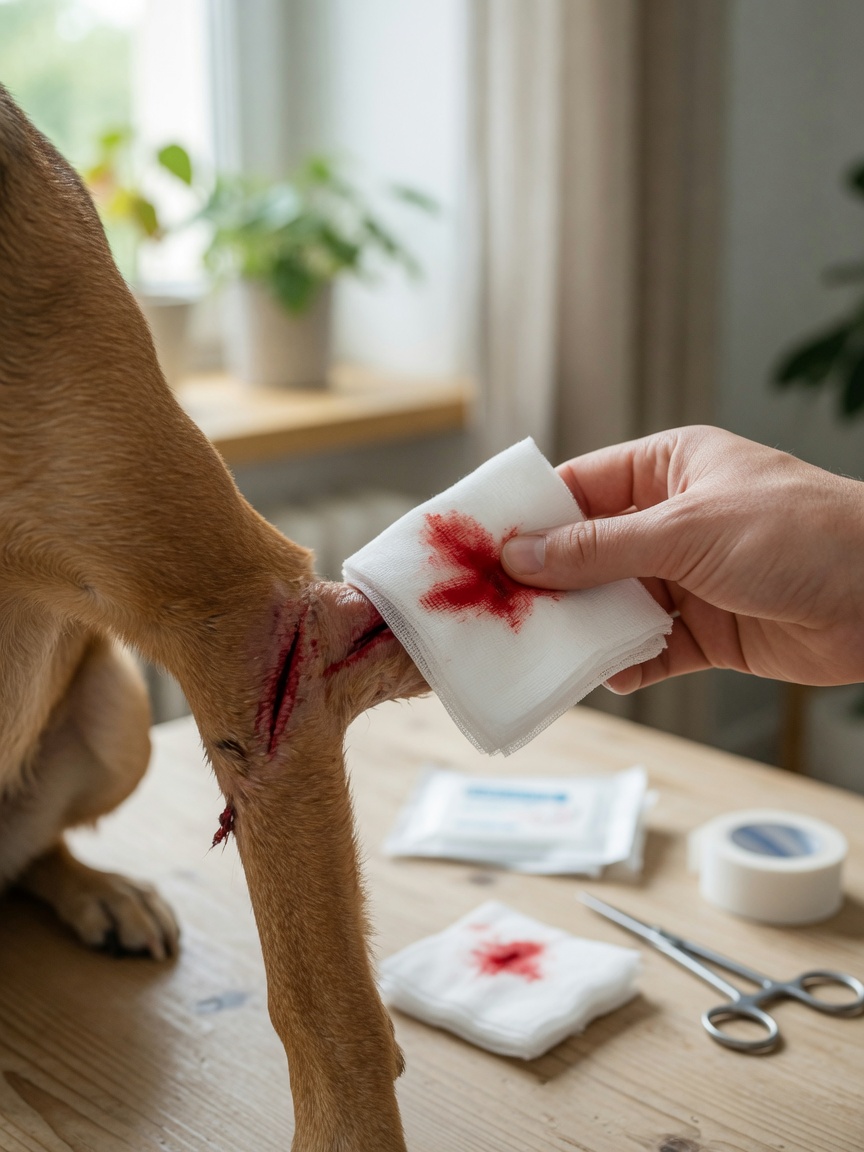
Apply gentle, firm pressure using a clean cloth or sterile gauze pad. Maintain pressure for three to five minutes without lifting the cloth to check, as disturbing the clot restarts the process. If blood soaks through, add more gauze on top rather than removing the first layer.
Step 2: Clean the Wound
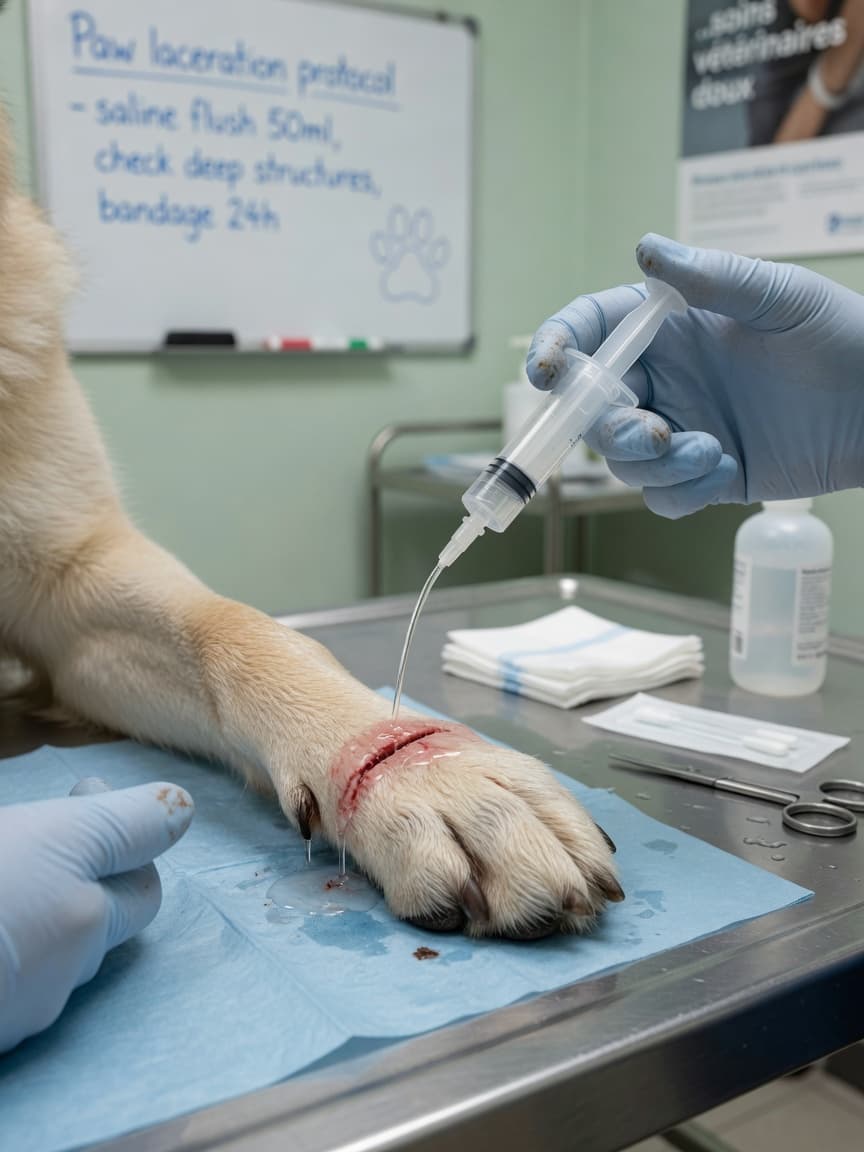
Once bleeding is controlled, carefully clip the fur around the wound using blunt-tipped scissors. This prevents hair contaminating the area during healing. Rinse the wound thoroughly with sterile saline solution — a 0.9% sodium chloride solution is ideal and can be purchased from most pharmacies. Use a syringe or a clean squeeze bottle to flush gently but with enough pressure to dislodge debris. Do not use hydrogen peroxide, iodine at full strength, or alcohol; these damage healthy tissue and delay healing.
Step 3: Apply a Wound Antiseptic
After flushing, apply a dilute chlorhexidine solution (0.05% concentration) or a veterinary-approved wound spray. Allow it to dry briefly before proceeding.
Step 4: Bandage the Wound
For minor abrasions on the body, a light non-stick dressing held in place with self-adhesive bandage (such as Vetrap) is appropriate. For wounds on the paws, use a non-adherent pad, then a layer of soft cotton padding, followed by a cohesive bandage. Ensure the bandage is snug but not tight — you should be able to slip two fingers underneath. Change dressings daily or whenever they become wet or soiled.
Step 5: Use an Elizabethan Collar
Dogs are determined lickers, and licking a wound introduces bacteria and removes the protective bandage. Fit an E-collar (the traditional cone) or a soft inflatable collar to prevent your dog from reaching the injury. Leave it on at all times, including during sleep, until the wound has healed sufficiently.
Signs of Infection to Watch For
Check the wound at every dressing change. Contact your vet promptly if you notice any of the following:
- Increasing redness, warmth, or swelling around the wound edges
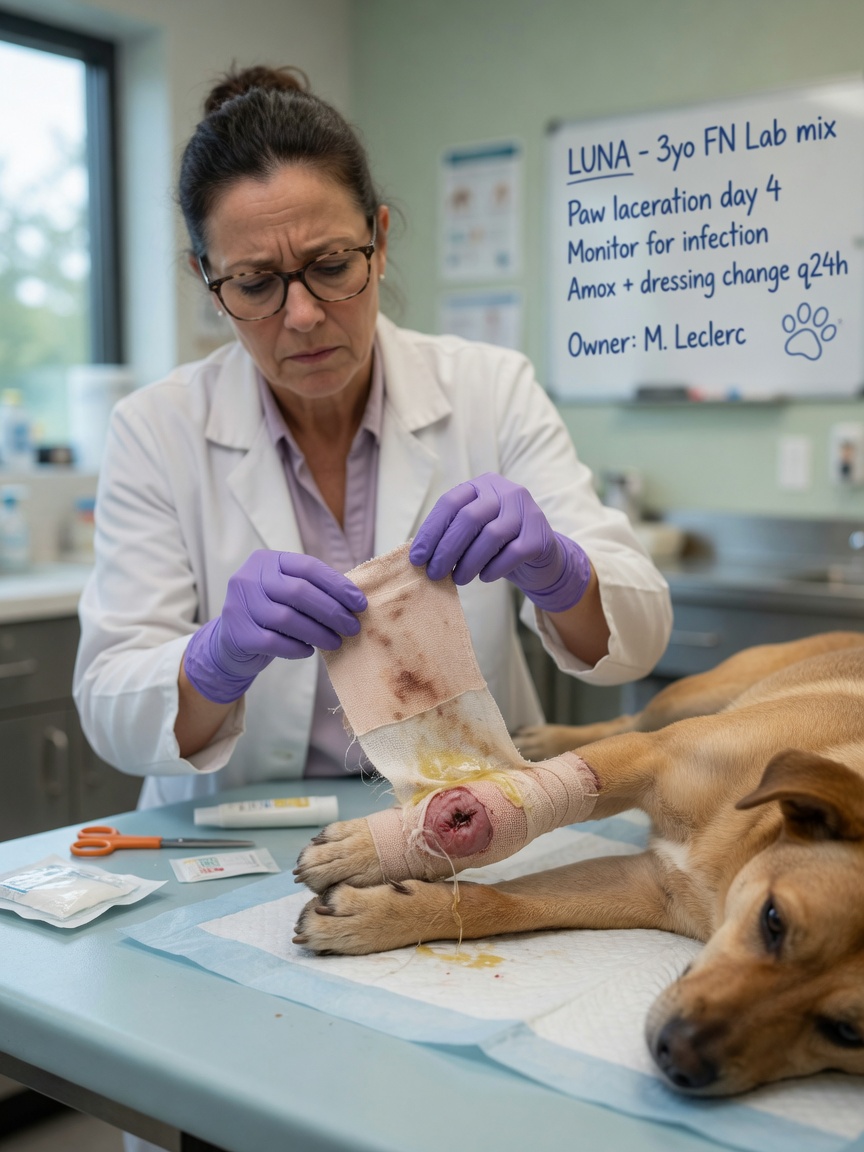
- Discharge that is yellow, green, or foul-smelling
- The wound appears to be enlarging rather than closing
- Your dog is feverish, lethargic, or has lost appetite
- The wound is hot to the touch 48 hours after the injury
The Healing Stages
Understanding what normal healing looks like prevents unnecessary panic. In the first 24 to 48 hours, mild redness and a small amount of clear or slightly pinkish fluid is normal — this is the inflammatory stage, when the body is mobilising resources. From day three onwards, you should see the wound edges beginning to pull together and a thin layer of new pink tissue forming at the base. This is granulation tissue and is a very positive sign. Full skin closure typically occurs within seven to fourteen days for minor wounds, though deeper injuries take longer.
When Not to Treat at Home
Home care is appropriate only for minor, superficial wounds. You must take your dog to a vet without delay if:
- Bleeding does not slow after ten minutes of firm pressure
- The wound is deeper than a centimetre, or you can see fat, muscle, or bone
- The wound is a bite from another animal (antivenom and antibiotic prophylaxis may be needed)
- The wound is near the eye, ear canal, or genitals
- Your dog is in severe pain, unable to bear weight, or showing signs of shock (pale gums, rapid breathing, collapse)
- The wound is a puncture, regardless of how small it looks
If you are in any doubt, call your vet. A quick telephone triage conversation is free and could save your dog's life.
What to Bring to the Vet Appointment
Bring a brief account of how the injury happened, when it occurred, and any first aid you have already provided. If another animal was involved, note its vaccination status if known. Carry your dog's vaccination record, as your vet may wish to check tetanus and Leptospira cover. If the wound has been bandaged, leave the dressing in place so the vet can assess how much blood has been lost.
A Note on Prevention
Regularly check your garden for sharp objects, trailing wire, and broken fencing. Keep walks on leads in areas with heavy undergrowth or near livestock. Inspect your dog's paws, belly, and ears after every country walk. The best wound is the one that never happens.
With swift, calm first aid and good judgement about when professional help is needed, you give your dog the best possible chance of a smooth, complication-free recovery.