
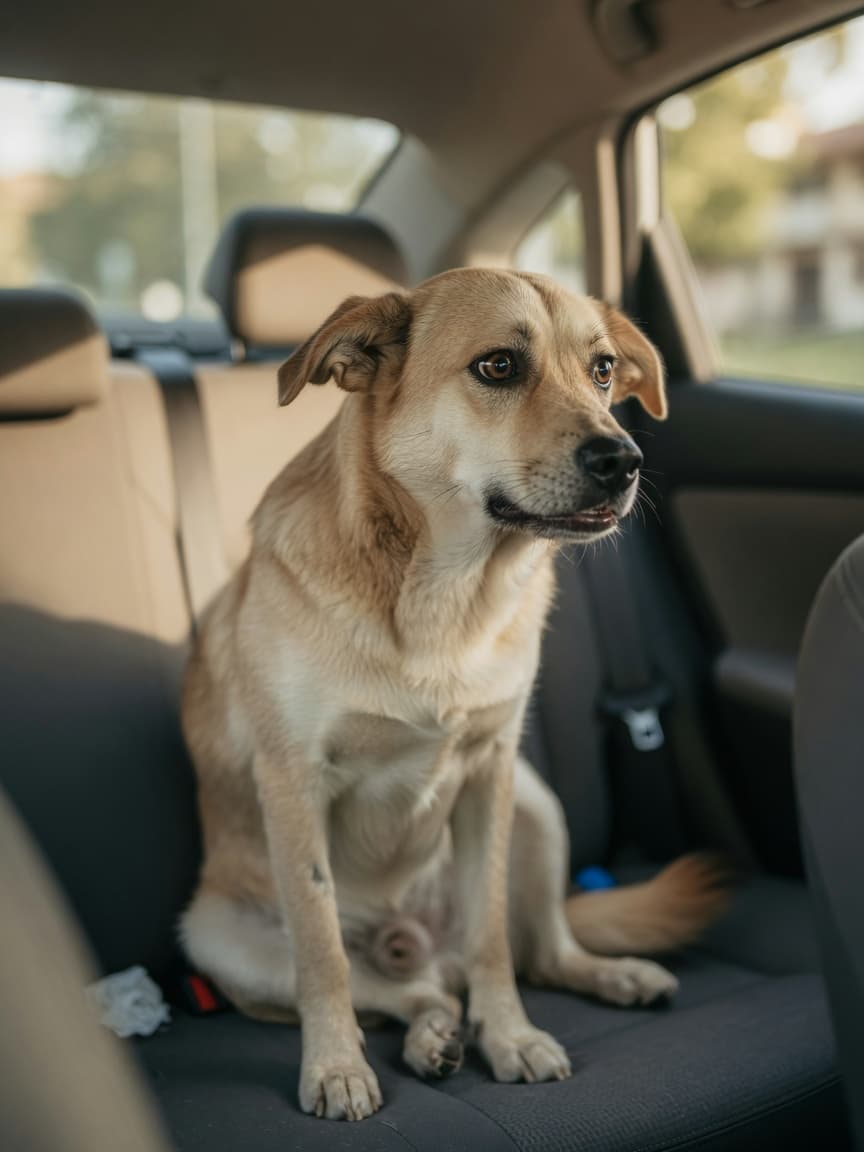
Motion Sickness and Anxiety: Two Different Problems
One of the most important things to understand about dogs that struggle in the car is that travel sickness and travel anxiety are two distinct problems with different causes, different solutions, and different treatments. Confusing them can lead to months of frustration and ineffective interventions. The first step is working out which one — or which combination — your dog is experiencing.
What Motion Sickness Looks Like
True motion sickness is a physiological response to conflicting sensory signals. The inner ear detects movement, but the eyes — particularly if a dog is in a position where they cannot see out of the windows — may not register the same motion. This sensory mismatch triggers nausea through mechanisms similar to those in humans. Signs of genuine motion sickness include excessive yawning, licking the lips, drooling, appearing listless or glassy-eyed, and vomiting. The dog may otherwise seem happy to approach the car and have no particular anxiety about getting in.
Motion sickness is especially common in puppies and young dogs because the structures of the inner ear involved in balance are still developing. Many puppies outgrow the problem naturally, though some dogs remain susceptible into adulthood.
What Car Anxiety Looks Like
A dog with car anxiety, by contrast, is distressed by the psychological experience of car travel rather than by nausea per se. These dogs may become reluctant to approach the car, tremble before the engine has even started, pant excessively, whine, bark, pace, or attempt to escape. The distress typically begins before any movement occurs. Some anxious dogs also vomit in the car, which can make the two conditions look superficially similar, but the vomiting in anxious dogs is caused by the stress response rather than by vestibular confusion.
Car anxiety often has a history behind it — a previous frightening journey, an association of the car with unpleasant destinations such as the vet, or simply a lack of positive car experiences from an early age. Treating anxiety with anti-nausea medication alone will not resolve the problem.
Medical Treatment for Motion Sickness: Maropitant (Cerenia)
Maropitant, sold under the brand name Cerenia, is the only veterinary medication specifically licensed for the prevention and treatment of motion sickness in dogs in the UK and Europe. It works by blocking neurokinin-1 (NK1) receptors in the vomiting centre of the brain, preventing the nausea signal from being processed. Unlike older antihistamine-based remedies such as promethazine, maropitant does not cause significant sedation, meaning your dog can remain alert and engaged during the journey.
Cerenia is available as tablets for dogs, given as a single dose approximately two hours before travel. It is prescription-only, so a conversation with your vet is needed before starting treatment. For dogs with frequent travel requirements, it is safe to use on consecutive days, though your vet will advise on appropriate frequency for your individual dog. Cerenia is not licensed for use in puppies under eight weeks of age.
Feeding Protocol: When to Feed Before Travel
Travelling on a full stomach significantly increases the risk of vomiting in dogs prone to motion sickness. For most dogs, withholding food for four to six hours before a journey reduces the likelihood of sickness considerably. This does not mean depriving your dog of water — hydration is important, particularly in warm weather — but a light stomach makes a real difference to comfort during travel.
If your dog is on medication that must be given with food, discuss with your vet whether timing can be adjusted on travel days. For very short journeys of ten minutes or less, the fasting period is less critical, but for any journey of thirty minutes or longer, fasting beforehand is well worth the inconvenience.
Car Position Matters
Where your dog sits in the car influences how much sensory conflict they experience. Dogs that can see out of a forward-facing window receive visual information that matches what their inner ear is sensing, which reduces the mismatch that triggers nausea. Dogs confined to a boot area with no window view, or positioned sideways or facing backwards, are more likely to feel unwell.
A well-fitted, properly anchored dog car harness that allows a forward-facing seated position is both the safest and the most comfortable option for motion-sick dogs. Crates in the boot should ideally have a clear forward-facing view. Good ventilation also helps — keeping the car cool and allowing fresh air circulation reduces the severity of nausea for many dogs.
Acclimatisation Training for Car Anxiety
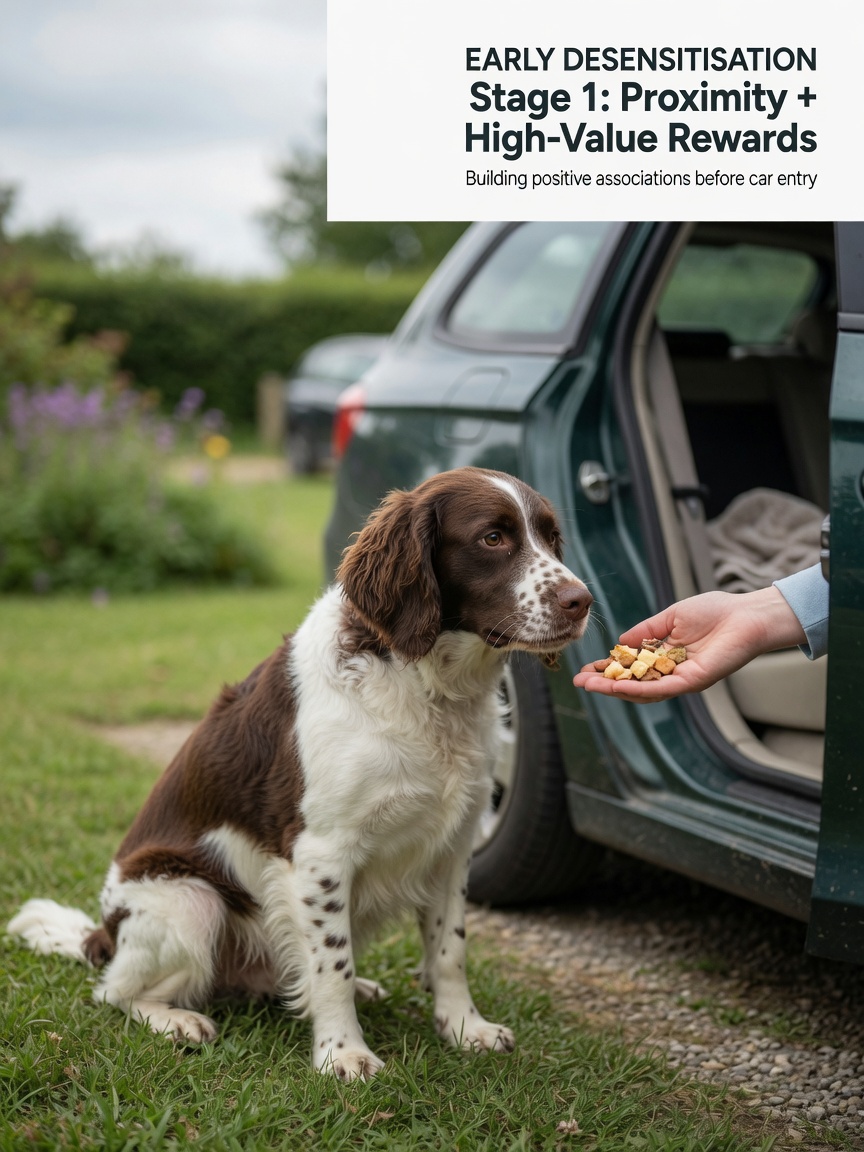
For dogs whose problem is anxiety rather than (or as well as) motion sickness, the most effective long-term solution is systematic desensitisation — gradually and repeatedly exposing the dog to car-related experiences at a level below the anxiety threshold, pairing each exposure with high-value rewards, and very slowly building up the complexity of the experience.
Start with simply feeding treats near the car with the engine off. Progress to sitting in the stationary car with the engine running, then to brief journeys to pleasant destinations such as a favourite park. Every session should end positively. The key is going slowly enough that the dog never becomes overtly distressed — once anxiety is triggered, the training session has gone too far and needs to be scaled back. This process may take weeks or months for severely anxious dogs, but the results are durable in a way that medication alone is not.
Pheromone Products
Adaptil (dog appeasing pheromone) products, which mimic the calming pheromone produced by nursing mother dogs, can be a useful adjunct to training for anxious travellers. The Adaptil spray can be applied to the dog's bedding or car harness approximately fifteen minutes before travel — never directly onto the dog. The Adaptil collar, worn continuously, provides ongoing background pheromone exposure that may reduce baseline anxiety levels. Pheromone products are not a substitute for training or veterinary treatment in severely anxious dogs, but they are safe, non-sedating, and can take the edge off mild to moderate anxiety.
Anxiolytic Medication for Severe Cases
For dogs with severe car anxiety that does not respond to training and pheromones, short-term anxiolytic medication prescribed by a vet may be appropriate. Options include alpha-2 agonists such as dexmedetomidine oromucosal gel (Sileo), which reduces noise sensitivity and generalised anxiety without causing heavy sedation, or in some cases longer-acting anxiolytics such as trazodone or gabapentin. These medications require a veterinary consultation and, where possible, a referral to a veterinary behaviourist who can oversee an integrated training and medication plan.
It is worth noting that sedating a dog does not treat anxiety — a sedated dog is simply unable to express distress. Using appropriate anxiolytic medication that allows the dog to remain conscious and able to engage with training gives much better long-term outcomes.
When to Seek Veterinary Advice
If your dog vomits on every car journey, shows signs of significant distress in the car, or has never been able to travel comfortably, a conversation with your vet is a good starting point. They can help you identify whether you are dealing with motion sickness, anxiety, or both, and advise on the most appropriate combination of interventions. Car travel does not have to be an ordeal — with the right approach, most dogs can learn to tolerate or even enjoy it.