
Dog Ticks: Safe Removal, Lyme Disease Risk & Prevention
By Julia Wrenfield, Pet Wellness Researcher
Ticks are obligate blood-feeding arachnids — more closely related to spiders and scorpions than to insects. They are among the most medically significant external parasites in the world, capable of transmitting a wide range of viral, bacterial, and protozoal diseases. For dog owners across Europe, North America, and Australia, understanding tick identification, safe removal, and disease prevention is increasingly essential as range expansions driven by climate change bring ticks into previously low-risk regions.
Tick Lifecycle: Three Hosts, Three Stages
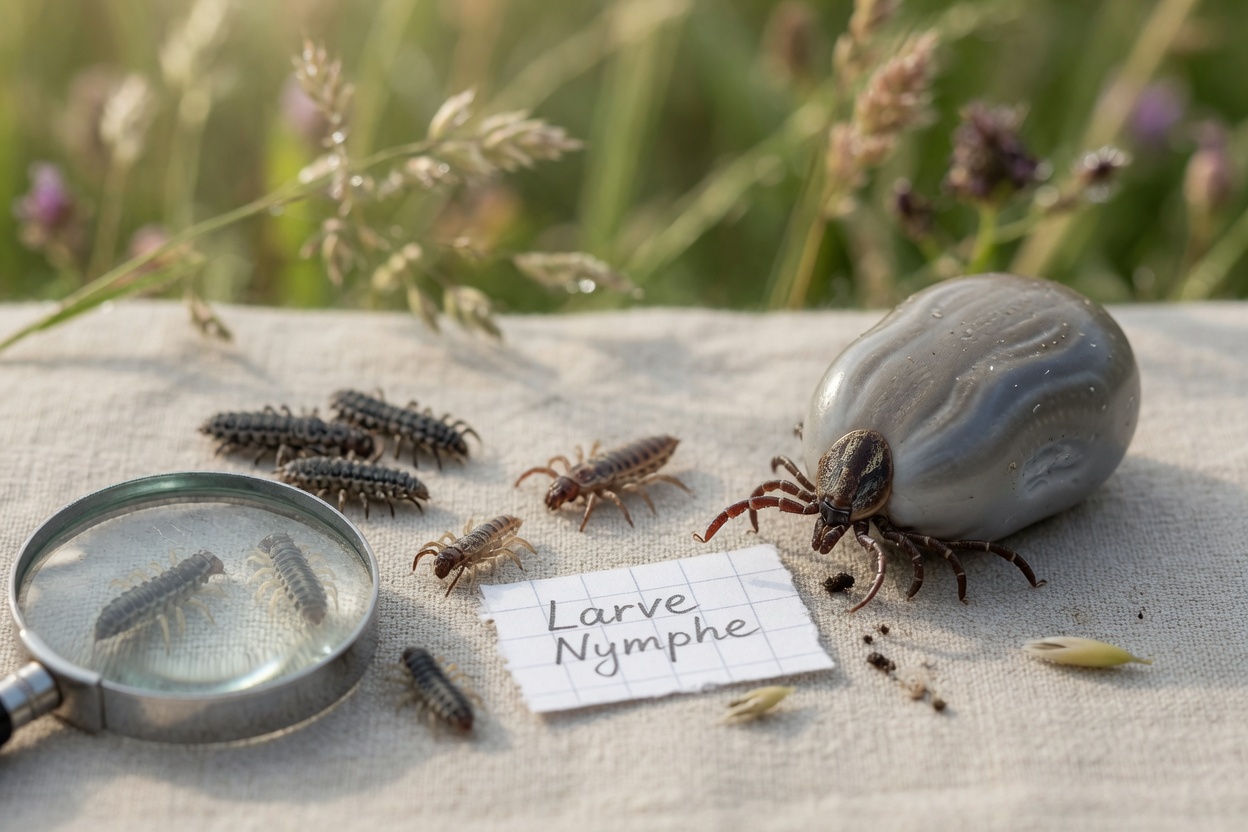
Most ticks of veterinary importance are three-host ticks, meaning each life stage — larva, nymph, and adult — feeds on a different host animal. This behaviour is what makes ticks such effective disease vectors.
- Egg: A female tick lays thousands of eggs in the environment (leaf litter, long grass) after her final blood meal. Eggs hatch into six-legged larvae.
- Larva: The larval tick feeds on a small mammal (rodent, bird) and may acquire pathogens at this stage. After feeding, it drops off and moults into a nymph.
- Nymph: The nymph stage is tiny (poppy-seed sized) and the life stage most likely to transmit Lyme disease to humans, as it is easily missed. Nymphs feed on a wider range of hosts, including dogs, rabbits, and deer.
- Adult: Adults are larger and more visible. Adult females must take a blood meal before laying eggs. Adult males may feed briefly or not at all. Dogs most commonly pick up adult ticks, though nymphs are equally capable of infesting them.
The entire lifecycle can span 2–3 years, depending on species and climatic conditions. Ticks do not jump or fly — they engage in "questing" behaviour, holding onto vegetation with their rear legs and extending their forelegs to latch onto a passing host.
Tick Species and Risk Areas in the EU and UK
Several tick species are medically important in Europe:
- Ixodes ricinus (Castor Bean Tick / Sheep Tick): The most widespread tick in Europe, found throughout the UK, Ireland, Scandinavia, Central and Eastern Europe. Primary vector of Lyme disease (Borrelia burgdorferi s.l.), tick-borne encephalitis (TBE), anaplasmosis, and babesiosis. Active from early spring through late autumn, with peak activity in May–June and September–October.
- Dermacentor reticulatus (Marsh Tick): Found in Central and Eastern Europe, expanding westward into France, Germany, and the UK. Transmits Babesia canis, a potentially fatal blood parasite in dogs, and canine Ehrlichiosis.
- Rhipicephalus sanguineus (Brown Dog Tick): Predominantly a Mediterranean species, though found in kennels throughout Europe. Transmits Ehrlichia canis and Babesia vogeli.
- Haemaphysalis punctata: Found in southern UK coastal areas and across southern Europe. Increasing range as temperatures rise.
High-risk areas for dog owners in the UK include the New Forest, Thetford Forest, the Lake District, the Scottish Highlands, and coastal heathland. The ESCCAP publishes regularly updated European risk maps for tick-borne diseases. In the US, the black-legged tick (Ixodes scapularis) is the primary Lyme vector in the Northeast and Midwest.
Tick-Borne Diseases in Dogs

The diseases ticks transmit are diverse and some are serious:
- Lyme Disease (Borrelia burgdorferi): Signs in dogs include lameness (often shifting between legs), fever, lethargy, swollen lymph nodes, and in severe cases, Lyme nephritis (fatal kidney disease). Transmission typically requires 24–48 hours of tick attachment, making prompt removal critically important. A comprehensive review in Veterinary Sciences (PubMed) outlines current understanding of canine Lyme disease pathogenesis.
- Babesiosis (Babesia canis): A protozoan parasite that infects red blood cells, causing haemolytic anaemia, dark urine, and potentially fatal organ failure. Cases in the UK have been increasing, including local transmission cases without recent foreign travel.
- Anaplasmosis (Anaplasma phagocytophilum): Causes fever, lethargy, joint pain, and low platelet counts. Generally responsive to doxycycline treatment.
- Ehrlichiosis (Ehrlichia canis): A potentially severe bacterial infection causing fever, weight loss, and bleeding disorders.
The Guardian has reported on the significant rise in tick-borne disease cases across the UK, with health authorities urging increased vigilance for both pet owners and walkers in rural areas.
How to Safely Remove a Tick
If you find a tick on your dog, remove it as quickly as possible. Transmission time varies by pathogen, but minimising attachment time always reduces risk.
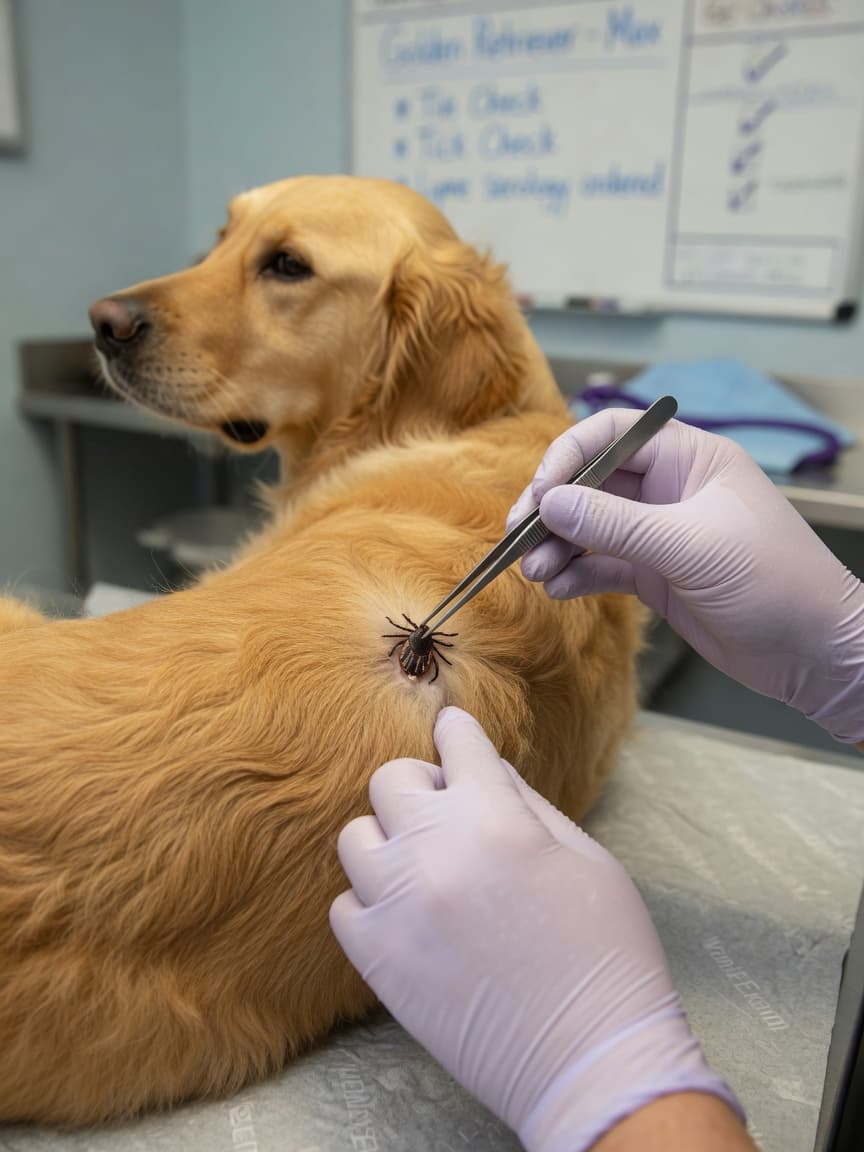
- Use a commercially available tick hook (O'Tom Tick Twister, Tick Key) or fine-tipped tweezers. Specialised tick hooks are gentler and easier to use correctly than tweezers.
- Part the fur to expose the tick's attachment point clearly.
- Place the hook as close to the skin surface as possible, ideally under the tick's mouthparts.
- Pull upward with steady, even pressure. Do not jerk, twist, or squeeze the tick's body.
- After removal, clean the bite site with antiseptic. Wash your hands thoroughly.
- Dispose of the tick by placing it in alcohol, in a sealed bag, or flushing down the toilet. Do not crush it with your fingers — tick fluids can carry pathogens.
- Monitor the bite site and your dog's general health for 4–6 weeks. Contact your vet if your dog develops fever, lameness, or lethargy.
Tick Prevention for Dogs
Prevention is significantly more effective — and less stressful — than treatment after the fact. Options include:
- Isoxazoline-based oral treatments (fluralaner, afoxolaner, sarolaner): Monthly or 3-monthly chews. Kill ticks rapidly after attachment, typically within hours, reducing transmission risk.
- Acaricidal spot-ons (permethrin, fipronil + amitraz): Applied to skin, spread via sebaceous glands. Permethrin also has repellent activity. Never use permethrin on or near cats.
- Tick collars (flumethrin + imidacloprid): Provide sustained release over several months. Particularly useful for dogs in high-exposure environments.
- Tick checks after every walk: Run fingers through the coat, paying attention to ears, between toes, groin, armpits, and around the collar. Ticks can be very small at the nymph stage.
- Lyme vaccination: A Lyme disease vaccine is available for dogs in the US and increasingly in Europe. Discuss suitability with your vet based on your dog's risk profile.
Key Takeaways
- Ticks are three-host parasites; each life stage feeds on a different animal, enabling disease spread across wildlife, pets, and humans.
- Ixodes ricinus is the dominant tick species in the EU and UK, active spring through autumn, with expanding range due to warming winters.
- Safe removal requires a tick hook or fine-tipped tweezers, pulling straight out — no twisting, burning, or smothering.
- Lyme disease transmission typically requires 24–48 hours of tick attachment, making prompt removal crucial.
- Year-round tick prevention with acaricidal products is strongly recommended for dogs in or near woodland, heathland, or long-grass environments.