
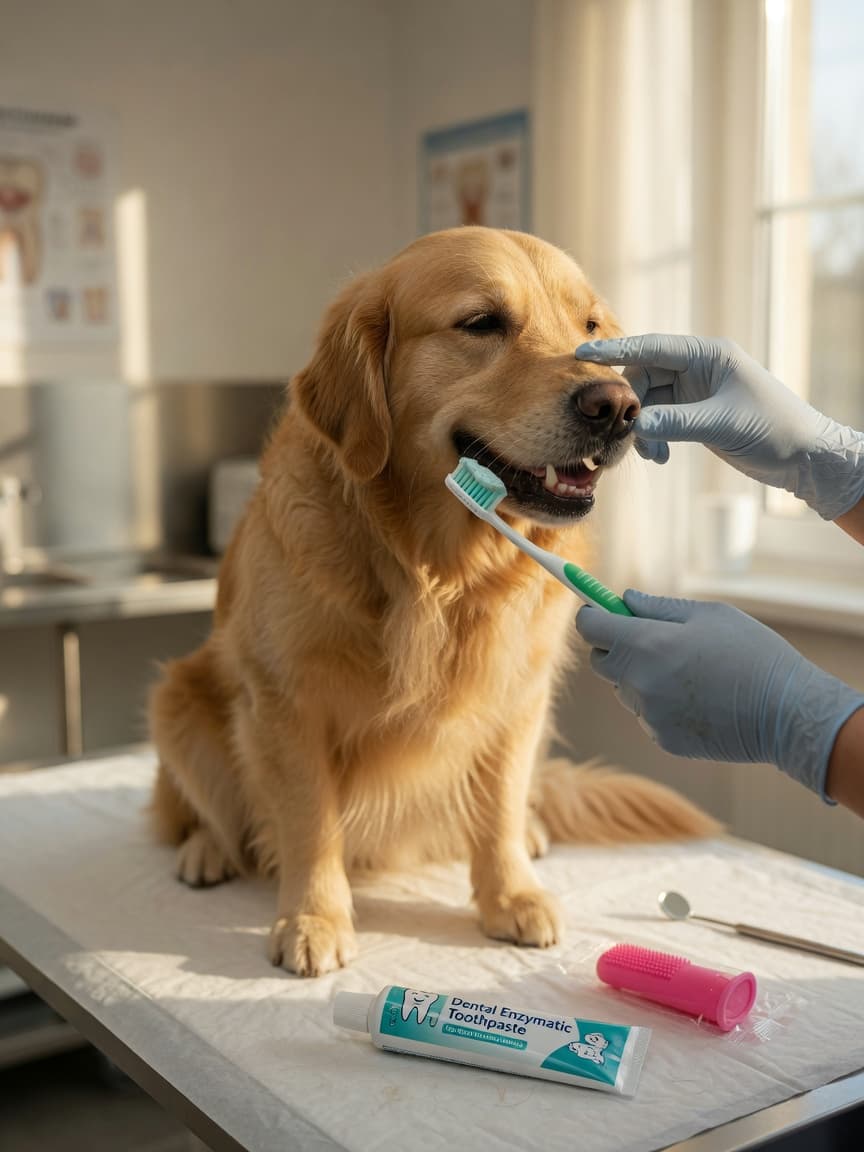
Why Your Dog's Dental Health Matters
It might not be the first thing that comes to mind when you think about keeping your dog healthy, but dental hygiene is one of the most important — and most overlooked — aspects of everyday care. Studies suggest that the majority of dogs over the age of three show some degree of periodontal disease, a progressive condition that begins with plaque accumulation and can ultimately lead to pain, tooth loss, and systemic effects on organs including the heart and kidneys.
The good news is that regular brushing at home can make an enormous difference. Even three to four sessions per week can slow plaque build-up significantly and reduce the frequency of professional dental treatments. This guide walks you through everything you need to know to get started.
Choosing the Right Toothbrush and Toothpaste
Before you reach for your own toothbrush, stop. Human toothbrushes are not suitable for dogs — they are too large and the bristles are too stiff. Equally important: never use human toothpaste on your dog. Human toothpaste contains fluoride and, in many cases, xylitol, both of which are toxic to dogs.
Instead, choose products designed specifically for dogs:
- A finger brush (a soft rubber cap that fits over your fingertip) is ideal for beginners and smaller dogs, as it gives you excellent control and feels less intrusive to the dog.
- A soft-bristled dog toothbrush with an angled head works well once your dog is comfortable with the process.
- A double-headed brush, which cleans both sides of a tooth simultaneously, can be useful for larger breeds.
- Dog toothpaste comes in flavours such as chicken, beef, and vanilla-mint, which most dogs find far more acceptable than the taste of human toothpaste. These formulations are designed to be swallowed safely.
You can find these products at most pet shops, veterinary practices, and online retailers. The ESCCAP (European Scientific Counsel Companion Animal Parasites) and similar professional bodies recommend integrating dental home care into routine preventive health plans, and most veterinary nurses can advise on product choices if you are unsure where to start.
Introducing Your Dog to Tooth Brushing: Step by Step
Patience is the key. Rushing the process will make your dog associate tooth brushing with stress, which makes future attempts far more difficult. Take a gradual approach over one to two weeks before attempting a full brush.
Step 1 — Get Your Dog Used to Your Hands Near Their Mouth
Begin by gently touching the outside of your dog's muzzle and lips during calm, relaxed moments. Offer a small treat afterwards. Repeat this daily for several days until your dog shows no concern.
Step 2 — Introduce the Toothpaste
Let your dog sniff and lick a small amount of dog toothpaste from your finger. Most dogs enjoy the flavour and this step is usually straightforward. Once your dog is happy to lick it from your finger, move on.
Step 3 — Introduce the Brush
Apply a small amount of toothpaste to the brush or finger brush and allow your dog to lick it off. Then briefly touch the brush to the outside of the front teeth. Keep initial sessions very short — ten to fifteen seconds — and end on a positive note with praise and a treat.
Step 4 — Begin Brushing
Once your dog is comfortable, begin brushing in small circular motions along the outer surfaces of the teeth, working from front to back along both the upper and lower jaws. Hold the brush at a 45-degree angle towards the gum line, where plaque accumulates. You do not need to open the mouth wide — the tongue naturally keeps the inner surfaces cleaner, so focus on the outer faces of the teeth.
Step 5 — Build Up Gradually
Increase the duration of each session gradually until you are comfortably brushing all teeth in one sitting. Aim for around two minutes total. Always end with calm praise.
How Often Should You Brush?
Daily brushing is the gold standard and offers the best protection against plaque and tartar build-up. If daily brushing is not achievable, aim for a minimum of three to four times per week. Brushing less frequently than every other day allows plaque to mineralise into tartar, which cannot be removed by brushing and requires professional descaling.
Dental Chews and Water Additives
While brushing is the most effective tool, supplementary products can provide additional benefit — particularly on days when brushing is not possible:
- Dental chews with the VOHC (Veterinary Oral Health Council) seal of acceptance have been independently tested and shown to reduce plaque or tartar. Look for this seal when choosing a product.
- Water additives are liquid solutions added to your dog's drinking water that help reduce bacterial load in the mouth. They are easy to use but should be seen as a supplement to brushing, not a replacement.
- Dental toys and certain chew treats designed to mechanically abrade the tooth surface can also contribute, though their effectiveness varies considerably.
Avoid very hard chewing items such as antlers, cooked bones, and hard nylon toys. These can cause slab fractures — where a large piece of tooth breaks away — and the pain and infection risk that follows.
Professional Dental Scale and Polish
Even the most diligent home brushing routine cannot remove tartar once it has formed, or reach below the gum line. A professional dental scale and polish, performed under general anaesthesia at your veterinary practice, is the only way to address established tartar and assess the full health of the teeth and surrounding tissues.
How often this is needed depends on the individual dog — breed, diet, home care routine, and genetics all play a role. Your vet will advise based on what they observe at annual health checks. Many dogs benefit from a professional clean every one to two years; others with excellent home care may go longer.
If the idea of anaesthesia concerns you, speak with your vet about the risks and benefits. For most healthy dogs, the risks of dental disease far outweigh the small risk associated with modern veterinary anaesthesia.
Signs of Dental Problems to Watch For
Between professional checks, keep an eye out for the following, all of which warrant a vet visit:
- Bad breath that is persistent or noticeably worse than usual
- Difficulty chewing, dropping food, or reluctance to eat hard kibble
- Pawing at the mouth or rubbing the face
- Visible brown or yellow build-up on the teeth
- Red, swollen, or bleeding gums
- Loose or missing teeth
Starting a dental hygiene routine early — ideally when your dog is a puppy — makes the habit far easier to establish. But it is never too late to begin, and even older dogs can adapt to tooth brushing with patient, consistent training.