
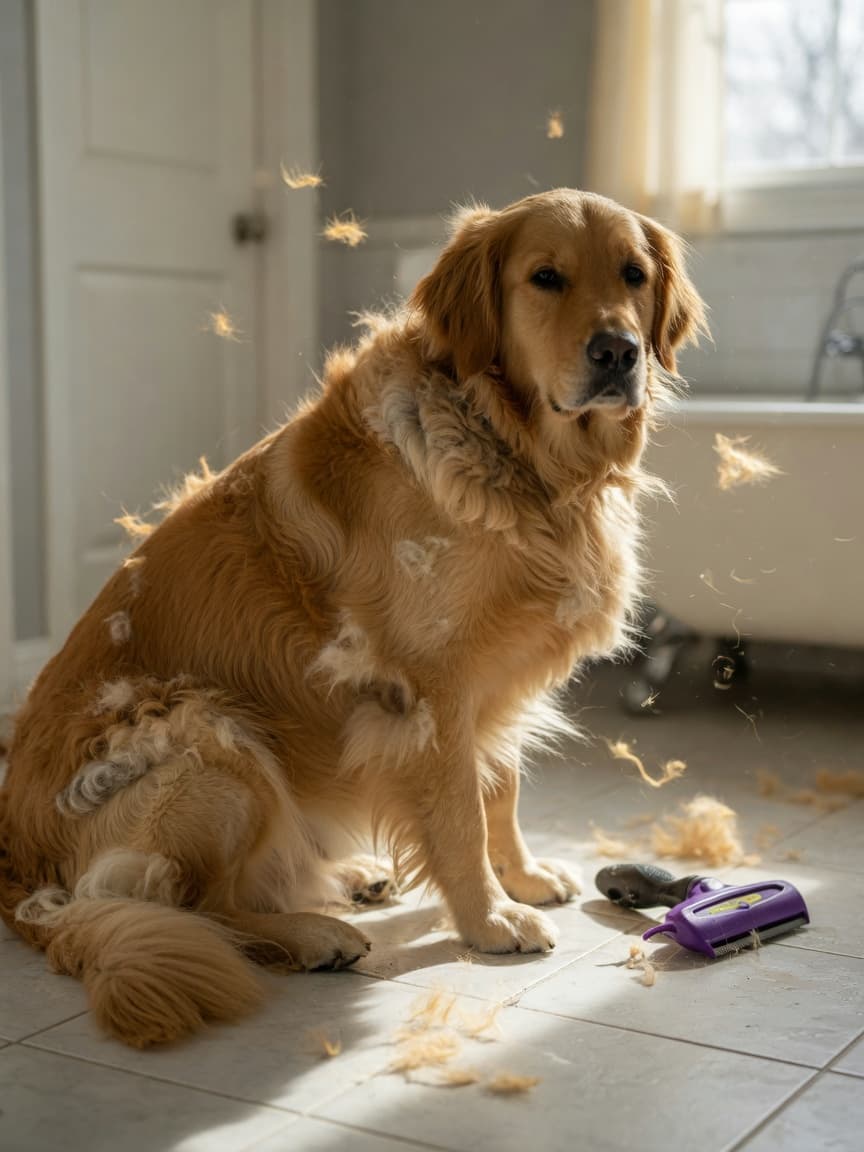
Why Dogs Shed: The Hair Growth Cycle Explained
Dog shedding is a completely normal biological process, but understanding why it happens can help you manage it more effectively — and recognise when something has gone wrong. Each hair on your dog's body passes through three distinct phases: anagen (active growth), catagen (transition), and telogen (resting, followed by shedding). When a hair reaches the end of its telogen phase, it detaches from the follicle and a new one begins growing in its place.
The rate at which dogs cycle through these phases varies enormously by breed. Double-coated breeds such as Huskies and German Shepherds have large numbers of follicles cycling simultaneously, which is why they produce staggering quantities of shed hair. Single-coated or low-shedding breeds such as Poodles and Maltese cycle more slowly, and loose hair tends to remain caught in the coat rather than falling freely.
Heavy Shedders vs Low Shedders
Heavy-Shedding Breeds
The following breeds are known for significant year-round or seasonal shedding:
- Labrador Retriever
- German Shepherd
- Golden Retriever
- Siberian Husky
- Alaskan Malamute
- Bernese Mountain Dog
- Chow Chow
- Border Collie
- Akita
- Corgi (both Pembroke and Cardigan)
Low-Shedding Breeds
These breeds shed far less visibly, making them popular choices for tidier households:
- Poodle (all sizes)
- Bichon Frise
- Maltese
- Shih Tzu
- Yorkshire Terrier
- Portuguese Water Dog
- Lagotto Romagnolo
- Wire-coated terriers (Border Terrier, Schnauzer)
It is worth noting that low-shedding does not mean low-maintenance. Many low-shedding breeds have coats that matt easily and require frequent brushing and professional grooming.
Seasonal Shedding: Spring and Autumn Coat Blows
Double-coated breeds experience dramatic increases in shedding twice a year — in spring and autumn — as they transition between their summer and winter coats. These periods are colloquially known as "coat blows," and owners who have experienced them understand the scale. During a spring coat blow, a Husky or Malamute can shed what appears to be a second dog's worth of fur over just a few weeks.
In spring, dogs shed their dense winter undercoat to make way for a lighter summer coat. In autumn, the summer coat is shed to allow the heavier winter undercoat to grow. Indoor dogs living in centrally heated homes often experience a more diffuse, year-round shed rather than two sharp seasonal peaks, as the consistent temperature and artificial light reduce the photoperiodic triggers that drive coat cycling.
The Best Deshedding Tools
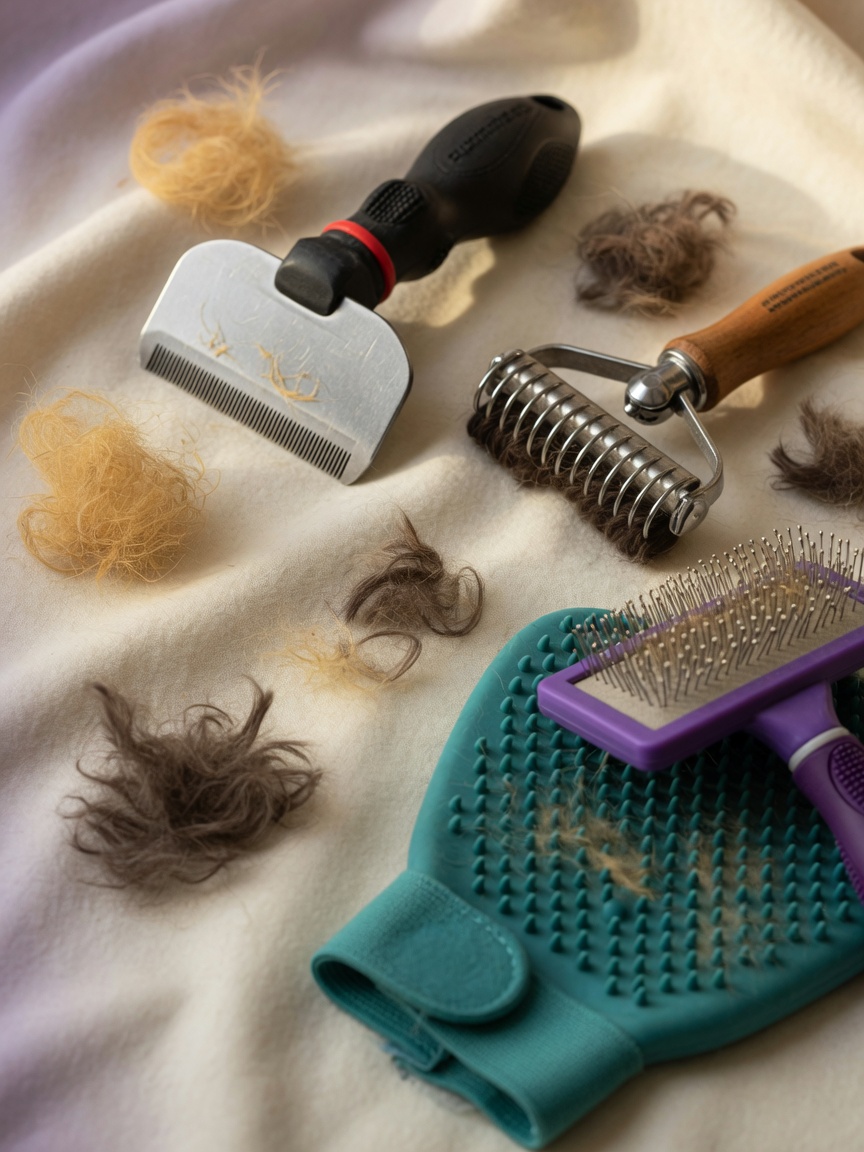
Investing in the right tools dramatically reduces the amount of hair that ends up on your furniture. The following are among the most effective options, several of which are available through Zooplus for EU-based owners:
- Furminator deshedding tool: One of the most widely recognised tools for double-coated breeds. Its fine-toothed stainless steel edge reaches through the topcoat to remove loose undercoat without cutting the guard hairs. Available in multiple sizes for different breeds.
- Undercoat rake: A rotating-pin rake is gentler than the Furminator and well-suited to dogs with particularly dense or long undercoats. It detangles and loosens dead hair simultaneously.
- Rubber grooming mitt: An excellent choice for smooth and short-coated breeds, and useful during bathing to loosen dead hair across the whole body. The rubber nodules create friction that lifts fur from the skin efficiently.
- Slicker brush: Effective for medium and long coats as a finishing tool after raking or combing. Removes surface loose hair and adds shine.
Zooplus stocks the full Furminator range alongside a wide selection of undercoat rakes and rubber mitts from brands including Trixie and Safari, with competitive pricing and EU delivery.
Bathing to Loosen Dead Hair
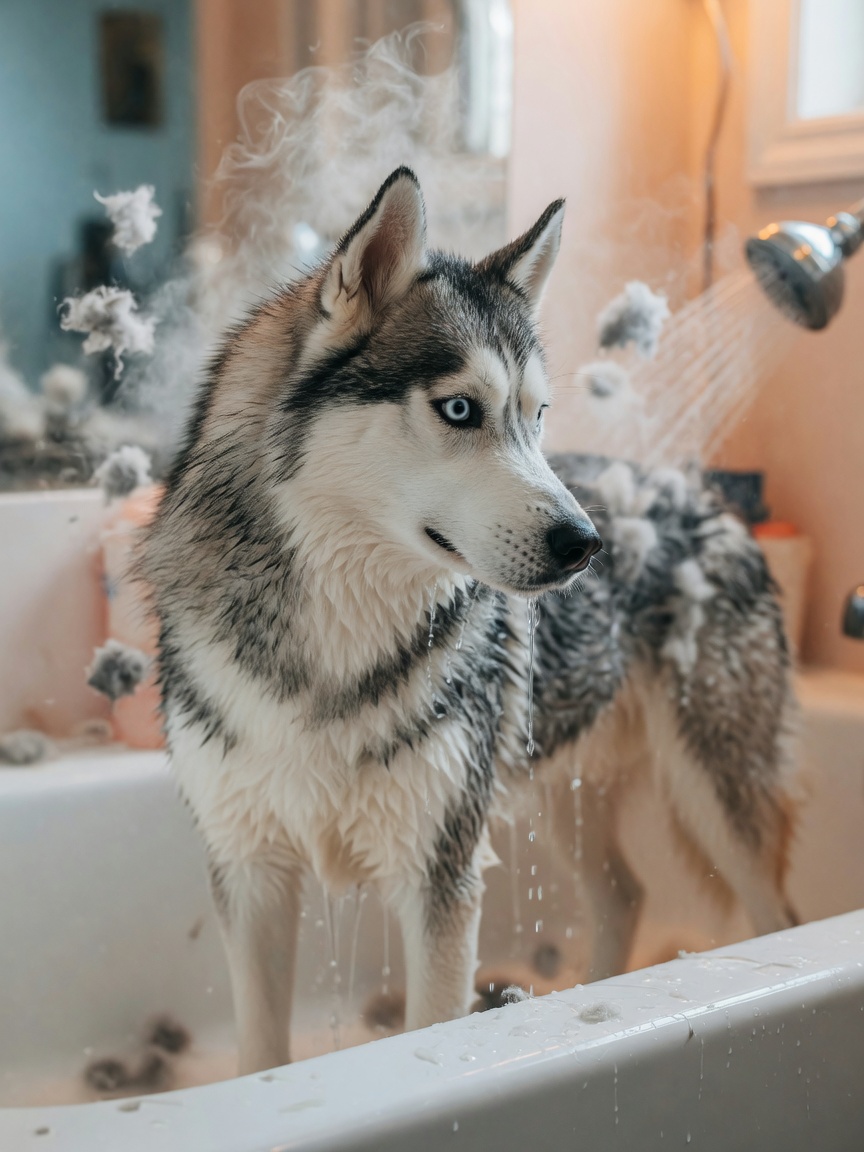
A warm bath does more than clean the coat — it loosens telogen-phase hairs that are ready to shed, allowing you to remove them in a controlled environment rather than on your sofa. For heavy-shedding breeds, a dedicated deshedding shampoo and conditioner formulated to release the undercoat can dramatically reduce the fur that falls post-bath.
The technique matters as much as the product. Lather thoroughly, working the shampoo down through the topcoat to the skin, then rinse completely. Incomplete rinsing leaves residue that can irritate the skin and dull the coat. After bathing, use a high-velocity dryer if available — this blasts loose fur from the coat far more effectively than towel-drying alone.
Diet and Omega-3 Supplementation for Coat Health
A nutritionally complete diet is essential for a healthy coat. Dogs fed poor-quality food often develop dull, brittle coats that shed excessively as the follicle does not receive adequate nutrients to support the hair growth cycle properly.
Omega-3 fatty acids — particularly EPA and DHA from marine sources — have the strongest evidence base for supporting skin barrier function and coat quality in dogs. Fish oil supplementation (from salmon, sardine, or anchovy oil) can reduce inflammation, improve coat shine, and modestly reduce excessive shedding where it has a nutritional component. Look for products with clear EPA and DHA content labelling rather than generic "fish oil" claims.
Ensure your dog's diet also provides adequate protein, zinc, and B vitamins, all of which play roles in healthy hair follicle function.
Abnormal Shedding: When to Be Concerned
Shedding that falls outside the normal seasonal pattern, or that results in visible bald patches, warrants investigation. The most common medical causes of abnormal shedding include:
- Stress: Acute stress — such as a veterinary visit, a house move, or a new animal in the home — can trigger a temporary increase in shedding. This typically resolves once the stressor is removed.
- Hypothyroidism: Underactive thyroid is common in middle-aged to older dogs and classically causes bilateral symmetrical hair loss, a dull coat, and weight gain alongside lethargy. Diagnosed by blood test and manageable with daily medication.
- Cushing's disease (hyperadrenocorticism): Excess cortisol production causes hair thinning, a pot-bellied appearance, increased thirst and urination, and skin that bruises easily. Requires specialist investigation.
- Allergies: Environmental or food allergies cause itching that leads to secondary hair loss through self-trauma — scratching, licking, and chewing.
- Nutritional deficiency: Feeding a homemade or unconventional diet without proper formulation can cause widespread hair thinning and poor coat quality.
When to See a Vet
Book a veterinary appointment if you notice symmetrical hair loss (particularly along the flanks or tail), visible bald patches, changes in skin pigmentation, shedding accompanied by increased thirst or appetite changes, or if regular grooming is not keeping the shedding manageable. Early diagnosis of hormonal conditions makes treatment considerably more straightforward.
Managing Hair in the Home
No amount of grooming eliminates shed hair entirely from the home environment. The following practical measures help keep it under control:
- HEPA-filter vacuum cleaner: Standard vacuums can recirculate fine pet hair particles. A HEPA-filter model captures them effectively and is well worth the investment for multi-pet households.
- Washable furniture covers: Designate pet-friendly throws on sofas and chairs — machine washable and far easier to maintain than upholstery.
- Regular grooming schedule: The more hair you remove during brushing, the less ends up on your floors. Grooming outdoors during coat blows keeps the bulk of shed fur outside.
- Lint rollers: Keep several accessible for clothing — a small investment with an outsized impact on daily life.
Written by Julia Wrenfield, vet-informed pet health editor at ForPetsHealthcare.