
Dog Ownership in the Netherlands: A Practical and Legal Guide
The Netherlands has a well-deserved reputation as one of the most dog-friendly nations in Europe. With approximately 1.7 million dogs and a culture that warmly embraces canine companionship in everyday life, the Dutch approach to pet ownership is a fascinating blend of relaxed attitude and sensible regulation. Whether you are moving to the Netherlands, already living there, or simply curious about how Dutch dog law works, this guide covers all the essentials.
Microchipping: Strongly Recommended but Not Universally Mandated
Unlike some EU neighbours, the Netherlands does not have a nationwide mandatory microchipping law for all dogs. However, microchipping is strongly recommended by the Dutch government, veterinary associations, and animal welfare organisations — and it is required in several specific situations:
- Dogs imported into the Netherlands from abroad must be microchipped under EU Pet Travel Regulations
- Certain municipalities require microchipping for breeds considered higher-risk
- Breeders registered with the Raad van Beheer (Dutch Kennel Club) are required to microchip puppies before sale
The ISO 11784/11785-compliant microchip is the standard used across the EU. Once microchipped, it is advisable to register your dog on a national database such as Europetnet or the Dutch I-Base system. Microchipping at a Dutch vet typically costs between €20 and €40. Even where not legally required, a microchip vastly improves the chance of recovering a lost dog, and Dutch animal shelters (dierenasiel) routinely scan all animals brought in.
Hondenverzekering: Dog Insurance in Dutch Culture

Dog insurance (hondenverzekering) is not legally mandatory in the Netherlands for most owners, but it is widely used and considered standard responsible ownership practice. Dutch dog insurance typically comes in two forms:
- Aansprakelijkheidsverzekering (liability insurance): Covers damage or injury your dog causes to third parties. Note that many Dutch household insurance (inboedelverzekering or aansprakelijkheidsverzekering particulieren) policies already include pet liability cover — check your existing policy before purchasing a separate one
- Zorgverzekering (health insurance): Covers veterinary treatment costs. Monthly premiums for comprehensive cover range from approximately €20 to €60, depending on breed and age
The Dutch insurance market for pets is well-developed, with providers including Petplan, Reaal, and various specialist insurers. Given that specialist veterinary treatment in the Netherlands can be expensive — emergency care can easily reach €1,000–3,000 — health insurance offers genuine peace of mind.
Amsterdam and Rotterdam: Specific Leash and Public Space Rules
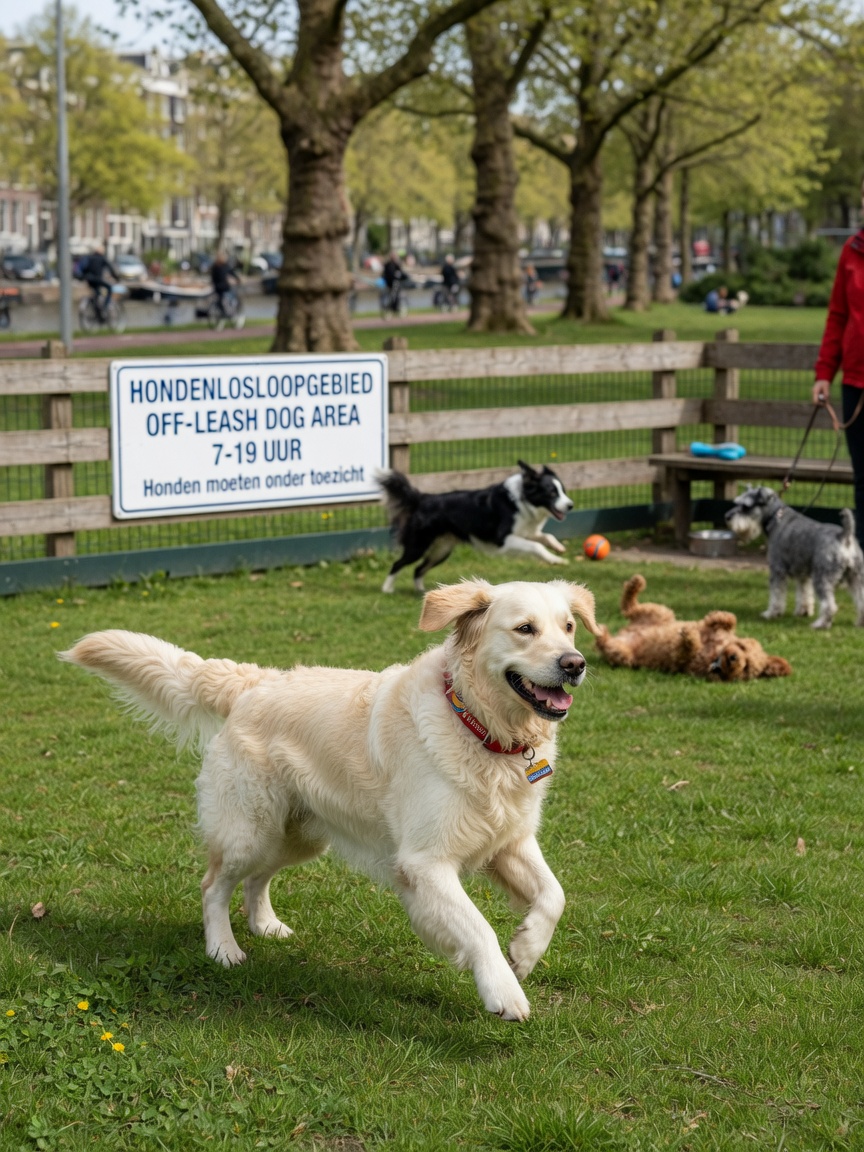
Leash requirements in the Netherlands are set at municipal level. The two largest cities have clear and well-enforced rules:
Amsterdam
In Amsterdam, dogs must be kept on a lead (aangelijnd) in all public areas unless in a specifically designated off-lead zone (hondenlosloopgebied). The city has invested considerably in dog-friendly infrastructure, and Amsterdam's parks contain numerous designated fenced and unfenced hondenlosloopgebieden. The Vondelpark, Westerpark, and Beatrixpark all have designated areas. Outside these zones, leads are required at all times. Fines for unleashed dogs in non-designated areas are enforced by handhaving officers and start at around €90.
Amsterdam also has specific rules about dog waste — cleaning up after your dog is legally required, and failure to do so can result in fines. The city provides waste bag dispensers throughout the city's parks.
Rotterdam
Rotterdam has similar leash requirements in public spaces, with designated hondenlosloopgebieden in parks across the city including Kralingse Bos and Het Park. Rotterdam has been particularly active in expanding off-lead areas in recent years. Dogs are also permitted on Rotterdam's RET public transport (metro, tram, and bus) provided they are kept on a lead and a supplement ticket is purchased.
Breed-Specific Legislation: No National Ban, Municipal Variation
The Netherlands abolished its national breed ban on Pit Bull Terriers in 2008, following evidence that it had not reduced dog bite incidents. Today there is no nationwide breed-specific legislation (BSL) in the Netherlands. However, some municipalities retain their own restrictions on certain breeds, requiring permits, muzzles in public, or mandatory behavioural assessments.
The Dutch approach has shifted towards assessing individual dog behaviour rather than breed appearance. If a dog is involved in a biting incident, the owner can be required to have the dog undergo a behavioural test (gedragstest) and to take a responsible ownership course. Repeat offences can result in confiscation of the animal. This incident-based system is increasingly seen as a model approach across Europe.
Hondenbelasting: The Dog Tax That Largely Disappeared
The Netherlands formerly had a national hondenbelasting (dog tax), but this was abolished at the national level in 1996. However, a small number of municipalities continue to levy their own local dog tax. As of 2024, only a handful of Dutch municipalities still charge hondenbelasting, typically in the range of €50–100 per year per dog. The overwhelming majority of Dutch cities and towns, including Amsterdam, Rotterdam, The Hague, and Utrecht, have abolished the tax entirely. Check with your gemeente (municipality) to confirm whether it applies in your area.
Dutch Dog-Friendly Culture
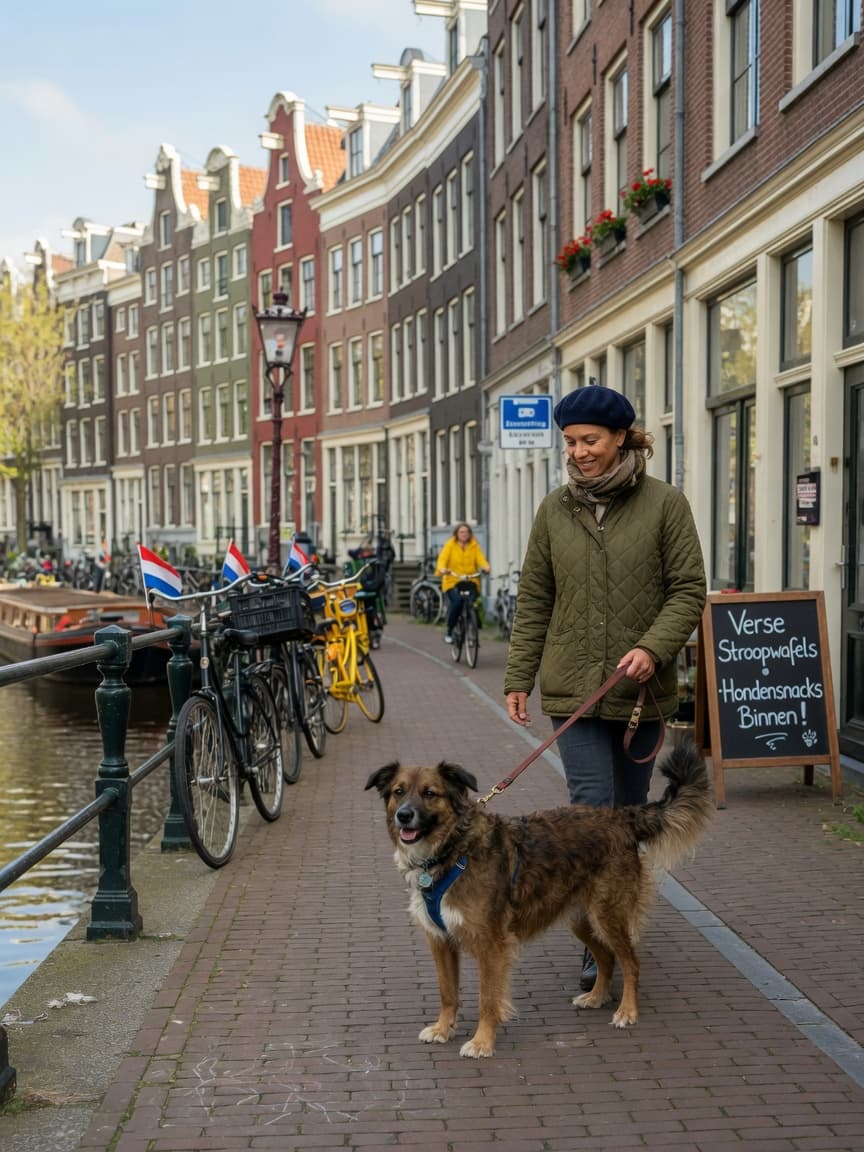
One of the most striking aspects of dog ownership in the Netherlands is the degree to which dogs are integrated into everyday Dutch life. Dogs are routinely welcomed in:
- Many cafes (kroegen) and restaurants, particularly on terraces
- Numerous shops, including some supermarkets
- Public transport (NS trains allow dogs with a supplement ticket; a dog must be on a lead or in a carrier)
- Many hotels and holiday parks
This cultural openness reflects a broader Dutch attitude of pragmatic coexistence. However, it also means that owners are expected to maintain excellent control over their dogs and clean up promptly — social norms around responsible ownership are strongly enforced, sometimes more by fellow citizens than by official enforcement.
Finding a Vet in the Netherlands
Dutch veterinary professionals are regulated by the KNMvD (Koninklijke Nederlandse Maatschappij voor Diergeneeskunde — the Royal Netherlands Veterinary Association). You can find a registered vet via the KNMvD directory at knmvd.nl or through the independent vet-finding platform dierenarts.nl.
Standard consultation fees at a Dutch private clinic typically range from €25 to €65 for a first appointment. Annual vaccinations (core vaccines including distemper, parvovirus, hepatitis, and leptospirosis) cost approximately €60–100. The Netherlands has a strong network of specialist veterinary hospitals in cities such as Utrecht (home to the renowned Utrecht University Faculty of Veterinary Medicine), Amsterdam, and Rotterdam.
Quick Reference: Key Points for Dog Owners in the Netherlands
- Microchip your dog — not universally mandatory but strongly recommended and required for EU travel
- Check whether your home insurance already includes dog liability cover before buying separate insurance
- Use a lead in all public areas unless in a designated hondenlosloopgebied
- Always clean up after your dog — legally required and strongly socially expected
- Check your specific gemeente for any remaining hondenbelasting obligation
- Find a registered vet via the KNMvD directory